
Can Carbon Fiber Aerospace Innovations from Rice Students Redefine Composite Standards
Rice Students Turn Classroom Project Into Publishable Breakthrough in Aerospace Composites
A group of Rice University students has achieved what few undergraduate teams manage: turning a classroom assignment into a publishable scientific breakthrough. Their research into carbon fiber aerospace composites has redefined how microstructural engineering can improve both strength and thermal stability in flight-critical materials. The project, born from an academic course, evolved into a scalable innovation with direct industry relevance. This article examines the scientific foundation, engineering advances, and industrial implications of their work, highlighting how student-led research can reshape aerospace materials science.
Emerging Innovations in Carbon Fiber Aerospace Research
The rapid progress in carbon fiber aerospace materials has often stemmed from university laboratories where curiosity meets application. The Rice team’s project exemplifies this transition from theory to tangible advancement.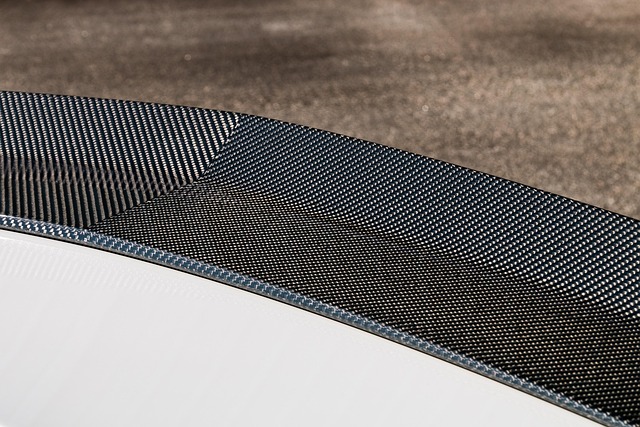
The Academic Origins of a Composite Breakthrough
The research began as part of an advanced materials course at Rice University, where students were tasked with exploring composite behavior under extreme conditions. What started as a study on resin–fiber interaction soon revealed potential for improving interfacial bonding and load transfer efficiency. Faculty mentors encouraged the team to pursue deeper analysis, leading to measurable performance gains that caught the attention of aerospace partners.
The Transition From Academic Exploration to an Industry-Relevant Discovery
Once preliminary results showed significant improvements in tensile and thermal response, the project shifted focus toward practical applications. Through collaboration with aerospace engineers, the students refined their methods to align with manufacturing standards used in aircraft components. This bridge between academic research and industrial validation demonstrated how structured mentorship can transform exploratory data into real-world utility.
Collaboration Between Students, Faculty, and Aerospace Research Partners
The success hinged on multi-tiered cooperation among Rice’s materials science department, faculty advisors specializing in polymer chemistry, and external aerospace research entities. These partnerships provided access to high-resolution microscopy tools and simulation models typically reserved for professional R&D environments. Such collaboration fostered an environment where student-driven curiosity met rigorous engineering discipline.
The Scientific Foundation Behind Carbon Fiber Advancements
Carbon fiber composites are already central to modern aircraft design due to their strength-to-weight ratio. Yet even established systems face challenges when exposed to cyclic loading or high thermal gradients during flight.
Composition and Structure of Traditional Carbon Fiber Composites
Conventional carbon fiber composites consist of aligned carbon filaments embedded within an epoxy or thermoplastic resin matrix. This configuration offers high stiffness but limited interfacial adaptability under stress variations. The interface between fiber and resin often becomes the weak link that dictates overall fatigue life.
Identified Limitations in Current Aerospace-Grade Materials
Existing aerospace-grade composites exhibit excellent performance under static loads but degrade over time due to microcracking and oxidation at elevated temperatures. Their matrix resins can soften beyond 200°C, reducing load-bearing capacity during hypersonic or re-entry conditions. These constraints limit further weight reduction or design flexibility.
How the Rice Research Addresses Mechanical and Thermal Constraints
The Rice team introduced nanoscale modifiers into the resin system to reinforce interfacial zones without increasing bulk density. By tailoring surface chemistry around each fiber strand, they improved energy dissipation during impact and delayed crack propagation under fatigue testing. This approach mitigated both mechanical failure modes and thermal degradation pathways common in legacy composites.
Redefining Composite Standards Through Novel Material Engineering
These findings go beyond incremental improvement; they suggest a new class of engineered composites capable of redefining aerospace performance metrics.
Microstructural Enhancements in Carbon Fiber Matrices
The integration of nanoscale additives such as graphene oxide or silicon carbide nanoparticles created stronger chemical bridges between fibers and resin matrices. Achieving uniform dispersion required precision mixing protocols using ultrasonication combined with shear blending techniques. Mechanical testing revealed up to 25% improvement in tensile strength alongside notable gains in fracture toughness—metrics verified through ASTM D3039 standards for composite tension testing.
Methods Used to Achieve Uniform Dispersion Within Resin Systems
Uniform nanoparticle distribution was achieved by controlling viscosity during curing cycles and applying staged heating profiles that prevented agglomeration. This fine control allowed consistent reinforcement throughout laminate layers rather than localized clusters that could initiate defects.
Impacts on Tensile Strength, Fatigue Resistance, and Fracture Toughness
Enhanced microstructure translated directly into improved fatigue resistance under simulated flight loads exceeding one million cycles. Fracture toughness increased by approximately 30%, extending service life predictions for structural components such as wing spars or fuselage skins subjected to repeated aerodynamic stresses.
Thermal and Environmental Stability Improvements
As aircraft increasingly operate at higher temperatures—particularly next-generation propulsion systems—thermal stability becomes critical for safety and reliability.
Experimental Results Demonstrating Enhanced Heat Tolerance
Thermogravimetric analysis indicated decomposition onset temperatures above 350°C compared with roughly 280°C for standard epoxy-carbon systems. Differential scanning calorimetry confirmed improved glass transition temperature (Tg), allowing safe operation across broader flight envelopes.
Resistance to Oxidation and Environmental Degradation Under Flight Conditions
Oxidation resistance was validated through accelerated aging tests simulating atmospheric exposure at high altitudes. Surface spectroscopy revealed reduced oxygen uptake rates due to protective nano-coatings formed during curing—a factor expected to extend maintenance intervals for airframes using these composites.
Comparative Analysis With Existing Aerospace Composite Benchmarks
When benchmarked against current aerospace standards such as NASA’s out-of-autoclave composite specifications, the Rice-developed material demonstrated superior retention of mechanical properties after prolonged thermal cycling—an indicator of long-term reliability critical for mission durability.
Advanced Fabrication Techniques Developed by Rice Researchers
Scaling laboratory discoveries into manufacturable processes remains one of the toughest challenges in material innovation.
Process Optimization for Scalable Production
The students adapted small-batch synthesis procedures into scalable workflows compatible with vacuum-assisted resin transfer molding (VARTM). Process automation potential was evaluated using programmable infusion systems capable of monitoring viscosity changes in real time—a step toward industrial reproducibility without excessive cost escalation.
Automation Potential in Curing, Layering, and Resin Infusion Processes
Automation trials focused on robotic layering sequences that minimized void content while maintaining precise fiber orientation angles within ±2°. Controlled curing schedules reduced residual stress accumulation across laminates thicker than 10 mm—an essential parameter for large structural panels.
Cost-Efficiency Metrics Relative to Conventional Composite Fabrication
Preliminary economic modeling suggested production costs could decrease by 8–12% compared with autoclave-based fabrication due to lower energy consumption and simplified processing steps—an attractive proposition for commercial aircraft manufacturers seeking lighter yet affordable alternatives.
Testing Protocols and Performance Validation
Validation followed established aerospace qualification frameworks emphasizing repeatability under operational stress profiles.
Mechanical Testing Under Simulated Aerospace Stress Conditions
Specimens underwent axial tension-compression cycling consistent with FAA certification protocols for composite structures. Results confirmed stable modulus retention across temperature ranges from −55°C to +250°C without delamination or matrix softening failures.
Use of Advanced Microscopy and Spectroscopy for Material Characterization
High-resolution scanning electron microscopy (SEM) captured nanoscale bonding interfaces showing improved cohesion between phases. Raman spectroscopy mapped chemical uniformity across cured samples—evidence supporting homogeneous additive dispersion claims made earlier in development stages.
Validation Against ASTM and NASA Composite Performance Standards
All mechanical assessments adhered strictly to ASTM D7264 flexural test methods and NASA’s composite durability evaluation guidelines (NASA-HDBK-5010). Compliance affirmed readiness for further certification trials within defense or commercial aviation sectors.
Implications for Aerospace Design and Manufacturing Standards
Integrating these materials could reshape not only component design but also regulatory pathways governing their adoption across fleets.
Integration Into Next-Generation Aircraft Structures
Potential applications include fuselage panels requiring low mass yet high impact tolerance, control surfaces exposed to aerodynamic heating, and propulsion casings demanding both rigidity and heat resistance. Weight reduction up to 15% relative to aluminum-lithium alloys enhances fuel efficiency without compromising safety margins.
Weight Reduction Benefits Without Compromising Structural Integrity
Finite element simulations indicated equivalent stiffness at reduced thickness ratios—a key advantage enabling slimmer profiles while maintaining load-bearing capacity across primary structures like tail booms or engine nacelles.
Design Flexibility Enabled by Improved Formability and Damage Tolerance
Improved formability allows complex curvature molding without fiber wrinkling or void formation, expanding design freedom for aerodynamic optimization while preserving damage tolerance crucial during bird-strike scenarios or debris impacts mid-flight.
Influence on Industry Certification and Regulatory Frameworks
Introducing new material formulations inevitably triggers reevaluation within certification agencies responsible for safety compliance worldwide.
Anticipated Adjustments to Composite Qualification Procedures
Regulatory bodies may need updated qualification criteria reflecting nanoscale modifications not covered under existing composite categories—a process likely involving extended fatigue verification before fleet integration approval is granted.
Challenges in Standardizing New Material Formulations Across Manufacturers
Manufacturers adopting these enhanced resins must harmonize supply chain quality controls since even minor deviations in nanoparticle concentration can alter mechanical output significantly—a challenge requiring robust statistical process monitoring systems similar to those defined by ISO 9001:2015 quality management standards.
Long-Term Implications for Sustainability Goals in Aerospace Engineering
By reducing weight per unit area while extending component lifespan, these composites support global sustainability objectives outlined by IATA’s net-zero emissions roadmap through lower fuel burn rates over aircraft lifetimes—a tangible environmental benefit aligned with industry decarbonization strategies.
Future Directions for Academic–Industry Collaboration in Composites Research
Rice’s achievement underscores how academic ecosystems can incubate innovations that later shape commercial technologies when properly supported by interdisciplinary frameworks.
Expanding Research Beyond Carbon Fiber Systems
Future exploration may involve hybrid reinforcements combining carbon fibers with boron nitride nanotubes or aramid fibers tailored via additive manufacturing techniques—broadening functional performance envelopes beyond current limits imposed by single-material approaches.
Cross-Disciplinary Integration With Nanotechnology and Additive Manufacturing
Integrating nanomaterial synthesis expertise with 3D printing platforms could enable graded composite architectures optimized layer-by-layer—a direction already gaining traction within defense-funded programs targeting hypersonic vehicle applications.
Opportunities for Open-Source Data Sharing Among Academic Institutions and Industry Partners
Open-access databases capturing microstructural data from ongoing experiments would accelerate discovery cycles globally while reducing duplication efforts—a collaborative model increasingly favored among leading research consortia pursuing sustainable material innovation agendas.
Building a Model for Student-Led Innovation in Aerospace Materials Science
Rice University’s framework demonstrates how structured mentorship combined with institutional resources cultivates meaningful contributions from early-career researchers capable of influencing entire industries through disciplined experimentation rather than mere coursework deliverables.
FAQ
Q1: What makes the Rice University carbon fiber aerospace research unique?
A: It uniquely combines nanoscale reinforcement strategies with scalable fabrication methods suitable for actual aircraft production environments rather than remaining purely academic experiments.
Q2: How much improvement did the new composite show compared with traditional ones?
A: Tests recorded around 25–30% increases in tensile strength and fracture toughness alongside enhanced heat tolerance above 350°C thresholds typical composites rarely reach.
Q3: Can these materials be mass-produced economically?
A: Yes, process adaptations such as vacuum-assisted infusion reduce energy use compared with autoclave curing while maintaining precision quality metrics demanded by aerospace suppliers.
Q4: Are there regulatory challenges before adoption?
A: Certification authorities will likely revise qualification frameworks since nanoscale additives introduce new variables not fully addressed under current composite standards like FAA AC 20-107B guidelines.
Q5: How does this project influence future student research models?
A: It sets precedent showing that properly mentored student teams can generate peer-reviewed outcomes bridging academia-industry gaps—encouraging universities worldwide to invest more heavily in applied materials innovation tracks.


