
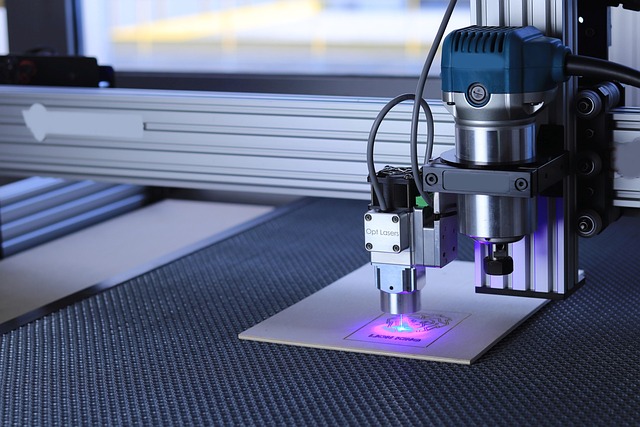
Electric Hand Saw vs CNC Router Which Delivers Greater Precision in Vectric Workflows
Something Went Wrong. If This Issue Persists Please Contact Us Through Our Help Center at help.openai.com.
Precision is the defining factor separating hobby-grade fabrication from professional CNC production. Within Vectric environments such as VCarve and Aspire, tool control directly affects how faithfully a digital design becomes a physical part. While electric hand saws remain practical for rough work, CNC routers deliver unmatched repeatability and surface accuracy. For most Vectric-based workflows, CNC routing stands as the better long-term investment for consistent precision across material types and production volumes.
Comparing Tool Precision in Vectric Workflows
Precision in digital fabrication extends beyond numerical tolerances; it defines the reliability of every cut, joint, and contour produced through Vectric software. Each stage—from design export to machine calibration—affects how closely the result matches the designer’s intent.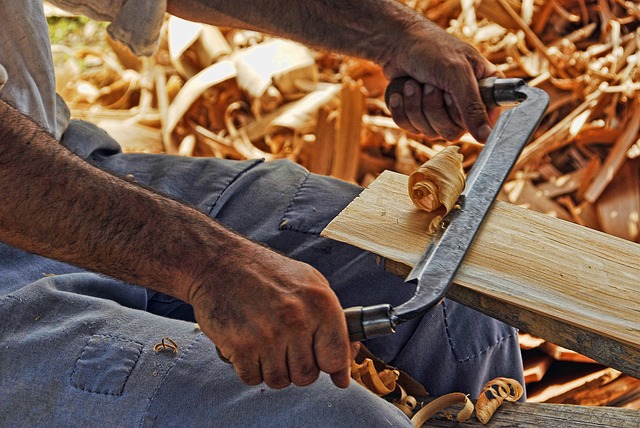
Understanding the Role of Precision in Digital Fabrication
Precision governs component fit and finish in any computer-aided manufacturing process. In Vectric workflows, even minor deviations can compound into visible misalignments or poor assembly performance. Repeatability matters just as much as single-pass accuracy because production often involves multiple identical pieces. When tolerance bands tighten below 0.1 mm, factors like spindle vibration or feed rate consistency become decisive. The link between software output and mechanical execution ultimately dictates whether a project meets industrial standards or remains a prototype.
How Vectric Software Interfaces with Cutting Tools
Vectric’s CAM engines convert vector geometry into motion commands interpretable by CNC controllers. Platforms like VCarve Pro and Aspire generate G-code tailored to specific machine configurations, defining spindle speed, step-over distance, and plunge depth. Electric hand saws, by contrast, rely entirely on operator control without digital guidance or positional feedback loops. Even when guided by templates, their variability exceeds what CNC systems tolerate. Machine calibration—steps per millimeter settings, backlash compensation, and axis alignment—further shapes the final dimensional fidelity.
Evaluating Electric Hand Saws in Vectric-Based Production
While electric hand saws remain common in workshops for their mobility and low cost, integrating them into a precision-driven workflow presents challenges that limit their role to preparatory stages rather than final machining.
Mechanical Capabilities and Limitations
An electric hand saw depends almost completely on user steadiness for maintaining straight lines and uniform depth. Any slight wrist movement alters kerf width or cut angle. Blade drift caused by uneven grain resistance can distort parts beyond acceptable tolerance levels for joinery or fitting operations derived from CAD models. Unlike CNC routers that follow programmed coordinates precisely, manual saws lack closed-loop correction mechanisms to counteract human error.
Situations Where Electric Hand Saws Remain Useful
Despite these constraints, electric hand saws still serve practical roles in hybrid production setups. They excel at rough cutting large panels down to manageable sizes before transferring material to a router bed. On construction sites where power outlets are scarce or portability outweighs precision demands, they provide flexibility unmatched by fixed CNC systems. For instance, trimming oversized MDF sheets before fine routing saves time while preserving router bit life during subsequent finishing passes.
CNC Routers as a Precision Solution in Vectric Workflows
CNC routers represent the technological core of modern digital fabrication pipelines using Vectric software. Their automation transforms virtual toolpaths into predictable physical outcomes without relying on operator dexterity.
Motion Control and Repeatability Advantages
Stepper or servo motors drive each axis along defined coordinates with sub-millimeter consistency across repeated cycles. Once calibrated through test cuts and dial indicators, routers maintain positional accuracy over extended runs with minimal drift. This repeatability is critical when producing interlocking parts such as cabinetry joints or engraved signage where alignment must remain exact across batches.
Toolpath Optimization in VCarve and Aspire Environments
Vectric’s CAM modules allow users to simulate tool motion before machining begins, preventing collisions or overcuts that could ruin workpieces. Adaptive pathing minimizes tool deflection by controlling chip load distribution along curves or pockets. Feed rate tuning further refines surface texture; slower passes yield smoother finishes on hardwoods while faster feeds suit soft plastics or foam boards used in prototyping environments.
Material Considerations Affecting Precision Outcomes
Material behavior under cutting stress influences both manual and automated processes but manifests differently depending on density and structure.
Influence of Material Density and Grain Direction
Wood species with pronounced grain patterns often cause lateral blade pull when cut manually using an electric hand saw. In contrast, CNC routers maintain directional stability since feed rates adjust dynamically relative to spindle torque feedback systems common in industrial machines compliant with ISO 230-2 positioning standards. Denser substrates like phenolic resin boards respond best to controlled tool engagement typical of computer-guided routing rather than freehand sawing.
Managing Heat, Chip Load, and Tool Wear
Thermal buildup during long machining sessions affects bit sharpness and dimensional integrity. Routers equipped with vacuum extraction sustain consistent chip evacuation that preserves edge quality throughout production cycles. Manual tools lack such regulation; uneven pressure applied through an electric hand saw accelerates blade dulling unpredictably, requiring frequent replacement to maintain cut quality comparable to digitally managed operations.
Workflow Efficiency in Professional Fabrication Settings
In professional contexts where throughput matters as much as quality assurance, workflow integration defines competitiveness more than individual tool performance alone.
Integration with Digital Design-to-Cut Pipelines
CNC routers seamlessly connect design data from CAD environments into automated cutting sequences without intermediate translation steps. Every modification made within VCarve updates corresponding G-code instantly for real-time manufacturing adjustments—a key advantage aligned with Industry 4.0 principles recognized by IEC technical committees on smart manufacturing systems (IEC TC 65). Manual tools interrupt this continuity since they require separate layout marking after digital export.
Balancing Cost, Speed, and Accuracy in Production Decisions
Upfront costs for CNC equipment may appear steep but amortize quickly through reduced rework rates and material waste savings averaging 10–15% per batch according to industrial benchmarking studies published under ISO/TC184 guidelines on automation systems integration. Electric hand saws remain inexpensive but cannot scale efficiently when tolerances tighten below ±0.2 mm or when repetitive accuracy is essential across hundreds of identical components.
Advancing Precision Through Hybrid Workflows
Modern fabrication rarely excludes manual craftsmanship entirely; instead it blends traditional flexibility with digital repeatability for optimal results under varying project constraints.
Combining Manual Tools with CNC Processes Strategically
A balanced approach uses electric hand saws for coarse stock division followed by CNC routers handling detailed contours defined within Aspire’s 3D relief modeling workspace. This sequence minimizes spindle runtime while maintaining geometric conformity across assemblies such as furniture panels or exhibition displays requiring both structural strength and aesthetic refinement.
The Future of Precision Fabrication Using Smart Tool Integration
Emerging sensor technologies now enable live calibration between CAD/CAM outputs and machine controllers through feedback-enabled spindles capable of adjusting feed rate mid-operation based on torque readings—an advancement supported by IEEE robotics interface standards (IEEE 1876). As these systems mature, hybrid workflows will merge human adaptability with algorithmic precision more fluidly than ever before.
FAQ
Q1: Why is precision so vital in Vectric workflows?
A: Because even small errors compound during assembly stages; accurate translation from design vectors to physical cuts determines overall product reliability.
Q2: Can an electric hand saw be calibrated like a CNC router?
A: No, manual tools lack programmable control loops; calibration depends solely on operator skill rather than measurable axis correction values.
Q3: What materials benefit most from CNC routing?
A: Dense woods, composites, and plastics where controlled feed rates prevent tear-out or warping benefit most from automated routing systems.
Q4: How does simulation improve machining outcomes?
A: Simulation previews potential collisions or overcuts before actual machining begins, saving both time and material waste during production runs.
Q5: Are hybrid workflows cost-effective for small shops?
A: Yes; combining rough manual cutting with precise digital finishing balances investment costs against output quality without compromising efficiency.


