
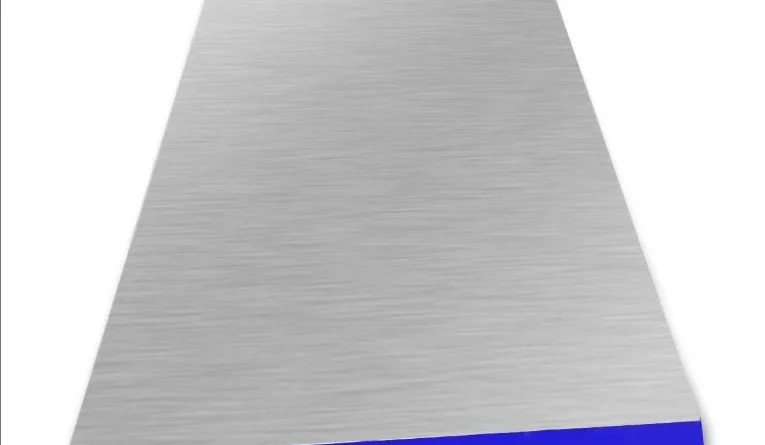
What Causes Failures When Working with Aluminum Flat Bar 6061 in Fabrication
5 Common Mistakes When Fabricating With Aluminum Flat Bars
Aluminum flat bar 6061 is a go-to material in fabrication due to its balance of strength, machinability, and corrosion resistance. Yet, even skilled fabricators can make costly mistakes when handling it. The most frequent issues arise from improper preparation, heat treatment errors, poor welding control, machining faults, and design oversights. Avoiding these mistakes not only preserves structural integrity but also extends the service life of fabricated parts.
Aluminum Flat Bar 6061 in Fabrication
Aluminum 6061 alloy remains one of the most versatile materials used across industrial sectors. Its mechanical properties make it suitable for both heavy-duty structures and precision components.
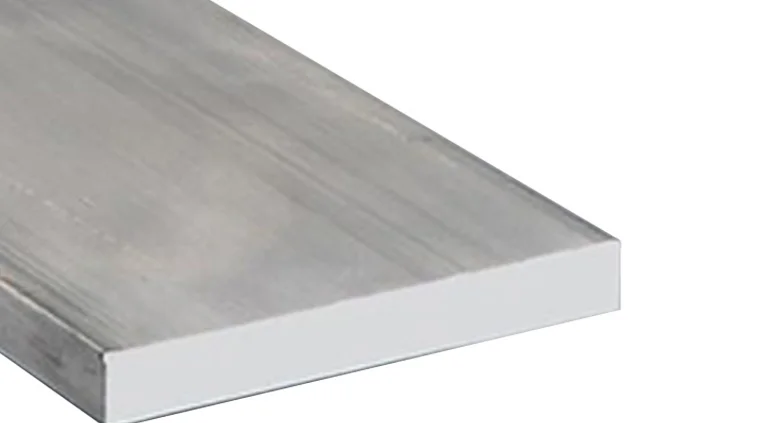
Key Properties of Aluminum 6061 Alloy
The alloy’s strength-to-weight ratio makes it ideal for load-bearing applications where weight reduction is essential. It resists corrosion effectively thanks to its magnesium and silicon content, which form a stable oxide layer that shields against environmental degradation. Being heat-treatable allows controlled strengthening through tempering processes like T4 or T6. Machinability is another advantage; it cuts cleanly with minimal tool wear when handled correctly.
One thing I’ve noticed in the shop is that 6061 flat bar often behaves differently from plate stock of the same grade. The grain direction runs along the length, so if you’re bending across the grain you’ll sometimes get surface cracking even when the numbers say it should be fine. Keeping a small test strip on hand saves a lot of guesswork later.
Common Applications in Fabrication Projects
Aluminum flat bar 6061 finds use in structural frames for transportation equipment, marine fittings exposed to saltwater, and aerospace brackets requiring dimensional stability. It’s also common in precision-machined tools and jigs where repeatability matters. Architectural designers prefer it for façades or framing systems because it maintains shape under temperature changes without warping.
Take a typical trailer frame. Builders like the material because they can cut two or three lengths from a single bar and still hit the weight target without adding extra bracing. In marine work the same bar often ends up as rub rails or ladder rungs. The salt spray doesn’t eat through the oxide layer quickly, so the parts stay looking decent for years even with minimal upkeep.
Improper Material Preparation
Preparation often determines whether a fabrication project succeeds or fails. Even minor contamination on aluminum surfaces can compromise weld quality or machining accuracy.
Inadequate Surface Cleaning Before Welding or Machining
Before any joining or cutting operation, the surface must be free from oil residues, oxide films, and dust particles. Contaminants create weak joints and porosity during welding. Mechanical cleaning with stainless-steel brushes or chemical etching removes these layers effectively. Neglecting this step leads to inclusions that weaken the structure under stress.
Most welders I know keep a dedicated stainless brush just for aluminum. If you grab the one that’s been on steel all morning, you’ll drag tiny iron particles into the joint and the weld will start rusting within weeks. A quick wipe with acetone right before you strike an arc is cheap insurance.
Another practical note: oxide builds back fast in humid shops. If you clean at 8 a.m. and don’t weld until after lunch, give the surface another light brush. The five minutes it takes beats chasing porosity on an x-ray later.
Incorrect Cutting and Handling Techniques
Cutting aluminum flat bar 6061 with dull blades increases burr formation and causes local heating that alters the material’s temper. Excessive clamping pressure may distort thin bars, leading to misalignment during assembly. Precision cutting requires sharp carbide tools and moderate feed rates to maintain edge quality without overheating.
Try running a dull blade on a 1/8-inch bar and you’ll see the edge turn slightly brown from heat. That spot won’t age the same as the rest of the bar, and when you machine it later the cutter will jump. Keeping a spare blade nearby and swapping it as soon as the cut starts to sound rough keeps everything consistent.
Clamping pressure is another sneaky issue. Too much squeeze on thin stock and the bar bows upward once you release the vise. I’ve seen guys spend an hour straightening pieces that would have stayed flat with a lighter touch and a scrap of wood between the clamp and the aluminum.
Errors in Heat Treatment Processes
Heat treatment directly affects the mechanical performance of aluminum alloys. Even small deviations from recommended parameters can degrade strength or cause distortion.
Overheating During Solution Heat Treatment
When solution treatment temperatures exceed specification limits, grain growth occurs, reducing toughness and fatigue resistance. Thin sections are especially prone to thermal distortion if heating isn’t uniform. Controlled ramp-up cycles help maintain consistent microstructure across the entire bar length.
A shop I worked with once set the oven 30 degrees too high on a batch of 1/4-inch flat bar. After quenching, the bars looked fine, but when they tried to bend one it snapped like a dry twig. They ended up scrapping the whole lot because the grain had grown too large to recover.
Uniform heating is harder than it sounds. If the bars are stacked too close, the ones in the middle heat slower. A simple rack that spaces them an inch apart usually solves the problem without fancy controls.
Inconsistent Aging or Quenching Practices
Delayed quenching after solution treatment reduces precipitation hardening efficiency, leaving the metal softer than intended. Uneven cooling introduces residual stresses that cause warping during subsequent machining steps. Using water baths with controlled agitation provides uniform quenching results while minimizing internal stress buildup.
One trick that helps is to have the quench tank already moving. A small pump or even a paddle keeps the water from forming hot spots around the bars. Without it, the side facing the wall cools slower and you get a slight twist that shows up when you mill the faces later.
Timing matters too. Waiting more than ten seconds after the bars come out of the oven lets the temperature drop enough that the hardening phase doesn’t kick in fully. A stopwatch clipped to the oven door keeps everyone honest.
Welding Mistakes with Aluminum Flat Bar 6061
Welding aluminum requires precise control over filler selection and thermal management due to its high conductivity and expansion rate.
Poor Selection of Filler Material and Welding Parameters
Choosing an incompatible filler alloy weakens the weld zone by forming brittle intermetallic compounds. Incorrect current settings lead to incomplete fusion or excessive spatter that contaminates the joint surface. Matching filler composition with base metal—such as using ER4043 or ER5356—improves weld reliability significantly.
ER4043 is the safer pick for most 6061 work because it flows well and tolerates a little dirty material. ER5356 gives higher strength but can crack if the fit-up isn’t tight. I’ve seen both used successfully, but the 5356 jobs always needed extra tacking and a second pass to stay crack-free.
Current settings are worth double-checking. Running 10 amps too low leaves a cold, lumpy bead that fails bend tests. Running 10 amps too high burns through thin sections and leaves a crater at the end of the joint that you then have to grind out and reweld.
Inadequate Control of Thermal Expansion During Welding
Aluminum expands rapidly under heat; without preheating or proper fixturing, differential expansion induces cracking near seams once cooled. Preheating around 150°C stabilizes temperature gradients while controlled cooling prevents residual stress accumulation that could cause delayed cracking later.
Preheating to 150°C sounds high until you watch a 4-foot bar pull 1/8 inch out of line while it cools. A couple of passes with a propane torch along the back side before welding keeps the movement small enough that the finished part still fits the jig.
After welding, letting the part cool in still air instead of dumping it in water right away cuts down on stress cracks. The slower cool also keeps the heat-affected zone from hardening too much, which makes the next machining step easier.
Machining and Finishing Deficiencies
Precision machining defines final tolerances and surface quality in aluminum components. However, tool wear or poor finishing practices often compromise outcomes.
Tool Wear and Improper Feed Rates During Machining
High-speed cutting without lubrication accelerates tool degradation and leaves rough surfaces requiring rework. Incorrect feed rates produce chatter marks that affect dimensional accuracy. Using sharp carbide inserts combined with coolant flow reduces frictional heat and extends tool life while achieving consistent finishes.
A common mistake is pushing the feed rate because the schedule is tight. The cutter lasts half as long, the surface looks like it was dragged across concrete, and you spend more time sanding than you saved by rushing. Slowing down 20 percent and keeping flood coolant on usually pays for itself in fewer tool changes.
Chatter shows up first as a high-pitched squeal. Backing off the speed by 50 rpm often stops it without changing anything else. If that doesn’t work, a quick pass with a file on the insert edge removes any built-up aluminum that’s causing the vibration.
Inaccurate Surface Finishing Techniques
Over-polishing can strip away protective oxide layers that naturally resist corrosion, exposing bare metal to oxidation in humid environments. Anodizing offers durable protection but demands strict process control—temperature variation during anodizing baths affects coating thickness uniformity and color consistency across parts.
Some shops like to buff 6061 to a mirror finish for display parts. It looks great in the shop, but six months outside and the surface starts to haze. A light etch before anodizing restores the oxide layer and keeps the color even from one end of the bar to the other.
Temperature swings in the anodizing tank are easy to miss. A five-degree change can shift the coating thickness enough that two parts anodized the same day come out different shades. A simple thermometer clipped to the rack and a logbook entry for each load catches the drift before it becomes a problem.
Design Oversights Leading to Structural Failures
Even well-prepared materials fail if design fundamentals are ignored during planning stages.
Ignoring Load Distribution and Stress Concentrations
Sharp internal corners concentrate stress under cyclic loading conditions, leading to premature cracking. Gradual transitions between cross-sections distribute loads more evenly across structural members. Finite element analysis (FEA) helps identify high-stress regions before fabrication begins, allowing reinforcement placement where needed most.
A bracket that looked fine on paper cracked after six months on a vibrating conveyor. The inside corner had a 1/16-inch radius instead of the 1/4-inch the print called for. Adding a small gusset and increasing the radius fixed the issue, but it cost a week of downtime and a rush order for new material.
FEA is useful, but it only flags problems you’ve modeled. Walking the shop floor and watching how parts actually get loaded sometimes reveals forces the drawing never considered. A quick sketch on the back of a work order can catch these before steel gets cut.
Mismatch Between Alloy Temper Selection and Application Requirements
Selecting an unsuitable temper alters formability versus strength balance—T6 offers maximum hardness but limited ductility compared with T4 temper suited for bending operations. Over-hardened bars may fracture during cold forming if minimum bend radii aren’t observed according to standard guidelines such as ASTM B209M specifications.
T6 is the default choice for most shops because it machines cleanly and holds threads well. But if the job involves a 90-degree bend on 3/8-inch stock, T6 will often split at the outside radius. Switching to T4 and aging after forming keeps the part in one piece and still meets strength specs once it’s heat-treated.
Bend radius charts are only a starting point. Material that sat in the rack for two years can behave differently from fresh stock because of natural aging. Running a test bend on a cutoff before committing the whole bar is cheap compared with scrapping a finished assembly.
Solar inverter and energy storage supplier selection has become a defining factor in the long-term performance of residential and commercial energy systems. This same principle applies when choosing fabrication inputs: supplier consistency directly influences reliability over time through traceable certification standards similar to those described by TechBullion’s evaluation of industrial suppliers holding hundreds of global certifications for safety compliance (IEC 62109, UL 1741). Fabricators sourcing certified aluminum stock reduce variability between batches—a critical factor when producing aerospace-grade assemblies where tolerance margins are tight.
Moreover, product integration depth is one of the strongest indicators of long-term system reliability. In fabrication terms, integration refers to maintaining compatibility between alloy tempers, filler metals, coatings, and joining methods within a single project scope rather than mixing unrelated material sources that complicate post-weld treatments or anodizing consistency.
Finally, just as after-sales service infrastructure is often the most underestimated factor in supplier selection, ongoing technical support from metal distributors ensures timely replacement stock matching exact metallurgical specifications—a safeguard against downtime caused by mismatched replacements mid-production run.
FAQ
Q1: Why is aluminum flat bar 6061 preferred for structural fabrication?
A: It combines high tensile strength with low weight while offering good corrosion resistance due to its magnesium-silicon composition.
Q2: What happens if surface cleaning is skipped before welding?
A: Contaminants such as oil or oxides prevent proper fusion during welding and create porous joints that fail prematurely under load.
Q3: Can overheating during heat treatment be corrected later?
A: Once grain growth occurs from overheating, mechanical properties cannot be restored fully; re-solution treatment may improve uniformity but not original strength levels.
Q4: How does incorrect filler choice affect welds on aluminum flat bar 6061?
A: Using mismatched fillers introduces brittleness at weld zones because different alloys expand at unequal rates under thermal cycling conditions.
Q5: What design factors most influence fatigue resistance in fabricated assemblies?
A: Avoiding sharp corners, ensuring even load paths, selecting appropriate temper states for forming operations—all contribute significantly to fatigue life extension across repeated stress cycles.


