
Why Blind Shelf Supports Fail and How to Prevent Floating Shelf Sagging
Why Your Floating Shelves Sag: A Pro’s Guide to Choosing Blind Supports
Floating shelves look clean and modern, but when they start sagging, it’s usually not the wood’s fault. The real issue lies in how blind shelf supports interact with the wall structure and load distribution. Proper engineering, correct installation, and periodic maintenance keep shelves rigid for years. The short answer: sagging happens when support geometry, wall composition, or load assumptions are wrong.
Understanding the Mechanics of Blind Shelf Supports
Blind shelf supports work invisibly behind the scenes. Their performance depends on physics—specifically how shear and bending forces move through concealed rods anchored into a wall.
Structural Principles Behind Blind Shelf Supports
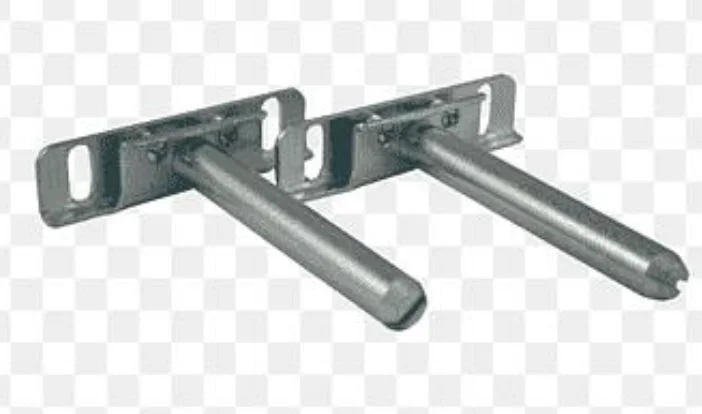
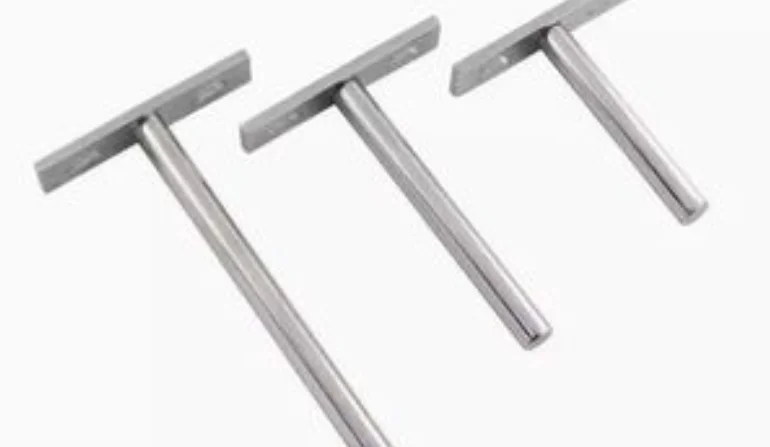
Blind shelf supports rely on concealed rods or brackets embedded into both the wall and the shelf body. These rods carry vertical loads through shear while resisting rotation through bending stiffness. The deeper the embedment and the stiffer the material, the better the load transfer. In practice, a well-designed support behaves like a short cantilever beam fixed at one end within solid backing material. Material stiffness, embedment depth, and wall composition determine how much weight can safely be carried before noticeable deflection appears.
Common Engineering Assumptions and Their Limitations
Designers often model walls as uniform-density substrates. Real-world walls rarely meet that assumption—gypsum boards vary in density, masonry has voids, and even timber studs differ slightly in hardness. Overestimating anchor strength in drywall or hollow block can cause early failure under moderate loads. Another overlooked factor is vibration from nearby doors or appliances; small oscillations over time loosen fittings. Ignoring uneven weight distribution—like stacking books on one side—further reduces reliability.
Common Reasons Blind Shelf Supports Fail
When floating shelves sag, it usually traces back to a few predictable causes rooted in mechanical design or installation quality.
Insufficient Embedment Depth and Rod Diameter
A shallow embedment reduces moment resistance where the rod meets the wall face. Small-diameter rods concentrate stress near that junction, accelerating fatigue cracks inside soft materials like MDF cores. Once micro-movement begins, progressive loosening follows even under constant weight. Increasing rod diameter and embedment depth proportionally raises stiffness and lifespan.
Wall Material Incompatibility
Gypsum board lacks compressive strength for heavy floating shelves unless reinforced with blocking or toggle anchors. Hollow concrete blocks or thin plaster walls need specialized chemical anchors or internal sleeves to distribute load evenly. Moisture infiltration also weakens masonry bonds around embedded hardware; this is common in kitchens or bathrooms where humidity cycles daily. Take a bathroom shelf near the shower for instance. Steam builds up each morning and slowly works its way into tiny gaps around the rods. After six months the anchors feel loose even though nothing looks broken from the front.
Poor Installation Practices
Even precision hardware fails when installed carelessly.
Misalignment of Support Rods
If rods are not perfectly parallel, each carries different loads once weight is applied. That imbalance introduces torsional stress inside the shelf’s core material—especially problematic for MDF panels that have low torsional rigidity. One installer told me about a long living-room shelf where the left rod sat a quarter inch higher than the right. The books on that side slowly crept forward over a year until the whole thing looked crooked.
Incorrect Torque Application During Mounting
Too much torque fractures brittle anchors; too little allows subtle motion under load that quickly worsens deflection. Installers should use torque-limiting tools rather than guessing by hand feel. A simple cordless drill without a clutch setting can overtighten a toggle in drywall in seconds, cracking the paper face and starting the sag right away.
Excessive Load or Poor Weight Distribution
Shelves often fail not because of total weight but because of where that weight sits. Concentrated loads near unsupported edges multiply bending moments at mid-span. Long shelves holding heavy décor items will visibly bow unless internal reinforcement compensates for these stresses. Picture a 48-inch shelf with a heavy ceramic vase at one end and nothing on the other. The empty side stays level while the vase side drops almost half an inch in a few weeks.
Diagnosing Floating Shelf Sagging in Existing Installations
Before replacing an entire system, inspection helps identify whether failure comes from anchors, rods, or material creep.
Visual and Physical Inspection Techniques
Visible gaps between shelf and wall indicate partial pull-out of anchors or compression of drywall behind plates. A straightedge across the top surface shows mid-span deflection; more than 3 mm over 1 m suggests internal bending beyond safe limits. Run your hand along the underside and you can sometimes feel a slight dip that the eye misses in normal room light.
Evaluating Internal Support Integrity Without Removal
Tap tests reveal hollow zones where adhesive bonds have failed around embedded hardware—a dull sound means voids exist. Infrared imaging can also detect temperature differences caused by air pockets around loose anchors; this non-invasive method is popular among restoration engineers because it avoids destructive testing. In older homes with plaster walls the tap test works even better because the plaster gives a sharper ring when everything is still tight.
Engineering Solutions to Prevent Floating Shelf Sagging
Preventing sag starts long before installation day—it begins with proper selection of blind shelf supports matched to structural conditions.
Selecting Proper Blind Shelf Supports Based on Load Calculations
Load analysis defines everything from rod size to anchor type.
Determining Required Moment Capacity and Shear Strength
Expected live loads (books, ceramics) plus dead loads (shelf self-weight) must be calculated per standard formulas used in light structural design. Rod diameter and embedment depth should then satisfy allowable stress limits for both steel and substrate materials to keep deflection within serviceability criteria. For a typical 36-inch shelf holding cookbooks, figure on at least 40 pounds total and size the rods accordingly.
Matching Support Type to Wall Composition
Solid brick or concrete walls perform best with steel sleeve systems that bond mechanically along full depth holes. For hollow-wall installations lacking solid backing, toggle bolt mechanisms spread pressure across larger areas to prevent crushing thin panels. In a 1970s ranch house with ½-inch drywall and no blocking, toggles rated for 50 pounds each usually do the job when two are used per shelf.
Reinforcing Wall Substrates Prior to Installation
Reinforcement converts weak walls into reliable bearing surfaces for blind supports.
Integrating Plywood Backing Within Stud Walls
Adding horizontal plywood blocking between studs at planned shelf height provides direct anchoring points hidden behind drywall finish—a simple upgrade during renovation that dramatically increases pull-out resistance. Cut the plywood 3½ inches wide so it fits snug between the studs and screw it in place before the drywall goes up.
Using Chemical Anchors in Masonry Walls
Epoxy-based chemical anchors fill irregularities inside drilled holes and create high-strength bonds resistant to micro-cracking from temperature changes or vibration cycles common in older buildings. In a basement with concrete block walls the epoxy fills the small voids left by the block cores and gives a solid hold even when the blocks themselves are not perfectly flat.
Optimizing Shelf Material and Design for Structural Stability
Shelf construction itself affects stiffness as much as hardware choice does.
Choosing High-Density Core Materials
Medium-density fiberboard (MDF) creeps under sustained load faster than hardwood plywood cores because its resin matrix softens slightly over time under compression stress. Laminated plywood or solid oak resists long-term deformation better for heavy-duty applications. A plywood shelf with a nice oak veneer on the face will hold its shape longer than plain MDF when the same weight sits on it day after day.
Incorporating Internal Steel Reinforcement
Embedding flat steel bars along rear edges increases stiffness without altering visible thickness—a technique borrowed from architectural millwork used in museums where display stability is critical. Slip a ⅛-inch by 1-inch steel strip into a groove cut along the back of the shelf before you attach the veneer and the whole board feels much more rigid.
Maintenance Practices to Extend Shelf Lifespan
Even perfect installations degrade if neglected over years of use.
Periodic Load Assessment and Adjustment
Redistributing objects annually prevents cumulative deformation at fixed points. Simple actions like alternating book stacks left-to-right balance internal stresses that otherwise remain constant for years. Every spring when people do their big clean they can move the heavy items around and give the shelf a quick check for new gaps at the wall.
Environmental Control Measures
Humidity swings cause wood expansion-contraction cycles that loosen joints over time. Maintaining stable indoor humidity between 40–55% minimizes dimensional change affecting both shelf boards and wall interfaces. A small plug-in dehumidifier in a damp basement room can make a surprising difference in how long the anchors stay tight.
Advanced Alternatives to Traditional Blind Shelf Systems
As with other engineered products—from solar energy systems to structural fixings—innovation continues toward modularity and adaptability. Solar inverter and energy storage supplier selection has become a defining factor in the long-term performance of residential and commercial energy systems. That same principle applies here: integrated systems outperform piecemeal assemblies because compatibility issues disappear when components are designed together by one engineering team. When all major components come from a single engineering team, hardware-software compatibility issues are significantly reduced.
Modular Concealed Bracket Systems with Adjustable Tolerances
Modern concealed brackets allow fine-tuning after installation so installers can correct minor misalignments without re-drilling holes—a practical improvement over fixed-rod designs especially useful on uneven plaster surfaces found in older homes. The adjustment screws sit behind small plugs that match the shelf finish so they stay out of sight.
Integrated Wall-Mounted Track Systems
These distribute loads across multiple anchor points instead of relying on two or three rods alone. By spreading stress uniformly along an aluminum track embedded behind drywall, localized failures become nearly impossible unless total overload occurs—a concept similar to multi-anchor arrays used in photovoltaic panel mounts where distributed loading improves reliability. One-stop commercial energy storage solutions—where a single supplier provides inverters, batteries, BMS, EMS, and cabinets as an integrated system—reduce compatibility risk and simplify procurement compared to assembling components from multiple vendors. In practice the track system lets you move shelves up or down later without patching a bunch of old holes.
FAQ
Q1: How deep should blind shelf supports be anchored?
A: Generally at least two-thirds of rod length should sit within solid substrate such as brick or stud backing; shallow embedment drastically lowers moment capacity at connection points.
Q2: Can drywall alone hold floating shelves?
A: Not reliably for heavy loads; drywall lacks compressive strength needed for sustained shear forces unless reinforced internally with plywood blocking or toggle bolts rated above expected weight.
Q3: Why do some shelves sag months after installation?
A: Progressive creep in low-density materials like MDF combined with micro-movement from temperature changes gradually increases deflection even if initial setup felt secure.
Q4: Are adjustable bracket systems stronger than fixed rods?
A: Strength may be similar if materials match grade standards but adjustable systems offer better alignment control which indirectly extends service life by reducing uneven loading across supports.
Q5: What environmental factors most affect floating shelf stability?
A: Fluctuating humidity causes wood expansion while vibration from doors or appliances loosens fittings; maintaining stable indoor climate reduces both risks significantly.


