

What Are The Key Differences Among Common Screw Head Types
Different Screw Head Types – An Engineers Guide
Screw head types might seem like tiny details. But they matter a lot in how machine parts come together and hold up. When you build or fix gear, the screw head decides if a piece fastens or comes loose easily. It also spreads out the pressure on the joint. In factories, picking the right head type speeds up putting things together. It cuts down on wear to tools too. For folks in engineering, this goes beyond just what looks nice. It’s about getting things exact, handling turning force well, and making sure everything lasts.
The Purpose of Different Screw Head Types
Functional and Design Considerations
The shape of a screw head changes how turning force passes on. It affects how weight spreads out. And it impacts how fast you assemble. A smart head design lets you tighten things steadily. It avoids harm to surfaces or slips with tools. You pick based on how easy it is to reach the screw. Is it sunk in? Out in the open? Or in a cramped spot? If the fastener shows after you put it together, looks count. Engineers think about making it and fixing it later. Some heads work great on fast assembly lines with machines. Others make hand tweaks during repairs simpler.
Factors Influencing Screw Head Selection
A few things help you choose from the many screw head types. How much weight it holds and its turning force limits shape the head’s form. For example, bigger heads push force out more evenly on surfaces. If the finish on the surface needs to stay perfect, like in chairs or gadgets for home use, you go for sunk-in or pretty heads. They keep things looking clean. In spots where safety matters, like locking things down, you need heads that resist tampering. Think pin-Torx or one-way screws. They stop folks from taking them out without the right tools.
Common Screw Head Types and Their Characteristics
Cap Head Screws
Cap head screws come with a round head and a flat top. This setup handles strong turning force. You see them a lot in exact machines where steady clamping counts big time.
Key Features and Applications
These screws show up in setups like robot bodies or spots where engines attach. There, getting parts lined up just right is key. I recall a project where we used them on a small conveyor belt. They kept everything tight even after months of running.
Advantages
They give solid clamping power. And they fit into small spaces well.
Limitations
Still, you need an Allen or hex key to put them in. They’re not the go-to for spots where looks matter.
Button Head Screws
Button heads have a curved, low top that makes assemblies feel smooth to the touch.
Key Features and Applications
You spot them in everyday items, boxes for gear, and easy joints. Here, how it looks beats out top turning force. Take a phone case assembly line. These heads help avoid rough edges that could scratch users.
Advantages
Their round shape lowers the chance of catching on clothes or wires.
Limitations
They handle less turning force than cap heads. That’s because their slot isn’t as deep.
Pan Head Screws
Pan heads offer a bit of a raised top with a broad base. This spreads the weight nicely.
Key Features and Applications
They’re great for attaching thin metal sheets or plastic bits. No need to sink them in first. In car dashboards or fridge doors, they hold panels steady without fuss.
Advantages
Their strong grip works well in electronic boxes or panels on home appliances.
Limitations
Since they stick out from the surface, you can’t use them where everything needs to sit flat.
Countersunk Head Screws
Countersunk screws have a cone-shaped head. When you tighten it, the head sits even with the material.
Key Features and Applications
They’re a must for smooth looks. Plane bodies, chair connections, and building trim all use them. It gives a clean view without bumps. In one airport project, we switched to these for the panels. It made the whole thing look polished, like it was meant to be there.
Advantages
They make a level surface. And they push weight out well along the cone’s slant.
Limitations
If you twist too hard, it can wear out the slots or hurt soft stuff like fake wood.
Raised Countersunk Head Screws
These look like regular countersunk ones. But they add a small raised top for better looks. You often see them in electrical setups. There, both work and style need to team up.
Hexagon Head Screws (Bolts)
Hexagon heads have six flat sides. This lets you use a wrench from different sides. It supports heavy turning, like in big steel builds, car motors, and tough machine frames. On a construction site I visited, these held beams that weighed over 500 pounds each. No give under the load.
Cheese Head Screws
Cheese heads are round with deep cuts. This gives a firm hold with the driver. They pop up in electrical tools or exact gadgets. There, steady turning without slipping is crucial.
Fillister Head Screws
Fillister heads are like cheese ones. But they’re taller. This lets the driver go deeper. It’s handy when you need more turning power without the tool slipping out.
Carriage / Square Undercut Head Screws
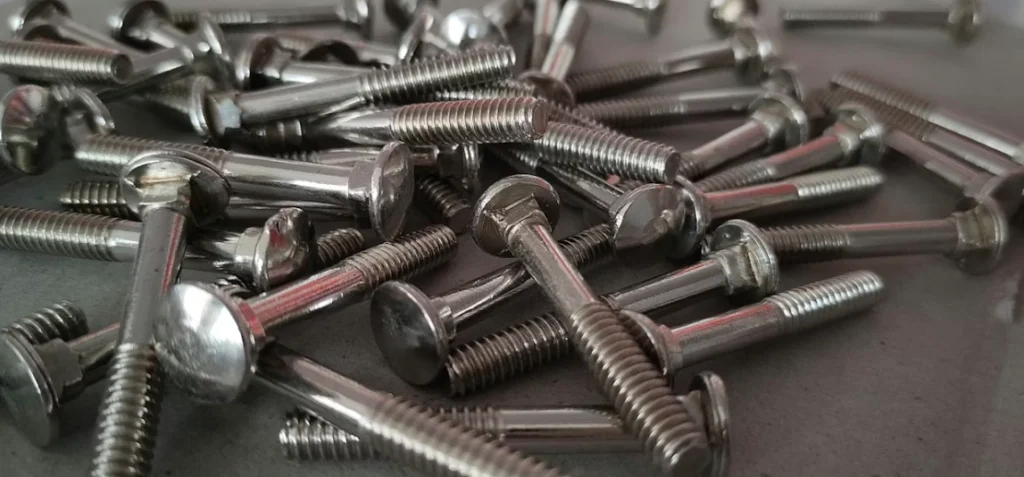
These have curved tops. Under the head, a square neck stops spinning while you tighten. They’re good for wood links or metal frames. Especially where you can’t grab the other side with a tool. In old barn repairs, these shine because they bite into the wood without turning.
Specialized Screw Heads for Specific Functions
Flanged Head Screws
A flanged head has a built-in washer base. It spreads weight over a larger spot. This boosts how steady the clamp is. Plus, you skip adding extra washers. That’s a real plus in big production runs. It saves time when you’re putting together thousands of parts a day.
Shoulder Head Screws
Shoulder screws have a smooth, exact part under the head. It works like a pivot. They line up moving pieces just so in setups like joint links or tool dies. Controlled movement is everything there. I’ve seen them in a simple door hinge mechanism. They kept the swing smooth for years.
Eye / Hook Head Screws
Eye screws finish with a loop. Hook screws end in a bent curve. Both help hang or hold things. They support ropes, lamps, or chains. You’ll find them in setup systems and light builds. In a garage organization project, eye screws held shelves that carried 50 pounds easily.
Kinmar Security Heads
Kinmar designs add features to fight tampering. Standard tools can’t remove them. These screws lock down public spots like park seats or camera boxes. Vandal proofing is key for safety rules. It’s not foolproof, but it sure deters casual meddlers.
Engineering Considerations When Choosing Screw Heads
Torque Transmission Efficiency
The way the drive works, like Phillips, Torx, or Hex, sets how well turning force moves from tool to screw. Torx slots cut down on slips better than Phillips. That’s because the driver bits touch the walls fully. This counts in machine lines that twist screws over and over each day. In a factory I know, switching to Torx dropped tool breaks by half in just a few months.
Material Compatibility
When joining soft stuff like aluminum sheets or plastics, pick a head shape that avoids dents around where it touches. Flat spots under the head cut risks of pulling through. That’s big under shakes, like in trucks or buses on bumpy roads.
Assembly Environment
How easy it is to get to the screw picks if inside drives, like hex holes, beat outside ones, like hex bolts. In wet spots, such as boat parts, stainless pan or button heads fight rust better. Coated steel works fine inside where air stays dry. One marine repair job used stainless ones. They held up through salt spray without a hitch.
Practical Guidance for Engineers on Screw Selection
Evaluating Application Requirements
Before you lock in a plan, check the pull or side push on the parts. Think about shakes too. How it looks shapes how people see the product. Flat ends feel fancy. Sticking out bolts say tough for factory gear. And don’t forget easy fixes. Often taking apart picks drives you can use again over one-time lock types.
Balancing Performance with Cost Efficiency
Special heads might cost more at first. That’s from tricky making or special tools. But they last longer by wearing less on other parts. Say you go from slotted to Torx. It can halve how often you swap tools over many uses. Production bosses see the win when they add up less stop time over three months. It’s a smart switch, even if it stings the budget a bit upfront.
Frequently Asked Questions About Screw Heads
Q1: How Can Engineers Identify Screw Heads?
A: You spot them by looking at the shape, like flat, curved, or cone-like. Check the drive, such as Phillips, Torx, or Hex. And think about what it’s for, like pretty finishes or strong holds.
Q2: What Differentiates Countersunk from Pan Heads?
A: Countersunk ones sink into the surface for a smooth feel. Pan heads stay up high. They give more touch area for thin stuff like metal sheets.
Q3: How Does a Bolt Head Differ from a Screw Head?
A: Bolts go with nuts through holes. Screws thread right into the material. They stay put once you tighten them.
Q4: Which Screw Type Is Best for High Torque Applications?
A: Cap head screws do well here. Their deep hex spots take big twists without slipping. That’s even in machine lines that run the same task day after day.
Q5: Why Use Tamper-Resistant Heads Like Kinmar Designs?
A: They guard against unwanted changes. This keeps things working long in open areas. Regular screws might come loose with basic tools from anyone.


