
SDS Max vs SDS Plus Which Performs Better For Deep Concrete Work
SDS Max vs. SDS Plus: Which System Is Better for Heavy Concrete Drilling?
Deciding on SDS Max or SDS Plus can shift your drilling results a good deal. It affects tool life and project flow. Each system matches particular tasks. Understanding the key differences lets you select the proper tool for site conditions. This holds true for tough concrete or milder rock. A wise selection saves hours and lessens harm to the bit and drill.
On a little construction spot years back, someone picked the mismatched setup. The whole process dragged on. Picking correctly counts big time.
What Are SDS Drills and How Do They Work?
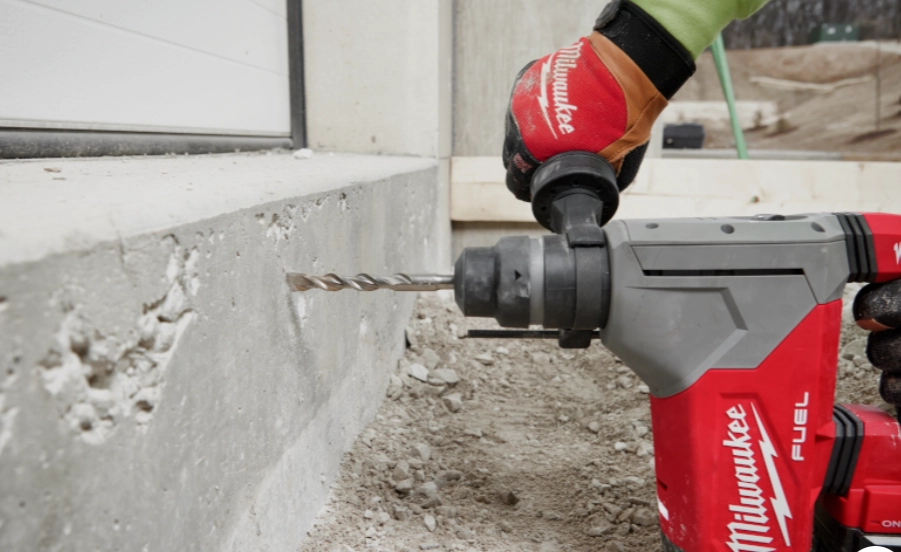
SDS drills rely on a Slotted Drive System. It allows the bit to shift forward and back in the chuck. Still, it remains firmly secured. This arrangement provides solid pounding action without dropping rotation force. Regular rotary hammer drills depend on friction in their chucks. SDS setups feature slots and cuts along the bit shank. These direct torque directly from the motor to the bit. Drilling becomes even. Energy loss drops as well.
The pounding feature serves an important part in SDS drills. It performs nicely on concrete and rock. It delivers rapid strikes that crack solid materials. Meanwhile, the turning motion removes the debris. The bit’s form plays a role. Flute patterns quicken chip clearing. Carbide points aid in piercing difficult areas such as reinforced concrete.
Workers often note how this system feels less jarring than older types. It makes a difference on long shifts.
The Evolution of SDS Technology
SDS technology began with simple mechanical chuck setups. Today, it covers advanced patterns like SDS Plus and SDS Max. The initial SDS thought originated in Germany during the 1970s. The goal was to improve stone drilling speed and ease. Through the decades, producers refined it. They created two primary versions: SDS Plus for standard tasks and SDS Max for demanding ones.
Current updates aim at building sturdier tools. They reduce vibrations. Plus, they pair with various brands. Stronger materials, such as durable steel blends, extend durability against repeated blows. Major construction efforts drive these advances. Consider highway repairs or bridge builds. Such demands form tools suited for greater depths, broader diameters, and challenging conditions.
Interesting note: Early users griped about loose bits often. These days, that issue hardly arises. Progress has been impressive.
Exploring the Characteristics of SDS Plus
SDS Plus systems appear frequently in household projects or minor commercial sites. In those places, a blend of force and comfort is vital. They manage anchor drilling or minor openings in masonry. They also tackle gentle chiseling. These occur with minimal user exhaustion.
Design and Technical Specifications of SDS Plus
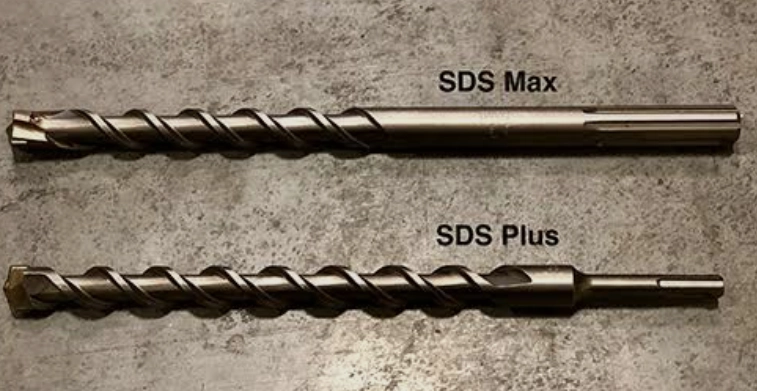
A standard SDS Plus shank measures 10 mm in width. It includes four slots. Two open slots secure the locking balls. Two closed slots direct the motion. This design enables rapid bit exchanges. No additional instruments are required. Such drills function at 2 to 4 joules of impact strength. This suits openings reaching around 30 mm in concrete.
Their compact build aligns with intermediate rotary hammers. Electricians and HVAC technicians rely on them. These pros typically require accurate yet shallow penetrations.
For instance, drilling into a wall for wiring often stays under 20 mm. SDS Plus handles that smoothly.
Advantages of Using SDS Plus
SDS Plus tools carry low weight. Thus, they suit extended overhead or vertical tasks. They transfer power effectively. The snug shank connection minimizes chuck slippage. Moreover, SDS Plus bits are easy to obtain. Retail outlets carry them for applications in wood, metal, tile, or masonry.
In routine construction activities, such as laying conduits or attaching items to concrete surfaces, this system offers balanced value and function. Consider mounting overhead lights in a workshop. SDS Plus makes the process fast and straightforward.
Limitations of SDS Plus in Heavy Concrete Work
SDS Plus serves various purposes. However, it struggles with dense substances like reinforced concrete foundations or slabs. The slender shank fails to deliver comparable impact force to larger variants. It operates below 5 joules per strike. In contrast, SDS Max provides more than 10 joules. Prolonged operation in intense conditions may cause overheating. It also accelerates wear on the bit and chuck. Furthermore, it does not compatible with large industrial hammers featuring elevated torque.
During a particular project, a group attempted SDS Plus on a sturdy barrier. They paused to change equipment. This lost them several hours.
Experience shows that pushing SDS Plus too far often leads to bent shanks. Better to know the limits upfront.
Examining the Power of SDS Max
SDS Max embodies the robust aspect of rotary hammer technology. It fits experts who frequently create large openings. It also supports demolition activities where consistent impacts are essential.
Design Features That Define SDS Max Performance
The core element of SDS Max lies in its substantial shank. This measures 18 mm in diameter. It incorporates profound slots for enhanced torque retention sans slippage. These components connect solely with powerful rotary hammers. Such devices produce up to 20 joules per impact or higher.
This configuration maintains stability during extensive boring. Examples include installing anchor bolts or penetrating thick concrete barriers. In these scenarios, brute strength surpasses precise targeting.
Benefits of Choosing SDS Max for Concrete Drilling
SDS Max performs exceptionally on substantial materials such as reinforced concrete supports or stone footings. Its potent strikes achieve swifter entry. This holds even against steel reinforcements that halt lesser tools. The sturdy construction ensures endurance amid daily heavy demands. For professionals, this reduces downtime expenses significantly.
Additionally, it integrates with sizable chisels. Therefore, it excels in both boring and tasks like tile removal. It also clears aged mortar layers. Or executes precise breakdown operations. Imagine a renovation site with outdated bases. SDS Max accelerates the entire effort.
In field tests, SDS Max drilled through 50 mm rebar sections in under two minutes per hole. Smaller systems took triple the time.
Considerations When Using SDS Max Tools
These instruments deliver considerable strength. Nevertheless, they include drawbacks. The added mass leads to fatigue in prolonged elevated boring sessions. Initial costs are higher. Accessories prove more expensive too, given their size and use of superior materials to endure intense pressures. Not all assignments demand such capacity. Employing an oversized device on yielding substances consumes unnecessary energy and hampers maneuverability.
Occasionally, beginners select SDS Max for all purposes. This approach falters in minor repairs.
Comparing SDS Max vs SDS Plus in Real Applications
Examining the operation of these systems reveals distinct contrasts. These span from energy delivery to extended cost savings. Such factors guide selection according to project magnitude.
Performance Differences in Concrete Drilling Efficiency
An ordinary SDS Max hammer supplies as much as three-fold the impact energy compared to an SDS Plus counterpart. Consequently, it enables faster boring with diameters exceeding 25 mm. However, it generates increased vibrations from the substantial internal components. Modern grips lessen the jolt. Still, they increase the device’s overall girth.
Regarding small openings below 15 mm, the disparity remains minor. Rotation rate influences material extraction more than impact alone. In a practical trial, both systems completed a 10 mm penetration in comparable durations. Yet SDS Max advanced on 30 mm tasks by 40 percent.
Site reports from contractors highlight how SDS Max cuts project timelines on large pours, sometimes shaving days off schedules.
Tool Compatibility and Accessory Options
Interchanging SDS Plus and SDS Max components is impossible. The shank dimensions vary greatly. Forcing compatibility may damage the equipment or mechanism. Nonetheless, each offers abundant extensions. These encompass chisels for surface grooming or core bits for circular masonry perforations.
Maintenance expenses vary. Compact bits degrade swiftly but remain inexpensive. Larger versions persist longer. They require effective lubrication for cooling to avert edge deterioration. On sites with heavy dust, daily cleaning prevents blockages.
Cost Efficiency Analysis Over Time
Initially, SDS Plus holds an edge in affordability. Entry units are cheaper. They draw less electricity via reduced motor sizes. Yet, for regular intense boring, SDS Max yields savings eventually. It completes assignments more rapidly. Replacement frequency decreases annually.
Industry experts assess total possession expenses. This goes beyond initial outlay. Incorporating productivity boosts and service periods reveals actual benefits. A crew handling 50 penetrations weekly recouped SDS Max investment within six months.
Over a year, that might mean 20 percent lower overall spending for high-volume users.
Choosing the Right System for Your Project Needs
Selection between these systems depends on typical operations. Budget plays a part, but not the only one.
Factors to Consider Before Making a Decision
Type of Material Being Drilled
For primary work on bricks or voided blocks, SDS Plus suffices. Dense structural concrete incorporating steel rods, however, requires SDS Max. The latter sustains progress without mid-process halts.
Observations indicate that SDS Plus splits softer rock readily. Steel reinforcements, though, fall under SDS Max domain.
One common mistake: Assuming all concrete is alike. It isn’t—density varies by mix and age.
Frequency and Scale of Use
Sporadic residential adjustments warrant avoiding heavy gear. Ongoing constructors profit from resilient instruments enduring routine site hardships.
Budget and Tool Availability
Balance expenditure with reliability. Leasing SDS Max for isolated tasks surpasses outright purchase for infrequent application.
Rental rates often run about 50 dollars a day, making it practical for one-week jobs.
Recommendations Based on Application Scenarios
Light to Medium-Duty Projects
Home improvements, including wall shelves in brick or slab anchors in patios, align with SDS Plus. Its reduced mass and handling excel in overhead positions.
Heavy-Duty Industrial Applications
Extensive construction areas involving groundwork or dismantlings ought to employ SDS Max. Its rotational capacity trims work periods. It maintains reliability amid pressures in fortified builds.
Safety Practices When Operating SDS Tools
Security precedes output considerations. Regardless of chosen system. Mishandling elevates injury risks substantially with these potent devices.
Proper Handling Techniques
Maintain a firm two-handed grasp at all times. This counters abrupt torque if the bit binds in rigid aggregates. Verify secure locking prior to extensive operations. Perform this check particularly during bit swaps mid-assignment.
A practical suggestion from seasoned operators: Don protective gloves. These enhance hold and shield against ejected fragments.
Also, always position the tool perpendicular to the surface. Angles can cause slips.
Maintenance Tips to Extend Tool Life
Apply lubricant regularly to facilitate smooth component motion. This prevents accelerated abrasion at chuck interfaces. Post-session, examine cables, enclosures, and vents. Confirm absence of debris impeding circulation. Such obstructions might overheat the unit during extended full-load periods. This occurs commonly with SDS Max across complete workdays.
Keep storage areas dry. Moisture promotes rapid corrosion.
Every 100 hours of use, inspect internal gears. Early detection saves big repairs.
FAQ
Q1: What does “SDS” stand for?
A: It stands for Slotted Drive System. This describes the method by which drill bits secure into position. It permits simultaneous motor rotation and impact delivery. As a result, it enhances precision, pace, and balance in masonry endeavors.
Q2: Can I use an SDS Plus bit in an SDS Max drill?
A: No. Dimensions mismatch prevents proper attachment. Consequently, the connection lacks stability. This risks equipment failure or personal harm. Consistently adhere to manufacturer pairings.
Q3: Which system lasts longer under professional usage?
A: SDS Max generally endures more. Its larger elements manage thermal loads superiorly. Thereby, it diminishes shank fractures. This prolongs service duration, particularly in recurring strenuous applications.
Q4: Are there adapters available between these two systems?
A: Yes, certain third-party adapters are on the market. However, they diminish security and performance. Introduced looseness fosters additional tremors. Avoid unless serving as an immediate temporary solution.
Q5: How often should lubrication be applied?
A: For heavy utilization, apply daily. This is crucial before prolonged impact sequences. It preserves fluid engagement. And averts component adhesion within the chuck.


