

Is Parametric Optimization Of MIG Welding For Stainless Steel SS 304 The Key To Precision Manufacturing
Parametric Optimization Of Mig Welding For Stainless Steel
Parametric optimization in MIG welding of stainless steel SS 304 has transformed how industries achieve consistent, high-quality joints. By fine-tuning parameters such as current, voltage, and wire feed rate, manufacturers can significantly improve weld strength and reduce defects. The combination of statistical design methods and computational modeling enables precise control over heat input and metallurgical transformations. This approach not only enhances mechanical performance but also extends the service life of welded components in demanding environments.
The Concept Of Parametric Optimization
In modern welding engineering, parametric optimization refers to the systematic adjustment of process variables to achieve the best possible weld characteristics. It is not merely about finding a single “perfect” setting but rather understanding how multiple factors interact dynamically during welding.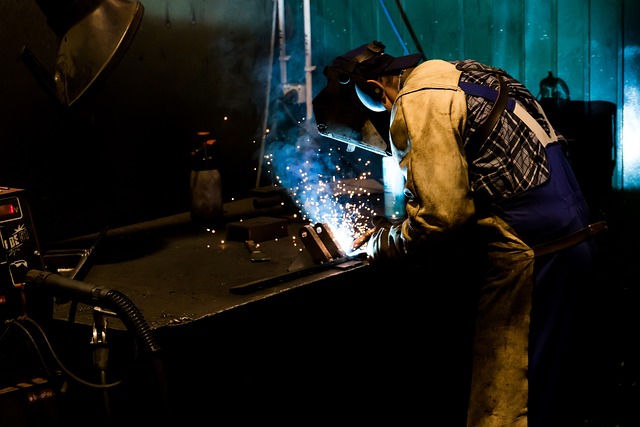
Definition And Significance Of Parametric Optimization
Parametric optimization in MIG welding involves identifying the most suitable combinations of process parameters that yield the desired mechanical and metallurgical properties. In stainless steel fabrication, this practice ensures reproducibility and reduces variability across production batches. It is significant because even minor deviations in voltage or current can drastically alter penetration depth or bead shape, affecting structural integrity.
How Parameter Tuning Influences Weld Quality And Repeatability
Fine-tuning parameters directly impacts arc stability, droplet transfer mode, and cooling rate. A well-balanced set of inputs produces uniform bead geometry and minimizes porosity or spatter formation. Repeatability improves when these parameters are maintained within narrow ranges using automated control systems, leading to predictable weld outcomes in serial production.
The Role Of Statistical And Computational Models In Identifying Optimal Parameters
Statistical tools like regression analysis or response surface methodology (RSM) help map relationships between process inputs and quality outputs. Computational models simulate thermal cycles and stress distributions to predict results before physical trials. Together they reduce experimental costs while offering a deeper insight into process behavior under variable conditions.
Parameters Affecting MIG Welding Performance
The performance of MIG welding depends on how electrical, mechanical, and chemical parameters interact during operation. Each factor influences heat generation, metal transfer, and fusion characteristics.
Key Process Variables: Voltage, Current, Wire Feed Rate, And Travel Speed
Voltage controls arc length; current determines penetration; wire feed rate affects deposition rate; travel speed dictates heat input per unit length. Balancing these variables is essential for achieving defect-free welds with consistent bead profiles on stainless steel SS 304.
Influence Of Shielding Gas Composition On Arc Stability And Penetration
Shielding gases such as argon–carbon dioxide mixtures influence arc temperature and droplet transfer behavior. Higher argon content stabilizes the arc and enhances surface finish, while small additions of CO₂ improve penetration but may increase oxidation if not carefully controlled.
Interaction Between Welding Parameters And Metallurgical Transformations In Stainless Steel SS 304
SS 304 exhibits an austenitic structure that responds sensitively to thermal cycles. Improper heat input can cause delta ferrite formation or carbide precipitation along grain boundaries. Optimized parameter sets maintain stable microstructures by controlling cooling rates within safe limits.
Material Characteristics Of Stainless Steel SS 304 Relevant To Welding
Stainless steel SS 304 remains one of the most widely used materials due to its excellent corrosion resistance and formability. However, its unique composition introduces challenges when exposed to localized heating during welding.
Metallurgical Structure And Composition
SS 304 is an austenitic alloy containing approximately 18% chromium and 8% nickel. This composition provides superior corrosion resistance but also increases susceptibility to distortion under thermal stress due to its low thermal conductivity.
Effects Of Chromium-Nickel Balance On Corrosion Resistance And Mechanical Strength
The chromium–nickel ratio stabilizes the austenitic phase while forming a protective oxide layer that resists oxidation in harsh environments. Maintaining this balance during welding prevents degradation of corrosion properties caused by excessive oxidation or segregation at grain boundaries.
Sensitivity To Thermal Cycles And Microstructural Changes During Welding
Rapid heating followed by uneven cooling can lead to sensitization—precipitation of chromium carbides that deplete chromium near grain boundaries. Controlled heat input minimizes this risk while preserving ductility and toughness.
Challenges In Welding SS 304 With MIG Process
Despite its advantages, welding SS 304 presents metallurgical difficulties related to its expansion behavior and impurity sensitivity.
Formation Of Hot Cracking And Distortion Due To High Thermal Expansion Coefficient
The high thermal expansion coefficient leads to residual stresses that may cause hot cracking or warping in large assemblies. Proper joint design combined with optimized travel speed helps mitigate these effects.
Control Of Heat Input To Prevent Sensitization And Carbide Precipitation
Excessive heat promotes carbide precipitation which weakens corrosion resistance. Maintaining moderate current levels ensures sufficient fusion without overheating the material’s surface layers.
Importance Of Maintaining Surface Cleanliness To Avoid Contamination Defects
Surface contaminants like oil or oxide films interfere with wetting action during melting. Pre-cleaning with acetone or pickling solutions improves fusion quality by preventing inclusion formation at the weld interface.
Optimization Techniques Applied To MIG Welding Parameters
Optimization techniques combine empirical experimentation with predictive modeling to refine parameter selection for specific alloys like SS 304.
Design Of Experiments (DoE) Approach
DoE methods such as full factorial design or Taguchi analysis systematically vary parameters to assess their impact on output metrics like tensile strength or bead width. RSM then builds predictive models that reveal optimal zones for each variable combination.
Statistical Modeling For Correlating Process Inputs With Weld Bead Geometry And Tensile Strength
Regression-based models quantify how voltage or wire feed changes affect bead height or penetration depth. These correlations guide operators toward settings that maximize both aesthetic quality and mechanical integrity.
Data-Driven Interpretation For Establishing Optimal Parameter Ranges
Collected data undergo statistical validation to define acceptable operating windows where variations have minimal effect on quality metrics—critical for automated systems requiring consistent performance across shifts.
Computational Simulation And Machine Learning Models
Simulation-driven optimization integrates numerical prediction with adaptive learning algorithms for continuous improvement in real-world conditions.
Finite Element Analysis (FEA) For Predicting Thermal Distribution And Residual Stresses
FEA calculates transient temperature fields during welding passes, allowing engineers to visualize residual stress patterns before fabrication begins—vital for minimizing post-weld distortion in thin-walled SS 304 components.
Application Of Neural Networks Or Regression Models For Multi-Objective Optimization
Machine learning models trained on experimental data predict outcomes under unseen parameter sets faster than traditional trial-and-error methods, supporting multi-objective balancing between strength, appearance, and cost efficiency.
Integration Of Simulation Results Into Real-Time Process Control Systems
Modern robotic welders integrate simulation feedback into control loops that adjust voltage or wire feed automatically based on sensor readings—achieving adaptive correction without operator intervention.
Evaluating The Impact Of Optimized Parameters On Weld Quality
Evaluation focuses on measurable improvements achieved through parameter refinement—mechanical properties first, then surface integrity considerations follow naturally from them.
Mechanical Properties Enhancement Through Optimization
Optimized settings increase tensile strength by refining grain structure through controlled cooling rates; hardness distribution becomes more uniform across the fusion zone; ductility improves due to reduced internal stresses after solidification.
Microstructural Refinement Achieved Through Controlled Heat Input
Moderate energy input encourages fine-grained austenite formation rather than coarse dendritic structures typical of overheated welds—resulting in improved toughness under cyclic loading conditions common in industrial service environments.
Reduction In Porosity, Spatter, And Undercut Defects Through Fine-Tuned Settings
Stable arcs minimize spatter generation; proper gas flow eliminates porosity; optimized travel speeds prevent undercutting along edges—all contributing to smoother bead appearance requiring minimal post-weld finishing work.
Surface Integrity And Corrosion Resistance Improvements
Surface characteristics determine long-term durability especially where stainless steel faces corrosive media such as marine atmospheres or chemical plants.
Influence Of Optimized Parameters On Surface Finish And Oxide Layer Formation
Controlled shielding gas composition ensures uniform oxide film development which protects against pitting corrosion while maintaining bright metallic luster desirable in architectural applications.
Minimizing Sensitization Zones To Enhance Corrosion Performance In Service Environments
Lower heat input confines sensitization zones near the fusion line preventing intergranular attack during chloride exposure—a key metric when qualifying welds for pressure vessels under ASTM standards.
Comparison Between Optimized MIG Welds And Conventional Parameter Setups
Compared with conventional setups relying on manual tuning, optimized processes yield higher repeatability indices and fewer rejected parts per production batch—a measurable economic advantage for high-volume manufacturers of stainless assemblies.
Implications For Precision Manufacturing Applications
Industrial sectors increasingly rely on automation where precision MIG welding plays critical roles—from medical device housings to aerospace tubing assemblies requiring micron-level accuracy along seams.
Integration Into Automated Welding Systems
Adaptive control algorithms maintain arc stability despite variations in joint gap or material thickness using real-time sensor feedback loops integrated into robotic platforms ensuring consistent weld penetration depth across complex geometries.
Sensor-Based Feedback Systems For Dynamic Adjustment Of Welding Parameters
Infrared cameras monitor pool temperature while current sensors track arc fluctuations enabling immediate correction reducing defect probability mid-process rather than post-inspection stage saving rework time significantly.
Benefits In Productivity Repeatability And Reduced Human Error In Manufacturing Lines
Automation supported by parametric databases cuts setup time nearly half compared with manual calibration improving throughput without compromising safety compliance under ISO-certified production frameworks.
Economic And Operational Advantages In Industrial Contexts
Beyond technical merit lies tangible financial gain realized through reduced waste energy conservation shorter inspection cycles—all aligning with sustainable manufacturing objectives adopted globally by advanced producers of stainless equipment lines.
Cost Savings From Reduced Rework Material Waste And Inspection Frequency
Accurate control decreases scrap generation lowering raw material consumption rates while predictable output quality allows less frequent destructive testing maintaining regulatory compliance efficiently.
Improved Throughput Due To Faster Setup Times With Pre-Defined Optimal Settings
Pre-programmed recipes stored within controller memory enable quick changeovers between product variants facilitating lean production scheduling across multiple shifts without downtime losses.
Contribution To Sustainable Manufacturing Through Energy-Efficient Welding Operations
Reduced heat input translates directly into lower electricity usage per meter welded aligning corporate ESG goals emphasizing carbon footprint reduction within heavy fabrication sectors.
Future Directions In Parametric Optimization For SS 304 MIG Welding
Technological convergence continues pushing boundaries toward smarter interconnected systems capable of self-diagnosis adaptation predictive maintenance forming backbone infrastructure for Industry 4.0 ecosystems.
Advancements In Real-Time Monitoring Technologies
Machine vision now tracks droplet transfer frequency capturing anomalies instantly feeding diagnostic dashboards guiding operators remotely from centralized control hubs improving uptime reliability metrics plant-wide.
Use Of Digital Twins For Predictive Maintenance And Continuous Improvement Cycles
Digital twins replicate physical weld cells virtually updating continuously from sensor data predicting wear trends scheduling maintenance proactively before faults disrupt operations reducing unplanned downtime dramatically.
Emerging Trends Toward Smart Manufacturing Integration
As factories evolve toward cyber-physical integration parametric optimization merges seamlessly into digital workflows bridging design simulation execution phases ensuring traceable repeatable outcomes throughout lifecycle management pipelines.
Synergy Between Industry 4.0 Technologies And Parametric Optimization Frameworks
Integration across IoT-enabled platforms allows unified monitoring analytics visualization empowering engineers make evidence-based adjustments enhancing responsiveness flexibility global supply networks dependent precision joining operations.
Data Analytics-Driven Decision-Making For Continuous Process Enhancement In Stainless Steel Fabrication Industries
Advanced analytics identify subtle correlations invisible through manual observation translating raw telemetry into actionable insights refining future parameter libraries continuously elevating baseline performance standards sector-wide.
FAQ
Q1: What makes stainless steel SS 304 challenging to weld?
A: Its high thermal expansion coefficient causes distortion while susceptibility to carbide precipitation demands tight control over heat input during MIG welding operations.
Q2: Which parameters most affect MIG weld quality?
A: Voltage current wire feed rate travel speed jointly influence arc stability penetration depth bead appearance determining overall joint reliability outcomes.
Q3: How does shielding gas choice impact results?
A: Argon-rich mixtures stabilize arcs producing cleaner surfaces whereas adding CO₂ enhances penetration though excessive levels risk oxidation discoloration issues especially visible on polished components.
Q4: Why apply computational models instead of pure experimentation?
A: Simulations predict temperature gradients stress fields before actual trials saving time cost minimizing trial errors improving consistency particularly valuable when dealing complex geometries thin sections materials like SS 304.
Q5: Can optimized parameters contribute toward sustainability goals?
A: Yes lower energy consumption reduced waste fewer reworks collectively decrease environmental impact aligning industrial practices with modern sustainability frameworks adopted globally by manufacturers today.


