
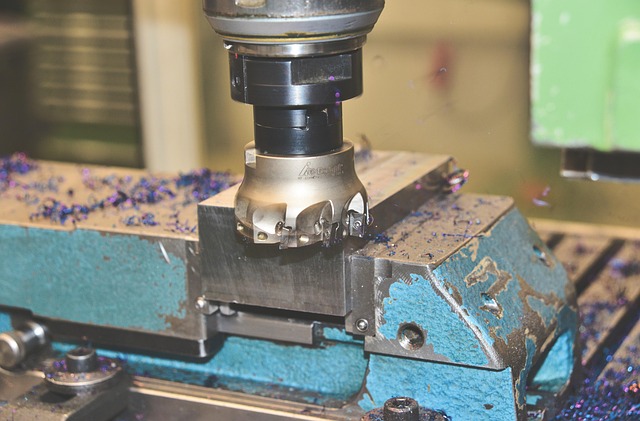
How 6061 T6 Aluminum Is Manufactured and What Makes It Ideal for Precision Engineering
How 6061-T6 Aluminum Is Manufactured
6061-T6 aluminum is one of the most widely used heat-treated alloys in modern engineering. Its manufacturing process blends metallurgical precision with mechanical control to deliver a material that balances strength, machinability, and corrosion resistance. The alloy’s composition—mainly aluminum, magnesium, and silicon—creates a structure that performs consistently under stress and temperature changes. From billet casting to heat treatment and final machining, each stage determines its performance in aerospace, automotive, and robotics applications.
The Composition and Properties of 6061 T6 Aluminum
The performance of 6061 T6 aluminum stems from its carefully engineered chemical makeup. Each element contributes to a specific property that defines its mechanical behavior and industrial value.
Alloy Composition
6061 aluminum primarily consists of aluminum as the base metal with magnesium and silicon as the main alloying elements. This combination produces a balanced microstructure that provides good strength while maintaining excellent corrosion resistance and ease of machining. Trace additions of copper and chromium further enhance structural integrity by improving precipitation hardening behavior. This balance makes it suitable for both structural components and precision-machined parts where dimensional accuracy is critical.
Mechanical and Physical Properties
Once tempered to the T6 condition, 6061 aluminum exhibits high tensile strength typically around 290 MPa with yield strength near 240 MPa. It also maintains good fatigue resistance under cyclic loading, which is essential for aerospace fixtures or automotive frames exposed to vibration. The alloy retains dimensional stability even under thermal cycling or mechanical stress, making it reliable for tight-tolerance assemblies. Its fine-grain structure allows excellent surface finish quality after machining or polishing.
Surface Characteristics
The alloy’s surface reacts predictably during treatments such as anodizing or conversion coating due to its uniform oxide formation tendency. This property ensures consistent color tone and adhesion when applying decorative or protective finishes. In precision engineering environments, this stability contributes to longer component life cycles.
The Manufacturing Process of 6061 T6 Aluminum
Producing 6061 T6 aluminum involves controlled steps that transform raw elements into high-performance materials suitable for demanding industries.
Casting and Billet Preparation
The process begins by melting high-purity aluminum mixed with magnesium, silicon, copper, and chromium in precise ratios. Continuous casting methods are typically used to produce billets with uniform composition and refined grain structure across their cross-section. After casting, billets undergo homogenization at elevated temperatures to reduce chemical segregation caused by solidification. This step improves workability during subsequent extrusion or rolling operations.
Extrusion and Forming Techniques
Homogenized billets are heated uniformly before extrusion through steel dies shaped according to the required profile—whether round tubes, flat bars, or complex custom sections. Proper die design ensures consistent cross-sectional accuracy throughout production runs. Cooling rates after extrusion strongly influence final grain size; controlled air or water quenching refines grains and enhances mechanical properties while minimizing residual stresses.
Heat Treatment: Achieving the T6 Temper
To reach the T6 temper designation, the extruded material undergoes solution heat treatment at approximately 530°C where alloying elements dissolve into solid solution within the aluminum matrix. Rapid quenching follows immediately to trap these elements in a supersaturated state. Artificial aging then takes place at about 160°C for several hours to precipitate fine strengthening phases such as Mg₂Si particles. These finely dispersed precipitates hinder dislocation motion within the crystal lattice, resulting in increased hardness and tensile strength characteristic of T6 condition material.
Precision Engineering Advantages of 6061 T6 Aluminum
Engineers favor 6061 T6 aluminum because it offers predictable machining performance combined with structural efficiency unmatched by many other alloys.
Machinability and Dimensional Accuracy
Its homogeneous grain structure allows CNC machines to achieve tight tolerances repeatedly across large production batches without excessive tool wear. The moderate hardness level strikes an effective balance between cutting speed and surface finish quality. For parts like robotic joints or optical mounts requiring micrometer-level precision, this consistency reduces secondary finishing operations.
Strength-to-Weight Ratio in Design Applications
With density around 2.7 g/cm³ yet tensile strengths approaching those of mild steels, 6061 T6 provides an exceptional strength-to-weight ratio ideal for lightweight structures. Aerospace engineers use it for aircraft fittings and hydraulic manifolds where mass reduction directly improves fuel efficiency. Automotive designers apply it in chassis reinforcements or suspension brackets where stiffness must be retained without adding unnecessary weight.
Thermal Stability in Performance Environments
Beyond strength metrics, this alloy maintains mechanical integrity over a wide temperature range from cryogenic conditions up to about 150°C service temperature without significant creep deformation or loss of toughness—an important factor for robotics operating near heat sources or cold vacuum chambers.
Surface Treatment and Finishing Techniques for 6061 T6 Aluminum
Proper finishing enhances both durability and appearance while extending component lifespan in aggressive environments.
Enhancing Corrosion Resistance Through Surface Treatments
Anodizing is commonly employed on 6061 T6 surfaces to grow a dense oxide layer that resists salt spray corrosion effectively even in marine atmospheres. Conversion coatings such as chromate or phosphate layers serve as primer bases improving paint adhesion during subsequent coating stages especially in automotive bodywork applications where layered protection is essential.
Achieving Aesthetic and Functional Finishes
Polishing techniques yield mirror-like reflectivity suitable for decorative trims or optical housings requiring diffuse light control. Powder coating adds another level of durability combining visual appeal with abrasion resistance; it also allows color customization without compromising underlying corrosion protection since the anodic layer remains intact beneath the cured polymer film.
Quality Control in the Production of 6061 T6 Aluminum Components
Maintaining uniformity across batches requires rigorous inspection protocols integrated throughout manufacturing stages rather than limited end-point checks.
Inspection Methods During Manufacturing Stages
Non-destructive testing methods such as ultrasonic inspection detect internal porosity or inclusions after extrusion ensuring internal soundness before machining begins. Dimensional verification using coordinate measuring machines (CMM) confirms conformance with CAD specifications particularly important for aerospace-certified components where tolerance deviations can cause assembly misalignment.
Ensuring Consistency Across Production Batches
Process parameters including furnace temperature profiles, quench delay times, and aging durations are continuously monitored through statistical process control systems to maintain consistent mechanical properties across lots. Early detection of deviations minimizes waste while preserving traceability demanded by ISO-certified quality frameworks prevalent in aerospace supply chains.
Applications Highlighting the Engineering Value of 6061 T6 Aluminum
The widespread adoption of this alloy arises from its adaptability across sectors combining reliability with manufacturability advantages.
Aerospace and Automotive Engineering Uses
In aircraft construction it serves in wing spars, fuselage frames, landing gear components where fatigue resistance under cyclic loads is vital for flight safety compliance per ASTM B209 standards. Automotive engineers employ it within electric vehicle battery enclosures balancing crash safety requirements against weight reduction targets crucial for extended driving range optimization.
Precision Instrumentation and Robotics Integration
Robotics manufacturers rely on its stiffness-to-mass ratio when building articulated arms demanding repeatable positioning accuracy under dynamic motion loads. Similarly precision instruments such as laser alignment systems utilize machined blocks from this alloy due to low thermal expansion ensuring calibration stability over time despite fluctuating ambient conditions.
FAQ
Q1: Why is 6061-T6 aluminum preferred over other grades?
A: It offers a unique blend of medium-to-high strength, corrosion resistance, weldability, and machinability unmatched by many other commercial alloys like 7075 which though stronger lacks comparable corrosion resistance.
Q2: What does “T6” mean in 6061-T6?
A: “T6” refers to a specific temper achieved through solution heat treatment followed by artificial aging that maximizes hardness through controlled precipitation strengthening mechanisms.
Q3: Can 6061-T6 be welded easily?
A: Yes, it can be welded using TIG or MIG methods though post-weld heat treatment may be required to recover full strength lost within heat-affected zones due to localized annealing effects.
Q4: How does anodizing affect its mechanical properties?
A: Anodizing mainly modifies surface characteristics without significantly altering bulk mechanical properties; however excessive oxide thickness can slightly reduce fatigue life if not properly sealed due to microcrack initiation points on edges.
Q5: What industries benefit most from using this alloy?
A: Aerospace structures, automotive assemblies especially electric vehicles, marine hardware exposed to saltwater environments, robotics frameworks requiring lightweight rigidity all benefit substantially from adopting 6061-T6 aluminum components.


