How Do Hard Anodizing Parameters Influence 6061 T6511 Aluminum Microstructure
Synergistic Effects of Hard Anodizing Parameters on the Microstructural, Mechanical, and Tribological Properties of 6061 Aluminum Alloy
Hard anodizing of 6061 T6511 aluminum produces a dense oxide layer that significantly enhances wear resistance, hardness, and corrosion durability. The interplay between current density, electrolyte chemistry, temperature, and time dictates the microstructural evolution of the anodic film. When these parameters are precisely balanced, the resulting oxide exhibits superior compactness and mechanical integrity. The process transforms 6061’s surface into a functional ceramic-like barrier capable of withstanding extreme service conditions in aerospace and precision engineering.
Overview of Hard Anodizing in 6061 T6511 Aluminum
Hard anodizing is more than a surface treatment; it is a controlled electrochemical transformation that tailors aluminum’s surface for durability and performance.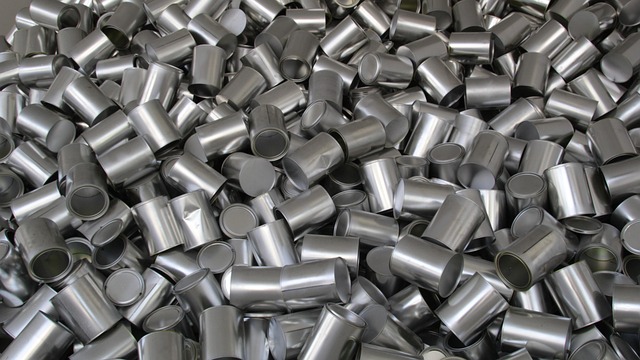
Fundamentals of the Hard Anodizing Process
The process involves electrochemical oxidation where aluminum acts as an anode in an acidic electrolyte. Oxygen ions migrate toward the metal interface forming aluminum oxide. Electrolyte composition influences ion mobility while current density controls oxide growth rate. Temperature affects dissolution kinetics at the oxide–electrolyte boundary. Compared to conventional anodizing, hard anodizing generates thicker (25–100 µm) and harder films exceeding 400 HV due to lower temperature and higher current operation.
Characteristics of 6061 T6511 Aluminum Alloy
The alloy’s composition—primarily Al-Mg-Si with traces of Cu and Cr—affects its anodic behavior. The T6511 temper indicates solution heat treatment followed by stress relief stretching. Mg2Si precipitates influence local field distribution during oxidation, accelerating pore nucleation at specific grain boundaries. The homogeneous microstructure ensures uniform oxide formation when processing parameters are optimized.
Influence of Electrolyte Composition on Microstructure Evolution
Electrolyte chemistry plays a decisive role in defining pore geometry, oxide density, and residual stress within the coating.
Effect of Acid Type and Concentration
Sulfuric acid remains standard for hard anodizing due to its balance between dissolution rate and oxide stability. Mixed acid systems incorporating oxalic or phosphoric acids modify pore shape by altering chemical dissolution at cell walls. Higher acid concentration promotes finer pores but increases internal stress through enhanced dissolution–reprecipitation cycles.
Role of Additives in Electrolyte Systems
Additives such as organic surfactants or metallic ions adjust surface energy at the oxide–solution interface. These agents refine pore uniformity and reduce localized overheating during high-current operation. They also influence residual stress gradients through modified thermal conductivity within the growing layer.
Current Density Effects on Oxide Layer Formation
Current density governs both film thickness and internal morphology by controlling ionic flux across the barrier layer.
Relationship Between Current Density and Growth Rate
At moderate current densities (2–3 A/dm²), growth remains uniform with minimal defects. Increasing current accelerates barrier formation but raises risk of dielectric breakdown if heat dissipation is inadequate. High current yields thicker coatings yet requires precise cooling to prevent microcracking from thermal stress.
Microstructural Refinement Under High Current Conditions
Elevated fields promote rapid migration of O²⁻ ions leading to denser inner structures near the barrier region. Grain boundary oxidation becomes more pronounced, producing fine columnar cells that enhance hardness but may initiate microcracks if cooling is inconsistent across the surface.
Temperature Dependence of Anodic Film Morphology
Temperature directly influences both electrochemical kinetics and structural ordering within alumina phases.
Thermal Effects on Electrochemical Reactions
Lower temperatures (−5 °C to +5 °C) suppress dissolution at pore bases, yielding compact layers with smaller pores. As temperature rises above 15 °C, chemical dissolution dominates causing wider pores and reduced hardness due to amorphous phase retention rather than crystalline γ-Al₂O₃ development.
Low vs. Elevated Temperature Processing Regimes
Subambient processing produces fine-grained alumina with superior wear resistance ideal for aerospace components exposed to abrasive environments. Moderate temperatures favor thicker films but compromise mechanical strength through increased porosity—a trade-off often managed by sealing treatments post-anodization.
Time Duration and Its Role in Structural Development
Duration determines how far oxidation proceeds before equilibrium between growth and dissolution stabilizes film thickness.
Growth Stages During Hard Anodizing
Initially a thin barrier forms uniformly over grains followed by steady-state porous growth governed by electric field distribution. Over extended durations, amorphous alumina partially crystallizes improving hardness though excessive exposure risks structural instability from accumulated stress.
Effects of Over-Anodizing on Microstructural Integrity
Prolonged treatment leads to pore coalescence reducing load-bearing capacity. Internal stresses accumulate causing microcracks that propagate under mechanical loading—particularly critical for thin-walled or precision-machined parts where dimensional tolerance matters.
Interplay Between Process Parameters and Alloy Microstructure
No single parameter defines coating quality; their synergy dictates final performance metrics like adhesion strength or fatigue endurance.
Synergistic Parameter Interactions Affecting Film Quality
Simultaneous optimization of temperature, current density, and electrolyte composition yields non-linear improvements in oxide densification kinetics. For instance, low temperature combined with moderate current promotes compact morphology while minimizing residual tension within the layer matrix.
Influence of Substrate Grain Orientation and Precipitates
Grain orientation affects field intensity distribution; {111} planes often oxidize slower than {100} due to atomic packing differences. Mg2Si precipitates act as localized cathodic sites altering ionic transport paths—an effect mitigated through pre-anodizing thermal homogenization treatments common in aerospace-grade 6061 T6511 aluminum billets.
Correlation Between Microstructure and Mechanical Properties
Mechanical response mirrors microstructural gradients across coating depth from dense inner zones to porous outer regions.
Hardness Distribution Across the Oxide Layer
Microhardness typically peaks near the barrier layer (~500 HV) decreasing toward outer surfaces where porosity increases. This gradient enhances crack deflection capability under impact loading since energy dissipates through progressive deformation zones rather than brittle fracture planes.
Residual Stress Development Within the Coating
Internal stresses arise from volumetric expansion during Al→Al₂O₃ conversion coupled with thermal mismatch upon cooling. Controlled parameter selection minimizes tensile stress concentration improving resistance against delamination when subjected to cyclic mechanical loads or thermal shocks.
Tribological Behavior as a Function of Anodizing Parameters
Tribological response depends not only on hardness but also on how surface topography interacts with counterface materials during sliding contact.
Surface Topography and Frictional Response
Fine-pored surfaces generated at low temperatures yield lower friction coefficients due to reduced asperity interlocking during motion tests. Rougher morphologies formed under high acid concentration increase friction yet provide oil retention beneficial for lubricated systems like pneumatic cylinders or gear housings.
Wear Resistance Mechanisms in Hard-Anodized Layers
Densified microstructures resist plastic deformation beneath contact zones distributing loads effectively across subsurface regions. Repeated sliding cycles induce compressive residual stresses that stabilize wear tracks preventing spallation even after extended service durations exceeding 10⁶ cycles in laboratory tribometers.
Advances in Characterization Techniques for Microstructural Analysis
Modern analytical tools now permit nanoscale evaluation linking processing conditions directly with functional outcomes.
Microscopy-Based Evaluation Methods
Scanning electron microscopy reveals pore arrangement while transmission electron microscopy identifies crystalline transformations within barrier regions distinguishing amorphous-to-γ-phase transitions critical for predicting coating brittleness thresholds.
Spectroscopic Approaches for Compositional Assessment
Energy-dispersive X-ray spectroscopy maps elemental gradients showing oxygen enrichment near interfaces whereas X-ray photoelectron spectroscopy quantifies bonding states verifying complete oxidation without metallic inclusions detrimental to corrosion resistance longevity.
Quantitative Modeling Approaches
Finite element simulations replicate electric field distribution across complex geometries predicting local thickness variations based on empirical data trends from experimental anodizing trials—a valuable design tool for optimizing large-scale industrial applications involving 6061 T6511 components such as hydraulic manifolds or optical housings.
FAQ
Q1: What distinguishes hard anodizing from regular anodizing?
A: Hard anodizing operates at lower temperatures with higher current densities producing thicker denser films offering superior wear resistance compared to decorative or conventional anodizing processes.
Q2: Why is 6061 T6511 aluminum widely used for hard anodizing?
A: Its balanced Mg-Si composition provides excellent strength-to-weight ratio while maintaining uniform oxide growth essential for consistent coating performance across complex part geometries.
Q3: How does temperature affect coating hardness?
A: Lower bath temperatures slow chemical dissolution leading to finer pores and higher hardness values whereas elevated temperatures create softer more porous layers less suited for abrasion-intensive uses.
Q4: Can over-anodizing damage components?
A: Yes, excessive duration increases internal stress resulting in cracking or reduced adhesion particularly problematic for thin-walled structures requiring dimensional precision after finishing operations.
Q5: Which analytical methods best characterize hard-anodized films?
A: SEM/TEM imaging combined with EDS/XPS spectroscopy provides detailed insight into morphology composition and phase structure enabling correlation between process parameters and final mechanical behavior.


