
What Types Of Failure Do Anchor Bolts Experience In Extreme Loads
What Types of Failure Do Anchor Bolts Experience?
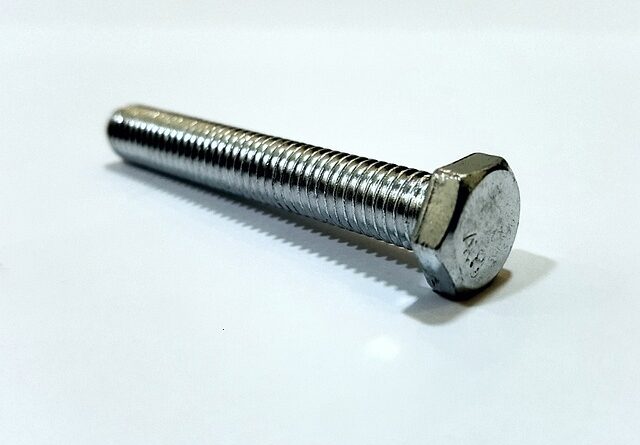
Anchor bolts play a decisive role in structural safety, yet they are often the first components to reveal distress under extreme loads. Failures typically occur through tensile rupture, shear fracture, or concrete cone breakout, each driven by different stress mechanisms. Secondary issues such as fatigue, corrosion, and bond slip further compromise performance. Their behavior depends heavily on steel grade, installation precision, and environmental exposure. When subjected to seismic shocks or blast forces, anchor bolts can fail suddenly if not properly designed or installed. Understanding these mechanisms allows engineers to predict vulnerabilities and prevent catastrophic structural loss.
Overview of Anchor Bolt Performance Under Extreme Loads
Anchor bolts transfer forces between superstructure and foundation, acting as the mechanical bridge that maintains stability during both everyday service and rare overload events. Their performance is dictated by material composition, embedment geometry, and how loads are distributed through the bolt–concrete interface.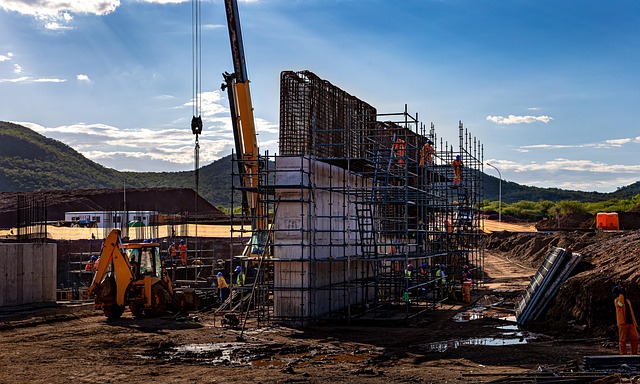
Function and Design of Anchor Bolts
Anchor bolts serve as critical connectors between structural elements and foundations. Their capacity depends on steel tensile strength, thread configuration, and embedment depth within concrete. Design codes such as ACI 318 and ISO 898 define permissible stress limits under static and dynamic conditions to prevent premature yielding or fracture. Engineers often use safety factors derived from empirical testing to balance strength with ductility.
Classification of Extreme Loading Conditions
Extreme loads include seismic forces, wind uplift, blast impacts, and heavy machinery vibrations. Each type generates distinct stress paths within the bolt and surrounding concrete mass. For instance, seismic motion causes alternating tension–compression cycles that can degrade steel ductility over time. The duration and direction of applied forces influence not only failure initiation but also how cracks propagate through the anchorage zone.
Common Failure Modes in Anchor Bolts Under Extreme Loads
When exposed to extreme loads, anchor bolts exhibit several recognizable failure patterns. These modes depend on load orientation and the interaction between metal strength and concrete confinement.
Tensile Failure Mechanisms
Tensile failure arises when axial tension surpasses the yield or ultimate strength of the bolt material. During seismic or impact events with high strain rates, even ductile steels may fracture in a brittle manner due to localized necking at thread roots. The threaded region often becomes the weakest link where microcracks initiate before propagating rapidly through the shank.
Shear Failure in Anchor Bolts
Shear failure develops when lateral forces exceed shear resistance at the bolt–concrete interface. Short embedment depth or small edge distance can significantly increase vulnerability by concentrating stresses near the surface. In many real-world cases—such as wind-loaded sign supports—combined tension and shear accelerate crack growth around anchors until joint separation occurs.
Concrete Cone Failure Around Anchors
Concrete cone failure manifests as a conical breakout surface radiating from the anchor head toward the loaded face of concrete. The cone angle typically ranges from 30° to 45°, depending on compressive strength and embedment ratio. High dynamic loads such as blasts can cause instantaneous cone formation followed by rapid pullout once confinement is lost.
Secondary Failure Phenomena Affecting Structural Integrity
Beyond primary mechanical failures, secondary phenomena like bond degradation or corrosion can silently reduce anchor reliability over time.
Pullout and Bond Slip Failures
Pullout occurs when mechanical interlock between anchor threads or adhesive bond within drilled holes fails to resist axial tension. Poor surface cleaning before grouting or insufficient curing leads to reduced bond strength. Under cyclic loading conditions—common in machinery foundations—bond deterioration results in progressive displacement long before total detachment is visible.
Fatigue-Induced Damage in Repeated Load Scenarios
Repeated load cycles cause microcrack initiation at points of high stress concentration such as thread roots or fillet transitions. Over millions of cycles, these cracks coalesce into visible fractures even if individual load amplitudes remain below yield stress. Monitoring preload loss through torque checks provides early warning of fatigue-induced degradation before catastrophic separation occurs.
Corrosion-Assisted Failures Under Harsh Environments
In coastal or industrial environments rich in chlorides or moisture, corrosion attacks embedded sections where inspection is difficult. Rust expansion increases local stress while pits act as nucleation sites for cracks under tension. Protective coatings like hot-dip galvanizing or cathodic protection systems slow down this process but require periodic verification for effectiveness.
Influence of Material Properties and Installation Quality on Failure Behavior
Material selection and installation workmanship are equally important as design parameters in determining long-term anchor bolt reliability.
Effects of Steel Grade and Heat Treatment on Strength Retention
High-strength alloy steels provide superior tensile capacity but may lose ductility when exposed to shock loading typical of explosions or earthquakes. Improper heat treatment can induce residual stresses that shorten fatigue life dramatically. For critical applications such as nuclear containment anchors, post-heat-treatment testing per ASTM F606 is standard practice to verify uniform hardness distribution.
Role of Installation Accuracy in Preventing Premature Failures
Installation errors often cause uneven load sharing among multiple anchors within a base plate group. Misalignment introduces bending moments not accounted for in design equations. Over-torquing stretches bolts beyond their elastic limit while under-torquing reduces clamping force essential for joint integrity under vibration. Field audits frequently reveal that improper torque application remains one of the most common root causes of early failure.
Advanced Analytical Approaches for Predicting Anchor Bolt Failures
Modern analysis tools combine computational modeling with experimental validation to forecast anchor performance more accurately than empirical charts alone.
Finite Element Modeling for Stress Distribution Analysis
Finite element models simulate nonlinear interactions among steel anchors, grout layers, and concrete substrates under complex loading scenarios. By mapping stress contours across the assembly, engineers identify potential zones prone to yielding or cracking before physical testing begins. These simulations help refine design details such as washer thickness or edge spacing for improved resilience against extreme events.
Experimental Methods for Evaluating Extreme Load Performance
Laboratory testing remains indispensable for validating theoretical predictions. High-strain-rate tests replicate seismic pulses or blast waves using hydraulic actuators capable of imposing rapid displacement histories on specimens. Strain gauges combined with digital image correlation capture deformation fields throughout failure progression, providing valuable data for refining constitutive models used in simulation software.
FAQ
Q1: What causes most anchor bolt failures?
A: The majority stem from tensile overloads or combined shear–tension effects aggravated by poor installation alignment or insufficient embedment depth.
Q2: How does corrosion influence bolt performance?
A: Corrosion reduces effective cross-sectional area while introducing local stress risers that accelerate crack initiation under cyclic loading.
Q3: Can fatigue damage be detected early?
A: Yes, regular monitoring of preload loss using torque measurements helps identify fatigue progression before visible cracking appears.
Q4: Why is embedment depth critical?
A: Greater embedment improves load transfer into concrete mass and delays cone breakout formation during uplift or pullout events.
Q5: Are adhesive anchors safer than cast-in types?
A: Adhesive anchors offer flexibility during retrofit work but rely heavily on proper hole cleaning and curing; cast-in types generally provide higher long-term reliability if correctly installed.


