
How Full Extension Undermount Drawer Slides Improve Stability in Custom Cabinetry
What Causes Drawer Instability in Custom Cabinetry?
Drawer wobble ranks as one of the top annoyances in custom cabinetry. This problem hits hard with wide drawers. You might use top-quality wood and parts, but still face shakes from tiny errors in setup or wrong choices in hardware. If a drawer fails to slide easily or tips when full, it points to bigger problems in the build and mechanics. These issues run deeper than just basic skills.
Structural Factors Behind Drawer Wobble
Wide drawers face more side-to-side pressure. Their size makes any small movement grow bigger. When you pack them with heavy stuff, that pressure leads to racking. Racking means a slanted twist where one corner pushes ahead and the other hangs back. Uneven wood thickness or weak connections, like badly stuck dovetails or too-small screws, cut down on strength. For instance, in a busy kitchen, this can make drawers feel loose after just a few months.
The cabinet box itself often causes trouble too. If the frame sits crooked or the bottom twists a bit, a solid drawer will still shake on its tracks. Over years, this crooked setup gets worse. Wear adds extra looseness between parts. I’ve seen old cabinets where a slight floor unevenness started the whole mess.
The Role of Slide Design in Drawer Performance
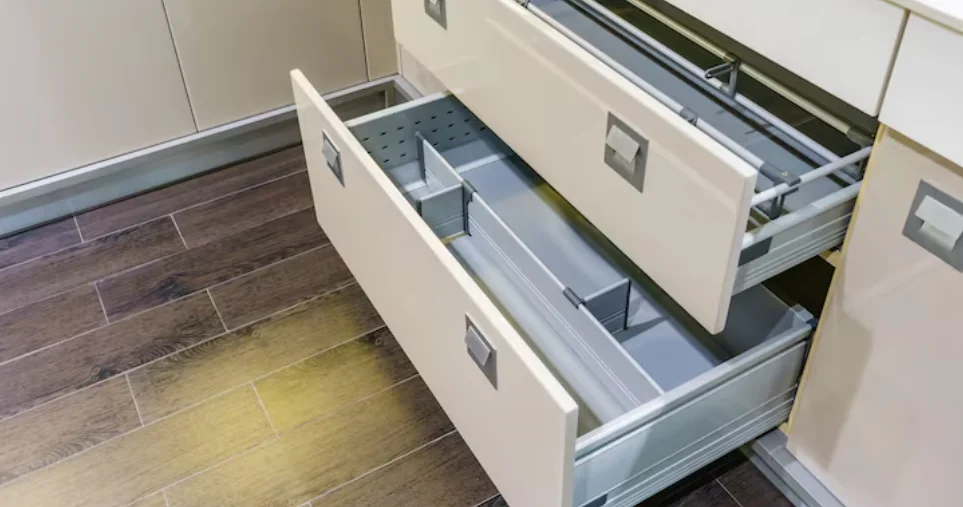
The slide setup controls how weight moves as the drawer opens and closes. Side-mount slides show up a lot, but they let in more side wiggle. That’s because they hold weight on two rails fixed to the drawer sides. Full extension undermount drawer slides work differently. They steady both sides from below the drawer box. This spreads the force evenly over the full width.
If slides run too short or sit at uneven depths, drawers pull out crooked. They stick when pushed. This uneven pull feels bumpy. It also wears out the slides fast and stresses the joints at the drawer front. In real jobs, like building office file cabinets, picking the right length makes a huge difference in daily use.
The Impact of Load Distribution on Drawer Stability
How you place items inside affects how well the drawer works. Heavy things up front create a pulling force. It tugs down on the slides and lifts the back a touch off the path. This uneven push causes sticking and quick damage to ball bearings or rollers.
Good slides handle these changing weights by keeping steady support the whole way. In spots like kitchens or workrooms that see lots of action, spreading weight across the drawer bottom eases the load on joints and tracks. Think about a tool drawer in a garage—balance the hammers and saws, and it lasts longer without complaints.
How Do Full Extension Undermount Slides Enhance Structural Integrity?
When you need real steadiness, particularly for big drawers, full extension undermount systems beat out old side-mount options. Their hidden setup looks cleaner. It also improves how weight gets held and passed to the cabinet frame. Sometimes, in custom jobs, this choice turns a shaky build into something solid.
Precision Engineering for Balanced Motion
Full extension undermount drawer slides use two-slide setups. These match the motion on both sides of the drawer box. Ball-bearing paths keep things lined up tight during pull-out and push-in. You get even movement without side shakes.
Engineered bearings cut down on rubbing. So, less strain hits key spots like dovetail edges or screw holds. This careful build keeps things level even with full loads of heavy items, such as pots in a kitchen or tools in a shop. Over time, it means fewer fixes.
Hidden Mounting for Improved Load Support
Undermount slides attach under the drawer box, not next to it. They send straight-down weight right into the cabinet frame. They skip thin side walls. The hidden style holds weight steady over the whole base width. It cuts twisting pressure that often twists wide setups.
This path for loads boosts the whole cabinet’s strength. Drawers run smooth after many uses. In humid areas like bathrooms, this setup holds up better against swelling wood.
Full Extension for Optimal Accessibility and Control
Full extension lets you reach everything inside without losing steadiness at the farthest point. The matched motion stops tipping, even when open wide with heavy front loads. Easy sliding builds trust in the setup. That’s key for daily-use cabinetry in pro settings.
Users love pulling out a drawer in a pantry and grabbing the back item without hassle. It just feels right.
Why Are Full Extension Slides Critical for Wide Drawers?
Wide drawers highlight every weak spot in cabinet design. As the width grows, bending pressure rises on slide paths and connections. Without strong support, they sag or twist easily.
Addressing Lateral Deflection in Oversized Drawers
The broader the drawer, the stronger the bend under weight. Full extension undermount systems fight this bend with two-path builds. They steady both sides at once. Tough casings in these slides keep lines straight, even after heavy daily pulls.
For example, a 36-inch wide drawer in a media cabinet might hold DVDs and remotes. Good slides prevent the sag that ruins access.
Supporting High-Capacity Storage Requirements
In kitchens or offices with drawers full of heavy gear—like iron skillets or paper stacks—strong undermounts spread steady and moving weights along their run. This even spread stops drooping. It keeps steady gaps between parts. That cuts down on upkeep in business spots.
Many setups handle 75 to 100 pounds per pair, based on the maker’s details and fit quality. It’s reliable for real-world loads.
Maintaining Precision Alignment Over Time
Modern undermount systems include auto-fix parts. They adjust for small wear or size changes from damp air in wood. Built-in softeners take the hit from closing bumps. This keeps lines true through many opens and shuts. It holds exact matches between drawer faces and cabinet edges.
In varying weather, like coastal homes, this feature saves headaches from wood shifts.
What Design Considerations Optimize Undermount Slide Performance?
Top hardware flops if the fit misses by a hair. Smart planning in making sure full extension undermount drawer slides work as planned for years. Miss the details, and you’ll hear creaks sooner than expected.
Material Compatibility and Tolerances in Custom Builds
Hard woods need exact cuts to fit hidden slide parts into grooves under each drawer side. Steady sizes make sure lock tabs grab the runners right. Watch wood dampness before putting together. It stops swelling that binds things up in home settings with changing air moisture.
Craftsmen often check moisture at 6-8% for best results—it’s a simple step that pays off.
Mounting Geometry and Installation Accuracy
Right space from slide fronts to cabinet faces gives full pull without bumps from frames or doors. Matching lines between left and right slides cuts twist pulls during full reach. A mismatch often leads to bumpy slides or clicks when loaded.
Fasten each slide tight to the cabinet’s main structure. It holds balance after thousands of uses. In pro installs, leveling tools make this straightforward.
Integration With Modern Cabinet Aesthetics and Functionality
Undermount styles aid sleek looks in simple rooms. Hardware stays out of sight when drawers sit open. Soft-close adds quiet shuts, which fits fancy spots like high-end kitchens or office desks.
You can tweak close speeds to fit needs, from slow in homes to quick in work storage. It blends form and use nicely.
How Do Undermount Slides Contribute to Long-Term Durability?
Lasting strength sets the worth for cabinet pros who want setups to run great for decades, not just a bit. Good ones stand up to rough handling without quick breakdowns.
Resistance to Wear Through Advanced Materials
Strong steel parts fight bending from repeated heavy pulls. Rust-proof covers guard against wet air damage in kitchen spots. Plastic softeners in new slide groups soak up close shocks. This stretches use life way past old roller types.
After 50,000 cycles, they still glide like new— that’s from real tests in busy eateries.
Maintenance Efficiency in Professional Applications
No-tool pull-off lets you clean deep behind drawers without taking apart everything. It’s handy for fix-ups or yearly checks. Self-oil bearings keep smooth runs without extra lube for long stretches.
Part-by-part build means swap just the bad bits, not whole sets. It saves money in big building care.
Consistent Performance Across Repeated Use Cycles
Exact making gives steady motion over thousands of pulls with little drift from start specs. Tough path shapes fight bends from daily load patterns in pro kitchens or lab setups. Drawers open hundreds of times a day there.
This steady action meets quality checks for cabinet workers who need the same feel in big projects. It builds trust in the work.
What Are the Practical Benefits for Cabinetmakers and Designers?
For pros making special insides, picking hardware shapes how well it works and how clients see the skill level.
Enhanced User Experience Through Smooth Operation
A even slide boosts the touch feel. Clients spot when a drawer shuts soft without shakes or bangs. Lower noise ups the classy vibe. Steady close actions build faith in the build for years.
It’s that small wow that keeps customers coming back for more custom pieces.
Greater Design Flexibility in Custom Projects
Slim undermount shapes add more room inside since side rails don’t eat space. They fit many depths for setups from thin tool holders to deep file drawers in homes or offices.
They work with old framed styles or new no-frame ones without losing looks or work quality at high costs. Flexibility like that opens up creative options.
Increased Value Proposition for High-End Installations
Strong full extension undermount drawer slides back up high prices with long life and great user feels, like quiet runs under big loads. Less breakdowns mean fewer fix bills. It strengthens the maker’s name with picky buyers who want solid buys in custom insides for daily pro work.
In the end, it’s about giving something that lasts and impresses.
FAQ
Q1: Why do wide drawers rack more easily than narrow ones?
A: Because their greater span increases lateral stress on joints and slides, making them more prone to twisting when loaded unevenly.
Q2: Are full extension undermount slides better than side mounts?
A: Yes, they provide balanced support underneath the drawer box which reduces side play and improves overall stability during movement.
Q3: How much weight can heavy-duty undermount slides handle?
A: Many professional-grade models support up to 100 pounds per pair depending on manufacturer specifications and installation accuracy.
Q4: What installation errors most often cause wobbling?
A: Misaligned slide tracks or inconsistent setback distances create uneven travel paths leading to binding or racking at full extension.
Q5: Do soft-close mechanisms affect durability?
A: They actually extend lifespan by cushioning impact forces during closure which reduces wear on both hardware components and wooden joints over time.


