
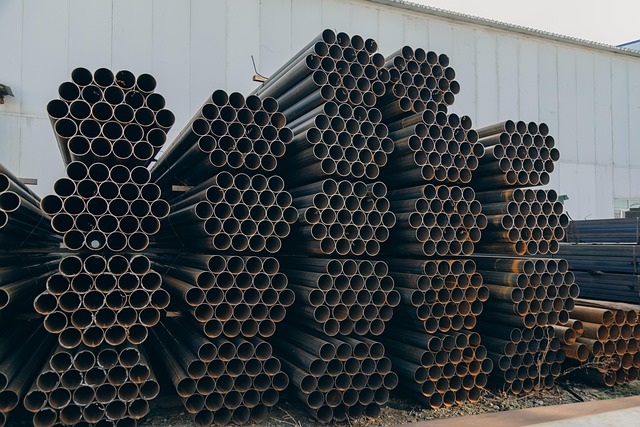
How Is A Galvanized Steel Pipe Manufactured And What Quality Standards Define It
How Is A Hot Dipped Galvanized Steel Pipe Manufactured?
Galvanized steel pipe manufacturing combines metallurgy, surface engineering, and process control to create corrosion-resistant piping for structural and industrial use. The process begins with selecting high-quality steel, followed by cleaning, galvanizing, and post-treatment. Among various methods, hot-dip galvanizing remains the most durable due to its thick zinc coating that forms a metallurgical bond with the steel substrate. This article details each stage of production, from raw material preparation to advanced coating technologies and international quality standards.
Overview of Galvanized Steel Pipe Manufacturing
Galvanized pipes are widely used in construction, plumbing, and mechanical systems where moisture exposure is unavoidable. The galvanization process extends service life by providing both physical and electrochemical protection against corrosion.
The Role of Galvanization in Corrosion Protection
Galvanization applies a zinc layer that prevents oxidation on steel surfaces. Zinc serves as a sacrificial anode; when exposed to corrosive environments, it corrodes instead of the steel beneath. This dual mechanism—barrier protection from the coating and cathodic protection from zinc’s reactivity—ensures long-term durability even in humid or saline conditions. In practice, galvanized pipes often last decades longer than uncoated ones in similar applications.
Types of Galvanization Processes Used in Pipe Production
Different galvanizing methods are selected based on performance goals and production volume.
Hot-Dip Galvanizing involves immersing cleaned steel pipes into molten zinc at about 450°C to achieve a uniform layer bonded metallurgically to the substrate.
Electro-Galvanizing uses an electrolytic bath where zinc ions deposit onto the pipe surface under controlled current density, producing thinner but smoother coatings ideal for aesthetic or indoor applications.
Continuous Galvanizing is applied in automated lines for high throughput manufacturing, ensuring consistent thickness across long pipe lengths.
Raw Material Preparation and Pre-Treatment
Before coating, the steel substrate must meet strict chemical and surface requirements to secure adhesion and coating integrity. This phase determines whether the final galvanized product will perform reliably under environmental stress.
Selection and Inspection of Steel Substrate
Base metal quality directly affects coating adherence and corrosion resistance. Manufacturers inspect incoming coils or billets for composition uniformity using spectrometric analysis to confirm compliance with galvanizing standards such as ASTM A53 or EN 10240. Any surface flaws like laminations or inclusions are removed mechanically through grinding or shot blasting before further processing.
Surface Cleaning and Activation Prior to Coating
Surface preparation removes contaminants that could interfere with zinc bonding. Degreasing eliminates oil residues from rolling processes using alkaline solutions or solvents. Pickling follows—pipes are immersed in dilute acid baths (commonly hydrochloric) to dissolve oxides and mill scale. After rinsing, fluxing treatment applies a thin layer of zinc ammonium chloride that promotes wetting between molten zinc and clean steel during immersion.
The Hot-Dip Galvanizing Process in Pipe Manufacturing
Among all galvanization techniques, hot-dip remains dominant for outdoor infrastructure due to its robust coating structure formed through diffusion between iron and zinc layers.
Immersion and Coating Formation Mechanism
During dipping, pipes enter molten zinc maintained near 450°C. A series of intermetallic phases—Gamma (Fe₃Zn₁₀), Delta (FeZn₇), Zeta (FeZn₁₃)—form at the interface before an outer eta layer of pure zinc solidifies upon withdrawal. The withdrawal rate determines final thickness: faster lifting yields thinner coatings with smoother surfaces; slower rates produce heavier coatings suited for marine exposure.
Post-Galvanizing Treatments for Quality Enhancement
After immersion, excess zinc drains off through air knives or centrifugation ensuring uniformity across inner and outer walls. To prevent white rust during storage, passivation treatments apply chromate-free inhibitors forming protective films over fresh coatings. Controlled cooling then stabilizes microstructures while avoiding internal stresses that could cause flaking or cracking under mechanical load.
Electro-Galvanized Pipe Manufacturing Techniques
Electro-galvanized pipes cater mainly to precision industries requiring fine finishes such as automotive tubing or electrical conduits. Their production relies heavily on electrochemical control rather than thermal immersion.
Process Control Parameters in Electrolytic Deposition
The deposition rate depends on current density, bath chemistry, temperature, and agitation level within electrolytic cells. Additives like brighteners refine crystal growth improving glossiness while suppressing hydrogen embrittlement risks common in thin coatings. Continuous sensors monitor voltage balance ensuring even distribution along pipe surfaces regardless of geometry variations.
Comparative Analysis with Hot-Dip Galvanized Pipes
Electro-galvanized coatings are typically 5–15 µm thick compared with 50–100 µm for hot-dip types. While thinner layers provide superior aesthetics suitable for interior installations, they offer less sacrificial protection under harsh weathering conditions. Therefore, engineers select between these based on operational environment—hot-dip for durability outdoors; electro-galv for visual appeal indoors where humidity is controlled.
Quality Standards Governing Galvanized Steel Pipes
Compliance with international standards guarantees consistency across manufacturers worldwide and allows fair benchmarking of performance parameters like coating mass or adhesion strength.
International Standards Defining Material Specifications
ASTM A123 outlines general requirements for hot-dip galvanized coatings including minimum thickness per unit area measured by weight gain after dipping tests. ASTM A53 specifies mechanical properties such as tensile strength alongside permissible deviations in dimensions for welded or seamless galvanized pipes used in pressure applications. ISO 1461 standardizes inspection methods globally focusing on average coating thickness verification through representative sampling procedures. EN 10240 defines internal versus external coating demands particularly relevant for fluid transport systems operating under pressure differentials.
Testing Methods Ensuring Compliance with Standards
Quality control laboratories employ non-destructive magnetic induction gauges or eddy current devices to measure coating thickness precisely without damaging samples. Bend tests evaluate adhesion—pipes must withstand specified curvature angles without visible flaking indicating strong metallurgical bonding at interfaces. Corrosion resistance is validated via salt spray testing simulating prolonged marine exposure; results correlate directly with expected field performance over years of service.
Factors Influencing Coating Performance and Longevity
Even when produced under specification, actual lifespan varies depending on metallurgical integrity at interfaces and environmental aggressiveness during use.
Metallurgical Bond Integrity Between Zinc and Steel Layers
Flux composition critically affects bonding quality since improper ratios can trap oxides reducing intermetallic continuity between base iron atoms and diffused zinc phases. Controlled cooling after dipping refines grain size within these layers enhancing toughness against impact loads encountered during installation or transportation handling.
Environmental Conditions Affecting Service Life
Atmospheric pollutants like sulfur dioxide accelerate corrosion particularly when condensation cycles repeatedly wash away protective films formed naturally on zinc surfaces. In abrasive environments such as mining conveyors or coastal scaffolding, mechanical wear can expose bare steel leading to localized rusting unless periodic maintenance re-applies protective sealants.
Advances in Galvanized Pipe Technology and Process Optimization
Recent innovations focus not only on extending lifespan but also reducing ecological impact associated with traditional galvanizing operations which historically consumed significant energy resources.
Innovations in Coating Formulation and Application Control
Modern alloyed systems incorporating aluminum-magnesium into zinc baths (Zn-Al-Mg) provide enhanced self-healing ability when scratched while cutting total metal consumption by up to 30%. Automated robotic dipping arms integrated with real-time optical sensors maintain consistent immersion depth improving reproducibility across production batches—a leap forward compared with manual control lines common decades ago.
Integration of Sustainability Practices in Manufacturing
Sustainability now defines competitiveness among global producers: recycling recovered zinc ash back into furnaces minimizes waste streams; regenerative burners lower fuel use by reclaiming exhaust heat thereby trimming carbon emissions without compromising metallurgical stability required by ISO 9001-certified plants focused on continuous improvement cycles.
FAQ
Q1: Why is hot-dip galvanizing preferred for outdoor pipelines?
A: Because it forms thicker intermetallic layers offering superior barrier protection against moisture-driven corrosion compared with thinner electro-galv coatings.
Q2: How long can galvanized steel pipe last underground?
A: Depending on soil chemistry and drainage design, service life ranges from 30 up to 70 years when properly coated per ASTM A123 specifications.
Q3: What causes white rust on freshly galvanized surfaces?
A: It develops when newly coated pipes remain damp without airflow; applying passivation films immediately after cooling prevents this reaction between zinc hydroxide crystals.
Q4: Can damaged galvanized areas be repaired?
A: Yes, minor scratches can be treated using cold galvanizing compounds containing high-purity zinc dust restoring local cathodic protection efficiency close to original levels.
Q5: Are modern galvanizing plants environmentally friendly?
A: Contemporary facilities employ closed-loop water systems and fume recovery units significantly cutting emissions while maintaining compliance with ISO environmental management standards (ISO 14001).


