
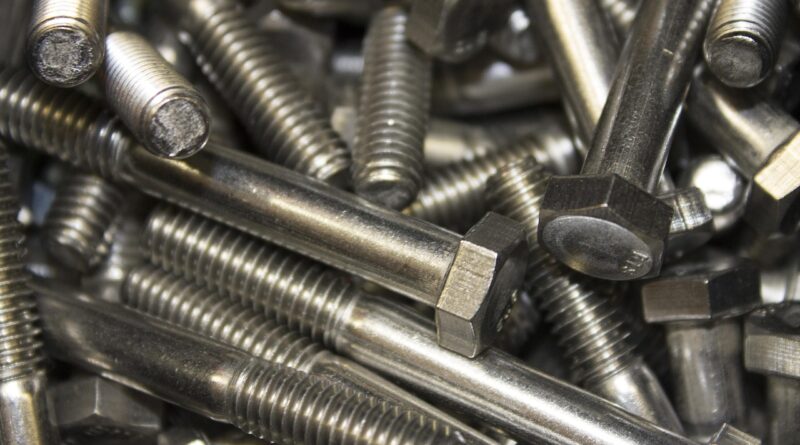
How to choose stainless bolts for corrosion resistance, strength, and standards
Quick answer for buyers and specifiers
Stainless bolts are specified when corrosion resistance, appearance, hygiene, or service life is more important than the lowest initial fastener cost. The right choice is not simply “stainless” or “316.” A reliable specification should identify the bolt form, thread series, stainless alloy or ISO group, mechanical property class, matching nut and washer requirements, and the service environment.
For general inch-series bolts, ASTM F593-24 is a common specification for stainless steel bolts, hex cap screws, and studs from 0.25 to 1.50 in. nominal diameter. For metric stainless bolts, ISO 3506-1:2020 defines mechanical and physical properties for corrosion-resistant stainless fasteners. In many purchasing and design discussions, the main choice is between 304-type/A2 stainless for general exposure and 316-type/A4 stainless for chloride-prone or marine-adjacent service.
For more fastener topics, visit the Bolts & Fasteners section.
What makes a stainless bolt different from a plain steel bolt
Stainless steel resists corrosion because chromium in the alloy supports a thin passive surface film. When oxygen is available, that film can reform after minor damage. This is why stainless fasteners are widely used in outdoor assemblies, architectural hardware, food equipment, water systems, and light industrial applications.
Stainless steel is still not immune to corrosion. Grade selection, surface contamination, crevices, chlorides, temperature, and contact with other metals can all change how a bolt performs in service.
The most common stainless bolt families are austenitic grades such as 304 and 316. They are widely used because they combine corrosion resistance, formability, and practical availability. Martensitic and precipitation-hardening stainless grades can provide higher hardness or strength, but their corrosion behavior and heat-treatment condition must be checked more carefully.
ASTM F593-24 groups stainless bolt alloys into several alloy groups, including austenitic, ferritic, martensitic, and precipitation-hardening types. For that reason, a complete order should reference the standard and alloy group rather than relying on a generic material description.
A stainless bolt can also behave differently during installation. Austenitic stainless threads are more prone to galling than many coated carbon steel fasteners, especially when stainless nuts are assembled dry, quickly, or under high pressure. Galling can cause thread damage, seizure, or a misleading torque reading before the intended clamp load is reached.
Key standards that appear in stainless bolt specifications
Standards matter because they define what the words on a purchase order mean. A phrase such as “3/8 stainless bolt” describes size and material only loosely. It does not define allowable chemistry, mechanical properties, dimensions, thread tolerances, test requirements, or matching nuts.
| Standard or designation | Where it is commonly used | What it helps define |
|---|---|---|
| ASTM F593-24 | Inch-series stainless bolts, hex cap screws, and studs | Stainless alloy groups, mechanical requirements, and related requirements for general corrosion-resistant service |
| ASTM F594-24 | Stainless nuts for use with stainless externally threaded fasteners | Nut alloy groups, mechanical properties, and compatibility with F593 fasteners |
| ISO 3506-1:2020 | Metric stainless bolts, screws, and studs | Mechanical and physical properties by stainless steel grade and property class |
| ASTM A193/A193M-25 | Pressure vessels, valves, flanges, fittings, and high-temperature or high-pressure service | Alloy and stainless steel bolting materials for demanding service conditions |
| AISC/RCSC Design Guide 41 | Structural joints using stainless steel bolts | Design, installation, and inspection considerations for structural stainless bolted joints |
ASTM F593-24 states that suitable nuts are covered by ASTM F594 and, unless otherwise specified, should be of the same alloy group with proof stress appropriate for the externally threaded fastener. This compatibility point is easy to miss when the buyer focuses only on bolt material. A strong bolt paired with an unsuitable nut can make the joint unreliable even if the bolt itself meets the requested grade.
ISO 3506-1 uses familiar markings such as A2-70 and A4-80. In that system, the first part identifies the stainless steel group and grade family, while the number after the dash indicates the property class. For common austenitic stainless fasteners, property class 70 is associated with a 700 MPa minimum tensile strength level, and property class 80 with an 800 MPa level.
That marking is useful, but it is not a complete design check. Geometry, engagement length, proof load, shear, fatigue, temperature, and joint design still matter.
304, 316, A2, and A4 stainless bolts compared
The most common stainless bolt question is whether to use 304 or 316. In ISO fastener language, A2 is broadly associated with 304-type austenitic stainless, while A4 is broadly associated with 316-type molybdenum-bearing stainless. This shorthand is useful in everyday communication, but the applicable standard should still be named because fastener designations are not identical to raw material sheet or bar designations.
| Common choice | Typical use case | Important limitation |
|---|---|---|
| 304 or A2 stainless bolts | Indoor equipment, general outdoor exposure, architectural hardware, light industrial assemblies | Less resistant than 316-type grades in chloride-rich or marine atmospheres |
| 316 or A4 stainless bolts | Coastal exposure, splash zones, chemical washdown, food and water equipment where chlorides may be present | Better chloride resistance than 304 does not mean immunity to pitting or crevice corrosion |
| 410 or other martensitic stainless bolts | Applications needing higher hardness or specific mechanical behavior | Corrosion resistance and heat treatment must be checked for the actual service |
| 630 precipitation-hardening stainless bolts | Special applications requiring higher strength and corrosion resistance balance | Not a drop-in substitute unless the design and standard allow it |
Chlorides are the key reason many projects move from 304/A2 to 316/A4. The British Stainless Steel Association explains that pitting corrosion is most associated with chloride-containing environments, and that molybdenum-bearing stainless steel may be required where a pitting hazard is known. The same source identifies crevice corrosion as a local attack that can occur where oxygen availability is very low, with crevices commonly found between nuts and washers, around screw threads, or at bolt shanks.
The practical takeaway is straightforward: if the bolt will see salt spray, de-icing salts, pool chemicals, stagnant chloride-bearing water, or regular washdown chemicals, 316/A4 is usually the more conservative starting point. If the joint is structural, pressure-containing, high-temperature, submerged, safety-critical, or exposed to unusual chemicals, grade selection should be confirmed by the governing design code or a qualified engineer.
Strength classes and why stainless is not always a stronger upgrade
Stainless bolts are often selected because they look more durable than plated steel, but corrosion resistance and mechanical strength are different properties. A stainless bolt can last longer in a corrosive atmosphere and still be weaker than the carbon or alloy steel bolt it replaces. This is especially important when replacing automotive, machinery, lifting, structural, or pressure-service fasteners.
For metric fasteners, A2-70 and A4-70 are common stainless markings. The “70” refers to the property class, not to corrosion resistance. A4-70 is usually more corrosion-resistant than A2-70 in chloride exposure because of the stainless grade family, not because of the number 70. Conversely, A4-80 indicates a higher property class than A4-70, but it does not automatically mean better corrosion resistance.
For inch-series fasteners, ASTM F593 defines groups and conditions rather than using the same marking logic as ISO 3506. For pressure and high-temperature applications, ASTM A193/A193M is often more relevant than a general-purpose stainless bolt specification. ASTM A193/A193M-25 covers alloy and stainless steel bolting materials and components for pressure vessels, valves, flanges, fittings, and high-temperature or high-pressure service. That scope is different from general corrosion-resistant bolting, so the correct standard should follow the application, not just the preferred material. See also: Fittings & Valves.
Structural substitutions deserve extra caution. ASTM F3125 covers high-strength structural bolts made from steel and alloy steel at defined minimum tensile strength levels. Stainless bolts can be used in structural work when properly designed and specified, but they should not be casually swapped for high-strength structural bolts. Head style, strength, installation method, pretension behavior, inspection requirements, and joint assumptions may differ. AISC and RCSC released Design Guide 41 on structural joints using stainless steel bolts in February 2026, reflecting the need for dedicated guidance rather than informal substitution.
Corrosion risks that still apply to stainless bolts
Stainless bolts reduce many corrosion problems, but they do not remove corrosion risk. The three most common concerns are pitting, crevice corrosion, and galvanic corrosion.
Pitting and crevice corrosion
Pitting is localized attack that can occur in chloride-containing environments. Crevice corrosion can occur where a tight gap traps stagnant solution and limits oxygen access. Fastener assemblies naturally create crevices at thread roots, under washers, under bolt heads, and between mating surfaces. A bolt that performs well on an open surface may perform differently inside a wet crevice.
Good joint design can reduce this risk. Avoid unnecessary liquid traps, specify a grade suitable for the chloride level, keep stainless surfaces clean, use washers and joint details that allow drainage, and avoid leaving carbon steel grinding dust or iron contamination on stainless surfaces.
Galvanic corrosion
Galvanic corrosion requires dissimilar metals in electrical contact and an electrolyte such as rainwater, condensation, process water, or seawater. The British Stainless Steel Association notes that area ratio is important: a small less-noble fastener connected to a large more-noble surface can be a poor detail. For example, carbon steel bolts in stainless steel members should generally be avoided because the small carbon steel fastener can corrode aggressively.
A stainless bolt in a larger carbon steel member is often less severe from an area-ratio perspective, but the carbon steel around the joint may still need coating, sealing, drainage, or isolation. In mixed-metal joints, designers may use non-conductive washers, sleeves, gaskets, coatings, or sealants to reduce the electrical path or exclude water.
Installation details that prevent avoidable failures
Correct installation is as important as the bolt grade. Stainless fasteners can fail in service because they were assembled dry, over-torqued, mismatched with the nut, or installed into a joint that traps corrosive liquid.
- Control galling. Use a suitable anti-seize or lubricant when allowed by the specification, assemble at moderate speed, and do not force damaged threads.
- Recalculate torque when lubricated. Lubricants change the relationship between torque and clamp load. Do not reuse dry-torque assumptions without checking the assembly requirements.
- Match bolts and nuts. Follow ASTM F594 compatibility for F593 inch-series stainless bolts, or use the matching ISO nut class for metric stainless fasteners.
- Check thread engagement. Stainless strength markings do not compensate for insufficient thread engagement, weak tapped-hole material, or damaged internal threads.
- Separate incompatible metals when needed. Isolation washers, sleeves, coatings, and sealed joints can reduce galvanic corrosion risk.
- Protect the passive surface. Avoid carbon steel wire brushes, contaminated abrasives, and embedded iron particles on stainless surfaces.
For critical joints, torque alone may not be enough to verify clamp load. Installation procedures should follow the applicable engineering specification, especially for pretensioned, slip-critical, pressure-containing, vibrating, or safety-related assemblies.
A practical selection checklist
A useful stainless bolt specification should answer the following questions before an order is placed:
- Is the application general fastening, structural, pressure service, high temperature, low temperature, sanitary, marine, or chemical exposure?
- Is the bolt inch-series or metric, and which dimensional standard applies?
- Should the fastener meet ASTM F593, ISO 3506-1, ASTM A193/A193M, or another project-specific requirement?
- Is 304/A2 adequate, or is 316/A4 needed because of chlorides, washdown, coastal air, or crevices?
- What property class, alloy group, or condition is required?
- Which nut and washer specification matches the bolt?
- Will the joint be wet, sealed, insulated, painted, or exposed to dissimilar metals?
- What lubrication, torque, pretension, and inspection procedure is required?
- Is traceability, test reporting, certification, passivation, or special packaging required?
If any of these answers are unknown, the safest wording is not “stainless bolts.” A better starting point is a complete description such as “ASTM F593 Group 2 stainless hex cap screw with ASTM F594 matching nut,” or “ISO 3506-1 A4-70 metric hex bolt with compatible stainless nut,” adjusted to the project’s dimensional and engineering requirements.
Frequently asked questions
Are 316 stainless bolts always better than 304 stainless bolts?
No. 316/A4 stainless generally offers better resistance to chloride-related pitting and crevice corrosion because it contains molybdenum, but it is not automatically required for every environment. 304/A2 can be appropriate for many indoor, dry, and general outdoor applications. The environment, cleaning chemicals, crevice geometry, and design life should guide the choice.
Can stainless bolts replace grade 8 or class 10.9 bolts?
Not without engineering verification. Stainless bolts may provide better corrosion resistance, but common stainless property classes do not automatically match the strength, yield behavior, fatigue performance, or installation assumptions of high-strength alloy steel fasteners. Replacement should follow the original equipment specification or a qualified design review.
Why do stainless bolts seize during tightening?
Thread seizure is usually galling. It occurs when stainless thread surfaces adhere under pressure and sliding friction, especially during dry stainless-on-stainless assembly. Clean threads, compatible nuts, suitable anti-seize, moderate installation speed, and correct torque procedures reduce the risk.
What is the difference between A4-70 and A4-80?
Both are ISO stainless fastener designations in the A4 family. The difference is the property class: A4-80 has a higher specified tensile strength level than A4-70. The “80” does not mean greater corrosion resistance than A4-70; corrosion resistance is mainly tied to the stainless grade family and service environment.
Do stainless bolts need matching stainless nuts?
Usually, yes. For ASTM F593 bolts, ASTM F594 is the matching nut specification, and the nut should be compatible in alloy group and proof stress unless the project specification says otherwise. Matching also matters for ISO fasteners, where the nut class and material should suit the bolt and joint design.


