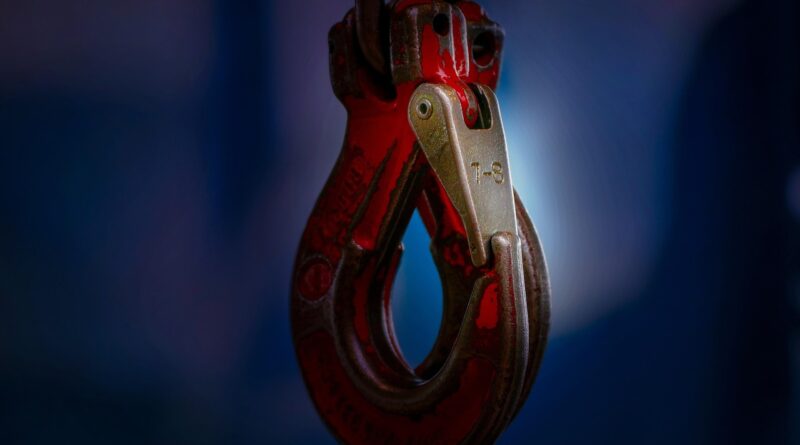
How to choose heavy duty eye bolts for lifting and rigging
Heavy duty eye bolts should not be selected by size alone. In lifting and rigging, the practical checks are straightforward: is the part a forged lifting eye bolt, is a shoulder required for angular loading, does the working load limit cover the actual sling angle, and are the threads fully engaged in a suitable base material? The phrase heavy duty eye bolts may be useful in buying conversations, but it is not a substitute for a recognized standard, a visible rated capacity, and the manufacturer’s instructions. Selection should begin with the load path: straight pull, side pull, single-point lift, multi-leg sling, temporary tie-down, or fixed anchor point.
What heavy duty eye bolts really mean
In everyday fastener language, heavy duty usually means larger, stronger, or more robust. In lifting work, that description is too vague to stand on its own. A lifting eye bolt should be evaluated by its standard, material, forging method, thread size, working load limit, loading direction, and installation conditions.

ASME B18.15-2025 covers dimensions and capacities for carbon steel and stainless steel forged threaded eyebolts intended primarily for lifting applications, including listed size ranges for steel and corrosion-resistant stainless steel. ASTM A489 covers weldless forged, quenched and tempered carbon steel threaded lifting eyes for overhead lifting. ASME B30.26-2026 addresses rigging hardware used for load handling activities, including eyebolts, shackles, links, rings, swivels, hoist rings, and related hardware. (asme.org)
This distinction matters because a hardware-store screw eye, a bent-wire eye, a decorative eye screw, and a rated forged lifting eye bolt can look similar to a non-specialist. They are not interchangeable. For load handling, the product should be treated as lifting hardware, not simply as a threaded fastener.
Shoulder eye bolts, plain eye bolts, and machinery eye bolts
The main product choice is usually between plain pattern eye bolts and shoulder pattern eye bolts. A plain eye bolt has a straight shank without a bearing shoulder. It is generally limited to in-line loading because side loading bends the shank. A shoulder eye bolt has a collar beneath the eye that seats against the load and helps resist angular loading when it is installed correctly. Machinery eye bolts are typically designed to thread into tapped holes in machines or components.
| Type | Typical use | Main limitation |
|---|---|---|
| Plain pattern eye bolt | Straight, in-line loading where the pull follows the shank axis | Not suitable for angular loading unless the manufacturer specifically permits it |
| Shoulder eye bolt | In-line loading and some angular loading when the shoulder is seated flush | Capacity must be reduced for angular pulls and the eye must align with the sling direction |
| Machinery eye bolt | Threaded installation into tapped holes in machinery or fabricated parts | Relies heavily on tapped-hole depth, thread condition, and base material strength |
| Swivel hoist ring | Repeated lifts, rotating loads, or multi-directional pulls | Higher cost, but often a better choice where angle changes are expected |
A common mistake is to buy the largest eye bolt that fits and assume the job is covered. A larger diameter helps only if the eye bolt type, load angle, receiving threads, and supporting structure are also correct.
Working load limit depends on direction of pull
The working load limit is not a single number that applies to every connection. It depends on the direction of pull. A straight vertical pull is normally the most favorable condition. As the sling angle moves away from the eye bolt’s axis, bending stress increases and capacity is reduced. This is why a shoulder eye bolt may be rated for a higher in-line load than it can safely carry in an angular lift.
Manufacturer instructions must control the actual selection. Crosby’s published eye bolt guidance, for example, states that shoulder or machinery eye bolts used in angular lifts require reduced working load values; its example table lists 30% of rated working load at 45 degrees from in-line and 25% at 90 degrees from in-line. The same guidance emphasizes calculating sling leg loads before selecting the eye bolt. (thecrosbygroup.com)
This is one of the most important points for anyone searching for heavy duty eye bolts: a stronger-looking part may become inadequate when the pull is not straight. Multi-leg slings can also increase force in each leg as sling angles become flatter. The eye bolt must be sized for the actual force at the connection, not simply for the total object weight divided by the number of lifting points.
Installation details that decide whether the rating applies
An eye bolt’s rated capacity assumes proper installation. If the shoulder does not sit flush, if threads are damaged, if the tapped hole is shallow, or if the base material is weaker than expected, the published rating may not apply.
- Seat the shoulder fully. Shoulder eye bolts used for angular loading need the shoulder tight against a flat load surface.
- Align the eye with the sling line. The plane of the eye should match the direction of pull. If alignment requires backing off the bolt, use only an approved method, such as suitable washers where the manufacturer allows it.
- Confirm full thread engagement. Through-hole and tapped-hole installations have different requirements. A nut-and-washer connection is not the same as a blind tapped hole.
- Check the receiving material. Steel, aluminum, cast iron, wood, and concrete do not provide the same thread strength. A rated forged eye bolt can still fail if the base material pulls out.
- Avoid shock loading. Sudden load application can exceed the intended working load even when the static weight appears acceptable.
OSHA’s construction rigging rule requires rigging equipment for material handling to be inspected before use on each shift and as necessary during use to ensure it is safe; the same rule also prohibits shock loading in the listed rigging context. These requirements reinforce a practical point: installation and condition are part of capacity, not separate paperwork. (osha.gov)
Material and finish choices for heavy service
Carbon steel forged eye bolts are common for industrial lifting hardware because they provide predictable strength when manufactured and tested to the appropriate specification. Stainless steel may be selected for corrosion resistance, washdown areas, marine exposure, or outdoor use, but stainless does not automatically mean a higher lifting capacity. Always compare the manufacturer’s rated load chart for the exact material and size.
Finishes such as zinc plating or hot-dip galvanizing are primarily corrosion-protection choices. They do not turn a non-rated eye bolt into lifting hardware. In corrosive or high-cycle environments, inspection frequency should increase because pitting, thread damage, and deformation can reduce reliability. For international sourcing, DIN 580 is commonly encountered for lifting eye bolts; the current DIN listing identifies DIN 580:2024-05 as the standard for lifting eye bolts and notes that it specifies properties for steel and stainless steel lifting eye bolts. (dinmedia.de)
Temperature also matters. Some standards and manufacturer documents define service temperature ranges or reduction factors. If an eye bolt will be used in heat treatment areas, cold storage, outdoor winter lifts, or process equipment, do not assume the room-temperature rating is valid without checking the applicable document. See also: Fittings & Valves.
When a hoist ring is the better answer
In some applications, the right answer is not a heavier eye bolt but a different lifting point. Swivel hoist rings are designed to rotate and align with the load direction, which makes them useful for angular pulls, repeated lifting, or loads that may shift during handling.
An eye bolt can be suitable for a controlled straight lift with a known load path. A hoist ring is often more appropriate when the sling angle varies, when the lift requires rotation, when the connection point is offset, or when multiple lifting points need to share load under changing geometry. The tradeoff is cost and complexity, but the benefit is better alignment with the real force path.
For fastener background and related hardware topics, see the Bolts & Fasteners section.
A practical buying and inspection checklist
Before specifying or purchasing heavy duty eye bolts, use a checklist that connects the part to the lift rather than treating it as a generic commodity.
- Identify whether the use is lifting, lashing, positioning, anchoring, or general fastening.
- Require a rated forged lifting eye bolt for overhead lifting applications.
- Check the applicable standard, such as ASME B18.15, ASTM A489, ASME B30.26, DIN 580, or the standard required by the project jurisdiction.
- Match the working load limit to the actual sling angle and number of lifting points.
- Choose shoulder eye bolts for permitted angular loading; do not use plain eye bolts for side pulls.
- Confirm thread size, thread pitch, shank length, tapped-hole depth, nut engagement, and washer requirements.
- Verify that the eye bolt material and finish suit the environment.
- Inspect for bent shanks, elongated eyes, worn threads, corrosion, cracks, grinding marks, or undocumented modifications.
- Remove damaged or questionable eye bolts from service rather than downgrading them by guesswork.
- Keep manufacturer load charts and installation instructions with the job documentation.
This checklist highlights a point that simple product descriptions often miss: capacity is a system property. The eye bolt, sling angle, base material, thread engagement, and inspection condition work together. If one element is wrong, the words heavy duty do not protect the lift.
Frequently asked questions
Are heavy duty eye bolts safe for overhead lifting?
They can be, but only when they are rated forged lifting eye bolts, selected for the actual working load and installed according to the manufacturer’s instructions. A large unrated eye bolt should not be treated as safe lifting hardware simply because it looks strong.
Can plain eye bolts be used for side loading?
Plain eye bolts are generally intended for in-line loading. For angular loading, use a shoulder eye bolt only when the manufacturer permits the angle and provides a reduced working load limit. For changing or rotating loads, a swivel hoist ring may be the safer design choice.
Does stainless steel have a higher working load limit than carbon steel?
Not necessarily. Stainless steel is usually selected for corrosion resistance, not automatically for higher strength. Compare the rating for the exact size, material, and standard rather than assuming one material is stronger.
How much thread engagement does an eye bolt need?
The required engagement depends on the eye bolt design, thread size, installation type, and receiving material. Follow the manufacturer’s instructions and verify that the supporting material can carry the load. Full engagement in weak or damaged material is still not enough.
What is the biggest mistake when choosing heavy duty eye bolts?
The biggest mistake is selecting by diameter or appearance instead of by working load limit, load direction, and installation conditions. Angular loading, poor shoulder seating, shallow threads, and damaged hardware are common reasons a seemingly strong eye bolt becomes unsafe.