
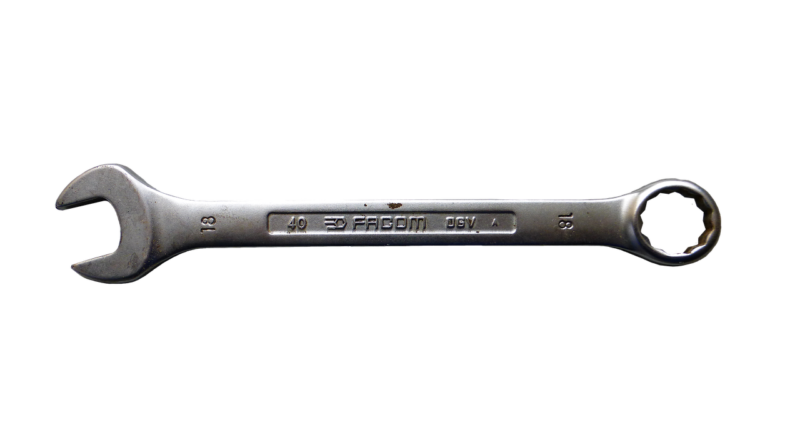
Spanner tools explained by type, fit, and jobsite use
Spanner tools are hand tools used to turn nuts, bolts, and other fasteners by gripping flat sides or purpose-made drive features. In the United Kingdom and many Commonwealth markets, “spanner” is the common term. In the United States, “wrench” is more common, while “spanner wrench” often refers to hook, pin, or other specialty tools.
For buyers, maintenance teams, and site users, the practical question is not the name on the package. It is whether the tool matches the fastener size, access space, torque demand, and risk of slippage. A tool that almost fits can still damage the fastener or create a safety problem.
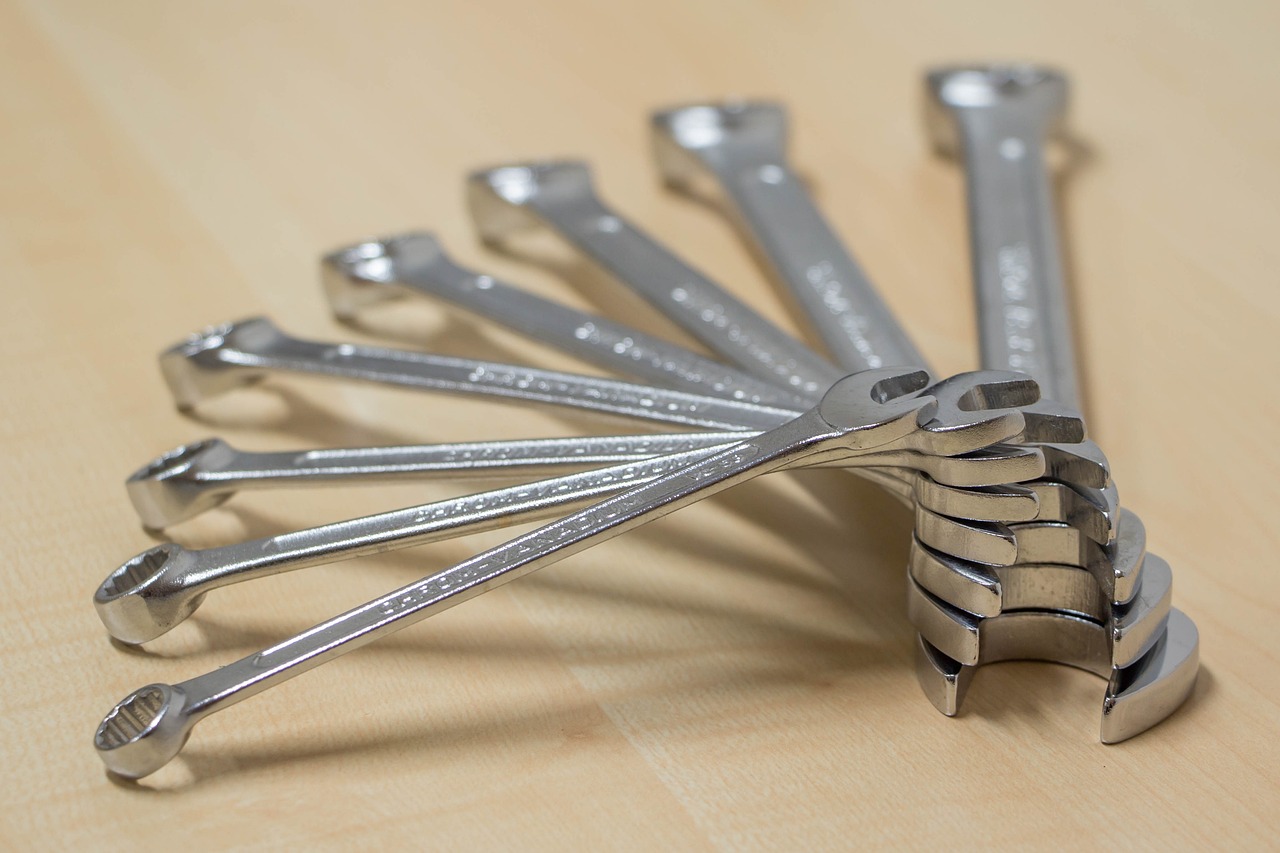
For more tool and workshop guidance, visit the Tools & Power section.
What are spanner tools?
A spanner is designed to apply turning force to a fastener. Most standard spanners work on nuts and bolt heads with flat sides, usually hexagonal. Specialty spanners are made for round collars, locknuts, grinder flanges, hydraulic fittings, and other components with pins, slots, holes, or notches.
The key difference between designs is contact. A tool that contacts more of the fastener spreads the load more effectively and reduces the chance of rounding the corners. This is why a ring or box-end spanner is often preferred for tight or stubborn fasteners. An open-end spanner is more convenient where the tool has to slide in from the side, but it gives up some contact area.
Terminology can create confusion in global trade. A “combination spanner” in one market may be listed as a “combination wrench” in another. An “adjustable spanner” is commonly called an “adjustable wrench” in the U.S. Product listings, maintenance manuals, and safety procedures may use either term, so the tool design and fit matter more than the label.
Main types of spanner tools and where they fit
Most workshops need more than one style of spanner. Access, fastener condition, and required torque can change from one job to the next. The table below summarizes common categories and their practical limits.
| Spanner type | Typical use | Main advantage | Important limitation |
|---|---|---|---|
| Open-end spanner | Nuts and bolts where side access is required | Quick to place and remove | Less contact than a ring end, so it can slip on worn fasteners |
| Ring or box-end spanner | General fastening where the tool can pass over the fastener | More contact around the fastener head | Needs top access and enough clearance |
| Combination spanner | General workshop, automotive, machinery, and maintenance work | Open end and ring end in one size | Still limited by exact size and access angle |
| Adjustable spanner | Variable fastener sizes, field repairs, light to moderate tasks | One tool covers several sizes | Jaw play and poor adjustment can increase slippage |
| Flare nut or line spanner | Brake lines, fuel lines, hydraulic and refrigeration fittings | More support than an open end while allowing pipe clearance | Must match the fitting size closely |
| Socket and ratchet | Repeated assembly, recessed fasteners, higher productivity tasks | Fast operation and good engagement with the right socket | Requires compatible drive size, socket depth, and clearance |
| Hook, pin, or C spanner | Locknuts, collars, grinder flanges, and round retaining parts | Engages special slots, holes, or notches | Often application-specific and easy to misuse |
| Pipe wrench | Threaded pipe and round pipe fittings | Self-tightening serrated jaws for pipe work | Not intended for finished hex nuts or precision fasteners |
For general maintenance, a combination spanner set plus sockets will cover many routine jobs. Adjustable tools are useful as backup, especially in field kits, but they should not replace fixed-size tools when the fastener is tight, safety-critical, plated, soft, or already damaged.
Fit is the biggest performance factor
A spanner that is slightly too large can round a fastener even if it looks close enough. Correct fit starts with the width across flats: the distance between opposite flat sides of the nut or bolt head. Metric fasteners require metric spanner sizes, and inch fasteners require inch sizes. Near matches are not the same as correct matches.
Standards help explain why fit is more than a convenience issue. ISO 691:2005 covers tolerances for wrench and socket openings for metric widths across flats, and the ISO listing states that this standard was reviewed and confirmed in 2025. ISO 6787:2018 covers dimensions and allowable jaw clearance for adjustable wrenches. ASME also maintains B107 hand tool standards, including ASME B107.100-2023 for flat wrenches and standards connected with wrench openings, sockets, handles, and attachments.
These documents do not mean every tool on a shelf is suitable for every job. They show that dimensional accuracy, jaw clearance, strength, and performance requirements are recognized engineering issues. For buyers, the practical takeaway is to check for clear sizing, legible markings, credible standard references where relevant, and manufacturer information on intended use.
Six-point, twelve-point, and fastener condition
Where sockets or box-end tools are involved, six-point contact is often preferred for high-load or damaged hex fasteners because it acts more directly on the flats. Twelve-point designs can be quicker to position in confined spaces because they offer more indexing positions. The better choice depends on access, torque demand, and the condition of the fastener.
Open-end angle and swing space
Many open-end spanners have jaws angled relative to the handle. This allows the user to flip the tool and continue turning when swing space is limited. It does not remove the need for the correct size, square placement, and controlled force.
How to choose the right spanner for a job
Good selection starts before the tool touches the fastener. A short check can prevent many common failures.
- Identify the fastener system. Confirm whether it is metric, inch, pipe-related, or a specialty locknut or collar.
- Measure or verify the size. Do not rely on visual similarity when sizes are close.
- Check access. Decide whether the tool must approach from the side, from above, at an offset, or through a recess.
- Assess torque demand. A lightly loaded cover bolt does not require the same tool strategy as a seized suspension or structural fastener.
- Consider surface risk. Chrome, brass, aluminum, hydraulic fittings, and plated fasteners may need better contact and controlled force.
- Inspect the tool. Worn jaws, cracks, spread openings, damaged ratchets, or illegible size markings are warning signs.
Open-end spanners are efficient for quick work, but they are usually not the best first choice for stuck fasteners. Ring spanners, box-end tools, and correctly fitted sockets provide more support. Flare nut spanners are valuable around tubing because they leave clearance for the line while gripping more sides of the fitting than a normal open end.
Adjustable spanners need careful use. They are convenient for occasional tasks and variable sizes, but the movable jaw must be tightened snugly against the fastener. Where possible, apply load in the direction that pushes against the fixed jaw. If the jaws spread, rock, or will not stay adjusted, choose another tool.
Safety and maintenance points that are often missed
Safety guidance from organizations such as OSHA and the Canadian Centre for Occupational Health and Safety consistently emphasizes using the right hand tool for the job and removing damaged tools from service. OSHA’s construction hand tool rule specifically addresses wrenches, including adjustable, pipe, end, and socket wrenches, and says they should not be used when jaws are sprung to the point that slippage occurs.
That guidance is practical, not only regulatory. A slipping spanner can injure hands, damage nearby equipment, round a fastener, or cause a fall if the user is working from a ladder, platform, or awkward position. The more force a job requires, the more important it is to stop and reassess the tool choice. See also: Bolts & Fasteners.
- Use the correct size rather than forcing a near match.
- Do not use pliers as a substitute for a spanner on nuts and bolts.
- Do not use a spanner as a hammer.
- Avoid improvised handle extensions unless the tool and procedure are designed for that loading.
- Pull rather than push when the position allows better body control.
- Keep oil, grease, and debris off handles and jaws.
- Store tools so jaws, ratchets, and size markings are not damaged.
Maintenance is straightforward: clean tools after use, dry them before storage, inspect for jaw wear, and separate precision or torque-related tools from rough-service tools. If a tool has been overloaded, struck, heated, ground, or visibly bent, treat it as suspect.
Materials, finishes, and buying considerations
Many spanner tools are made from alloy steels and finished with chrome plating, phosphate, black oxide, or other protective coatings. The material label alone does not prove quality. Heat treatment, dimensional control, jaw geometry, surface finish, and quality assurance all affect performance.
When comparing tools for a shop, maintenance team, or purchasing list, focus on measurable and task-related details:
- Complete size coverage for the equipment being serviced
- Clear metric or inch markings
- Good jaw finish with no visible spreading or burrs
- Comfortable handle length for the expected torque
- Appropriate offset, head thickness, and access profile
- Manufacturer guidance on intended use and limitations
- Replacement availability for ratchets, sockets, or specialty tools
For industrial buyers, consistency across sets can matter as much as individual tool cost. Mixed sets with missing sizes push users toward adjustable tools, pliers, or unsafe improvisation. A well-planned tool board or service kit reduces wasted time and makes incorrect tool selection easier to spot.
Common mistakes with spanner tools
The most common mistake is treating spanners as interchangeable levers. They are not. Each design balances access, grip, clearance, and torque capacity.
Using an adjustable spanner for every fastener
An adjustable tool is useful, but it adds a movable jaw and a clearance adjustment. On high-torque work, a fixed-size ring spanner or socket is usually a better choice if access allows.
Mixing metric and inch sizes
Some metric and inch sizes appear close, but the clearance difference can be enough to damage corners. This is especially risky on small fasteners, stainless hardware, and older equipment.
Choosing speed over engagement
A ratchet can save time only when the socket is fully seated and aligned. If the socket is shallow, tilted, or partly blocked by debris, the risk of rounding increases.
Ignoring fastener condition
Rust, paint, thread locking compound, damaged corners, and previous over-tightening change the job. Penetrating oil, cleaning, heat where appropriate, or a different tool style may be safer than applying more force.
Frequently asked questions
Are spanner tools and wrenches the same thing?
In general use, yes, but terminology depends on region. “Spanner” is common in British and Commonwealth English, while “wrench” is common in U.S. English. In U.S. usage, “spanner wrench” can also mean a specialty hook or pin tool for round collars and locknuts.
What is the most useful spanner type for a basic workshop?
A combination spanner set is a practical starting point because each tool provides an open end and a ring end in the same size. Add sockets, adjustable tools, and specialty spanners based on the equipment being maintained.
When should I use a flare nut spanner?
Use a flare nut or line spanner on tubing fittings such as brake, fuel, hydraulic, or refrigeration lines. It provides more support than a normal open-end spanner while still allowing the line to pass through the tool opening.
Can an adjustable spanner replace a full set?
It can cover multiple sizes for light or occasional work, but it is not a full replacement. Fixed-size tools usually provide better engagement, especially where torque is high, access is awkward, or the fastener must not be damaged.
How do I know when a spanner should be replaced?
Replace or remove it from service if the jaws are spread, cracked, badly worn, bent, slipping under normal load, or no longer hold adjustment. Damaged tools create both safety and fastener-damage risks.
Bottom line
Spanner tools look simple, but correct selection affects safety, speed, and fastener life. Match the tool to the fastener size, access path, torque requirement, and surface condition. Use open-end tools for access, ring or box-end tools for stronger engagement, flare nut spanners for tubing fittings, sockets for repeated work, and adjustable spanners as controlled, limited-purpose tools. The right spanner is not the one that almost fits; it is the one that engages securely and applies force without damaging the job.


