
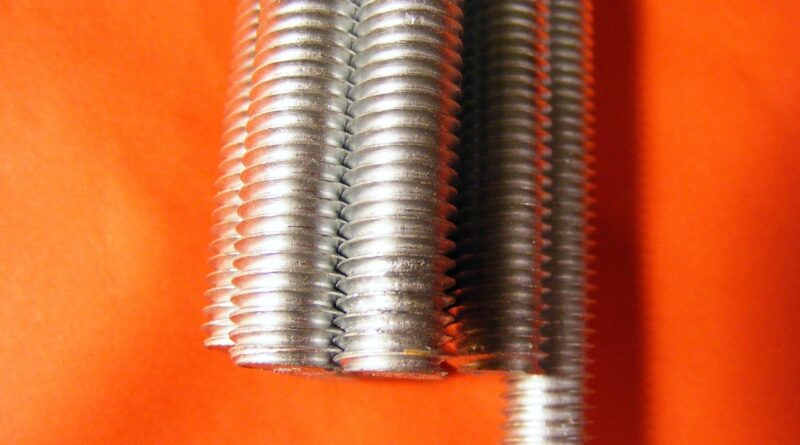
How to choose bolts and fasteners for strength, fit, and corrosion resistance
The practical way to specify bolts and fasteners
The right bolts and fasteners are selected by working from the joint requirement, the governing standard, the material strength, the thread fit, the coating system, and the installation method. A bolt can look correct and still be unsuitable if its grade, nut, washer, coating, or certification does not match the application. For general hardware, a catalog description may be enough. For structural steel, machinery, vehicles, pressure-related assemblies, or outdoor exposure, the fastener should be specified against recognized standards such as ASTM, ISO, ASME, SAE, or the project documents.
This guide explains the selection process in practical terms for buyers, fabricators, maintenance teams, and materials specifiers comparing bolts and fasteners for industrial use.
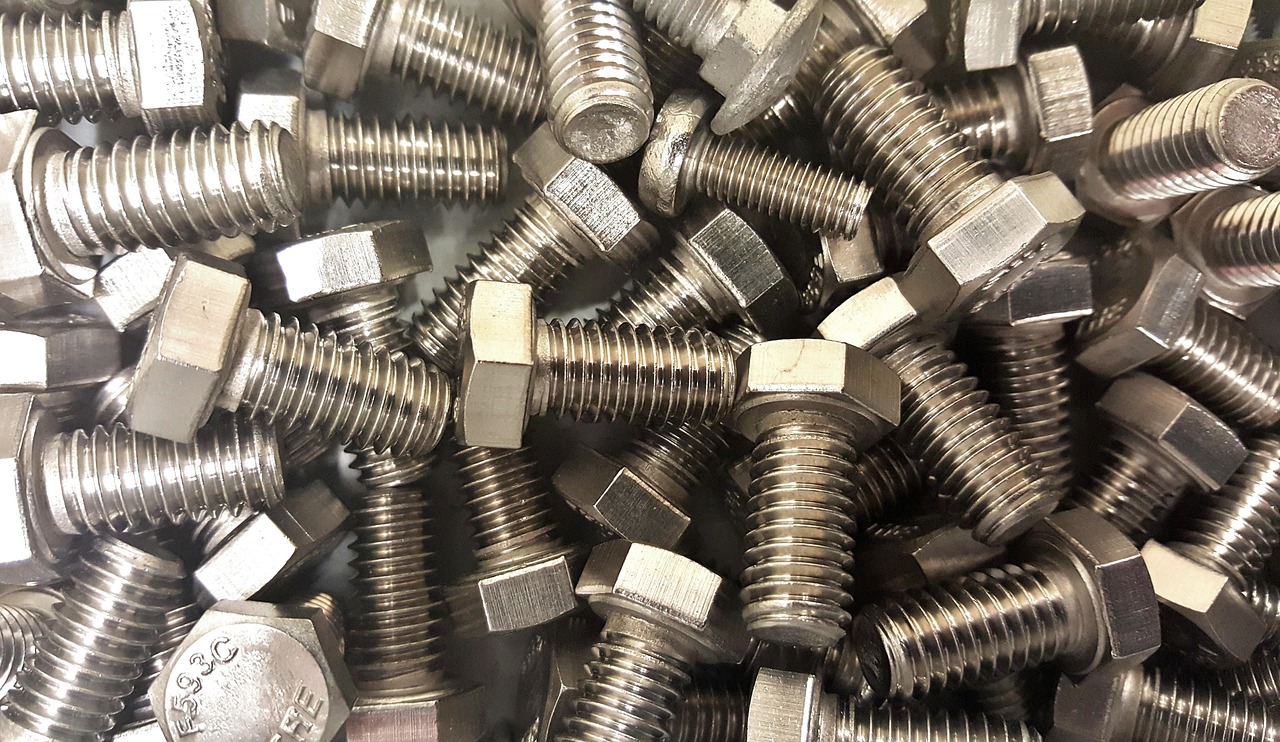
Start with the joint, not the catalog
A fastener is one part of a joint system. Before selecting a bolt grade or finish, define what the joint must do. Key factors include tension, shear, clamp load, vibration, fatigue, temperature, corrosion, and whether the assembly will be opened repeatedly for maintenance. A light-duty cover plate, a structural beam splice, and a rotating machine base may all use threaded fasteners, but they do not require the same product.
For noncritical general assemblies, low- or medium-strength carbon steel bolts may be suitable where loads are modest and the environment is controlled. For structural steel, the bolt assembly usually includes a specified bolt, nut, and washer combination, and the installation method may be defined as snug-tightened, pretensioned, or slip-critical. For machinery, consistent clamp load, fatigue resistance, and vibration behavior may matter more than headline tensile strength.
The practical rule is straightforward: choose the fastener only after the joint requirement is known. Substituting a stronger-looking bolt without checking geometry, ductility, coating, and installation requirements can create a different failure mode rather than a safer joint.
Match the fastener to the governing standard
Standards give fasteners a common technical language. They define dimensions, mechanical properties, materials, finishes, markings, inspection requirements, and, in some cases, compatible nuts or washers. Public standard listings from ASTM, ISO, ASME, SAE, RCSC, and NIST show that fastener requirements are divided across several document families rather than controlled by one universal rulebook.
| Selection need | Common reference | What it helps define |
|---|---|---|
| General carbon steel bolts and studs | ASTM A307 | Carbon steel bolts, studs, and threaded rod with 60,000 psi tensile-strength classification in common general applications |
| Inch-series automotive and industrial threaded fasteners | SAE J429 | Mechanical and material requirements for externally threaded steel fasteners such as Grade 2, Grade 5, and Grade 8 families |
| High-strength structural bolting | ASTM F3125/F3125M and RCSC specification | Structural bolt grades such as A325 and A490, assembly requirements, and structural joint practices |
| Metric carbon and alloy steel bolts, screws, and studs | ISO 898-1 | Metric property classes and mechanical properties for specified carbon and alloy steel fasteners |
| Inch-series dimensional requirements | ASME B18 series | Head style, dimensional data, and product geometry for many inch-series bolts and screws |
| Electroplated or zinc-flake coated fasteners | ASTM F1941/F1941M, ISO 4042, ISO 10683 | Coating requirements, dimensional effects, corrosion protection, and hydrogen embrittlement precautions |
One important point for structural buyers is that ASTM F3125/F3125M consolidated several older high-strength structural bolt specifications, including A325, A325M, A490, A490M, F1852, and F2280. In practice, A325 and A490 remain familiar grade names, but they are now used within the consolidated F3125 framework. Public ASTM listings in 2026 show F3125/F3125M-26 as the active edition, while RCSC lists a 2025 specification for structural joints using high-strength bolts.
Understand strength grades and property classes
Strength markings are useful, but they are not a complete specification. In inch-series industrial fasteners, SAE Grade 5 and Grade 8 are common in machinery and automotive-related work, while ASTM A307 is common for general carbon steel bolts. In structural steel, ASTM F3125 Grade A325 is associated with 120 ksi minimum tensile strength, and Grade A490 is associated with 150 ksi minimum tensile strength. These values are not a reason to substitute one fastener family for another; they belong to different standards and applications.
Metric bolts commonly use ISO property classes such as 8.8, 10.9, and 12.9. Under the ISO system, the first number relates to nominal tensile strength in hundreds of megapascals, and the second number relates to the ratio between yield or proof strength and tensile strength. For example, class 8.8 indicates a nominal tensile strength of about 800 MPa and a yield-strength ratio of about 0.8. The system is useful, but the property class still has to be matched with the correct dimensions, thread tolerance, coating, and application limits.
Stainless steel fasteners should not be assumed to be stronger than alloy steel fasteners. Stainless is often selected for corrosion resistance, hygiene, or appearance, but its mechanical properties and galling behavior need separate review.
Size, thread, and fit determine whether the joint can be built
Diameter and length are only the visible part of fastener sizing. A complete specification should also consider grip length, thread length, thread pitch, head style, nut height, washer type, hole size, and required protrusion after tightening. A bolt with too much thread in the shear plane may behave differently from one with the correct grip. A bolt that is too short may not fully engage the nut, while a bolt that is too long may interfere with adjacent parts or lead to improper washer stacking.
The thread system matters as well. Inch fasteners may use UNC or UNF threads, while metric fasteners use metric thread pitches. Coarse threads are often more tolerant of field assembly and dirt. Fine threads can offer finer adjustment and higher tensile-stress area in some sizes, but they are more sensitive to damage and cross-threading. Mixing metric and inch hardware is a common maintenance error, especially when parts look similar.
Nuts and washers are not afterthoughts. Structural bolts often require compatible heavy hex nuts and hardened washers. Washers can distribute load, protect surfaces, bridge oversized holes when allowed by the specification, or provide hardened bearing surfaces. A high-strength bolt paired with an unsuitable nut or soft washer may not deliver the intended joint performance.
Corrosion protection changes durability and assembly behavior
Coatings should be selected for the service environment, not appearance alone. Plain carbon steel may be acceptable indoors in dry service, but outdoor, marine, chemical, or high-humidity environments usually require corrosion protection. Common options include zinc electroplating, hot-dip galvanizing, mechanical galvanizing, zinc-flake coatings, stainless steel, and weathering steel assemblies where permitted.
Each option has limits. Electroplated coatings are widely used on threaded fasteners, but standards such as ASTM F1941/F1941M and ISO 4042 include precautions related to hydrogen embrittlement, especially for high-strength or surface-hardened fasteners. ISO 10683 covers non-electrolytically applied zinc-flake coating systems and notes their use for high-strength fasteners where avoiding internal hydrogen embrittlement risk is important. These details matter because coating choice can affect both corrosion resistance and mechanical reliability. See also: Fittings & Valves.
Coating thickness also affects thread fit. Hot-dip galvanized fasteners often require compatible nuts with adjusted thread allowance. Lubricated coatings can change torque-tension behavior, so the same torque may produce a different clamp load. For critical joints, installation instructions should come from the project specification, the fastener standard, or the equipment manufacturer rather than from a generic torque chart.
What to check before purchasing or installing
A fastener purchase should be checked against the drawing or specification before installation. For low-risk maintenance work, that may mean verifying size, thread pitch, material, and finish. For regulated, structural, or load-critical applications, the documentation should be more complete.
- Confirm the exact standard, grade, size, length, thread pitch, and head style.
- Check whether the bolt requires a matching nut, hardened washer, direct tension indicator, or complete assembly.
- Verify the coating type and whether it is compatible with the strength grade and service environment.
- Review manufacturer identification, grade markings, and lot traceability where required.
- Request mill test reports, certificates of conformance, or inspection records when the application requires them.
- Keep fasteners protected from corrosion, dirt, and thread damage before installation.
- Follow the specified tightening method instead of assuming torque alone proves clamp load.
In the United States, the Fastener Quality Act framework addresses concerns such as mismarked, misrepresented, and counterfeit fasteners. NIST guidance on the Act emphasizes grade identification, lot conformance information, and defined quality-system exceptions. For buyers, the practical takeaway is that markings and paperwork are part of risk control, not administrative decoration.
Common mistakes that cause fastener problems
The first mistake is treating all bolts as interchangeable. A Grade 8 bolt may have high tensile strength, but that does not automatically make it a replacement for a structural A325 bolt. Structural bolts are specified as part of a system that includes geometry, nuts, washers, installation rules, and design assumptions.
The second mistake is choosing the coating after the bolt is selected. High-strength fasteners may need special precautions if electroplated, and some structural grades have coating restrictions depending on the standard and edition. Corrosion resistance should be part of the original specification, especially outdoors or in contact with treated wood, dissimilar metals, chemicals, or road salts.
The third mistake is relying only on torque. Torque is easy to measure, but it is an indirect way to estimate clamp load because friction under the head, in the threads, and in the coating can vary widely. Critical joints may require turn-of-nut methods, calibrated wrench procedures, direct tension indicators, tension-control assemblies, or other specified installation methods.
The fourth mistake is ignoring service temperature and maintenance. Some materials lose toughness in cold service, some coatings degrade at elevated temperatures, and stainless threads can gall if assembled without proper practice. If a joint will be removed and reassembled, thread durability and anti-seize compatibility may be just as important as initial strength.
Frequently asked questions
What is the difference between bolts and fasteners?
A fastener is the broad category of hardware used to join parts. Bolts are one type of externally threaded fastener, usually used with a nut or tapped hole. Screws, studs, nuts, washers, rivets, anchors, and pins can also fall under the broader fastener category.
Are stronger bolts always safer?
No. Higher tensile strength can reduce ductility, change tightening behavior, and introduce coating limitations. A fastener should meet the joint design requirement, not simply the highest available grade.
Can SAE Grade 8 replace ASTM A325?
Not by assumption. SAE Grade 8 and ASTM F3125 Grade A325 belong to different standards and are used for different applications. Even if one property appears similar or higher, geometry, nut compatibility, washer requirements, and installation procedures may not match.
Which bolts work best outdoors?
The right outdoor fastener depends on exposure. Zinc-plated fasteners may suit mild indoor or sheltered use, while hot-dip galvanized, zinc-flake coated, stainless, or weathering steel assemblies may be considered for harsher environments. The coating must also be compatible with the fastener grade and mating parts.
How can I identify a bolt grade?
Head markings, manufacturer identification, packaging, and certificates can help identify a bolt grade. However, markings alone do not prove suitability for a critical application. When safety or compliance matters, verify the full standard, lot documentation, and required test records.


