
Can Joint Connector Wood Redefine Three Axis Joint Builds Without Screws
Three-Axis Joint Builds Structure Directly From Raw Branches Without Screws
The use of joint connector wood in three-axis structures presents a new approach to wooden assembly that eliminates screws, bolts, or adhesives. By relying on geometric interlocking and material science, these systems achieve structural integrity through mechanical precision rather than hardware. This method enables the construction of frameworks directly from raw branches, combining natural irregularity with digital fabrication. The outcome is a sustainable, reversible, and high-performance structure suitable for architectural and furniture applications.
The Concept of Joint Connector Wood in Three-Axis Structures
In modern timber engineering, three-axis joints represent a critical intersection of geometry and material behavior. They allow connections along orthogonal directions while maintaining balance between stiffness and flexibility. The concept of joint connector wood extends this by replacing metal fasteners with wooden interlocks that respond to mechanical loads through compression and friction rather than tensioned hardware.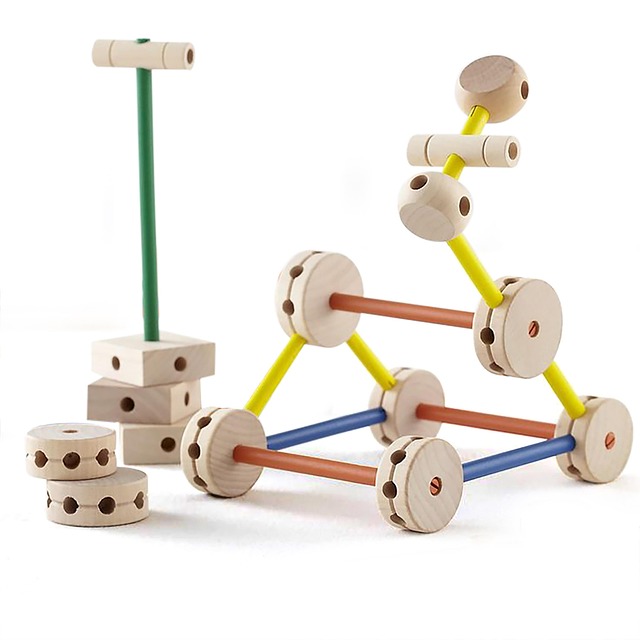
Understanding the Mechanics of Three-Axis Joint Builds
Three-axis joints enable structural connections along orthogonal directions. Traditional builds rely on screws, bolts, or adhesives for reinforcement. However, mechanical interlocking through joint connector wood offers an alternative assembly method that minimizes dependency on external materials. When properly designed, these connectors distribute forces evenly across the contact surfaces, reducing stress concentrations typical in screw-based systems. In practice, such assemblies exhibit increased tolerance to deformation without losing alignment.
Material Science Behind Joint Connector Wood
Engineered wood composites are tailored to handle multi-directional stress by manipulating fiber orientation and bonding patterns. Grain direction plays a decisive role in determining how load transfers across the joint interface. When raw branches are used as source material, natural irregularities introduce both challenges and opportunities—variability in density can enhance energy absorption under impact but may reduce predictability in stiffness. Sustainable sourcing from local forestry operations also supports environmental goals by reducing embodied energy.
Structural Behavior Without Screws
The absence of screws changes how load paths develop within the structure. Instead of point-based anchoring, forces propagate through surface contact and interlocking geometry. This shift requires precise control over tolerances to maintain stability under variable conditions such as humidity or vibration.
Load Transfer and Stress Distribution in Screwless Joints
Interlocking geometries distribute shear and tensile forces across broader surfaces rather than concentrating them at single points. Compression fit between components generates frictional resistance that stabilizes the assembly under both static and dynamic loads. Finite element modeling has become essential for simulating these interactions; it predicts deformation modes and identifies weak zones before fabrication begins.
Evaluating Mechanical Integrity and Fatigue Resistance
Repeated cyclic loading can cause wear at contact points where micro-movements occur between wooden surfaces. Over time, moisture fluctuations influence dimensional stability—swelling during humid cycles followed by shrinkage during dry periods alters stiffness characteristics. Surface treatments such as oil impregnation or resin coating mitigate these effects by sealing pores and reducing moisture exchange, thereby extending service life.
Design Principles for Screwless Three-Axis Joints Using Wood Connectors
Designing screwless joints demands attention to geometry more than fastener specification. The success of such systems depends on accurate alignment between form generation tools and material constraints derived from natural wood behavior.
Geometric Optimization for Multi-Directional Stability
Parametric design software allows designers to define interlocking angles with sub-millimeter precision while testing tolerance ranges virtually before production. Rounded fillets at corners reduce stress concentrations that could lead to cracking under bending loads. Modular geometries further enable repeatable fabrication even when using irregular branches—each piece can be digitally scanned to adapt connector dimensions accordingly.
Integration with Digital Fabrication Techniques
CNC milling machines or robotic carving arms produce complex connector geometries directly from digital models with high repeatability. Scanning raw branches using 3D imaging captures their organic curvature so connectors can be adapted to fit naturally instead of forcing uniformity. Combining computational design with detailed material mapping improves alignment accuracy during assembly and reduces manual adjustment time on-site.
Comparing Traditional Fastening Methods with Wood Connectors
The transition from metal fasteners to joint connector wood represents more than a stylistic choice—it redefines performance metrics across strength, flexibility, cost, and sustainability dimensions.
Performance Metrics: Strength, Flexibility, and Durability
Screw-based joints offer high localized strength but often fail abruptly when overloaded due to concentrated stress points around threads or holes. In contrast, wooden connectors distribute load paths throughout their volume, reducing risk of sudden failure. Comparative testing shows that while metal fasteners provide rigidity ideal for permanent installations, wooden connectors excel in reconfigurable structures where controlled movement is beneficial.
Environmental and Economic Considerations
Eliminating metal components significantly lowers embodied energy since steel production remains one of the largest industrial carbon sources globally (as reported by IEA). Using locally sourced timber further strengthens circular economy models by shortening supply chains. For small-scale workshops or community projects, reduced hardware dependency translates into lower procurement costs and simplified recycling at end-of-life because all parts remain biodegradable.
Applications and Future Development Directions
The versatility of screwless three-axis assemblies opens applications across architecture, furniture design, and experimental research fields where adaptability meets ecological responsibility.
Architectural and Structural Applications of Screwless Joint Systems
Temporary pavilions benefit from reversible connections that allow quick disassembly without damaging components—a key feature for event structures or disaster-relief shelters. In furniture design, visible wooden connectors become aesthetic highlights demonstrating craftsmanship while maintaining structural efficiency. Experimental prototypes have shown scalability from small fixtures to full-scale spatial frameworks capable of supporting live loads comparable to conventional joinery.
Advancements in Research and Computational Modeling
Research teams increasingly rely on simulation-driven optimization to refine connector forms based on specific load cases derived from real-world data sets (referencing ISO 6892 standards for mechanical testing). Hybrid solutions combining wood connectors with bio-based resins yield improved consistency under fluctuating humidity conditions while maintaining biodegradability. Current studies also explore digital twin approaches that monitor deformation over time using embedded sensors—allowing predictive maintenance for large-scale timber assemblies before physical degradation occurs.
FAQ
Q1: What is joint connector wood?
A: It is a specially shaped wooden component designed to mechanically interlock multiple members without screws or adhesives.
Q2: How does a three-axis joint function?
A: It connects elements along three perpendicular directions using geometric engagement rather than metallic fasteners.
Q3: Are screwless joints as strong as traditional ones?
A: Properly engineered designs can match or exceed traditional joints in distributed load capacity though they behave differently under concentrated stresses.
Q4: What fabrication methods are used?
A: CNC milling, robotic carving, or adaptive 3D scanning are commonly employed for precision shaping based on digital models.
Q5: Why use raw branches instead of processed lumber?
A: Raw branches preserve natural grain orientation offering unique strength patterns while minimizing waste from industrial processing.


