
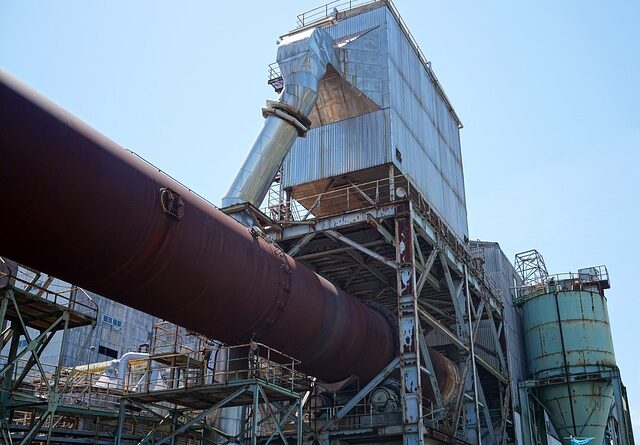
Can The 2 1 2 Inch Black Iron Pipe Reflect The Strength Of Kerala HC’s Stand On Essential Services
Kerala HC Urges Govt to Consider Declaring Nursing Services Essential Amid Strike
The Kerala High Court’s recent observation urging the government to consider declaring nursing services as essential reflects a critical intersection between law, ethics, and governance. The court’s stance underscores the state’s duty to maintain uninterrupted healthcare even during industrial unrest. By drawing parallels with the resilience of industrial materials like the 2 1 2 inch black iron pipe, one can see how structural strength mirrors institutional determination. This article explores that metaphor and evaluates how judicial reasoning reinforces systemic stability while balancing labor rights and public welfare.
The Symbolism of Strength: Drawing Parallels Between Industrial Materials and Legal Determination
Metaphors often provide clarity when describing abstract legal ideas. The Kerala High Court’s approach toward essential services can be better appreciated through the lens of material durability, where physical endurance becomes a symbol of institutional resolve.
The Metaphor of the 2 1 2 Inch Black Iron Pipe
A 2 1 2 inch black iron pipe represents resilience and continuity under pressure. In construction, such pipes are valued for their ability to withstand high stress without deformation or corrosion. Similarly, judicial systems must resist external pressures—political or social—while maintaining their foundational integrity. The metaphor extends beyond engineering; it embodies societal faith in structures that do not fail when tested.
Industrial Materials as Symbols of Stability
In public discourse, industrial materials often symbolize endurance and reliability. Steel beams, concrete foundations, and iron pipes convey permanence in a world prone to flux. When applied to governance, these images evoke confidence in institutions that remain upright amid turbulence. A judiciary that consistently interprets constitutional principles performs much like a reinforced column—it bears the weight of competing interests without collapse.
Linking Physical Strength with Institutional Firmness
Institutional firmness stems from procedural consistency and moral clarity. Just as engineers rely on tensile strength data to evaluate materials, courts rely on precedent and constitutional interpretation to ensure fairness. Both systems demand internal coherence; otherwise, cracks appear under load. The metaphor reminds policymakers that governance frameworks must be designed with redundancy and flexibility—qualities shared by both robust materials and sound legal systems.
The Role of Metaphor in Analyzing Judicial Perspectives
Before delving into the Kerala High Court’s reasoning, it is worth noting how metaphoric framing enriches legal analysis by connecting tangible imagery with abstract duties.
Interpreting Judicial Attitudes Toward Essential Services
Judicial language often employs symbolism to capture complex moral expectations. When courts describe healthcare as “essential,” they implicitly invoke notions of lifelines or arteries—structures vital to systemic survival. Such metaphors reveal not only legal reasoning but also social values about what must never fail: access to care, justice, and dignity.
Symbolic Language Reflecting Societal Expectations
Societies expect their courts to act as stabilizing forces during crises. Symbolic language helps articulate this expectation by portraying judges as custodians of equilibrium rather than mere arbiters of law. When healthcare workers strike, the judiciary’s role extends beyond adjudication—it becomes an instrument for preserving collective welfare.
Intellectual Value of Material-Justice Connections
Drawing analogies between material science and jurisprudence deepens comprehension of institutional behavior under stress. Both domains value endurance over perfection. A pipe may rust yet still function; likewise, courts evolve through imperfections while sustaining legitimacy. This pragmatic resilience defines mature democracies.
Kerala High Court’s Position on Essential Services in Healthcare
The Kerala High Court’s recent remarks emerged from ongoing tensions between nurses’ unions and hospital managements across the state. These disputes have tested both administrative capacity and ethical boundaries within healthcare delivery.
Context Behind the Court’s Observation on Nursing Services
The court intervened amid widespread nursing strikes affecting patient care across several districts. It observed that nursing constitutes an indispensable component of healthcare infrastructure and urged the government to evaluate whether such services should be legally declared “essential.” This suggestion aligns with earlier precedents where courts recognized uninterrupted medical service as fundamental to public welfare.
Legal Precedents Influencing Classification
Indian jurisprudence has long debated which sectors qualify as essential under labor laws. Past rulings emphasized that activities directly linked to life preservation warrant special protection from disruption. By invoking this principle, the Kerala bench reinforced continuity in judicial thought while adapting it to contemporary health crises like pandemics or staffing shortages.
Judicial Reasoning Behind Governmental Intervention
The court reasoned that unchecked strikes in hospitals could jeopardize lives, thereby justifying limited restrictions on protest rights within critical sectors. It called upon state authorities to mediate disputes swiftly rather than allowing prolonged standoffs that erode trust in public institutions.
Evaluating the Court’s Approach to Balancing Rights and Responsibilities
Balancing constitutional freedoms with social duties remains one of judiciary’s most delicate tasks. The Kerala High Court’s view demonstrates cautious pragmatism rather than authoritarian control.
Tension Between Protest Rights and Healthcare Access
Workers’ right to strike is constitutionally protected but not absolute when public safety is at stake. In healthcare, delayed treatment can mean irreversible harm; thus courts must weigh liberty against life itself—a moral calculus few institutions confront so directly.
Constitutional Perspectives on Continuity During Strikes
Article 21 guarantees citizens’ right to life and health protection, implying an obligation on states to maintain medical access even amid industrial action. Courts have repeatedly interpreted this duty expansively, treating essential service continuity as part of constitutional morality rather than administrative convenience.
Alignment with National and International Frameworks
The International Labour Organization recognizes governments’ authority to limit strikes within genuinely essential sectors provided compensatory negotiation mechanisms exist. Kerala HC’s stance fits within this global framework by emphasizing dialogue over coercion while safeguarding core services.
Interpreting Strength Through Legal and Structural Lenses
Resilience is not merely physical—it manifests institutionally through adaptability without fragmentation.
Comparing Physical Durability with Institutional Endurance
A black iron pipe resists corrosion through protective coatings; similarly, legal systems preserve credibility through transparency and accountability measures that prevent decay from within. Both require maintenance cycles—judicial reforms serve as periodic inspections ensuring continued load-bearing capacity.
Material Fatigue Resistance vs Judicial Consistency
Material fatigue occurs after repeated stress cycles; institutions face analogous strain during recurring crises like strikes or political upheavals. Courts mitigate such fatigue by reaffirming principles instead of reacting impulsively—consistency becomes their anti-corrosion layer.
Maintaining Coherence Amid Challenges
Judiciaries sustain coherence through procedural discipline even when external forces demand expediency. This steadfastness resembles engineered redundancy where multiple supports share weight evenly—a design lesson applicable across governance domains.
Assessing the Judiciary’s Role in Reinforcing Governance Frameworks
Judicial oversight functions much like reinforcement bars embedded within concrete: invisible yet vital for structural stability.
Interventions as Reinforcement Mechanisms
When courts step into policy vacuums—such as labor disputes—they strengthen democratic scaffolding rather than weaken executive discretion. Each judgment adds tensile strength against arbitrary governance or administrative inertia.
Equilibrium Between Executive Discretion and Oversight
Healthy democracies depend on calibrated tension between branches of power. Judicial review prevents overreach while respecting administrative expertise—a dynamic equilibrium akin to balanced loads distributed along a beam network ensuring no single point bears excessive stress.
Policy Stability Through Consistent Rulings
Predictable jurisprudence fosters investor confidence, bureaucratic continuity, and citizen trust—the civic equivalents of engineering reliability standards where uniform testing guarantees performance under variable conditions.
Broader Implications for Policy and Governance in Essential Sectors
The Kerala case invites policymakers nationwide to rethink what “essential” means amid evolving socio-economic realities shaped by technology and interdependence.
Reconsidering Definitions Under Modern Administration
Traditional definitions centered on utilities like water or electricity now seem narrow given society’s reliance on digital networks and logistics chains alongside healthcare delivery systems. Governments may soon need multi-tiered classifications reflecting varying degrees of essentiality based on impact metrics rather than sector labels alone.
Criteria for Determining Essentiality Today
Decision-makers could adopt quantitative benchmarks such as dependency ratios or risk exposure analyses similar to engineering safety factors used for load calculations—objective tools minimizing politicization when declaring services essential during emergencies.
Policy Reforms Inspired by Judicial Observations
Kerala HC’s remarks may catalyze legislative reviews introducing clearer protocols for dispute resolution within health institutions including arbitration timelines or contingency staffing models ensuring minimal disruption without suppressing worker voice entirely.
Strengthening Institutional Frameworks for Crisis Resilience
Governance can borrow heavily from industrial design thinking focused on redundancy, modularity, and flexibility—all traits enhancing crisis endurance.
Lessons from Industrial Design Applied to Governance Structures
Just as pipelines incorporate bypass valves for maintenance continuity, policy frameworks should include fallback mechanisms enabling uninterrupted service delivery even during workforce agitation or supply chain breakdowns.
Legal Mechanisms Preventing Systemic Collapse
Codified emergency procedures—temporary deputation rights or mandatory mediation windows—act like pressure relief valves preventing catastrophic failure when institutional stress exceeds safe limits.
Cross-Sectoral Insights for Preparedness Enhancement
Integrating lessons from energy grids or transport logistics could help healthcare administrators develop layered response strategies blending automation with human oversight ensuring sustained functionality under duress conditions similar to multi-loop control systems in engineering plants.
Ethical Dimensions of Declaring Services Essential
Ethics often lingers behind legality; yet decisions about essentiality demand both moral sensitivity and pragmatic foresight especially in caregiving professions like nursing.
Weighing Public Welfare Against Labor Rights
Limiting strike rights challenges democratic ideals but neglecting patient welfare breaches humanitarian duty. Policymakers must navigate this ethical corridor using transparent criteria acknowledging both sacrifice expected from caregivers and gratitude owed by society.
Balancing Compassion with Duty
Healthcare ethics emphasizes beneficence—the obligation to act for others’ good—even when personal cost arises. Courts invoking this principle echo professional oaths binding nurses themselves thus reinforcing mutual accountability between caregivers and state institutions overseeing them.
Ethical Decision-Making Frameworks
Structured deliberation models incorporating stakeholder consultation panels could guide future declarations avoiding unilateral decrees while embedding empathy within administrative logic—a rare but necessary blend in modern governance practice.
Future Pathways Toward Sustainable Labor Relations in Healthcare
Sustainability in healthcare labor relations depends less on coercive statutes than on trust-building processes capable of enduring cyclical tensions inherent in service professions driven by compassion yet constrained by economics.
Collaborative Models Among Stakeholders
Tripartite councils involving government officials, union representatives, and independent mediators can institutionalize dialogue channels reducing escalation frequency much like preventive maintenance schedules reduce mechanical breakdowns over time.
Dialogue-Driven Resolution Mechanisms
Encouraging continuous communication platforms supported by digital grievance tracking may replace adversarial litigation culture fostering early-warning signals before discontent hardens into strikes disrupting patient care ecosystems statewide.
Long-Term Strategies Ensuring Workforce Dignity
Comprehensive workforce planning integrating fair compensation frameworks with wellness programs would uphold dignity without compromising operational reliability—the human equivalent of balancing strength-to-weight ratios optimizing both efficiency and empathy simultaneously.
FAQ
Q1: Why did the Kerala High Court suggest declaring nursing services essential?
A: Because ongoing strikes disrupted patient care across hospitals prompting judicial concern over potential risks to life which justified considering special protection status for nursing duties within essential service categories.
Q2: Does declaring a service essential restrict workers’ rights?
A: It limits certain protest forms but compensates through structured negotiation channels ensuring grievances are addressed without halting critical operations entirely.
Q3: How does the metaphor of a 2 1 2 inch black iron pipe relate here?
A: It symbolizes resilience under pressure mirroring how judicial systems maintain structural integrity despite social or political strain much like durable materials resist deformation during heavy loads.
Q4: What international standards support such declarations?
A: Guidelines from bodies like the International Labour Organization permit governments restricting strikes only within genuinely essential sectors provided fair mediation alternatives exist protecting workers’ representation rights concurrently.
Q5: How can governments improve crisis resilience based on this case?
A: By embedding redundancy mechanisms flexible staffing models rapid arbitration protocols modeled after engineering reliability designs thereby ensuring uninterrupted service continuity regardless of labor unrest intensity.


