
How Cabinet Connectors Influence Precision in Drilling Template Design
Drilling Template for Cabinet Connectors
Precision in cabinet assembly depends heavily on the correct use of cabinet connectors and the accuracy of drilling templates. These components are not merely mechanical aids but engineering tools that define structural reliability, dimensional consistency, and production efficiency. In modern manufacturing, where tolerances are often measured in microns, even a slight deviation in connector placement can compromise the entire assembly. The design and fabrication of drilling templates, therefore, must reflect both the geometry of the connectors and the material behavior of substrates. The following sections explore how connector design, material interaction, and advanced technology converge to achieve repeatable precision.
The Role of Cabinet Connectors in Precision Engineering
Cabinet connectors are central to maintaining alignment between panels and ensuring structural integrity under load. Their role extends beyond fastening; they determine how forces distribute across joints and how accurately each component fits within the assembly.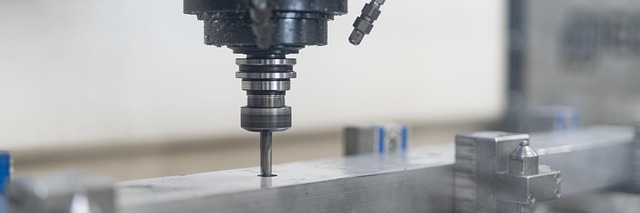
Function of Cabinet Connectors in Assembly
Cabinet connectors act as mechanical fasteners that hold panels together while preserving geometric alignment. In engineered furniture systems, this alignment is critical because even minor angular displacement can cause visible misfits or stress concentrations at the joints. The connector’s head shape, thread pitch, and flange design influence both ease of installation and long-term durability. A well-designed connector also reduces reliance on adhesives or manual adjustments during assembly.
The geometry of each connector dictates its compatibility with pre-drilled holes. For instance, eccentric cam connectors require precise circular pockets with defined depth tolerances to function correctly. When templates are used to guide drilling operations, their accuracy directly affects how smoothly connectors engage during final assembly.
Relationship Between Connector Design and Dimensional Accuracy
Connector design determines not only fitment but also dimensional control across an entire cabinet system. Variations in thread pitch or body diameter can alter drilling coordinates by fractions of a millimeter—enough to cause cumulative misalignment across multiple joints. Dimensional accuracy depends on consistent hole spacing and perpendicularity relative to panel surfaces.
Thermal expansion adds another layer of complexity. Metal connectors expand differently from wood or MDF substrates; ignoring this can lead to seasonal movement or joint loosening over time. Engineers often compensate by selecting materials with compatible coefficients of expansion or by using floating fittings that absorb minor shifts without stressing the structure.
Design Considerations for Drilling Templates
Drilling templates serve as precision instruments that translate digital designs into physical coordinates on panels. Their design must balance manufacturability with repeatability while accounting for connector geometry and tolerance stack-up.
Influence of Connector Geometry on Template Layout
Connector geometry defines how a template is laid out. The diameter and insertion depth dictate hole size, while connector type—such as dowel-based or cam-lock—determines spacing patterns. Multi-axis connectors demand more complex calibration since they require alignment along several planes simultaneously.
Templates must also accommodate tolerance zones for each connector type. If a template fails to account for these variations, even automated drilling machines may produce inconsistent results between batches. For high-volume production lines, this inconsistency translates into costly rework or scrapped parts.
Tolerance Management in Template Fabrication
Tolerance control during template machining is vital for maintaining consistent hole placement across multiple units. Errors introduced at this stage propagate through every cabinet assembled using that template. To mitigate such risks, manufacturers employ high-precision jigs or CNC machining centers capable of micron-level repeatability.
In practice, even small deviations—say 0.1 mm off-center—can cause visible gaps once doors or drawers are installed. Therefore, templates often undergo dimensional verification using coordinate measuring machines before being approved for production use.
Material Interactions Between Connectors and Substrates
The relationship between cabinet connectors and substrate materials determines both performance and longevity. Each material responds differently to drilling stress, torque application, and environmental changes such as humidity.
Impact of Substrate Properties on Connector Performance
Wood fibers compress under pressure differently than MDF or composite panels. A coarse-thread connector designed for solid wood may strip easily when used in medium-density fiberboard because the internal structure lacks sufficient grip strength. Conversely, fine-thread designs may fail to bite properly into softwoods.
Material-specific testing helps identify optimal thread profiles for each substrate type. In addition to mechanical grip, chemical interactions—such as corrosion between metal fasteners and acidic wood species—must be considered when selecting materials for long-term stability.
Surface Preparation and Drilling Technique Optimization
Surface preparation before drilling significantly influences hole accuracy and edge quality. A poorly prepared surface increases bit wander, leading to misaligned holes that compromise connector fitment. Controlled feed rates prevent tear-out around hole edges—a common issue when drilling laminated boards or veneered surfaces.
Pilot holes play an important role when dealing with fine-tolerance connectors like confirmat screws or mini-fix systems. They guide the main drill bit precisely along its intended path while reducing lateral stress on surrounding material fibers.
Technological Advances Enhancing Connector Precision
Modern manufacturing technologies have transformed how cabinet connectors integrate into production workflows. Automation now allows engineers to achieve consistency once possible only through manual craftsmanship.
CNC Integration in Template Manufacturing
CNC machining has revolutionized template fabrication by enabling micron-level accuracy in hole positioning. Digital templates eliminate variability between batches since tool paths are controlled directly by computer code rather than human operators.
Software-assisted path optimization further enhances precision while extending drill bit life by managing cutting angles dynamically during operation. This combination results in smoother bore walls and tighter fits between connectors and substrates.
Smart Connectors and Adaptive Fitting Systems
Emerging smart connectors incorporate micro-sensors that monitor torque levels during installation, providing real-time feedback on tightening force distribution across joints. Some designs automatically adjust clamping tension to maintain uniform pressure regardless of substrate density variations.
Integration with digital twin systems allows manufacturers to simulate mechanical performance before physical prototypes exist, reducing development time while improving predictive maintenance strategies throughout a product’s lifecycle.
Quality Control and Verification Methods in Drilling Template Design
Precision engineering requires robust quality assurance protocols at every stage—from template creation to final assembly testing—to maintain dimensional fidelity across production runs.
Metrology Techniques for Evaluating Connector Alignment
Coordinate measuring machines (CMM) remain standard tools for verifying positional accuracy after drilling operations. Optical scanners complement CMMs by detecting subtle surface deviations invisible under manual inspection tools like calipers or gauges.
Statistical process control methods track variation trends over time so engineers can intervene before defects accumulate across large production volumes.
Testing Protocols for Structural Integrity and Fitment Accuracy
Mechanical load testing assesses how different connector placements affect joint strength under realistic operating conditions such as vibration or impact loads during transport. Repeated assembly-disassembly cycles reveal potential wear points where threads might loosen after prolonged use.
Comparative analysis between prototype templates and mass-produced versions helps identify minor dimensional drifts caused by tool wear or calibration drift over extended manufacturing runs.
Integration of Ergonomic and Functional Aspects in Connector-Based Designs
Beyond technical precision lies an equally important goal: making assemblies faster and safer for technicians without sacrificing accuracy or durability.
Balancing Ease of Assembly with Precision Requirements
Ergonomic placement of cabinet connectors reduces strain during installation while improving speed on assembly lines. Modular systems allow flexibility when adapting designs without altering core alignment geometry—a practical advantage in custom cabinetry projects where dimensions vary frequently.
Torque specifications must be optimized carefully; excessive tightening distorts drilled holes while insufficient torque leads to loose joints that compromise stability over time.
Enhancing Workflow Efficiency Through Standardized Connectors
Standardization simplifies tooling setups across multiple product lines by maintaining uniform connector specifications such as thread size or head profile. This consistency shortens training periods for new technicians since procedures remain identical regardless of project scale or configuration complexity.
Compatibility between standardized connectors and digital templates supports scalable manufacturing models where automation plays an increasing role in daily operations—from small workshops using handheld drills to industrial plants running fully robotic systems.
FAQ
Q1: Why are cabinet connectors critical in modern furniture engineering?
A: They provide mechanical stability while controlling alignment tolerances essential for precision-built assemblies used in modular furniture systems.
Q2: How do drilling templates improve production consistency?
A: Templates translate digital coordinates into repeatable physical positions on panels, minimizing human error during repetitive drilling tasks.
Q3: What role does CNC technology play in improving connector fitment?
A: CNC integration delivers micron-level positioning accuracy that eliminates batch-to-batch variability common with manual jig setups.
Q4: How do material differences affect connector performance?
A: Each substrate type—wood, MDF, composite—responds uniquely to torque loads; matching thread geometry prevents stripping or deformation under stress.
Q5: What methods verify drilling precision after production?
A: Coordinate measuring machines combined with optical scanning detect positional errors early before full-scale assembly begins, ensuring consistent quality control throughout production cycles.


