
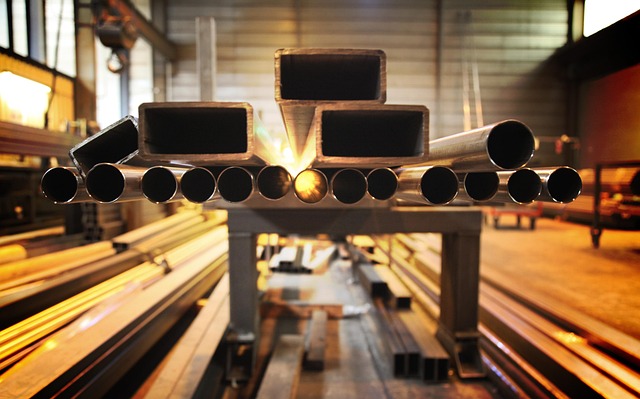
What Makes 304 Stainless Steel Tubing Ideal for Precision DIY Craft Models
DIY Craft Model Building Tubing 1 In OD Outside Diameter Hose & Tubing Uxcell 304 Stainless Steel Round Tubing 6mm OD 0.2mm Wall Thickness 250mm Length Seamless Nylon 3/8 In OD Outside Diameter Hose & Tubing 0.2mm Wall Thickness Seamless
For experts in precision model construction, 304 stainless steel tubing offers a rare mix of strength, corrosion resistance, and fine dimensional control. Compared with aluminum or nylon alternatives, it delivers greater rigidity and long-term stability while maintaining a refined finish ideal for visible framework or functional miniature components. When produced as seamless tubes—like Uxcell’s 6 mm outer diameter (OD), 0.2 mm wall thickness, and 250 mm length variants—it supports intricate assembly without deformation or misalignment.
Understanding the Characteristics of 304 Stainless Steel Tubing?
Before assessing its performance in modeling applications, it is essential to consider the alloy’s internal composition and manufacturing accuracy. These factors determine how well the tubing performs under mechanical stress and environmental exposure.
Composition and Material Properties
Type 304 stainless steel is an austenitic alloy made primarily from iron with around 18 percent chromium and 8 percent nickel. This composition forms a stable microstructure that resists oxidation even in moist air. The alloy’s tensile strength typically exceeds 500 MPa, allowing it to retain shape under miniature loads common in craft models. Its durability also extends to thermal stability; it tolerates both low and moderately high temperatures without losing form or surface integrity.
Dimensional Precision and Manufacturing Tolerances
High-precision manufacturing keeps the outer diameter and wall thickness consistent along the entire tube length. Seamless production avoids weld seams that could otherwise act as weak points during bending or cutting. For model builders who rely on repeatable geometry—especially when fitting shafts into bearings or connectors—this dimensional reliability is critical for consistent alignment.
Advantages of 304 Stainless Steel Tubing for Precision DIY Craft Models?
The benefits of using this material go beyond simple durability. Its corrosion behavior, mechanical response, and surface finish each contribute to the quality of a finished model.
Corrosion Resistance in Model Applications
The chromium content naturally develops a thin oxide film that protects against rust formation when exposed to air or water vapor. This passive layer regenerates if scratched, giving long-term protection even in humid conditions such as outdoor displays or marine-themed dioramas. Compared with carbon steel or untreated aluminum parts, maintenance frequency drops dramatically since no painting or sealing is required.
Mechanical Strength and Formability
Despite its hardness, 304 stainless steel tubing can be bent or cut cleanly with appropriate tools like rotary saws equipped with fine teeth. It resists cracking at sharp bends when properly lubricated during machining. For structural frames supporting rotating parts—such as axles in scale vehicles—the material provides stiffness without excessive weight, offering better dimensional stability than softer alloys.
Surface Finish and Aesthetic Appeal
A smooth polished surface enhances both appearance and handling comfort during assembly. The reflective quality lends models a professional-grade sheen similar to chromed finishes but without coating layers that may peel over time. Additionally, the metal’s resistance to scratches helps maintain visual consistency through repeated manipulation during prototype testing.
Comparing 304 Stainless Steel Tubing with Other Common Materials?
Material selection often determines not only aesthetics but also mechanical compatibility within complex assemblies. Comparing stainless steel with aluminum and nylon illustrates where each excels.
Differences Between Stainless Steel and Aluminum Tubing
Aluminum remains attractive for lightweight builds but lacks the stiffness of stainless steel under compression or torsion loads. Over time, aluminum may deform slightly from repeated stress cycles, whereas stainless maintains shape accuracy longer. Thermal expansion coefficients also differ—stainless expands less—so precision alignments hold better across temperature changes typical in workshops.
Evaluating Nylon Tubing as an Alternative Material
Nylon tubing offers flexibility useful for routing miniature fluid lines but cannot match metal alloys for load-bearing tasks. It deforms easily under tension or heat exposure from soldering operations nearby. Therefore, while nylon suits decorative covers or internal conduits within models, 304 stainless steel tubing remains superior for mechanical frameworks demanding tight tolerances.
Selecting the Right Specifications for DIY Craft Projects?
Choosing proper dimensions directly affects both functionality and ease of fabrication in small-scale engineering tasks.
Importance of Outer Diameter (OD) and Wall Thickness Selection
Common craft-model dimensions like 6 mm OD with 0.2 mm wall thickness strike a balance between rigidity and machinability. Thinner walls reduce mass while maintaining enough stiffness for precise assemblies using press-fit joints or micro screws. Maintaining uniform OD across batches ensures compatibility with standard fittings used by hobby machinists.
Length Considerations for Efficient Material Utilization
Standard lengths such as 250 mm simplify cutting into smaller sections using bench saws without generating excessive scrap material. Pre-cut tubes speed up repetitive production runs—for example when fabricating multiple identical struts—while longer stock pieces can be trimmed for custom geometries depending on project scale.
Techniques for Working with 304 Stainless Steel Tubing in Craft Models?
Handling thin-walled metal requires attention to tool choice and joining technique to preserve dimensional accuracy throughout construction.
Cutting and Shaping Methods for Precision Workpieces
Using fine-toothed saws minimizes burr formation at edges; applying light oil during cutting prevents heat-induced distortion on thin walls around 0.2 mm thick. After trimming, deburring tools clean edges so that sections fit snugly into connectors without scratching mating surfaces—a small but important detail when tolerances are tight.
Joining and Assembly Practices
Depending on design constraints, builders can use micro-soldering for permanent joints or adhesives formulated for metals where heat might damage adjacent materials like resin castings. Mechanical fasteners such as miniature screws provide reversible connections ideal for prototypes requiring disassembly during testing phases. Cleaning surfaces before bonding improves adhesion strength by removing residual oils from machining processes.
Practical Applications in Model Engineering and Prototyping?
In advanced modeling contexts—from architectural mock-ups to robotic prototypes—the versatility of 304 stainless steel tubing becomes evident across both structural and functional uses.
Structural Frameworks for Scale Models
Tubing serves effectively as skeletal support within detailed constructions where alignment accuracy matters most—for instance aircraft fuselage frames or bridge trusses at reduced scales. The rigidity allows attachment of lighter materials such as acrylic panels without warping over time, ensuring geometric fidelity between iterations of a prototype series.
Functional Components within DIY Mechanisms
Beyond static structures, stainless tubes function well as miniature shafts or bearing housings inside moving assemblies like gearboxes in RC vehicles or kinetic sculptures. Their wear resistance prolongs service life compared to softer brass alternatives while maintaining smooth rotation under small loads common in these mechanisms.
FAQ
Q1: What makes 304 stainless steel tubing preferable over carbon steel for models?
A: It resists corrosion naturally through its chromium oxide layer, eliminating frequent repainting or protective coatings required by carbon steel parts used outdoors.
Q2: Can thin-walled stainless tubes be bent without collapsing?
A: Yes, when filled temporarily with sand or supported by bending springs during forming; this prevents ovalization even at small radii typical of model-scale components.
Q3: Is seamless tubing always better than welded versions?
A: For precision crafts yes; seamless tubes avoid weld seams that could introduce slight diameter variations affecting fitment accuracy in miniature assemblies.
Q4: How should one polish stainless tubing after cutting?
A: Use progressively finer abrasive papers followed by metal polish compounds; avoid coarse grit which might leave visible scratches on reflective surfaces.
Q5: Are there specific safety precautions when machining small-diameter stainless tubes?
A: Always secure the tube firmly using soft-jaw clamps to prevent slippage; wear eye protection since fine metal fragments can eject at high speed during rotary cutting operations.


