
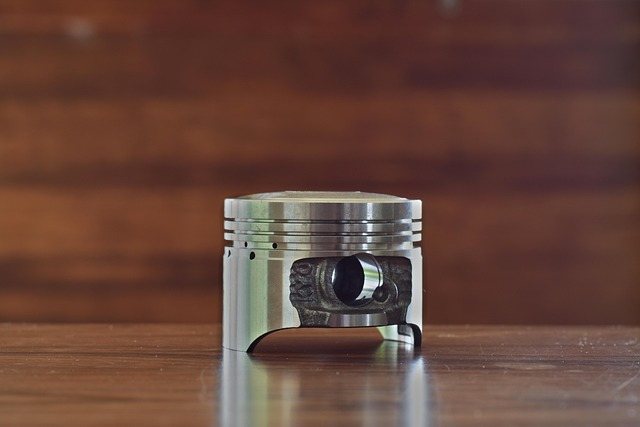
What Makes Phosphate Coating Essential for Manganese Treatment in Engine Parts
Manganese Phosphate Coating of Engine Components
Phosphate coating plays a decisive role in the durability and reliability of engine parts. Among various types, manganese phosphate stands out for its exceptional wear resistance, oil retention, and corrosion protection. It forms a dense microcrystalline layer that enhances surface performance under high-pressure and high-temperature conditions typical of internal combustion engines. This coating not only reduces friction but also extends component lifespan, making it an indispensable surface treatment in modern engine manufacturing.
The Role of Phosphate Coating in Engine Component Performance
Phosphate coatings are widely used across the automotive and heavy machinery industries to enhance metal surfaces. In engines, they serve as both a protective and functional layer that supports lubrication and corrosion resistance.
Understanding the Function of Phosphate Coating
Phosphate coating acts as a conversion layer on ferrous metals, improving their surface properties through chemical transformation. The process generates a microcrystalline structure that provides an excellent base for lubricants and subsequent coatings. This structure increases adhesion strength and helps prevent galling during assembly or operation. For example, piston rings treated with phosphate coatings can operate more smoothly during the initial break-in period, reducing scuffing and metal transfer.
Why Manganese Phosphate is Preferred in Engine Applications
Manganese phosphate is favored over zinc or iron phosphate due to its superior wear resistance and ability to perform under extreme loads. Its crystalline morphology allows effective oil retention, which is crucial when lubrication films become thin under boundary conditions. In high-performance engines where temperatures exceed 200 °C and pressures fluctuate rapidly, manganese phosphate helps maintain consistent frictional behavior. It is particularly beneficial for camshafts, rocker arms, and gear teeth exposed to cyclic stress.
Chemical and Structural Mechanisms of Manganese Phosphate Coatings
The effectiveness of manganese phosphate stems from its chemistry and microstructure. Both are influenced by controlled process parameters that determine coating uniformity and functional stability.
The Chemistry Behind the Conversion Process
The conversion process relies on chemical reactions between the metallic substrate and phosphoric acid solutions containing manganese ions. When the steel surface reacts with this solution, insoluble manganese phosphate crystals precipitate onto it. Factors such as temperature (typically 90–98 °C), immersion time, and bath concentration dictate crystal size and coating thickness. A stable nucleation rate ensures even deposition across complex geometries like crankshafts or connecting rods.
Microstructure Characteristics Relevant to Engine Parts
The resulting manganese phosphate layer exhibits fine-grained crystals tightly packed across the surface. These grains influence both frictional behavior and oil absorption capacity. A smaller grain size generally improves load-bearing ability while maintaining good lubricant retention. Surface roughness after coating also affects how oil spreads during operation; too smooth a finish may hinder lubrication film formation, while excessive roughness could increase abrasion during early running cycles.
Tribological Advantages of Manganese Phosphate Coating in Engine Systems
Tribology—the study of friction, wear, and lubrication—is central to understanding why manganese phosphate remains indispensable in engine manufacturing.
Reduction of Friction and Wear Under Load Conditions
Manganese phosphate acts as a sacrificial layer that prevents direct metal-to-metal contact during sliding motion. This property minimizes adhesive wear commonly observed in piston rings or valve trains operating under fluctuating loads. By absorbing part of the frictional stress, the coating extends component life even under boundary lubrication regimes where conventional oils might fail.
Lubrication Retention and Oil Absorption Properties
The porous microstructure of manganese phosphate allows it to hold lubricants within its cavities effectively. During engine start-up—when hydrodynamic lubrication has yet to form—these retained oils provide immediate protection against scuffing. Over time, this reservoir effect stabilizes friction coefficients across varying thermal conditions, supporting smoother transitions between cold start and full-load operation.
Corrosion Resistance and Environmental Stability of Phosphate Layers
Beyond tribological benefits, manganese phosphate also contributes significantly to corrosion control—an often-overlooked factor affecting long-term reliability.
Protective Barrier Against Oxidation and Corrosive Media
The phosphate layer isolates steel substrates from moisture and reactive agents found in combustion environments or coolant systems. This barrier delays rust initiation even when exposed to humidity or acidic residues from fuel combustion. When combined with post-treatments such as oil impregnation or wax sealing, corrosion resistance can improve by more than 40%, according to industrial testing standards like ISO 9717.
Influence of Surface Treatment Parameters on Corrosion Resistance
Bath composition plays a critical role in determining coating density. High acidity may produce coarse crystals with increased porosity, while optimal pH control yields compact layers with better barrier properties. Post-rinsing procedures remove residual acids that otherwise compromise long-term stability. Proper process control thus balances corrosion resistance with tribological performance—a trade-off often fine-tuned through empirical testing rather than theoretical models alone.
Integration of Manganese Phosphate Coatings into Engine Manufacturing Processes
In production lines where precision timing matters, integrating phosphate treatment demands careful synchronization with other machining steps.
Pre-treatment Requirements for Optimal Coating Quality
Before phosphating, surfaces must be thoroughly cleaned using alkaline degreasing solutions to eliminate oils or machining residues that inhibit crystal growth. Acid pickling follows to activate the metallic surface by removing oxides or scales formed during heat treatment. Maintaining controlled roughness—typically Ra 0.8–1.2 µm—ensures uniform nucleation across intricate geometries like cylinder bores or bearing caps.
Post-treatment Methods Enhancing Functional Performance
After phosphating, immersion in lubricating oils fills microscopic pores within the coating structure, enhancing anti-friction characteristics during assembly runs. Some manufacturers apply mild heat treatment at around 120 °C to stabilize crystalline phases further without altering dimensional tolerances. Quality inspection via optical microscopy verifies uniformity against industrial standards such as MIL-DTL-16232 Type M for military-grade components or ISO 9717 for civilian applications.
Advances in Manganese Phosphate Technology for Modern Engines
As environmental regulations tighten globally, innovation has shifted toward cleaner production methods without sacrificing performance metrics.
Innovations in Eco-Friendly Formulations and Process Control
Recent developments include zinc-free formulations that reduce heavy-metal discharge into wastewater streams while maintaining comparable wear resistance levels. Automated bath monitoring systems now track pH balance and temperature continuously through digital sensors integrated into production lines—a shift toward Industry 4.0-style manufacturing efficiency seen across major automotive plants worldwide.
Future Trends in Surface Engineering for High-Efficiency Engines
Future research explores combining manganese phosphate with advanced coatings like diamond-like carbon (DLC) or physical vapor deposition (PVD) layers for hybrid protection systems offering both hardness and self-lubrication properties. Another emerging area involves nano-scale phosphates designed to enhance tribo-corrosion synergy at atomic interfaces—a promising direction especially relevant for electric vehicle drive units where traditional oil-based lubrication behaves differently due to lower operating temperatures.
FAQ
Q1: What is the main purpose of applying a manganese phosphate coating on engine components?
A: It provides wear resistance, enhances lubrication retention under boundary conditions, and protects against corrosion during prolonged engine operation.
Q2: How thick is a typical manganese phosphate layer used on automotive parts?
A: Thickness generally ranges from 5 µm to 15 µm depending on component type; thicker layers may be used for gears subjected to heavy load cycles.
Q3: Can manganese phosphate coatings replace other anti-wear treatments like nitriding?
A: Not entirely; while it complements nitriding by improving initial run-in performance, it lacks the deep hardness achieved through diffusion processes.
Q4: Are there environmental concerns associated with traditional phosphating baths?
A: Yes; conventional baths may release zinc or nickel compounds into wastewater streams if untreated—hence modern eco-friendly alternatives are gaining traction.
Q5: What inspection methods verify coating quality before assembly?
A: Microscopic evaluation combined with weight gain measurement per ISO 9717 ensures proper crystal formation density across treated surfaces before final assembly stages.


