
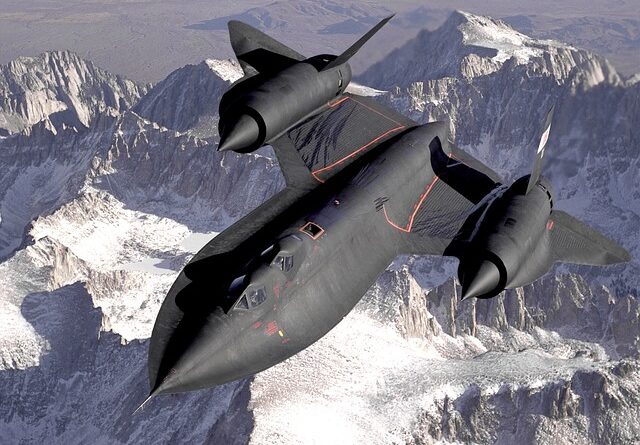
How Titanium Aerospace Innovation Is Redefining Additive Manufacturing Collaboration
GKN Aerospace and U.S. Air Force Partner to Advance Titanium Additive Manufacturing
Titanium additive manufacturing is reshaping aerospace production. The partnership between GKN Aerospace and the U.S. Air Force centers on developing scalable, high-performance titanium aerospace components through advanced additive techniques. This collaboration strengthens national defense manufacturing capabilities while driving innovation in materials science and digital production ecosystems.
Titanium Aerospace Innovation and Its Strategic Role in Additive Manufacturing
The aerospace industry’s shift toward lightweight, high-strength materials has made titanium indispensable. Its unique combination of mechanical and chemical properties aligns perfectly with the performance needs of modern aircraft.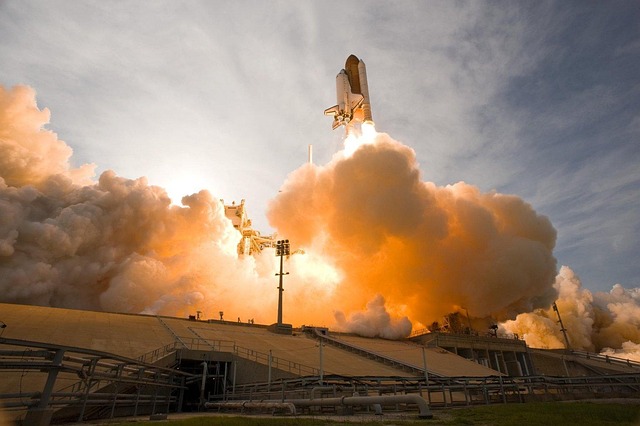
The Growing Importance of Titanium in Aerospace Engineering
Titanium’s high strength-to-weight ratio enhances aircraft performance and fuel efficiency by allowing designers to reduce structural mass without compromising safety. In commercial jets, replacing steel parts with titanium can cut weight by up to 40%, translating directly into lower fuel consumption. Its corrosion resistance and thermal stability make it ideal for demanding environments such as jet engines and outer fuselage structures where temperatures and stresses fluctuate constantly. These attributes also allow for thinner sections, supporting lightweight structural design while maintaining durability across long service lives.
Evolution of Additive Manufacturing in Aerospace Applications
Additive manufacturing (AM) has redefined how aerospace engineers approach design complexity. The technology enables intricate geometries that were once impossible with casting or forging, such as internal cooling channels in turbine blades or lattice-reinforced brackets. Layer-by-layer fabrication significantly reduces material waste—critical when working with costly titanium—and shortens lead times from months to weeks. By integrating titanium alloys into AM processes, manufacturers gain new flexibility to create optimized, topology-driven parts that meet both mechanical performance and weight reduction goals.
Collaborative Advancements Between GKN Aerospace and the U.S. Air Force
This partnership represents a broader trend toward public-private collaboration aimed at accelerating advanced manufacturing readiness for defense applications.
Objectives of the Partnership in Titanium Additive Manufacturing
The joint initiatives focus on refining powder-bed fusion (PBF) and directed energy deposition (DED) methods for titanium aerospace components. These technologies promise consistent microstructures, improved density control, and reduced residual stress formation during builds. The collaboration’s goals include enhancing component reliability through repeatable process parameters and ensuring scalability from prototype to production scale. Shared research efforts also target improvements in process control frameworks, qualification procedures, and certification standards—areas critical for defense procurement acceptance.
Technological Synergies Driving Innovation
GKN Aerospace contributes industrial-scale additive expertise developed through its global centers of excellence, including experience producing large structural parts for commercial aircraft programs. The U.S. Air Force brings access to advanced testing facilities where components undergo fatigue, vibration, and environmental validation under mission-relevant conditions. Together, these strengths accelerate the transition from laboratory prototypes to fully certified flight hardware ready for operational deployment.
Process Optimization and Material Science Integration
To achieve consistent quality in titanium additive manufacturing, process optimization must align closely with advances in material science.
Refining Titanium Powder Characteristics for Additive Processes
Powder quality directly determines build success in AM systems. Particle size distribution affects layer uniformity; morphology influences flowability within powder hoppers; purity governs final part integrity. Researchers are focusing on minimizing oxygen contamination during powder handling since even minor oxidation can embrittle titanium alloys. Enhanced recycling protocols now allow multiple reuse cycles without significant degradation in powder performance, improving cost efficiency while supporting sustainability objectives.
Process Monitoring and Quality Assurance Innovations
Real-time monitoring has become essential for maintaining part integrity during production. In-situ sensors track melt pool dynamics, layer thickness variation, and thermal gradients across each build layer. Data collected from these sensors feed into adaptive control algorithms that adjust laser power or scan speed instantaneously to maintain consistent conditions throughout fabrication. Post-build non-destructive evaluation methods—such as ultrasonic inspection or computed tomography—verify internal structure quality before components enter service.
Applications Transforming Aerospace Component Design and Performance
Additive manufacturing with titanium is already changing how engineers design key aircraft systems by merging functionality with manufacturability.
Structural Components Benefiting from Titanium Additive Manufacturing
Engine brackets, landing gear fittings, and airframe joints are among the first beneficiaries of this technology shift. Through additive consolidation, multiple machined or welded parts can be replaced by a single printed structure that reduces assembly steps while improving load distribution. The resulting components exhibit higher fatigue resistance under cyclic loads typical of flight operations, extending maintenance intervals and overall service life.
Enhancing Maintenance, Repair, and Overhaul (MRO) Capabilities
For military fleets where readiness is paramount, additive repair of titanium parts offers major advantages. Damaged components can be rebuilt layer by layer directly onto existing substrates using DED systems instead of waiting weeks for replacements from central depots. Digital twins further enhance MRO workflows by linking design data with operational feedback to predict wear patterns before failure occurs. This digital integration supports distributed manufacturing models capable of producing critical spares near deployment sites.
Future Directions in Collaborative Aerospace Manufacturing Ecosystems
As digital transformation continues across aerospace supply chains, partnerships like that between GKN Aerospace and the U.S. Air Force serve as blueprints for integrating advanced materials with intelligent production systems.
Scaling Production Through Digital Thread Integration
A fully connected digital thread links every stage—from initial CAD modeling through build execution to field performance tracking—ensuring traceability across the lifecycle of each titanium aerospace component. Cloud-based platforms enable secure data exchange between industry partners and defense agencies operating at different locations worldwide. Standardization efforts led by international bodies such as ISO are helping establish interoperability between various additive platforms used across the sector.
Sustainability Considerations in Titanium Additive Manufacturing Growth
Environmental responsibility is becoming a strategic priority alongside technical innovation. Additive processes inherently reduce material waste compared to subtractive machining since only required material is melted during fabrication. Energy-efficient laser systems further lower carbon emissions associated with part production cycles. Lifecycle assessments now guide development toward closed-loop titanium supply chains where scrap recycling feeds directly back into powder production—a model aligning with global sustainability targets set by organizations like IEA for low-carbon industrial operations.
FAQ
Q1: What makes titanium so valuable for aerospace applications?
A: Its strength-to-weight ratio allows lighter designs without sacrificing structural performance while resisting corrosion at high temperatures common in flight environments.
Q2: How does additive manufacturing improve aerospace component production?
A: It enables complex geometries with less material waste and faster turnaround times than conventional machining or casting methods.
Q3: What specific technologies are being developed under the GKN-Air Force partnership?
A: Research focuses on advancing powder-bed fusion and directed energy deposition techniques tailored for high-performance titanium alloys.
Q4: How does process monitoring enhance quality assurance?
A: Real-time sensor data allows immediate adjustments during printing to maintain uniform temperature distribution and defect-free builds.
Q5: Why is sustainability important in titanium additive manufacturing?
A: Reducing waste, reusing powders, and cutting energy use align with industry goals to lower environmental impact while maintaining economic efficiency.


