

Grout Saw Efficiency vs CNC Precision Which Workflow Delivers Better Results
Our Systems Have Detected Unusual Activity Coming From Your System. Please Try Again Later.
In professional fabrication, the debate between manual and automated material removal is less about tradition and more about measurable performance. Manual grout saws deliver tactile control ideal for restoration or confined spaces, while CNC routers powered by Vectric software dominate in repeatable, high-precision production. The conclusion is straightforward: grout saws serve craftsmanship, CNC workflows serve consistency. When paired with Vectric’s toolpath intelligence, CNC routers achieve unmatched repeatability and efficiency across complex geometries, redefining how tile and stone work is executed in both artisan and industrial contexts.
Comparing Traditional Grout Saw Techniques and CNC Routing Workflows
The distinction between manual and automated cutting methods defines modern fabrication standards. Each system shapes workflow efficiency, finish quality, and scalability differently.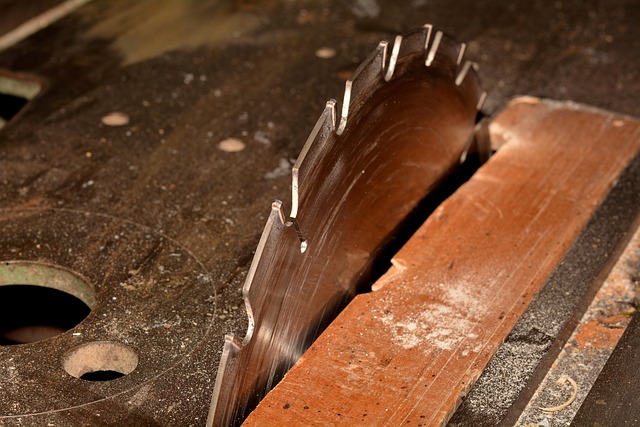
Understanding the Core Differences in Material Removal Methods
Manual grout saws depend entirely on operator control. Precision comes from hand pressure and angle consistency, which means results vary by skill level. These tools are best suited for removing old grout lines or adjusting joints during on-site repair work. In contrast, CNC routers follow programmed toolpaths that automate every motion of the cutting bit. This automation minimizes variation across multiple passes and ensures consistent edge geometry. The surface finish achieved by a router remains uniform even over long production runs because tool engagement is constant.
Evaluating Workflow Efficiency in Tile and Stone Applications
Grout saws excel in localized repair jobs where setup time must be minimal. A technician can start cutting within minutes without calibration or digital setup. However, when repetitive patterns or decorative panels are required, CNC systems outperform manual tools by maintaining steady throughput across batches. Productivity depends heavily on setup duration—CNC machines may take longer to configure but compensate through continuous operation once calibrated. Maintenance intervals also differ; manual saws need blade replacement more often, while routers require spindle checks and lubrication schedules to maintain precision.
The Role of Vectric CNC Software in Optimizing Router-Based Workflows
Software defines how effectively a CNC router translates design into physical output. Vectric’s ecosystem bridges artistic intent with technical execution through intelligent toolpath management.
How Toolpath Strategies Enhance Cutting Accuracy
Vectric’s adaptive toolpath strategies reduce redundant movement, allowing smoother transitions between contours. Feed rates automatically adjust based on material type—wood composites, natural stone substitutes, or ceramics—ensuring clean edges without chipping. By controlling acceleration curves at corners, the software keeps vibration low and improves edge definition even at higher speeds. This balance between motion control and feed rate tuning allows manufacturers to maintain tight tolerances without sacrificing speed.
Integration of Design-to-Manufacture Processes
CAD/CAM integration within Vectric streamlines the shift from concept to machining stage. Designers can import vector drawings directly into the CAM environment for simulation before cutting begins. The simulation preview shows tool engagement depth and collision risks so adjustments can be made digitally rather than wasting material on test cuts. Efficient nesting algorithms further minimize scrap by arranging parts within sheet boundaries based on real-time geometry analysis—a critical factor when working with costly stone slabs or composite panels.
Assessing Performance Metrics: Speed, Accuracy, and Repeatability
Performance evaluation must consider both qualitative outcomes like surface finish and quantitative metrics such as cycle time or dimensional tolerance.
Measuring Output Quality Between Manual and Automated Systems
Manual grout saws depend on tactile feedback; skilled operators can achieve precise joints but rarely match the repeatability of automation. In contrast, CNC routers maintain consistent depth per pass thanks to servo-controlled axes that hold position within microns of deviation. Dimensional tolerance studies consistently show automated systems outperforming manual methods in maintaining uniformity across multiple units—a decisive advantage for large-scale architectural installations.
Evaluating Throughput Efficiency in Production Environments
Cycle time optimization goes beyond raw cutting speed. For manual tools, productivity hinges on operator endurance; fatigue directly affects precision after extended use. With CNC workflows, once a program runs efficiently, batch processing becomes nearly continuous except for material loading intervals. This scalability makes routers preferable for industrial settings where hundreds of identical components must meet strict deadlines.
Application Suitability: When to Choose Grout Saw or CNC Router Workflows
Selecting between manual or automated systems depends on project size, location constraints, and required finish quality.
Ideal Scenarios for Manual Grout Saw Usage
Manual grout saws remain irreplaceable in restoration projects where delicate removal is necessary without damaging surrounding tiles or stone edges. Their portability allows technicians to maneuver easily around irregular surfaces such as mosaic floors or tight corners where larger machines cannot fit.
Restoration and On-Site Adjustments
These tools are particularly valuable during post-installation corrections—removing excess adhesive or smoothing uneven joints without disturbing finished surfaces nearby.
Custom Finishing and Detailing Tasks
For artisans performing intricate detailing by hand, tactile feedback provides immediate control over texture depth or bevel angle adjustments that digital systems may overshoot due to preset tolerances.
Ideal Scenarios for CNC Router Implementation with Vectric Software
CNC routing becomes indispensable when high-volume production demands uniformity across pieces or when designs involve complex 3D contours beyond manual capability.
High-Volume Production of Decorative Panels or Inlays
Automated routing ensures identical replication across batches using digital templates stored within Vectric’s library system. This eliminates human error that often arises from repeated manual tracing or measurement transfer during pattern making.
Complex Geometries Requiring Multi-Axis Precision
Vectric supports multi-axis operations that allow simultaneous movement along several planes—ideal for sculpted surfaces or layered relief carvings used in architectural facades or furniture components requiring compound curvature accuracy.
Technical Considerations Influencing Workflow Selection
Beyond design complexity lies the technical layer—tool wear management, machine calibration, and parameter tuning—which ultimately determines process stability over time.
Tool Wear, Bit Selection, and Maintenance Requirements
Diamond-coated bits extend operational life under abrasive conditions typical of ceramic or stone routing tasks. Selecting proper spindle speed prevents overheating that could cause micro-cracks along cut edges. Regular inspection schedules should track wear patterns since even minor imbalance can distort precision at high RPM levels.
Software Calibration and Machine Parameter Optimization
Feed rate tuning must align with both bit geometry and material density to prevent chatter marks during passes. Firmware updates improve motion control algorithms that govern acceleration smoothing—keeping router motion synchronized with programmed vectors to maintain dimensional integrity throughout prolonged runs.
Economic Factors Affecting Return on Investment (ROI) Analysis
Financial decisions often dictate technology adoption more strongly than technical merit alone; thus ROI modeling becomes essential before transitioning workflows.
Cost Implications of Manual Versus Automated Operations
Initial investment varies widely: a professional-grade grout saw costs a fraction of a mid-range CNC router equipped with Vectric software licenses. However labor intensity shifts this equation over time; manual operations demand continuous skilled input while automation scales output per hour without proportional labor increase—a key metric for contractors handling repetitive architectural elements.
Productivity Gains from Digital Workflow Integration
Digital integration reduces rework rates since simulation exposes potential errors before actual machining begins. Predictive maintenance analytics embedded within modern CNC controllers further lower downtime by forecasting spindle bearing wear based on runtime data trends—turning reactive maintenance into planned scheduling that sustains profitability over long-term production cycles.
FAQ
Q1: What materials benefit most from using a grout saw?
A: Porcelain tiles, natural stone joints, and ceramic mosaics respond well because controlled hand pressure avoids cracking delicate edges during repair work.
Q2: How does Vectric software improve router accuracy?
A: It adjusts feed rates dynamically according to material hardness while simulating tool engagement paths to prevent overcutting before execution begins.
Q3: Are CNC routers cost-effective for small workshops?
A: They can be if production involves repetitive designs since reduced rework offsets initial equipment cost within moderate output volumes.
Q4: What maintenance routine extends router lifespan?
A: Regular spindle lubrication checks every 100 operating hours combined with firmware updates keeps mechanical alignment stable under heavy use conditions.
Q5: Can manual grout saws match CNC-level precision?
A: Skilled operators can achieve close tolerances visually but cannot sustain identical results across multiple iterations as automation does through programmed consistency.


