
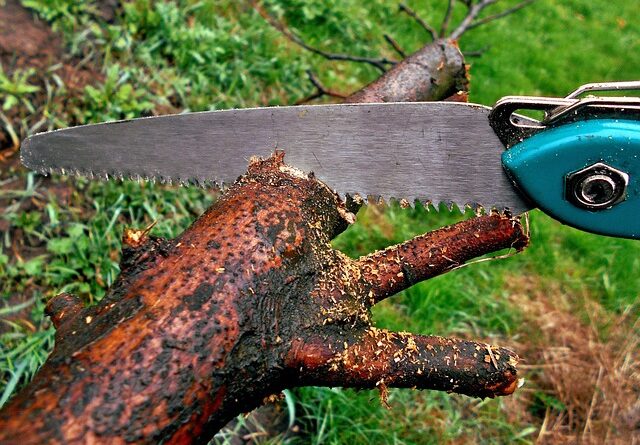
Is Pull Saw Technology Redefining Precision in Japanese Woodcraft
Pull Saw KAKURI Japanese Harvesting Sickle Review
The KAKURI Japanese Harvesting Sickle represents a refined evolution of traditional pull saw craftsmanship, merging centuries-old forging methods with modern precision engineering. Its design delivers exceptional control, minimal material waste, and consistent edge performance across demanding woodworking and harvesting tasks. The tool’s balance between flexibility and rigidity showcases how Japanese toolmaking continues to influence global standards in fine joinery and carpentry.
The Evolution of Japanese Pull Saw Technology
Japanese pull saw technology has undergone a remarkable transformation shaped by cultural craftsmanship, metallurgical advancement, and ergonomic insight. From early hand-forged tools to precision-engineered blades, each phase reflects Japan’s commitment to efficiency and detail.
Historical Context of Japanese Woodcraft Tools
Traditional Japanese woodworking emphasized accuracy and conservation. Artisans valued tools that allowed them to cut on the pull stroke rather than the push, enabling thinner blades with less effort. This orientation not only reduced fatigue but also improved control over delicate cuts. Over time, advances in metallurgy introduced harder yet more flexible steels, allowing for sharper edges that resisted deformation even under tension.
Transition from Traditional to Modern Pull Saws
As industrial processes matured, steel composition improved dramatically. The incorporation of high-carbon alloys increased edge retention while maintaining ductility. Machine precision also brought uniformity in tooth spacing and alignment—something nearly impossible with fully manual production. Despite this modernization, manufacturers preserved the essence of traditional craftsmanship: hand-finishing, blade tapering by eye, and ergonomic handle wrapping remain hallmarks of quality.
Design Philosophy Behind the Japanese Pull Saw
The design philosophy behind the Japanese pull saw combines mechanical simplicity with user-centered ergonomics. Each component—from blade thickness to handle curvature—is tuned for balance and responsiveness during cutting.
Understanding the Pull-Stroke Mechanism
The pull-stroke mechanism is central to its performance. By cutting on the pull rather than push motion, tension naturally straightens the blade during use. This minimizes deflection and allows for ultra-thin steel sheets that would otherwise buckle under compression. The result is a cleaner kerf with less wood fiber tear-out. Moreover, because force is applied toward the body rather than away from it, users experience less strain over long sessions—a critical advantage in precision joinery.
Blade Geometry and Tooth Configuration
Japanese pull saws feature distinct tooth patterns tailored for specific tasks: crosscut teeth slice across grain fibers cleanly; rip teeth glide along grain lines efficiently; hybrid patterns offer versatility for mixed materials. Many modern blades employ triple-ground teeth that accelerate cutting speed while maintaining surface smoothness. Variable pitch designs further enhance adaptability when transitioning between hardwoods and softwoods without changing tools.
Material Science in Contemporary Pull Saw Manufacturing
Modern pull saw manufacturing blends metallurgical science with artisanal sensibility. Every element—from alloy formulation to surface coating—affects performance longevity and tactile feedback.
Blade Materials and Heat Treatment Techniques
High-carbon steel remains standard due to its balance between hardness and resilience. Heat treatment cycles are precisely controlled to temper brittleness while maximizing edge life. Some advanced models undergo cryogenic tempering at sub-zero temperatures to stabilize molecular structure, enhancing wear resistance significantly. Anti-corrosion coatings such as nickel or fluorine compounds reduce friction during prolonged use in humid environments or resinous woods.
Handle Construction and Ergonomics
Handle design directly influences accuracy in fine work. Traditional rattan-wrapped handles provide a secure grip that subtly adjusts with moisture absorption—a natural shock absorber during repetitive motion. Contemporary models may use reinforced polymers or laminated composites for durability under extreme conditions without sacrificing tactile sensitivity. Proper alignment between handle axis and blade plane ensures straight tracking through dense timber or intricate joints.
Performance Characteristics in Precision Woodcraft Applications
In professional workshops where tolerances are tight, pull saws demonstrate measurable advantages over their Western counterparts.
Accuracy and Control in Fine Joinery Work
Pull saws excel at dovetails, tenons, and trim cuts requiring clean edges free from splintering. Their fine-tooth geometry supports micro-adjustments mid-cut—a feature often exploited by cabinetmakers when fitting joints by feel rather than measurement alone. Reduced tear-out translates into less sanding afterward, preserving sharp corners essential for aesthetic integrity.
Comparative Efficiency Against Western Push Saws
Unlike push saws that depend on compressive force, pull saws utilize tensile strength generated by pulling motion, requiring less physical exertion per stroke. This dynamic allows thinner kerfs—saving material cumulatively across projects—and smoother workflow transitions between roughing and finishing stages. Many professionals note that once accustomed to the rhythm of a pull stroke, productivity increases without sacrificing precision.
Evaluating the KAKURI Japanese Harvesting Sickle as a Case of Technological Refinement
KAKURI’s harvesting sickle exemplifies how heritage techniques can coexist with contemporary engineering principles within a single tool line.
Integration of Traditional Craftsmanship with Modern Engineering Principles
Each KAKURI blade is forged using time-tested hammering sequences before being machine-ground for uniformity. This dual process maintains internal grain alignment crucial for durability while achieving microscopic accuracy at the edge level. The curvature of its blade follows natural wrist motion arcs observed through ergonomic testing—an example of tradition meeting empirical design analysis.
Application Versatility Beyond Conventional Woodworking Uses
Beyond carpentry benches, KAKURI’s sickle proves effective in pruning orchards or shaping bamboo poles where controlled slicing matters more than brute force. Its dual-purpose nature appeals to craftsmen who value multifunctional tools capable of transitioning between workshop precision tasks and outdoor maintenance duties without compromise in feel or sharpness retention.
The Influence of Pull Saw Innovation on Future Woodcraft Practices
Innovation within Japanese pull saw technology continues influencing global toolmaking trends through modularity and sustainability considerations.
Emerging Trends in Tool Design and Customization
Manufacturers are exploring modular systems allowing interchangeable blades fitted onto standardized handles—reducing redundancy while expanding application range. Digital modeling now assists in simulating stress distribution along tooth geometries before production begins, shortening development cycles yet retaining artisanal oversight typical of high-end brands.
Sustainability Considerations in Tool Production and Use
Sustainable production increasingly defines responsible manufacturing ethos among leading toolmakers. Environmentally conscious steel sourcing reduces carbon intensity per ton produced while extending product life cycles through superior metallurgy minimizes waste generation across workshops worldwide—a quiet but meaningful step toward greener craftsmanship culture.
FAQ
Q1: Why do Japanese pull saws cut on the pull stroke?
A: Cutting on the pull stroke keeps the blade under tension instead of compression, preventing buckling and allowing thinner steel construction for finer cuts.
Q2: What makes KAKURI’s harvesting sickle unique among similar tools?
A: It merges traditional hand-forging with modern machining accuracy, resulting in consistent sharpness suited for both woodworking and agricultural applications.
Q3: How does tooth geometry affect cutting performance?
A: Crosscut teeth slice fibers cleanly across grain lines; rip teeth follow grain direction efficiently; hybrid patterns balance both actions depending on wood type.
Q4: Are modern materials better than traditional ones?
A: Modern alloys offer improved corrosion resistance and flexibility but still rely on traditional tempering knowledge to achieve optimal hardness ratios.
Q5: Is a Japanese pull saw suitable for beginners?
A: Yes, though it requires adapting technique since power comes from pulling rather than pushing; once mastered it provides superior control with less effort overall.


