
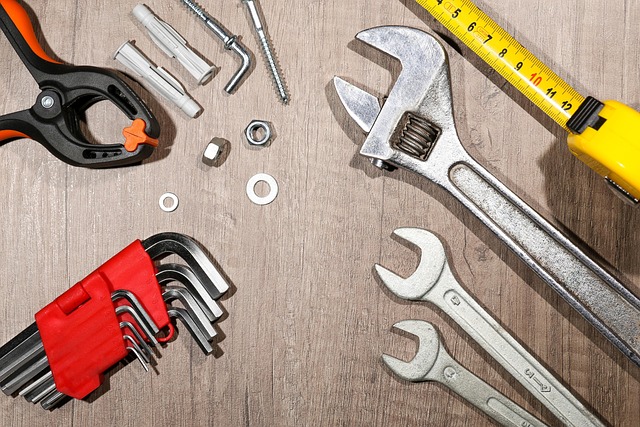
What Makes an Adjustable Spanner Essential in Northern America Professional Wrench Design
Northern America Professional Adjustable Wrench
The adjustable spanner has evolved into one of the most indispensable tools in Northern American engineering, shaped by industrial innovation and material science. The region’s manufacturers have refined its design for precision, strength, and ergonomic comfort. Modern models combine high-tolerance machining with alloy advancements to meet ANSI and ASME standards. This article traces that evolution, explains the engineering principles behind the tool’s function, and examines how digital manufacturing and sustainability are reshaping its future.
The Evolution of Adjustable Spanner Design in Northern America
The story of the adjustable spanner in Northern America reflects a century-long pursuit of mechanical efficiency. From early workshops to modern factories, every iteration has aimed to increase adaptability while maintaining structural integrity.
Historical Development of the Adjustable Spanner
Early adjustable spanners were inspired by 19th-century mechanical innovations that sought to replace multiple fixed wrenches with a single versatile tool. The rise of industrial machinery in cities like Chicago and Detroit created demand for adaptable equipment that could handle diverse fastener sizes. As factories expanded, engineers transitioned from fixed wrenches to adjustable mechanisms using threaded worms and sliding jaws for rapid size changes—an innovation that revolutionized maintenance work.
Key Milestones in Northern American Wrench Engineering
By the early 20th century, precision-machined jaws became standard, allowing tighter tolerances and smoother operation. Patent records from this period show continuous improvements in worm gear design and handle geometry. The mid-century focus on ergonomics introduced contoured grips and chrome finishes to resist corrosion. Material science breakthroughs later brought chrome-vanadium alloys that balanced toughness with machinability, setting new benchmarks for professional-grade spanners.
Engineering Principles Behind Adjustable Spanner Functionality
The efficiency of an adjustable spanner depends on its mechanical design and the precision of its adjustment mechanism. These principles determine torque capacity, jaw stability, and long-term reliability under heavy use.
Mechanical Design and Adjustment Mechanism
At the core is the worm gear system—a fine-threaded screw that moves one jaw along a calibrated guide. This allows precise control over jaw width without compromising alignment. The geometry ensures even pressure distribution across fastener flats when torque is applied. Machining accuracy within micrometer tolerances prevents backlash during adjustment, maintaining consistent grip even after prolonged use.
Load Distribution and Stress Analysis in Professional Use
In professional environments such as automotive repair or pipeline assembly, load distribution along the handle determines durability. Engineers model stress paths using finite element analysis to predict deformation under torque loads exceeding 200 N·m. High-grade alloys reduce fatigue failure by maintaining elasticity under cyclic stress. Optimized jaw angles minimize slippage—critical when working on rounded or worn nuts common in industrial maintenance.
Material Science and Manufacturing Standards in Northern American Production
Material selection defines both performance and lifespan. Northern American manufacturers emphasize metallurgical consistency through controlled forging processes aligned with international standards.
Selection of Alloys for Durability and Precision
Chrome-vanadium steel remains dominant due to its balance between hardness (HRC 45–50) and ductility. Carbon steel variants are still used for general-purpose models but require protective coatings against corrosion. Heat treatment cycles involving quenching at 870°C followed by tempering improve tensile strength while preventing brittleness—a key factor for impact resistance during field operations.
Quality Control and Standardization Practices
Professional-grade adjustable spanners must comply with ANSI B107.100 or ASME B107 standards covering dimensional accuracy, torque capacity, and surface hardness. Each production batch undergoes coordinate measuring machine (CMM) inspection to verify jaw parallelism within ±0.05 mm tolerance. Polished nickel-chrome finishes enhance corrosion resistance while providing tactile grip comfort essential for extended use in oily conditions.
Ergonomic Considerations in Professional Wrench Design
Modern wrench design integrates human factors engineering to reduce fatigue during repetitive tasks while improving control precision across varying torque levels.
Human Factors Engineering in Tool Design
Anthropometric studies guide handle contouring so that pressure distributes evenly across the palm during high-torque pulls. Designers balance head mass against handle length—typically at a ratio near 1:5—to maintain stability without excessive wrist strain. Anti-slip knurling or rubberized inserts enhance grip security even when gloves or lubricants are present.
Influence of User Feedback on Modern Adjustability Features
Continuous feedback from field technicians has driven innovations such as quick-adjust levers replacing traditional worm screws for faster operation in confined spaces. Some newer designs feature laser-etched scales for immediate size reference—useful when alternating between metric and imperial fasteners on mixed assemblies.
Comparative Analysis: Adjustable Spanners vs Fixed Wrenches in Professional Applications
While fixed wrenches excel in precision fits, adjustable models dominate environments demanding flexibility across variable sizes without tool changes.
Functional Versatility Across Different Work Environments
Adjustable spanners allow mechanics to service multiple bolt dimensions with one tool—ideal for mobile repair kits or fieldwork where carrying full wrench sets is impractical. However, their movable jaws can introduce slight play compared with fixed sockets, affecting torque accuracy at extreme loads above 250 N·m.
Performance Metrics Under Industrial Conditions
Controlled laboratory tests show torque efficiency within 95% of equivalent fixed wrenches when properly adjusted. Wear rate studies over 10,000 cycles reveal minimal degradation when jaws are hardened beyond HRC 48. In petrochemical facilities where exposure to solvents is frequent, nickel-plated variants show superior longevity compared to plain carbon steel versions.
Technological Advancements Shaping the Future of Adjustable Spanners in Northern America
The next generation of adjustable wrenches merges traditional craftsmanship with digital manufacturing technologies aimed at precision consistency and smart functionality.
Integration of Smart Manufacturing Techniques
CNC machining now achieves sub-0.01 mm repeatability across production runs, producing smoother worm threads that eliminate binding issues common in older models. Additive manufacturing enables lightweight prototypes using titanium composites before mass forging—a process reducing development cycles from months to weeks while testing new ergonomic geometries.
Emerging Trends Toward Smart Tools and Digital Calibration
Manufacturers are experimenting with embedded digital torque sensors transmitting data via Bluetooth for calibration tracking—aligning with Industry 4.0 practices seen across North American plants. IoT-enabled tools could soon alert users when recalibration is required or detect over-torque conditions automatically through internal strain gauges integrated into the handle core.
Environmental Responsibility in Modern Wrench Production
As sustainability becomes central to industrial policy, Northern American toolmakers adopt greener manufacturing processes without sacrificing durability or performance standards.
Sustainable Material Sourcing Practices
Recycled alloy inputs now constitute up to 40% of total material content while maintaining identical metallurgical properties verified through spectrographic analysis. Forging optimization reduces scrap rates by nearly one-third compared with conventional billet cutting methods—a measurable environmental gain aligned with ISO 14001 frameworks promoting responsible resource use.
Energy Efficiency in Manufacturing Operations
Modern heat-treatment furnaces employ low-emission gas systems cutting CO₂ output per batch by roughly 25%. Lifecycle assessments track energy consumption from raw material extraction through packaging stages, guiding continuous improvement initiatives toward carbon-neutral production goals set by leading North American manufacturers.
FAQ
Q1: Why are chrome-vanadium alloys preferred for professional adjustable spanners?
A: They provide an ideal combination of hardness, tensile strength, and corrosion resistance suitable for repeated high-torque applications without deformation.
Q2: How do adjustable spanners maintain accuracy over time?
A: Precision machining minimizes jaw play while heat-treated components resist wear under cyclic stress conditions common in industrial usage.
Q3: Are digital torque-sensing wrenches already available commercially?
A: Some prototypes exist; however, widespread adoption is still developing as manufacturers refine sensor integration within compact wrench housings.
Q4: What standards govern adjustable wrench quality in Northern America?
A: ANSI B107 series and ASME B107 specifications define dimensional tolerances, strength requirements, and surface finishing criteria for professional-grade tools.
Q5: How does ergonomic design impact user performance?
A: Proper handle contouring reduces hand fatigue during extended use while balanced weight distribution improves control precision under variable torque loads.


