
Could Black Malleable Iron Pipe Explain Why a Steel Pipe Protrudes 13 Meters in Osaka
Steel Pipe Protrudes 13 Meters Above Ground on a Highway in Osaka
A 13‑meter steel pipe unexpectedly rising from an Osaka highway has sparked debate among engineers and infrastructure specialists. The protrusion is not a random accident but likely the result of complex interactions between material properties, construction sequencing, and ground movement. Experts suggest that the pipe’s composition—possibly black malleable iron or structural steel—combined with soil expansion and thermal stress, could explain its vertical displacement. This event underscores the need for rigorous material verification and continuous monitoring in dense urban networks where even minor deviations can lead to dramatic outcomes.
Overview of the Osaka Steel Pipe Phenomenon
The Osaka case highlights how an isolated structural anomaly can reveal deeper systemic issues in infrastructure management. To interpret it correctly, both physical characteristics and engineering context must be assessed.
Description of the 13‑Meter Protruding Steel Pipe
The pipe emerged along a section of elevated highway near an interchange connecting industrial and residential districts. It projects vertically about 13 meters above the pavement, its base embedded within a service conduit beneath the roadbed. Field observations describe a cylindrical shape roughly 600 mm in diameter, fabricated from metallic alloy consistent with carbon steel or black malleable iron. The surface shows uniform oxidation patterns suggesting long‑term burial before exposure. Its alignment appears nearly perpendicular to the ground plane, implying constrained upward motion rather than lateral bending.
Initial Engineering Interpretations
Structural engineers proposed several hypotheses soon after discovery. One view considers it a remnant of a temporary support column used during bridge construction that was never fully dismantled. Another theory points to pressure buildup within buried conduits due to ground heave or trapped air expansion, forcing the pipe upward through weaker asphalt layers. Historical project records from Osaka’s expressway authority show multiple retrofits over two decades, which raises the possibility of undocumented modifications in subsurface utilities.
Understanding Black Malleable Iron Pipe in Engineering Contexts
Any assessment of such anomalies must consider material science fundamentals. The distinction between black malleable iron and structural steel determines how each reacts under stress or environmental change.
Material Composition and Metallurgical Properties
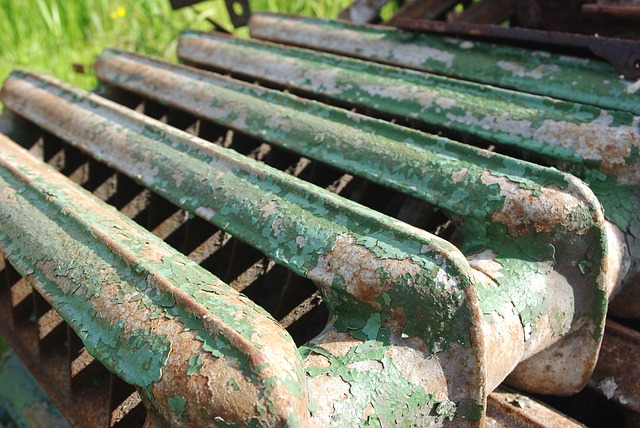
Black malleable iron results from heat‑treating white cast iron to convert brittle carbon structures into clusters of graphite nodules within a ferritic matrix. This process yields moderate ductility and tensile strength compared to standard carbon steel, which maintains higher yield limits but less inherent damping against vibration. While both resist compression well, black malleable iron exhibits reduced fatigue tolerance under cyclic loads typical of highways or bridges. Its corrosion resistance depends heavily on surface coatings since unprotected ferrous materials oxidize quickly in humid conditions.
Common Applications in Infrastructure and Industrial Systems
Engineers commonly use black malleable iron pipe for low‑pressure gas lines, fire sprinkler systems, and water distribution inside buildings. It connects through threaded joints rather than welding, simplifying assembly but limiting its suitability for high‑stress installations. Standard sizes follow ISO 49 or ASTM A197 specifications ranging from 6 mm to 150 mm nominal diameters. In outdoor or buried environments without protective wrapping or cathodic systems, these pipes degrade faster than ductile iron or galvanized steel alternatives.
Comparative Analysis: Black Malleable Iron Pipe vs Structural Steel Pipe
Comparing mechanical performance clarifies whether such material could withstand subsurface forces without deformation leading to protrusion.
Structural Performance Characteristics
Structural steel pipes possess higher yield strength—often exceeding 250 MPa—while black malleable iron averages around 150 MPa. Under repeated traffic vibration or temperature cycling, malleable iron may experience microcracking along graphite inclusions, promoting gradual failure at joints. Steel’s homogeneous grain structure provides better fatigue endurance and flexibility under bending moments induced by soil settlement or thermal gradients.
Compatibility with Highway Construction Practices
Civil infrastructure typically employs welded carbon steel or ductile iron for embedded conduits because they integrate well with reinforced concrete foundations and tolerate dynamic loads from vehicles above. Threaded malleable fittings would not meet most expressway standards due to leakage risk under differential movement. Misidentification during procurement—labeling low‑grade piping as structural—could create vulnerabilities unnoticed until stress redistributes unevenly.
Potential Engineering Explanations for the Protrusion Event
To explain why this particular pipe surfaced so dramatically, engineers examine both human factors like specification errors and natural influences such as soil behavior.
Material Substitution or Specification Deviation Scenarios
If contractors substituted black malleable iron components where structural steel was specified, mechanical mismatch could have caused local buckling once confined stresses exceeded elastic limits. Procurement audits sometimes reveal incomplete cross‑verification between supplier documentation and design intent, especially when multiple subcontractors handle separate phases of utility installation. Such lapses highlight the importance of traceability protocols mandated by ISO 9001 for quality assurance in public works.
Thermal Expansion and Soil Interaction Factors
Metallic pipelines expand when heated; if buried without expansion joints or flexible couplings, they exert axial force against surrounding soil layers. In Osaka’s temperate climate with seasonal variation exceeding 30 °C, even small coefficients of linear expansion can translate into several centimeters of movement per hundred meters of pipe length. When combined with clayey subsoil prone to volumetric change during rainfall cycles, this can generate uplift pressure sufficient to push rigid sections upward through pavement layers.
Installation or Maintenance‑Induced Anomalies
Improper anchoring during backfill can leave voids beneath heavy conduits. Over time groundwater infiltration may erode fine particles creating cavities that collapse unevenly under load redistribution. Hydrostatic pressure then lifts lighter segments toward zones of least resistance—the surface asphalt being one example. Maintenance crews using high‑pressure flushing equipment might also introduce transient forces if venting pathways are blocked, amplifying vertical displacement risks.
Implications for Future Infrastructure Design and Monitoring
The Osaka incident serves as a case study reminding designers that even routine materials require continuous oversight once installed underground.
Material Selection Guidelines for Urban Piping Systems
Urban projects should differentiate clearly between service piping like black malleable iron pipe and load‑bearing conduits intended for structural integration. Selection criteria must consider tensile capacity, corrosion environment, joint type compatibility, and expected maintenance intervals. Protective coatings such as epoxy linings combined with sacrificial anodes extend service life where electrochemical corrosion is likely.
Advanced Monitoring Techniques for Subsurface Infrastructure Stability
Modern inspection regimes now include ground penetrating radar (GPR) surveys capable of detecting voids around buried metallic objects before deformation becomes visible at the surface. Acoustic emission sensors mounted along key junctions can record microstrain events indicative of shifting loads. Integrating these data into digital twin simulations allows predictive modeling of long‑term deformation under varying traffic density and temperature cycles.
Policy and Safety Considerations for Public Infrastructure Management
Municipal authorities should adopt transparent reporting frameworks requiring periodic publication of inspection results for all critical assets within metropolitan zones. Rapid response teams trained in geotechnical assessment can evaluate emergent anomalies like protrusions without disrupting major traffic arteries unnecessarily. Public communication protocols also matter; timely updates prevent misinformation while reinforcing confidence in maintenance operations.
FAQ
Q1: What type of metal was likely used in the Osaka protruding pipe?
A: Observations suggest it may have been either carbon steel or black malleable iron based on surface texture and oxidation patterns seen after exposure.
Q2: Could temperature changes alone cause such a large displacement?
A: Temperature variation contributes but rarely acts alone; combined effects with soil expansion or poor anchoring amplify vertical movement significantly.
Q3: Why is black malleable iron unsuitable for heavy structural use?
A: Its lower yield strength and threaded connections make it vulnerable under cyclic loading common in highways or bridges.
Q4: How can similar incidents be prevented?
A: Strict material verification during procurement, better documentation control, and continuous subsurface monitoring reduce risk substantially.
Q5: What technologies help detect early warning signs underground?
A: Ground penetrating radar and acoustic sensors identify voids or strain shifts before visible deformation occurs on road surfaces.


