
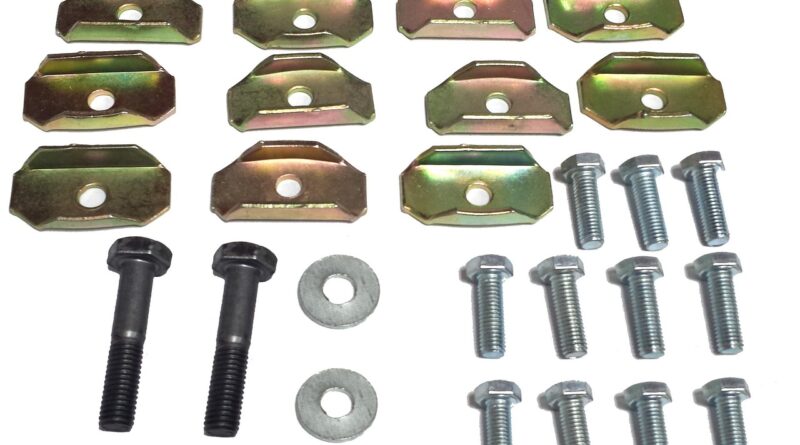
Bolts and washers explained for reliable fastened joints
Quick answer for choosing bolts and washers
Bolts and washers work together to create and maintain clamp force in a joint. The bolt, nut, and threads develop the tightening load; the washer changes how that load is transferred into the clamped material. A washer may spread bearing pressure, protect a surface, provide a harder or smoother bearing face, cover an oversized or slotted hole, or serve a special function such as preload indication.
That does not mean a washer is automatically required under every bolt head or nut. The right choice depends on the joint material, hole size, fastener grade, tightening method, vibration level, corrosion exposure, and the standard specified for the assembly.
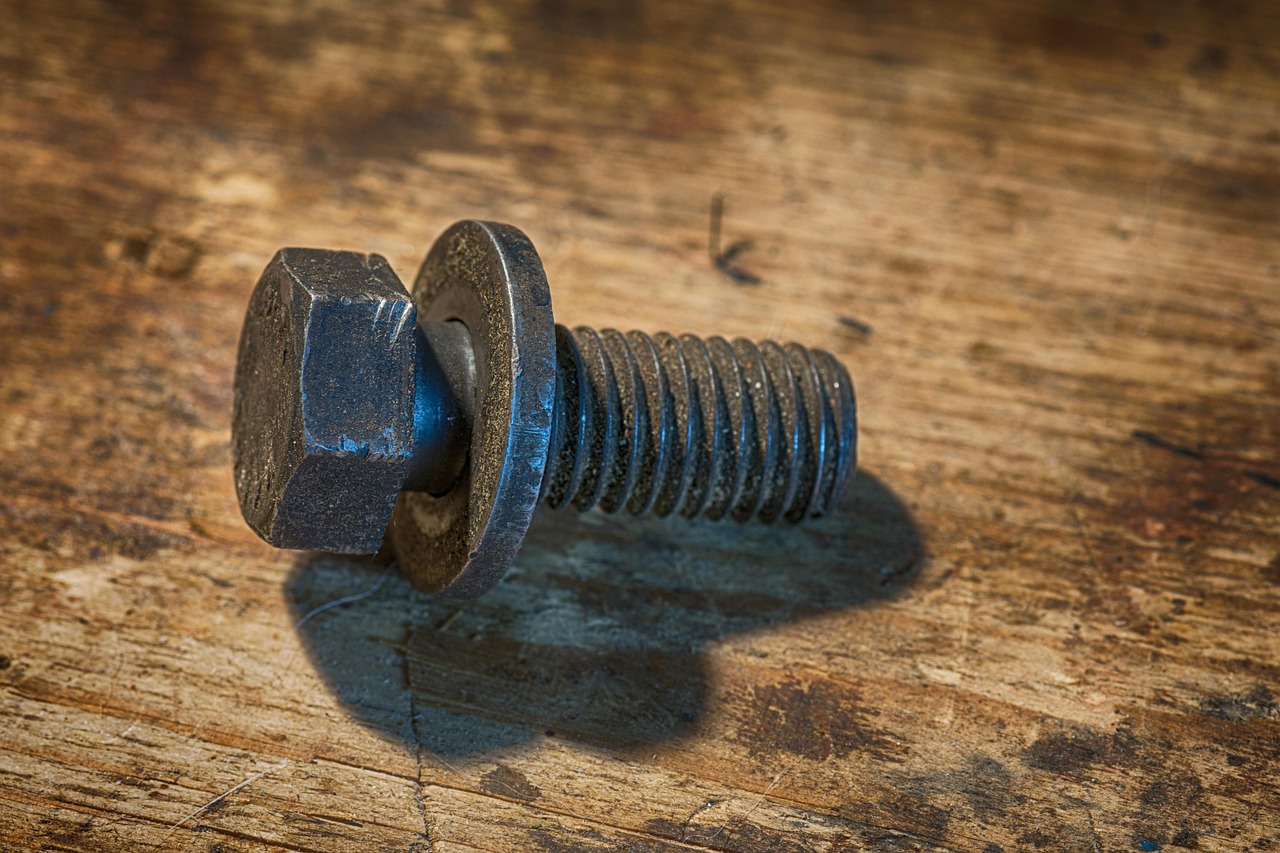
For related fastening topics, see the Bolts & Fasteners section.
What a washer actually changes in a bolted joint
A bolted joint is held together mainly by clamp force. When a bolt is tightened, the fastener stretches slightly and compresses the parts between the head and nut. That clamping action helps the joint resist separation, slip, or movement. In many assemblies, the washer matters because it becomes the bearing surface between the rotating fastener element and the workpiece.
The most common reason to use a flat washer is to distribute bearing load over a larger area than the underside of a bolt head or nut alone. This is especially useful when the clamped material is softer than the fastener, such as aluminum, wood, plastics, thin sheet, painted steel, or galvanized components. Without a suitable washer, the fastener may embed into the surface, damage the coating, or lose part of its initial preload as the material settles.
A washer can also create a more consistent surface for tightening. Torque does not translate directly into bolt tension; it is strongly affected by thread friction and under-head or under-nut friction. A clean, properly specified washer can make the bearing condition more predictable than tightening directly against a rough casting, a slotted hole edge, or a coated surface. Torque still will not be exact, but one source of uncontrolled variation is reduced.
Washers can also address geometry problems. If a hole is oversized, elongated, or slotted, the bolt head or nut may not provide enough bearing area. A washer with the correct outside diameter and thickness can bridge the opening and help prevent local deformation. In structural and engineered assemblies, this is not a preference item; washer type and placement should follow the governing drawing, code, or specification.
Common bolt and washer combinations
Hex bolts with flat washers
The most familiar combination is a hex bolt, hex nut, and one or two flat washers. In general-purpose metalwork, a flat washer is often placed under the rotating side of the assembly, usually the nut, to protect the workpiece and give the nut a consistent bearing surface. A second washer under the bolt head may be used when both sides need protection, when the hole is oversized, or when assembly instructions call for it.
For light fabrication, equipment frames, brackets, guards, and maintenance work, matching the washer nominal size to the bolt nominal diameter is the normal starting point. A 1/2 inch bolt normally uses a 1/2 inch washer; an M12 bolt normally uses an M12 washer. The washer hole is intentionally larger than the bolt shank to provide clearance, so selection should be based on the washer standard and application, not only on the measured inner diameter.
Structural bolt assemblies and hardened washers
Structural bolting is more tightly controlled than general shop fastening. In U.S. steel construction practice, high-strength structural joints commonly refer to specifications such as ASTM F3125 for bolt assemblies and ASTM F436/F436M for hardened steel washers. The Research Council on Structural Connections specification, dated June 11, 2020, is a key reference for snug-tightened, pretensioned, and slip-critical joints using high-strength bolts.
In these assemblies, washer hardness and placement matter. A soft washer under a high-strength bolt can deform and reduce the reliability of the pretension. Hardened washers are used where the specification requires them, where the turned element needs a controlled bearing face, or where holes and outer plies require additional support. Field crews should not substitute general-purpose flat washers for structural hardened washers unless the engineer of record and project documents allow it.
Machine screws, socket screws, and small-diameter fasteners
Small fasteners are often used with washers for surface protection, appearance, spacing, or load distribution. Socket head cap screws, button head screws, and machine screws may have smaller bearing surfaces than standard hex bolts. A washer can reduce marking and help keep the head from pulling into soft material.
At the same time, adding a washer changes stack height and may reduce available thread engagement. In thin assemblies, electronics, fixtures, or machine covers, that small thickness can matter. Before adding a washer to a design that did not originally include one, check that the bolt still engages enough threads and that the head does not interfere with adjacent parts.
Washer types and when they make sense
Not all washers serve the same purpose. A plain flat washer, a hardened washer, a fender washer, and a direct tension indicator are different parts with different design intent. The table below summarizes common types without treating any one of them as universally correct.
| Washer type | Main purpose | Typical use | Important limitation |
|---|---|---|---|
| Flat washer | Distributes load and protects the surface | General bolted joints, brackets, equipment frames | Does not lock the joint by itself |
| Hardened flat washer | Provides a hard bearing surface under higher clamp loads | Structural bolts, high-strength fasteners, pretensioned joints | Must match the applicable standard and assembly requirement |
| Fender washer | Provides a large outside diameter for soft or thin materials | Sheet metal, plastics, wood, repair work | Large diameter does not compensate for poor joint design |
| Split lock washer | Adds spring action and edge bite in some light-duty joints | Older equipment, noncritical maintenance assemblies | Should not be assumed reliable for severe vibration |
| Belleville or conical spring washer | Adds spring deflection to help maintain load over movement | Thermal cycling, short grip length, controlled spring force applications | Orientation, stack arrangement, and load-deflection data are critical |
| Direct tension indicator | Helps indicate achieved bolt tension | Structural bolting and inspected pretensioned joints | Must be installed and inspected according to the specified method |
The key point is that washer selection should start with the failure mode or assembly need. If the surface is soft, load distribution may be the priority. If the joint is structural, standard compliance and hardness may control the choice. If the concern is vibration, the answer may be a locking nut, wedge-locking washer, thread-locking compound, safety wire, cotter pin, or a redesigned joint rather than a simple split washer.
Matching size, material, hardness, and finish
Size and clearance
The washer must fit the bolt, but it must also fit the hole condition and surrounding geometry. Inner diameter provides clearance around the bolt shank. Outer diameter controls bearing area. Thickness affects stiffness, clearance, and the ability to span enlarged openings. Standards such as ASME B18.21.1 for inch-series washers and ISO 7089 or ISO 7090 for metric plain washers define dimensional families so buyers and engineers can specify repeatable parts.
Problems appear when only one dimension is considered. A washer with the right inner diameter may have an outside diameter too small to cover a slot. A large washer may interfere with a radius, weld bead, bend, or nearby fastener. A thin washer may dish under load. A thick washer may reduce thread engagement or create a clearance problem. In critical assemblies, washer dimensions should be checked on the drawing rather than selected from habit.
Hardness and bearing surface
Hardness is often overlooked. A low-strength washer can be acceptable in light-duty joints, but it may be unsuitable under a high-strength bolt or nut. If the washer yields during tightening, the joint can lose preload as the washer embeds or cups. Hardened washers reduce this risk and are commonly specified where high clamp loads, pretensioning, or structural reliability are involved. See also: Fittings & Valves.
The bearing surface also matters. Burrs, scale, thick paint, dirt, zinc buildup, or damaged coatings can change friction and seating behavior. A washer cannot fully correct a poorly prepared joint surface. Clean contact faces and consistent coatings are part of reliable tightening, especially when torque is used as the installation control.
Coating and galvanic compatibility
Bolts and washers should usually have compatible corrosion protection. A plain steel washer used with a galvanized bolt outdoors can become the weak point in the assembly. A stainless washer mixed with carbon steel may create galvanic concerns in wet or marine conditions, depending on the metals, surface area ratio, and electrolyte exposure. In many practical applications, matching finish families is the simplest rule: zinc with zinc, hot-dip galvanized with hot-dip galvanized, and stainless with suitable stainless hardware.
Coating thickness can also affect fit. Hot-dip galvanized fasteners and washers have heavier coatings than electroplated zinc parts. That extra thickness may influence thread fit, washer seating, and hole clearance. For safety-related or code-governed joints, do not mix coated components unless the governing specification allows the combination.
Installation details that affect joint reliability
Washer placement
A common practical rule is to place the washer under the part that turns during tightening. If the nut turns, the washer usually goes under the nut. If the bolt head turns, the washer may be placed under the bolt head. The reason is straightforward: the rotating element creates friction and can scar the workpiece. A washer provides a replaceable bearing face and can help tightening feel more consistent.
Some assemblies require washers on both sides. Others require a washer only under the turned element. Structural bolting, slotted holes, direct tension indicators, and manufacturer-specified joints may have exact placement requirements. In those cases, the drawing or specification overrides general shop rules.
Torque, friction, and lubrication
Torque values are meaningful only when the assumed friction conditions are close to the real assembly. Adding, removing, lubricating, or changing a washer can change the relationship between torque and bolt tension. A lubricated washer face may produce more bolt tension at the same torque than a dry, rough surface. A rough washer may do the opposite.
This is why torque charts should not be treated as universal truth. They are based on assumptions about thread condition, lubrication, material, coating, and bearing surface. For critical joints, installation procedures may require calibrated wrench testing, turn-of-nut methods, tension-control bolts, direct tension indicators, or other verification steps. For ordinary maintenance work, the practical lesson is to keep hardware condition consistent and follow the equipment manual when a torque is specified.
Vibration and locking
Vibration loosening is not solved simply by adding any washer. A bolted joint generally resists loosening best when it has sufficient clamp length, proper preload, stable mating surfaces, and a locking feature suited to the load direction and movement. Split lock washers have a long history in light-duty use, but engineering references have repeatedly cautioned that they should not be relied on as a universal solution for dynamic joints.
For machinery, vehicles, pumps, vibrating frames, and transport equipment, the better approach is to identify the loosening mechanism. If transverse slip is occurring, increasing clamp force, improving joint friction, using fitted fasteners, adding dowels, changing joint geometry, or using a tested locking system may be more effective than changing washer style alone.
Practical checklist before assembly
- Confirm the bolt standard and grade. The washer should be suitable for the bolt strength and intended clamp load.
- Check the hole condition. Oversized, short-slotted, and long-slotted holes may require specific washer dimensions or hardened washers.
- Match the washer size to the nominal bolt size. Do not choose only by visual fit.
- Review material compatibility. Consider hardness, corrosion protection, and galvanic behavior.
- Place the washer intentionally. Under the turned element is common, but drawings and specifications take priority.
- Avoid stacking washers casually. Multiple washers can settle, slip, or reduce thread engagement unless the design calls for them.
- Do not substitute washer types in critical joints. A fender washer, split washer, and hardened washer are not interchangeable.
- Keep surfaces clean. Dirt, burrs, heavy paint, and damaged coatings can reduce preload consistency.
- Use the specified tightening method. Torque, turn-of-nut, direct tension indication, and tension-control systems are not equivalent without proper procedure.
Frequently asked questions
Do bolts always need washers?
No. Many bolted joints work without washers when the bolt head or nut has adequate bearing area and the clamped material is strong enough. Washers are used when they solve a specific problem, such as surface protection, load distribution, hole coverage, hardness, or tension indication.
Should the washer go under the bolt head or the nut?
In many general assemblies, the washer is placed under the component that turns during tightening, often the nut. If both sides need protection or the design requires it, washers may be used under both the bolt head and nut. For structural or equipment-specific joints, follow the drawing or specification.
Can I use a larger washer for extra strength?
A larger outside diameter can reduce bearing pressure on soft or thin material, but it does not automatically make the joint stronger. If the washer is too thin, too soft, or poorly seated, it may deform. Large washers can also interfere with edges, bends, welds, or adjacent fasteners.
Are lock washers better than flat washers?
They serve different purposes. A flat washer mainly provides bearing area and surface protection. A lock washer is intended to resist loosening in certain conditions, but it is not a universal vibration solution. Critical dynamic joints should use a locking method proven for the application.
What standards are commonly used for washers?
Common references include ASME B18.21.1 for inch-series plain and lock washers, ASTM F436/F436M for hardened steel washers, ASTM F844 for general-use steel plain washers, and ISO 7089 or ISO 7090 for metric plain washers. The correct standard depends on region, industry, bolt type, and application requirements.


