
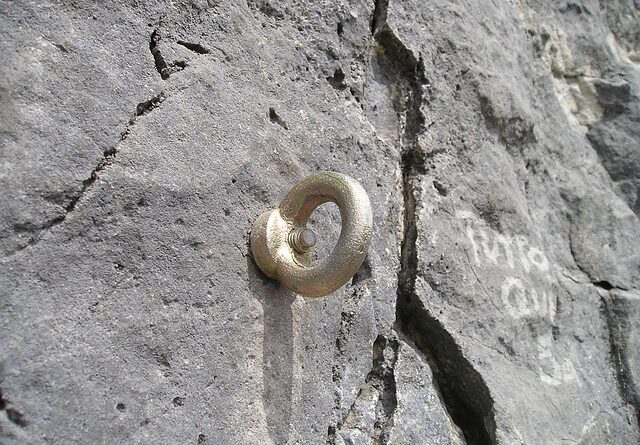
How Does the EU Anti Dumping Duty on Headless Screws Affect Eye Bolt With Hook Trade
Wall Anchors For Furniture ISpinner 140pc Drywall Anchor Kit
Drywall self drilling anchors have become a staple in professional mounting systems for furniture and fixtures. The ISpinner 140pc Drywall Anchor Kit exemplifies this evolution, offering a complete range of anchors designed for both residential and commercial applications. Its self-drilling design eliminates the need for pilot holes, saving time while maintaining precision. When properly installed, these anchors distribute load efficiently across drywall surfaces, ensuring stable support for shelves, cabinets, and media units. For contractors handling large projects, the kit’s pre-assorted components simplify workflows and improve consistency across installations.
Understanding Drywall Self Drilling Anchors
The performance of drywall self drilling anchors relies on precise engineering that merges material science with mechanical design. Each anchor type is optimized to penetrate gypsum board cleanly and hold firm under variable loads.
The Engineering Behind Self Drilling Anchors
Self drilling anchors feature a sharp cutting tip that acts as its own drill bit, allowing direct insertion into drywall without pre-drilling. The helical thread design carves through gypsum while compacting the surrounding material to form a tight mechanical bond. Zinc alloy models provide superior rigidity for medium to heavy loads, while nylon anchors are preferred for lighter fixtures due to their flexibility and corrosion resistance. Alloy steel variants combine both strength and durability, often used in industrial or high-humidity environments. The thread geometry—typically coarse with deep flanks—maximizes surface contact with the drywall matrix, enhancing pull-out resistance.
Load Distribution and Structural Behavior in Drywall Applications
In drywall assemblies, load transfer occurs primarily through frictional engagement between the anchor threads and the gypsum substrate. As torque is applied during screw engagement, compressive forces spread radially through the wallboard, creating a stable equilibrium between shear and tensile stresses. For furniture mounting, understanding rated shear (sideways) and tensile (pull-out) strengths is essential; exceeding these limits risks localized failure or anchor slippage. Factors like drywall thickness—usually 1/2 inch or 5/8 inch—and spacing between adjacent anchors significantly influence holding capacity. Too close spacing can cause stress overlap, reducing overall stability.
Evaluating the ISpinner 140pc Drywall Anchor Kit
Professionals evaluating an anchor kit must assess not only component variety but also manufacturing precision and packaging efficiency. The ISpinner 140pc kit integrates multiple anchor types suited for diverse installation conditions.
Component Breakdown of the Kit
The kit includes self drilling anchors for quick installations, expansion anchors for hollow wall cavities, and standard screw sets in various lengths and diameters. This assortment allows installers to match anchor type to wall composition without switching tools mid-task. Screws are typically zinc-plated carbon steel with Phillips heads ranging from 25mm to 50mm in length, covering both light decorative pieces and heavier wall cabinets. Packaging is organized by size category within labeled compartments—a practical feature that supports efficient on-site selection during high-volume work.
Quality Assessment Based on Material Integrity and Design Precision
Material integrity directly affects long-term reliability. Consistent casting quality ensures uniform thread profiles that maintain grip under cyclic loading conditions such as door swings or shelf vibrations. Manufacturing tolerances are critical; even minor deviations in thread pitch can lead to uneven torque distribution or premature stripping during installation. Corrosion resistance testing under high humidity confirms zinc-coated components resist rust formation over extended exposure periods—a key factor in coastal or bathroom environments where moisture fluctuates frequently. Compared with standard market-grade anchors, ISpinner’s components exhibit tighter dimensional control and reduced variance in pull-out strength.
Application Techniques for Reliable Furniture Mounting
Proper technique transforms an average installation into a structurally sound one capable of supporting substantial weight safely over time.
Preparation and Installation Procedures
Before installation, accurate marking using a laser level or template ensures alignment consistency across multiple mounting points. A cordless screwdriver set at low torque minimizes overdriving risk that could fracture drywall around the anchor head. The process typically involves marking positions, inserting the self-drilling anchor directly with steady pressure until flush with the surface, then fastening screws until snug without overtightening.
Mounting Heavy Furniture Using Self Drilling Anchors
For heavy furniture such as wall-mounted cabinets or entertainment units, weight thresholds per anchor must be respected—commonly between 20 to 50 pounds depending on material type and drywall thickness. Distributing load evenly across several anchors reduces localized stress concentrations that might otherwise cause pull-out failures. When total weight exceeds safe limits for drywall alone, integration with underlying wall studs provides additional reinforcement; combining stud-mounted screws with self-drilling anchors yields optimal structural security.
Performance Optimization in Professional Settings
Professional installers often face unpredictable site conditions where drywall composition varies or previous repairs compromise integrity. Addressing such challenges requires adaptability grounded in engineering principles rather than guesswork.
Addressing Common Installation Challenges
Anchor slippage usually stems from over-torquing or misalignment during insertion which enlarges the pilot cavity unintentionally. In soft or double-layer panels common in renovations, using longer-threaded variants improves grip depth while maintaining flush surface finish. If an anchor fails during testing pull-out load checks, repositioning at least two inches away prevents cumulative weakening of the board structure.
Enhancing Efficiency with the ISpinner 140pc Kit in Large Projects
On large-scale projects like hotel rooms or office partitions, workflow efficiency matters as much as mechanical performance. Pre-assorted kits reduce downtime spent sorting hardware on-site while maintaining traceability of component usage per room or section. The self-drilling mechanism eliminates pilot hole preparation steps entirely—saving several minutes per fixture when repeated hundreds of times daily translates into measurable labor cost reductions over bulk procurement cycles.
Technical Considerations for Selecting the Right Anchor Type
Selecting appropriate anchors begins with understanding how load paths interact within drywall layers under both static and dynamic conditions.
Matching Anchor Specifications to Load Requirements
Anchor choice depends on furniture weight class: lightweight shelves may use nylon variants while kitchen cabinetry demands zinc-alloy types rated above 30 pounds each. Penetration depth correlates directly with stability; deeper embedment increases frictional area resisting pull-out forces but must remain within board limits to avoid backside rupture. Temperature fluctuations can affect plastic-based materials through thermal expansion; metal alternatives maintain dimensional stability across wide environmental ranges common in HVAC-equipped interiors.
Integration with Modern Interior Mounting Systems
Contemporary interior designs increasingly rely on modular shelving units and concealed bracket systems requiring precise anchoring solutions compatible with thin partitions or composite panels. Self drilling anchors adapt well to these configurations due to their compact footprint and reliable torque response during automated tool use. As architectural standards shift toward lightweight construction emphasizing sustainability metrics like recyclability and reduced material mass per square meter, future developments will likely focus on hybrid polymer-metal composites delivering higher strength-to-weight ratios without sacrificing ease of use.
FAQ
Q1: How much weight can a single self drilling anchor hold?
A: Depending on material type and drywall thickness, most zinc alloy self drilling anchors support between 20–50 pounds under static load conditions.
Q2: Are nylon drywall anchors suitable for humid areas?
A: Yes, nylon offers excellent corrosion resistance making it ideal for bathrooms or kitchens where moisture exposure occurs regularly.
Q3: What causes an anchor to spin freely during installation?
A: This happens when excessive torque strips the surrounding gypsum; reducing driver speed usually prevents this issue.
Q4: Can these anchors be reused after removal?
A: Reuse isn’t recommended since thread engagement weakens once removed from its original cavity leading to reduced holding strength upon reinstallation.
Q5: Should pilot holes ever be drilled before using self drilling anchors?
A: No pilot holes are necessary as their integrated cutting tips are engineered specifically to penetrate drywall directly while forming a secure fit simultaneously.


