
Are New Standards Redefining Reamer Bit Performance Testing Methods
New Standards Could Change How Reamer Bits Are Tested
Reamer bit testing is entering a new era driven by digital precision and global standardization. Traditional methods that once relied on manual measurement and visual inspection are being replaced by data-centric systems capable of tracking tool wear, torque, and temperature in real time. These changes are not just procedural; they redefine how manufacturers verify performance and durability. The upcoming standards, shaped by international collaboration and smart manufacturing technologies, will make reamer bit testing more predictive, consistent, and transparent across borders.
The Evolution of Reamer Bit Performance Standards
The development of reamer bit testing has evolved alongside advances in machining technology. Historically, the focus was on basic mechanical integrity rather than integrated data analysis.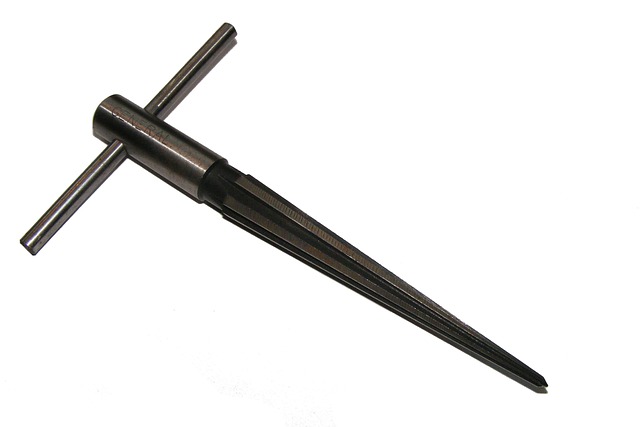
Historical Overview of Reamer Bit Testing Practices
Early reamer bit testing prioritized dimensional accuracy and surface finish as the main indicators of quality. Tool geometry, material hardness, and wear resistance formed the backbone of these early standards. However, test environments varied widely among manufacturers and laboratories, leading to inconsistent results. Some facilities used different coolant types or cutting speeds, making cross-comparison nearly impossible. This lack of uniformity limited the reliability of performance claims across the industry.
Drivers Behind the Development of New Testing Standards
The introduction of advanced coatings like TiAlN and nano-composite layers has changed how reamer bits behave under stress. These materials require updated evaluation methods that can capture micro-level friction changes. Global manufacturers now push for unified benchmarks to compare results regardless of geographic location or machine type. Moreover, digital measurement tools have become integral to modern testing labs, enabling real-time data collection that feeds into AI-driven analysis systems.
Emerging Methodologies in Reamer Bit Performance Evaluation
As manufacturing becomes more digitized, reamer bit testing is shifting from manual inspection to automated data acquisition systems capable of continuous monitoring.
Transition from Conventional to Data-Centric Testing Approaches
Modern setups employ digital sensors that record cutting forces, vibration levels, and acoustic signals during operation. These sensors create a detailed profile of tool behavior under load. Artificial intelligence further enhances this process through predictive wear modeling—estimating when a reamer bit will fail based on cumulative stress patterns. Automated logging systems also improve traceability by linking each test result to specific production batches.
Standardized Parameters for Measuring Efficiency and Longevity
Torque measurement now serves as a primary indicator for evaluating efficiency, while feed rate and cutting temperature reveal how effectively heat dissipates during machining. Wear mapping techniques visualize degradation zones on the tool’s surface using high-resolution imaging. Statistical repeatability metrics have been introduced to confirm that results remain consistent across multiple trials—a key requirement for certification under international standards like ISO 3685.
Interrelation Between Reamer Bits and Grinder Discs in Testing Environments
Although reamer bits and grinder discs serve different functions, their performance tests share underlying principles related to abrasive contact mechanics.
Comparative Analysis of Material Removal Dynamics
Both tools rely on controlled abrasion to remove material efficiently. Yet differences in rotational speed and contact area significantly affect thermal behavior during tests. Grinder discs typically operate at higher surface speeds with broader contact zones, producing more heat per second than a reamer bit does. By studying grinder disc dynamics, engineers can refine reamer bit evaluation protocols—especially regarding cooling strategies and energy efficiency metrics.
Influence of Abrasive Composition on Test Accuracy
Abrasive grain size directly impacts surface roughness outcomes during testing cycles. Finer grains produce smoother finishes but may obscure early signs of wear. Bonding materials also play a crucial role; resin-bonded abrasives dissipate heat differently than vitrified ones, altering temperature readings over long runs. Harmonizing these parameters across abrasive tools helps maintain consistency between grinder disc and reamer bit evaluations.
The Role of International Organizations in Defining New Standards
Global coordination is essential for aligning test procedures across regions with varying industrial capabilities.
Collaboration Between Industry Bodies and Research Institutions
Organizations such as ISO and ASTM are working closely with national laboratories to unify criteria for tool performance assessment. Joint research programs validate emerging test methods through empirical trials conducted under controlled environments. Manufacturers contribute feedback from production floors to fine-tune guidelines before final publication—creating a dynamic loop between science and industry practice.
Implementation Challenges in Global Manufacturing Contexts
Despite progress toward standardization, several challenges persist. Equipment calibration varies among countries due to differences in voltage standards or machine tooling tolerances. Retrofitting older test benches with new sensors involves significant cost investments that smaller firms may struggle to afford. Additionally, operators must undergo specialized training to interpret complex datasets generated by AI-integrated systems—a shift from traditional manual inspection routines.
Future Outlook on Performance Testing Frameworks for Reamer Bits
Future testing frameworks will merge physical experimentation with virtual simulation technologies for faster iteration cycles.
Integration of Smart Manufacturing Technologies into Testing Protocols
IoT-enabled monitoring systems now transmit live data streams during machining trials, allowing engineers to adjust parameters instantly if anomalies arise. Digital twin models replicate real-world conditions virtually to predict how a reamer bit performs under various loads or materials without consuming physical prototypes. Machine learning algorithms continue refining these models by analyzing historical datasets collected from previous tests.
Potential Impacts on Product Development and Quality Assurance Processes
Standardized digital outputs accelerate product development since engineers can compare new designs against verified benchmarks instantly. Quality control departments benefit from objective metrics rather than subjective assessments based on operator experience alone. Enhanced traceability also supports certification processes by providing verifiable audit trails linking every tested batch back to raw material sources—a crucial factor for compliance within aerospace or medical tooling sectors where precision is non-negotiable.
FAQ
Q1: Why are new standards necessary for reamer bit testing?
A: Modern materials and coatings require more precise evaluation techniques than traditional mechanical tests can provide.
Q2: How do grinder disc studies influence reamer bit testing?
A: They help refine heat management models since both tools share similar abrasive contact mechanics despite operational differences.
Q3: What role does AI play in performance evaluation?
A: AI predicts tool lifespan by analyzing wear trends from large datasets collected through sensor-based monitoring systems.
Q4: Which organizations are leading standardization efforts?
A: ISO and ASTM collaborate with national agencies to establish globally accepted criteria for tool performance assessment.
Q5: How will smart manufacturing impact future tests?
A: Real-time IoT feedback and digital twin simulations will make testing faster, more accurate, and less dependent on manual adjustments.


