
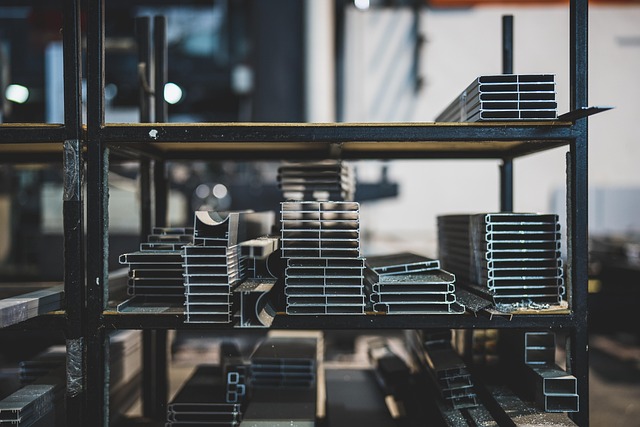
Can Black Iron Pipe Near Me Demonstrate The Same Resealing Effect Under Pressure
Study Unveils How Cast Iron Pipes Temporarily ’Reseal’ Under Pressure
Cast iron pipes, long valued for their durability, display a curious self-sealing behavior when subjected to internal pressure. This phenomenon occurs as microcracks close temporarily under mechanical stress, restoring partial integrity before permanent failure. The effect is linked to the metal’s graphite structure and limited elasticity. While black iron pipes share some metallurgical traits, they lack the same capacity for pressure-induced resealing. Engineers studying this behavior aim to design modern piping materials that combine structural toughness with adaptive sealing properties, improving safety in high-pressure systems such as gas and steam networks.
The Phenomenon of Self-Sealing Under Pressure
In industrial systems, cast iron’s ability to momentarily self-seal under pressure has intrigued engineers for decades. This behavior reflects an interplay between the material’s microstructure and the physics of stress redistribution within its matrix.
Explanation of How Cast Iron Pipes Exhibit Temporary Resealing Behavior When Subjected to Internal Pressure
When internal pressure rises, cast iron pipes experience localized elastic deformation that compresses existing microcracks. The graphite flakes embedded in the iron matrix help distribute stress unevenly, allowing certain cracks to close temporarily. This mechanical “resealing” does not restore full strength but delays leakage until external conditions stabilize. Such transient recovery has been observed in municipal water mains where fluctuating pressures cause cyclic sealing and reopening.
Discussion of the Material Properties That Contribute to This Effect, Including Microstructural Composition and Elasticity Limits
The key lies in cast iron’s heterogeneous structure composed of ferrite and pearlite phases interspersed with graphite inclusions. These inclusions act as crack arresters by absorbing strain energy. However, because cast iron is relatively brittle with low tensile strength, its resealing capacity operates only within narrow elasticity limits—beyond which cracks propagate irreversibly. Engineers often describe this as a balance between rigidity and microplastic adaptability.
Conditions Under Which the Resealing Effect Is Observed, Such as Pressure Thresholds and Environmental Factors
Resealing typically occurs under moderate pressures below 2 MPa in humid or aqueous environments where corrosion films assist closure by forming thin oxide layers along crack interfaces. Temperature fluctuations also influence performance; at elevated temperatures above 150°C, thermal expansion may enhance short-term sealing but accelerate fatigue over time.
Comparing Cast Iron and Black Iron Pipes in Structural Behavior
While both cast iron and black iron are ferrous materials used in piping, their internal structures differ significantly, leading to distinct responses under stress or pressure.
Differences in Composition Between Cast Iron and Black Iron Pipes, Focusing on Carbon Content and Metallurgical Characteristics
Cast iron contains 2–4% carbon primarily as graphite flakes or nodules, whereas black iron (essentially mild steel) holds less than 0.3% carbon dissolved uniformly in ferrite-pearlite phases. This difference gives cast iron its characteristic brittleness but also its unique self-sealing tendency due to discontinuous graphite networks that interrupt crack growth paths.
How These Differences Influence Mechanical Response Under Stress or Internal Pressure
Under pressure loading, black iron exhibits ductile deformation rather than fracture initiation. Its homogeneous composition allows uniform strain distribution without forming microgaps that could later reseal. In contrast, cast iron’s non-uniform structure permits localized compression zones around graphite sites that momentarily close cracks.
Analysis of Whether Black Iron Pipes Can Exhibit Similar Temporary Sealing Tendencies as Cast Iron
Black iron lacks the flake graphite morphology necessary for self-sealing; however, surface oxidation may create minimal sealing at joints or threads during compression cycles. Still, this effect is negligible compared with cast iron’s intrinsic microstructural response. Therefore, when engineers search for “black iron pipe near me” options for replacement projects, they typically prioritize corrosion resistance over any resealing capability.
Material Science Behind Pressure-Induced Sealing
To explain why certain metals exhibit transient sealing effects while others do not, one must analyze their microscopic features and how these interact under dynamic loads.
Microstructural Mechanisms Driving Resealing
In gray cast iron, graphite flakes act as both stress concentrators and energy dissipators. When internal pressure compresses the surrounding ferritic matrix, these flakes deform slightly within their cavities, reducing crack aperture width. The ferrite-pearlite mixture provides limited flexibility that enables temporary closure before yielding occurs. Conversely, black iron’s continuous ferritic lattice lacks discrete inclusions; thus any deformation leads to plastic flow rather than reversible sealing.
Examination of Ductility, Brittleness, and Crack Propagation Patterns Under Pressure
Cast iron’s brittleness manifests through rapid crack propagation once tensile stresses exceed its modest yield threshold (~130 MPa). Yet under compressive states induced by internal pressure surges, those same cracks can press together without full rupture—a paradoxical benefit of its stiffness. Black iron behaves oppositely: it deforms plastically long before cracks form but cannot reseal once breached due to absence of discontinuous phases.
Hypothesis on How Black Iron’s Homogeneous Microstructure Affects Its Ability to Mimic Resealing
Researchers hypothesize that introducing fine precipitates or lamellar carbides into steel matrices might emulate cast iron’s pressure response by creating microzones capable of elastic compression around flaws. Current alloy development efforts explore adding trace elements like vanadium or molybdenum to modify grain boundaries toward this goal.
Surface and Joint Integrity Considerations
Beyond bulk material properties, joint design and surface condition critically affect how pipes behave under fluctuating pressures in real installations.
How Joint Design, Threading, and Sealing Compounds Affect Pipe Performance Under Fluctuating Pressures
Threaded joints rely on mechanical interference combined with sealants such as PTFE tape or anaerobic compounds to prevent leaks during expansion-contraction cycles. Poorly machined threads can amplify stress concentrations leading to early failure even if base metal remains intact.
Interaction Between Pipe Coatings, Oxidation Layers, and Sealing Materials During Compression Cycles
Protective coatings like zinc phosphate or epoxy reduce oxidation but may alter friction coefficients at joints during tightening. Thin oxide films formed naturally on black iron surfaces sometimes assist minor self-sealing by filling microscopic voids when compressed repeatedly—a small yet measurable contribution to leak prevention.
Influence of Surface Roughness and Corrosion Resistance on Long-Term Sealing Reliability
Surface roughness determines how effectively sealants adhere under load variations; smoother finishes yield more consistent sealing performance over time. Corrosion undermines this stability by introducing pits that act as nucleation points for leaks—particularly relevant for older black iron systems exposed to moist air or chemicals.
Experimental Evaluation of Black Iron Pipe Performance
Laboratory testing provides insight into whether modern steels can replicate any aspect of cast iron’s transient sealing response under controlled conditions.
Pressure Testing Methodologies
Standardized hydrostatic tests per ASTM A53 involve gradually increasing internal fluid pressure while monitoring deformation via strain gauges and ultrasonic sensors. Temperature control ensures consistent viscosity of test fluids—usually water or mineral oil—to isolate mechanical from thermal effects during multiple pressurization cycles lasting up to 24 hours each.
Parameters Such as Temperature Control, Fluid Type, and Cycle Duration Relevant to Experimental Accuracy
Accurate evaluation demands maintaining constant temperature within ±2°C since thermal expansion skews readings at high pressures. Repeated cycling simulates real-world service conditions found in heating networks or compressed-air lines using black iron pipes common in industrial plants.
Data Interpretation Methods Used to Evaluate Transient Sealing Effects or Deformation Recovery
Data analysis focuses on correlating minute changes in leakage rate with strain recovery after depressurization phases. For black iron samples tested up to 10 MPa, results show elastic recovery without measurable resealing—confirming theoretical predictions about its homogeneous structure lacking crack-closing potential.
Comparative Results Between Cast Iron and Black Iron Samples
Empirical comparisons reveal distinct mechanical signatures between these two traditional piping materials when subjected to identical loading regimes.
Observed Mechanical Responses During Pressure Increase Phases
Cast iron specimens display nonlinear strain accumulation followed by brief stabilization periods attributed to microcrack closure events detected via acoustic emission sensors. Black iron samples show linear elastic response until yielding begins without similar acoustic signatures indicating reseal activity.
Evidence of Microcrack Closure or Absence Thereof in Black Iron Specimens
Microscopic inspection post-testing confirms absence of closed fissures within black iron walls whereas cast counterparts exhibit partially healed cracks lined with oxide residues formed during pressurization—a physical record of transient self-healing action unique to graphite-bearing alloys.
Correlation Between Material Hardness, Yield Strength, and Resealing Capability Metrics
Higher hardness values correlate inversely with reseal potential since rigid matrices resist local compression needed for closure phenomena; hence ductile steels outperform brittle irons structurally but not adaptively regarding leak mitigation through self-sealing mechanisms.
Engineering Implications for Modern Piping Systems
These findings influence how engineers select materials for high-pressure applications balancing safety margins against maintenance costs across infrastructure sectors.
Application Scenarios for Black Iron Pipes Under Pressure Loads
Black iron remains suitable for gas transmission lines and fire sprinkler systems where toughness outweighs any need for self-seal behavior. Its predictable ductility prevents catastrophic fracture even if minor leaks occur—an advantage absent from older cast installations still operating today.
Potential Performance Limitations Compared With Traditional Cast Iron Infrastructure
Despite superior strength-to-weight ratio, black iron lacks inherent damping against sudden pressure spikes leading engineers to install compensators or flexible couplings mitigating transient loads otherwise absorbed naturally by cast structures’ rigidity gradients.
Recommendations for Material Selection Based on Operational Stress Profiles and Maintenance Cycles
For facilities experiencing frequent thermal cycling or vibration exposure—such as power plants—hybrid assemblies combining steel cores with polymer linings provide improved resilience over either pure cast or black irons alone while minimizing downtime associated with leak repairs.
Advances in Alloy Design to Enhance Self-Sealing Properties
Ongoing research seeks ways to merge durability typical of steels with adaptive sealing once thought exclusive to graphitic irons through advanced metallurgical engineering approaches.
Exploration of Alloying Strategies Aimed at Replicating Cast Iron’s Pressure-Responsive Traits in Modern Steel-Based Pipes
Microalloying using carbon equivalents near eutectoid composition encourages formation of dispersed carbides acting analogously to graphite inclusions yet maintaining ductility—a promising direction toward next-generation “smart” piping alloys responsive under load variations.
Integration of Composite Materials or Surface Treatments to Improve Resilience Against Microleak Formation
Applying nanoceramic coatings enhances surface hardness while retaining flexibility beneath; such layered systems demonstrate reduced leak rates after cyclic pressurization compared with untreated steel tubes tested per ISO 3183 pipeline standards reported by industrial laboratories worldwide.
Future Research Directions for Developing Next-Generation Piping Materials With Adaptive Sealing Behavior
Emerging computational models simulate microcrack evolution enabling predictive control over alloy design parameters optimizing both toughness and self-heal capacity simultaneously—a frontier likely shaping future infrastructure renewal strategies globally across water distribution networks and energy grids alike.
FAQ
Q1: What causes the temporary resealing effect in cast iron pipes?
A: It results from compression around graphite flakes within the metal matrix that closes small cracks when internal pressure increases temporarily restoring tightness until stress relaxes again.
Q2: Can black iron pipes exhibit similar resealing behavior?
A: No measurable reseal effect occurs because black iron lacks discrete graphite inclusions necessary for localized crack closure though slight oxide compaction may reduce leakage marginally at threaded joints.
Q3: Are cast iron pipes still used today despite brittleness?
A: Yes mainly in legacy water mains where their stiffness offers dimensional stability though replacements increasingly use ductile irons or steel composites offering safer long-term performance profiles.
Q4: How do environmental factors like humidity influence resealing?
A: Moisture promotes formation of thin corrosion films inside cracks enhancing temporary sealing efficiency especially during moderate-pressure fluctuations common in buried pipelines exposed to groundwater contact.
Q5: Why might engineers choose black over cast despite absence of self-seal ability?
A: Because black steel provides higher tensile strength better weldability lower fracture risk making it ideal where integrity depends more on ductility than passive crack-closing effects found only in traditional gray irons.


