
Can The Dremel Tile Cutter Truly Replace Your Portable Circular Saw Setup
Dremel’s New Products Can Replace Your Portable Circular Saw Setup
The latest generation of Dremel tile cutters demonstrates that compact power tools can now rival traditional circular saws in both precision and adaptability. For professionals who prioritize control, clean finishes, and portability, the Dremel system presents a viable alternative. Its engineering focuses on torque stability, fine depth adjustment, and reduced vibration—key factors that influence accuracy and fatigue in field operations. While circular saws still dominate heavy structural cutting, the Dremel tile cutter’s refined performance in delicate materials makes it indispensable for modern trades where detail matters more than brute force.
Evaluating the Functional Capabilities of the Dremel Tile Cutter
The functional performance of a cutting tool extends beyond raw power; it involves balance between torque, speed, and precision. The Dremel tile cutter is engineered to handle intricate work with high RPM efficiency while maintaining manageable torque for controlled cuts.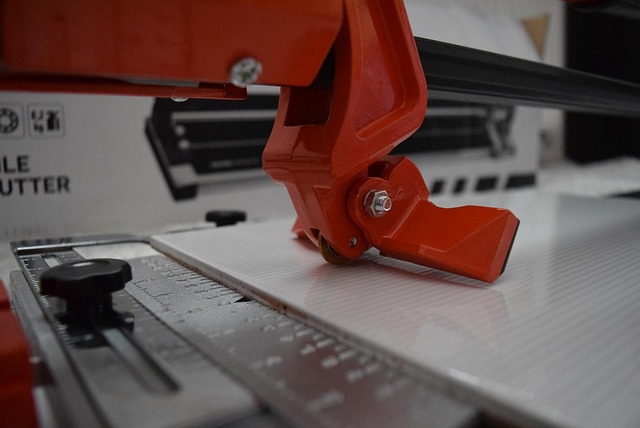
Comparing Power and Cutting Efficiency
The motor of the Dremel tile cutter operates at high revolutions per minute, often exceeding 20,000 RPM, which allows for rapid material removal on ceramics and stone composites. In contrast, portable circular saws typically operate between 4,000–6,000 RPM but generate higher torque suited for dense wood or concrete board. This difference defines their use cases: the Dremel favors finesse over brute strength. Cutting depth is limited to around 1 inch depending on attachment configuration, making it ideal for tiles but less effective on thick slabs or beams. Professionals note that its micro-motor design delivers consistent speed under load, enhancing curve control during decorative work.
Blade Technology and Material Adaptability
Dremel’s diamond-coated blades are optimized for abrasive resistance and heat dissipation. The segmented rim design improves airflow around the blade edge to minimize thermal buildup during prolonged operation. Unlike standard steel circular saw blades that rely on carbide teeth for shearing action, the Dremel blade grinds through hard surfaces using frictional abrasion. This makes it compatible with ceramic, porcelain, glass mosaic, and even thin granite pieces when used with water-assisted cooling systems. Under professional duty cycles—such as continuous tile scoring—the wear rate remains low if operated below maximum pressure thresholds.
Precision Levels in Both Straight and Curved Cuts
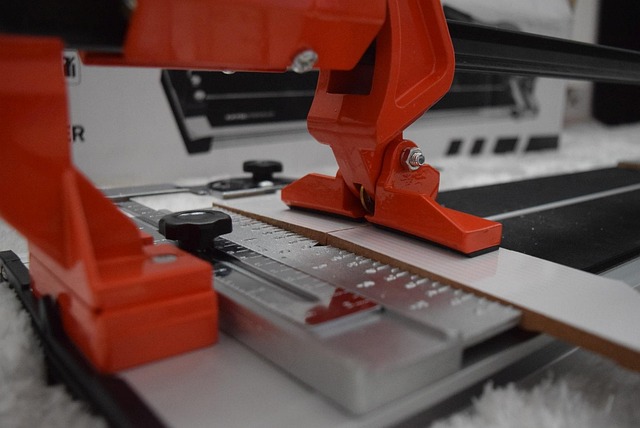
Precision is where the Dremel tile cutter excels. Its compact base allows operators to follow curved outlines or plunge-cut small openings without overcutting edges—a common issue with larger saws. Straight-line accuracy benefits from adjustable guide rails and transparent guards that enhance visibility of scoring lines. When working on patterned tiles or laminate flooring panels requiring tight tolerances under 0.5 mm deviation, this level of control significantly reduces rework time.
Operational Flexibility in Field Applications
Tool performance in real-world conditions depends not just on output power but also on ergonomics and workflow integration. The Dremel system was designed to move easily from one task to another without extensive setup changes.
Portability and Ergonomic Design Considerations
Weighing less than 2 kg including attachments, the Dremel tile cutter offers an advantage in overhead or wall-mounted applications where fatigue becomes critical after hours of use. Its grip geometry fits natural wrist motion, reducing strain compared to bulkier circular saw handles that require two-handed stabilization. Compact dimensions allow access into corners behind sinks or along stair risers—locations where larger tools cannot fit safely. Vibration dampening through internal counterbalance mechanisms further improves comfort during extended sessions.
Setup Efficiency and Workflow Integration
Setup time is minimal since most attachments use a quick-lock collet system instead of bolt-mounted arbors found in circular saws. Professionals can switch from cutting ceramic tiles to trimming laminate edges within minutes by changing accessories rather than entire tools. The corded models plug into standard outlets while cordless versions use lithium-ion packs rated for roughly 45 minutes of continuous runtime at moderate load—adequate for most onsite corrections or finishing passes. Storage cases are modular so they integrate neatly into existing contractor toolboxes without additional space requirements.
Precision Engineering: Control, Accuracy, and Finish Quality
Achieving repeatable precision across different materials requires fine mechanical calibration combined with operator feedback features such as depth guides and visual markers.
Depth Control Mechanisms and Adjustment Accuracy
The adjustable depth collar on the Dremel tile cutter allows incremental changes as small as 0.1 mm using a threaded sleeve mechanism similar to those found in CNC routers. This precision ensures consistent scoring depth across multiple tiles when preparing installation grids or mosaic layouts. Unlike many circular saws where depth adjustment depends on pivot arms subject to play over time, the linear travel system maintains calibration even after extensive use.
Repeatability of Cuts Across Layouts
Consistency across multiple cuts defines productivity in professional tiling projects. Once set, the Dremel’s micro-depth adjustment retains its calibration through vibration cycles thanks to a locking ring assembly that prevents drift during operation. This repeatability becomes essential when aligning grout joints or matching edge bevels across large tiled surfaces.
Edge Finish Quality Across Materials
On brittle ceramics or glass tiles prone to chipping under high-impact blades, the Dremel’s grinding-style cutting produces smoother edges requiring little post-sanding. Circular saws may leave micro-fractures along glaze surfaces due to aggressive tooth entry angles. However, when working with softer woods or composites, circular saws still deliver cleaner longitudinal cuts since friction-based grinding can slightly burn polymer laminates if feed speed is too low.
Durability, Maintenance, and Cost Efficiency Over Time
For professionals evaluating long-term investment value, durability metrics like bearing life span and motor insulation integrity weigh heavily against initial purchase cost.
Tool Longevity Under Professional Workload Conditions
The sealed bearing design inside the Dremel’s housing protects internal components from dust intrusion—a major concern when dry-cutting ceramic materials that generate fine silica particles. Motor windings are epoxy-coated for thermal resistance up to 120°C continuous operation temperature range as defined by IEC standards for Class B insulation systems (IEC 60085). Maintenance typically involves periodic brush replacement every 100 hours of runtime depending on load intensity.
Maintenance Intervals and Reliability
Circular saws generally require more frequent alignment checks because their larger arbor assemblies accumulate debris faster around bearings and guards. By contrast, the compact spindle structure of the Dremel reduces exposure points while maintaining rotational stability during prolonged sessions such as countertop trimming tasks lasting several hours without overheating incidents reported under normal duty cycles.
Long-Term Cost-Benefit Analysis for Professionals
From a financial perspective, although initial purchase cost per watt output may be higher than budget-grade circular saws, total ownership cost trends lower due to reduced consumable usage—diamond wheels outlast carbide-tipped blades by nearly threefold under identical workload conditions according to comparative field data from trade testing agencies compliant with ISO 9001 quality measurement frameworks.
Application Suitability Across Professional Scenarios
Different trades demand different priorities: carpenters seek throughput; tilers need precision; remodelers value dust control and low noise levels during occupied-site work.
Ideal Use Cases for the Dremel Tile Cutter in Specialized Trades
In fine renovation work such as bathroom refits or kitchen backsplash installations where space constraints limit tool maneuverability, compact cutters outperform bulkier alternatives by minimizing collateral damage around fixtures. Similarly, artisans creating custom mosaic designs benefit from variable-speed control allowing gradual approach cuts without surface cracking—a feature rarely available on standard jobsite saws.
Performance in Dust-Restricted Environments
When operating indoors under air-quality regulations like OSHA silica exposure limits (29 CFR 1926.1153), using a low-dust rotary tool becomes advantageous since it generates finer particulate at lower velocity compared with open-blade systems typical of circular saw setups requiring external vacuums for compliance.
Limitations When Replacing a Portable Circular Saw Setup Entirely
Despite its versatility, replacing a full-size circular saw entirely may not be feasible in structural framing or decking projects demanding deep penetration cuts through plywood stacks exceeding typical rotary capacity limits around 25 mm thickness per pass. Hybrid workflows—using a circular saw for rough sizing followed by a Dremel tile cutter for edge refinement—yield optimal efficiency across mixed-material construction sites.
FAQ
Q1: Can a Dremel tile cutter handle porcelain tiles effectively?
A: Yes, its diamond-coated blades are suitable for porcelain due to their hardness rating compatibility up to Mohs scale level 8 materials when operated at controlled feed rates.
Q2: How long does a typical blade last under daily professional use?
A: Under standard site conditions averaging four hours daily operation on ceramic substrates, blade life expectancy ranges between 40–60 working hours before noticeable wear affects cut smoothness.
Q3: Is water cooling necessary during operation?
A: It is recommended when cutting dense stone or glass materials since water reduces heat accumulation that could otherwise degrade bonding resin within diamond segments prematurely.
Q4: Does it support cordless operation?
A: Certain models feature lithium-ion batteries providing approximately 45 minutes runtime per charge depending on load intensity; suitable mainly for light finishing tasks rather than continuous production cutting.
Q5: What maintenance steps extend service life?
A: Regularly clearing dust vents with compressed air after each session and replacing carbon brushes at manufacturer-specified intervals significantly prolong motor efficiency over extended usage periods.


