
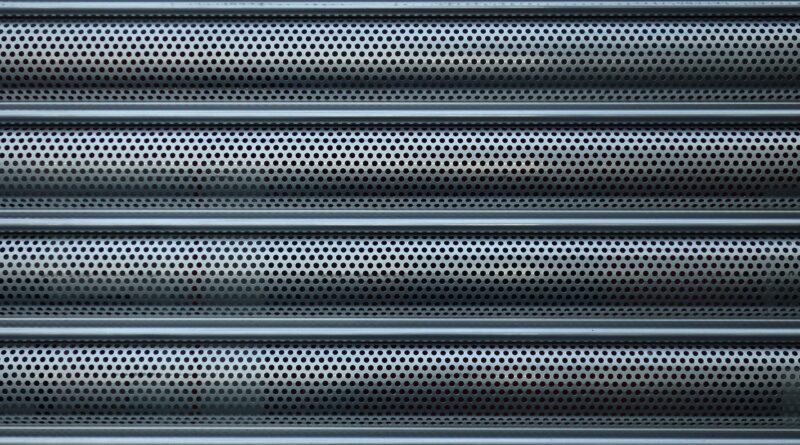
Perforated steel sheet guide for materials, hole patterns and finishes
What perforated steel sheet is and why specifications matter
A perforated steel sheet is a flat steel sheet or plate that has been punched, stamped, drilled, milled or cut with repeated openings. The specification is not just about adding holes. Material, hole shape, pitch, open area, thickness, edge margin and surface finish all work together. A high open area can improve airflow, drainage, light transmission or acoustic transparency. A thicker sheet, wider ligaments and a suitable coating can improve stiffness and service life.
For most buyers, the safest way to specify perforated steel sheet is to define the base steel, exact thickness, hole size, hole arrangement, open area, panel size, edge margins and finishing requirements before requesting pricing or fabrication.
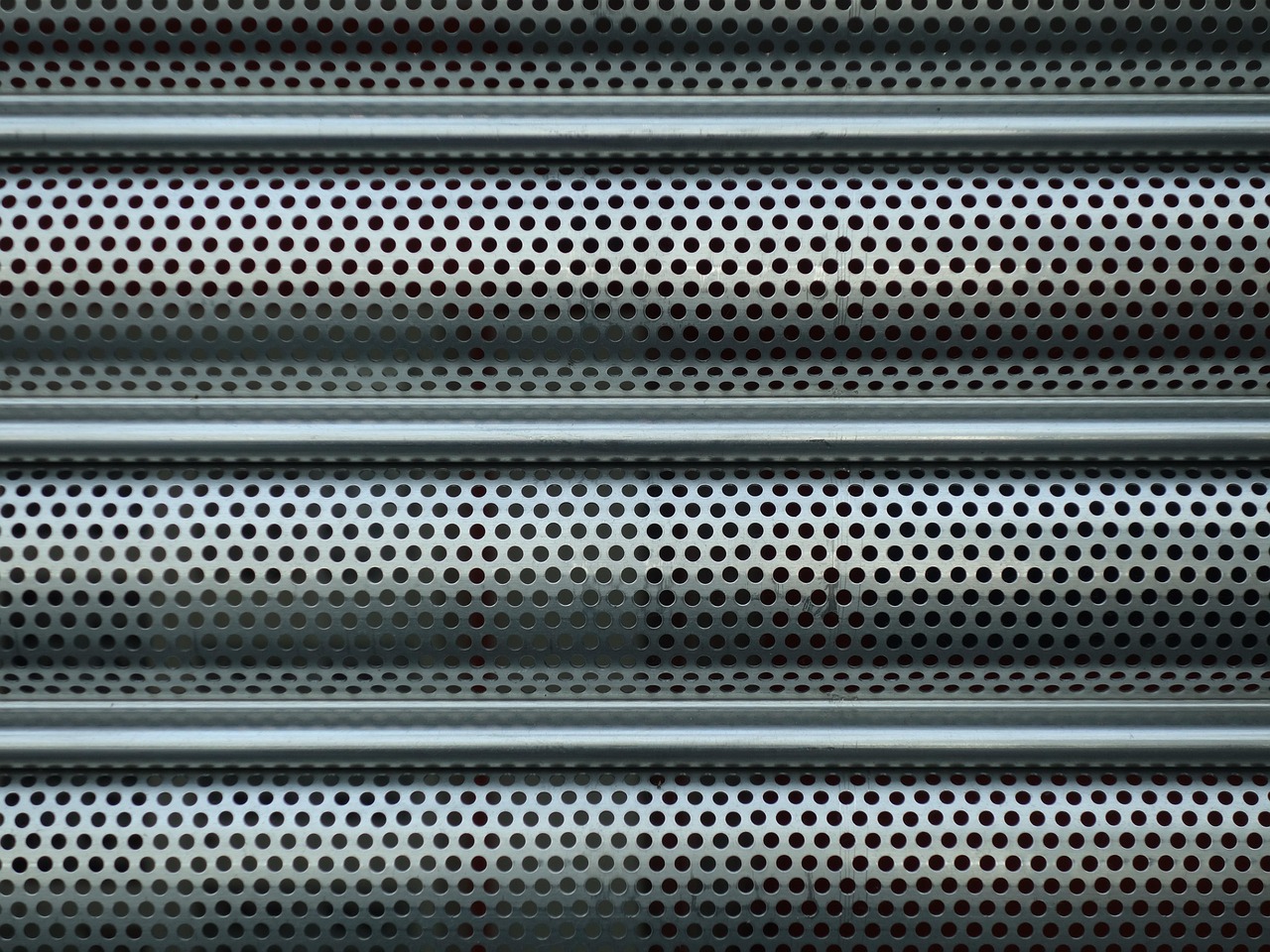
This guide focuses on practical selection for architectural panels, guards, screens, vents, enclosures, machine covers and general industrial use. For broader metal selection context, see the Metals & Surfaces section.
The key terms to define before ordering
Perforated steel is often described by hole diameter, but hole diameter alone is not enough to produce a repeatable part. ISO 7806, an international standard for designating perforations in industrial plate screens, identifies five core items: hole shape, aperture size, mutual arrangement of holes, pitch and the orientation of the perforation arrangement relative to the plate edges. The same logic is useful even when the sheet is not being used as a screen.
The most important terms are:
- Hole size: The diameter of a round hole, side length of a square hole or width and length of a slot.
- Pitch or centers: The center-to-center distance between adjacent holes. Smaller pitch usually means higher open area, but it also leaves less metal between holes.
- Open area: The percentage of the perforated field that is open space rather than metal. It affects airflow, visibility, drainage, acoustic behavior and load capacity.
- Bar width or ligament: The solid metal between neighboring holes. Narrow ligaments are more vulnerable to distortion, tearing, denting and visible waviness.
- Margins: Unperforated borders at the edges of the sheet. Margins help with framing, fastening and trimming, but they also change the visual rhythm of the panel.
- Perforated field: The area that actually contains holes. It may be smaller than the overall sheet if the design needs solid borders.
For a clean purchase description, avoid vague wording such as perforated sheet with small holes. A better description is: carbon steel sheet, 1.5 mm thick, 6 mm round holes on 10 mm 60-degree staggered centers, approximately 32.6% open area, 1000 mm by 2000 mm panel, 25 mm solid margins on all sides, powder coated after perforation.
Material choices for perforated steel sheet
The base metal should be chosen before the hole pattern. Perforation removes material, increases exposed edge length and can make a poor material choice fail faster in corrosive or abrasive service. Four material families are common.
Low carbon steel
Low carbon steel is the usual choice for interior guards, cabinets, partitions, equipment covers and panels that will be painted or powder coated. It is economical, formable and widely available in cold-rolled and hot-rolled sheet forms. Cold-rolled sheet is often selected when surface appearance and dimensional consistency matter. Hot-rolled sheet or plate may be used for heavier industrial parts where appearance is secondary.
Because carbon steel rusts when exposed to moisture and oxygen, the finishing plan is part of the material choice. A bare mill finish may be acceptable for temporary fixtures or dry interior applications. Exposed interior, exterior or washdown uses normally need paint, powder coating, galvanizing or another protective system.
Galvanized steel
Galvanized perforated sheet uses zinc to protect the steel. ASTM A653/A653M is a common standard series for zinc-coated or zinc-iron alloy-coated steel sheet made by the hot-dip process in coils and cut lengths. The practical detail is timing. If a sheet is galvanized first and then punched, the cut hole edges may expose bare steel. The American Galvanizers Association has noted the same distinction between continuous sheet galvanizing before fabrication and general hot-dip galvanizing after fabrication: coating after cutting and punching can protect more exposed surfaces, while punching pre-coated sheet leaves exposed edges.
That does not mean pre-galvanized perforated sheet is always wrong. It is widely used in HVAC, interior utility panels, light-duty grilles and applications where edge exposure is acceptable or later coated. For harsher exterior exposure, the specification should address edge protection, post-fabrication coating or hot-dip galvanizing after perforation where practical.
Stainless steel
Stainless perforated steel sheet is selected when appearance, washability and corrosion resistance are more important than the lowest material cost. ASTM A240/A240M is a common stainless flat-product standard for chromium and chromium-nickel stainless steel plate, sheet and strip for pressure-vessel and general applications. Grade 304 is common for indoor architectural and light industrial environments. Grade 316 is often chosen where chloride exposure, coastal air, cleaning chemicals or higher pitting risk are concerns.
Stainless steel resists corrosion because a chromium-rich passive oxide film forms on the surface. Industry sources such as the British Stainless Steel Association and worldstainless emphasize that chloride-rich conditions can lead to localized pitting, and that molybdenum-bearing grades such as 316 provide better pitting resistance than 304 in many chloride environments. Perforated stainless also needs careful handling because carbon steel contamination from tools, racks or grinding dust can create rust staining even when the stainless grade itself is suitable.
Weathering and specialty steels
Weathering steel can be used for decorative screens or facades where a stable oxide patina is desired, but it is not a universal exterior shortcut. Its performance depends on wet-dry cycling, detailing that avoids trapped moisture and compatibility with runoff staining requirements. Specialty steels may be necessary for heat, abrasion or chemical exposure. Those selections should be made by an engineer or material specialist rather than by appearance alone.
Hole patterns and open area tradeoffs
Round holes in a 60-degree staggered arrangement are among the most common perforated steel patterns because they combine good open area with an efficient, familiar visual rhythm. Straight rows are easier to align with some designs, but they usually provide less open area than a comparable staggered pattern at the same hole diameter and pitch. Square holes create a stronger grid appearance and can provide a high visual opening. Slots improve drainage or directional airflow, but they also introduce orientation: a slot can behave differently depending on whether its long dimension runs with or across the span.
Open area is not just a decorative number. It changes performance. A vent panel with too little open area may restrict airflow. A machine guard with too much open area may lose impact resistance. A screen with large holes may pass debris it was meant to stop. A decorative facade with high open area may reveal more of the support frame than expected.
For round holes on 60-degree staggered centers, a commonly used open-area formula is:
Open area % = D² × 90.69 ÷ C² See also: Bolts & Fasteners.
In that formula, D is the hole diameter and C is the center spacing, using the same unit. For example, 6 mm round holes on 10 mm staggered centers produce about 32.6% open area. The same formula also shows why a small pitch change matters: increasing the center spacing reduces open area quickly because the pitch is squared in the calculation.
| Pattern choice | Common advantage | Common limitation |
|---|---|---|
| Round staggered | Efficient open area and widely available tooling | Can look busy on large decorative panels |
| Round straight | Simple alignment with frames and fasteners | Lower open area than staggered at similar size and pitch |
| Square holes | Strong geometric appearance and high visual opening | Corners can concentrate stress and may be less forgiving in forming |
| Slotted holes | Useful for drainage, ventilation and directional design | Orientation and end radius must be specified clearly |
| Decorative patterns | Architectural identity and light control | May require custom tooling, longer lead time and closer drawing control |
Thickness, stiffness and fabrication limits
Perforating removes metal, so a perforated sheet is not as stiff as an unperforated sheet of the same grade and thickness. The reduction depends on open area, hole shape, ligament width, edge margins, panel size and how the sheet is supported. In simple terms, thinner sheets with high open area and narrow ligaments are more likely to oil-can, bow or vibrate.
Specify thickness as a decimal inch or millimeter value, not only by gauge. Gauge numbers can vary by material and regional convention, which can create ordering mistakes. A drawing or purchase description should state the nominal thickness and any tolerance requirement that matters to assembly.
Fabrication after perforation also matters. Bending a highly perforated sheet can distort holes near the bend line. Welding can discolor stainless, damage coatings or create local stress. Shearing through a hole pattern can leave partial holes at an edge unless the drawing calls for finished margins. Laser cutting after perforation can produce clean outlines, but the edge condition should still be reviewed if the part will be handled by people or exposed in an architectural setting.
For load-bearing floors, walkways, stair treads, fall-protection guards or structural screens, do not treat catalog open-area data as a strength rating. These applications need design checks for load, deflection, fastener pull-through, slip resistance, applicable code requirements and support spacing.
Surface finishes and corrosion planning
The finish should match the environment and the fabrication sequence. A finish applied before perforation may be convenient, but punching exposes edges and can mark the surface. A finish applied after perforation can cover cut edges more completely, but it may bridge small holes, change tolerances or create buildup at edges if not controlled.
- Mill finish: Suitable where appearance and corrosion exposure are not critical, or where a later finish will be applied.
- Paint: Flexible for color matching and repair, but surface preparation and edge coverage determine durability.
- Powder coating: Durable and attractive for many architectural and enclosure panels; specify cleaning, pretreatment and masking needs.
- Pre-galvanized finish: Economical for many light-duty applications, but punched edges may need consideration.
- Hot-dip galvanizing after fabrication: Provides more complete zinc coverage after cutting and punching, but hole size, drainage, distortion risk and finish appearance must be reviewed.
- Stainless brushed or polished finish: Improves appearance but should be protected during fabrication, transport and installation.
For exterior screens, corrosion risk often starts at the details rather than broad flat surfaces. Water trapped in frames, dissimilar metal contact, unsealed cut edges, debris buildup and fasteners with lower corrosion resistance can shorten service life. The perforated sheet should be treated as part of a system that includes frame material, isolators, fasteners, coating repairs and maintenance access.
A practical specification checklist
A clear specification reduces price confusion and fabrication disputes. Before ordering perforated steel sheet, define the following items:
- Base material, grade and relevant material standard if required.
- Sheet or plate thickness in millimeters or decimal inches.
- Overall sheet or part size, including flatness expectations.
- Hole shape, hole size, pitch and arrangement.
- Target open area, if airflow, drainage, light or visibility matters.
- Margins on each side and whether partial holes are acceptable at cut edges.
- Grain direction or pattern orientation, especially for brushed stainless and slotted patterns.
- Secondary fabrication such as bending, welding, rolling, framing or fastener holes.
- Surface finish, coating timing and color or texture requirements.
- Inspection requirements, packaging needs and acceptable cosmetic limits.
When a panel is visible, request a drawing or sample before full production. A perforated pattern can look very different at full scale than it does in a small catalog image. For repeated architectural panels, confirm how patterns align from panel to panel and whether margins will be symmetrical after trimming.
Frequently asked questions
Is perforated steel sheet stronger than expanded metal?
Not automatically. Perforated steel and expanded metal are made differently and behave differently. Perforated sheet removes material from a flat sheet, while expanded metal is slit and stretched into a mesh. Strength depends on material grade, thickness, opening size, strand or ligament geometry, support spacing and load direction.
What open area is best for ventilation?
There is no single best percentage. Higher open area generally allows easier airflow, but the final result also depends on hole size, air velocity, panel thickness, upstream and downstream obstructions, screen cleanliness and fan capacity. For equipment ventilation, start with the airflow requirement rather than a decorative pattern.
Can perforated galvanized steel be used outdoors?
Yes, but the coating method and edge condition matter. Pre-galvanized sheet punched after coating may have exposed edges. Hot-dip galvanizing after fabrication can provide more complete zinc coverage, but the panel geometry, hole size, drainage and appearance requirements should be reviewed before choosing it.
Should I choose 304 or 316 stainless perforated sheet?
Choose 304 for many indoor, dry or mildly corrosive settings where cost and availability matter. Consider 316 where chlorides, coastal air, cleaning chemicals or higher pitting risk are expected. For severe chemical or marine service, a corrosion specialist should review the environment rather than relying on grade names alone.
Why do margins matter on perforated panels?
Margins provide solid material for fastening, framing, bending and clean visual borders. Without controlled margins, cutting through a pattern can leave partial holes at the panel edge, which may be acceptable for industrial use but unattractive or sharp for exposed architectural work.


