
What Are Ball Bearing Drawer Slides and How Do They Work in Precision Engineering
What Are Ball Bearing Drawer Slides and How Do They Work?
Ball bearing drawer slides are precision-engineered components that enable controlled linear motion in mechanical systems. Their design relies on hardened steel balls that roll between two rails, allowing drawers, machine parts, or industrial assemblies to move smoothly under load. These slides are widely used in sectors like aerospace, robotics, and manufacturing because they combine low friction with high load-bearing capacity. In essence, they transform sliding friction into rolling motion, resulting in consistent performance even under demanding conditions.
Understanding Ball Bearing Drawer Slides
Ball bearing drawer slides serve as critical elements in modern mechanical assemblies where smooth and accurate motion is essential. Their function extends beyond furniture applications; they are integral to precision equipment where stability and repeatability define performance.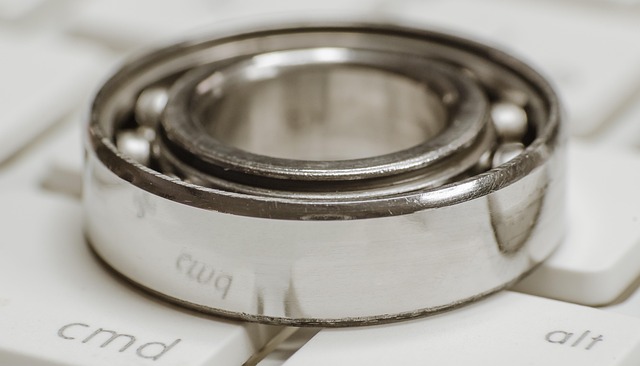
Definition and Core Function
Ball bearing drawer slides are mechanical components that enable smooth linear motion between two surfaces. They use precision-engineered ball bearings to reduce friction and ensure consistent movement under load. In industrial contexts, these slides maintain positional accuracy even during repetitive cycles, which is why they are common in automated machinery and aerospace fixtures.
Structural Composition and Design Principles
A typical slide consists of an inner rail, outer rail, and a ball retainer that guides the bearings along raceways. The circulating balls maintain alignment while minimizing wear on the metal surfaces. Material choice plays a decisive role: stainless steel offers corrosion resistance for humid or chemical environments, while cold-rolled steel provides strength for heavy-duty applications. The geometry of the raceways determines how evenly loads are distributed across the slide length.
The Mechanics Behind Ball Bearing Drawer Slides
The mechanical behavior of these slides depends on how forces transfer through the bearing elements. Their efficiency results from distributing loads across multiple contact points rather than relying on direct surface friction.
The Role of Ball Bearings in Load Distribution
Each ball acts as a miniature rolling element that carries part of the applied load. This distribution minimizes localized stress concentrations and reduces frictional drag. Because the contact area between balls and raceways is small yet uniform, deflection remains minimal even under significant weight. As a result, both lifespan and operational consistency improve dramatically compared with plain slide mechanisms.
Motion Dynamics and Kinematic Precision
Linear motion arises when the balls roll along precision-ground tracks between inner and outer rails. Tight manufacturing tolerances ensure each stroke replicates the same path repeatedly without play or vibration. Proper lubrication—often a lithium-based grease or synthetic oil—prevents metal-to-metal contact while maintaining temperature stability during continuous cycles.
Types of Ball Bearing Drawer Slides Used in Precision Engineering
Different engineering setups require different slide configurations depending on accessibility, rigidity, or available space. Selecting the right type directly influences mechanical accuracy and service life.
Full Extension vs. Partial Extension Slides
Full extension slides allow complete access to drawers or mounted components by extending their full length beyond the cabinet or chassis. Partial extension models travel only partway but provide greater stiffness under heavy loads. Engineers often choose partial extensions for machine enclosures where rigidity outweighs reach.
Heavy-Duty and Industrial Variants
Heavy-duty variants feature reinforced raceways and thicker cross-sections to handle extreme loads or frequent duty cycles. Such designs appear in CNC machining centers or laboratory automation systems where linear stability is non-negotiable. Some versions incorporate double-row bearings for added torsional resistance during off-center loading.
Key Factors Influencing Performance in Precision Applications
The operational performance of ball bearing drawer slides depends not only on design but also on environmental conditions and maintenance practices. Engineers must evaluate these parameters before integration into critical assemblies.
Load Capacity and Deflection Control
Load ratings derive from slide geometry, material strength, and bearing diameter. Excessive deflection can disrupt alignment in optical instruments or measurement devices where micrometer-level precision matters. Matching expected load profiles with manufacturer specifications helps maintain consistent positioning accuracy over time.
Friction Management and Lubrication Techniques
Lubrication plays a vital role in controlling wear rates and maintaining uniform resistance through repeated cycles. Specialized greases resist oxidation at elevated temperatures, while dry-film lubricants suit cleanroom environments where contamination must be avoided. Regular inspection prevents debris accumulation that could alter rolling characteristics.
Environmental Considerations and Durability Enhancements
In corrosive atmospheres or dusty workshops, protective coatings such as zinc plating extend service life by shielding exposed metal surfaces from oxidation or abrasion. Stainless steel versions perform best near marine environments or chemical plants due to their inherent corrosion resistance.
Integration of Ball Bearing Drawer Slides in Precision Engineering Systems
Integrating these slides into complex systems demands careful attention to geometry, mounting accuracy, and compatibility with automated movements. Misalignment can quickly negate their inherent precision advantages.
Alignment and Installation Accuracy
Accurate alignment ensures uniform load sharing among bearings throughout travel length. Mounting surfaces must remain parallel within tight tolerances—typically less than 0.1 mm deviation—to prevent binding or uneven wear patterns. Even slight angular misalignment increases frictional resistance significantly over time.
Compatibility with Automated Systems and Robotics
Modern robotics relies heavily on compact linear motion solutions like ball bearing drawer slides to achieve repeatable movement paths without backlash. When paired with servo-driven actuators or pneumatic cylinders, they deliver fine control suitable for assembly lines or testing rigs where positional feedback loops govern accuracy.
Advancements in Ball Bearing Slide Technology for Engineering Applications
Recent developments have expanded both material science options and digital monitoring capabilities for linear motion components. These advances aim to enhance reliability while reducing unplanned downtime across industrial systems.
Material Innovations and Coating Technologies
New alloy compositions improve fatigue resistance against cyclic stresses common in continuous-use operations. Coatings such as PTFE minimize friction coefficients further by creating self-lubricating surfaces that resist debris adhesion. Diamond-like carbon (DLC) coatings add hardness while maintaining low rolling resistance—a combination ideal for high-speed automation setups.
Smart Monitoring and Predictive Maintenance Integration
Emerging designs integrate micro-sensors capable of tracking position accuracy, vibration amplitude, or temperature fluctuations during operation. Data collected feeds into IoT-based predictive maintenance platforms that alert technicians before failure occurs, thereby reducing downtime costs in manufacturing cells where uptime is critical.
FAQ
Q1: What distinguishes ball bearing drawer slides from roller slides?
A: Roller slides rely on cylindrical rollers that glide along tracks with higher friction levels than ball bearings; thus ball-bearing designs deliver smoother motion under heavier loads.
Q2: How long do ball bearing drawer slides typically last?
A: With proper lubrication and correct alignment, high-quality industrial-grade slides can exceed 100,000 operational cycles before noticeable wear appears.
Q3: Can stainless steel ball bearing drawer slides operate outdoors?
A: Yes, stainless steel variants resist corrosion effectively when exposed to moisture or salt air environments like marine installations or outdoor kiosks.
Q4: What causes premature failure in precision slide assemblies?
A: Common factors include misalignment during installation, inadequate lubrication intervals, contamination by dust particles, or exceeding rated load limits.
Q5: Are sensor-equipped drawer slides worth using in automation?
A: For high-value production lines requiring real-time diagnostics or predictive maintenance scheduling, sensor-equipped models provide measurable ROI through reduced downtime events.


