
When Should a Hook Spanner Wrench Be Used on Slotted Round Nuts
Hook Spanner Wrenches: When to Use Them on Slotted Round Nuts and Rings
A hook spanner wrench may seem basic. But it is a careful tool made for certain mechanical jobs. You can spot it in shops where exact work counts. Think of bearing setups, machine care, and hydraulic systems. The bent hook and movable arm help it handle parts without flat spots for an ordinary wrench. The next parts look at how this tool operates. They also cover when to pick it up. Plus, they explain how to keep the wrench and the parts it works on in good shape.
Understanding the Function of a Hook Spanner Wrench
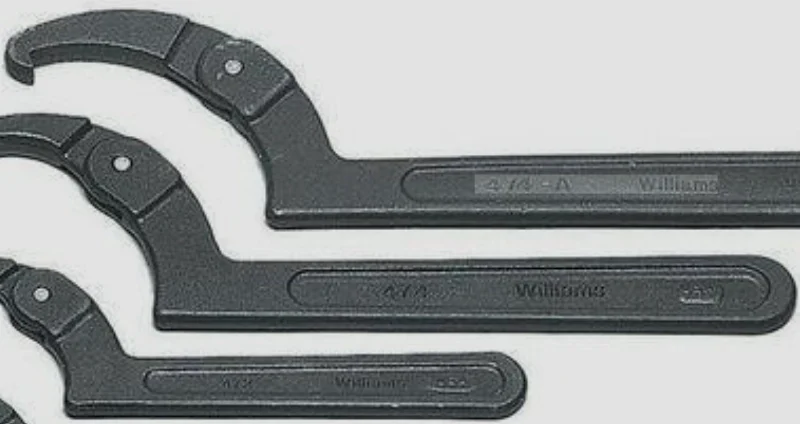
The hook spanner wrench is not just any hand tool. It plays a key role in jobs that need steady turning power and gentle hold on notched or circular nuts. Its shape lets you grab without scratching or bending delicate pieces. This matters a lot in careful building work.
Design Characteristics and Mechanical Purpose
The hook spanner wrench is built to fit into round nuts, collars, and rings that have slots around them. Its bent hook slides right into those slots. The handle gives you the pull to turn things. Since it hooks on smoothly, you can tighten or loosen without harming the outer layer. In exact setups like airplane bearings or CNC spindle parts, this helps a ton. Even a small scratch can lead to wobbles or shakes.
In simple terms, the tool turns your hand push into steady spinning force at its bend spot. Models that adjust let you change for nuts of various sizes by shifting the hook’s reach. This makes them useful in many different jobs. For example, in a busy garage, you might swap from a small nut on a bike part to a bigger one on a car engine without grabbing a new tool.
Variations of Hook Spanner Wrenches
Several kinds of hook spanners fit different tasks. The fixed-hook type has one size. It gives the strongest hold. That works well when you need to turn harder. Adjustable kinds bend to fit more but need setup for steady results each time. Pin-type wrenches use small rods that go into holes, not slots. You see them a lot on bearing locknuts.
The metal it is made from counts too. Ones from chrome-vanadium steel hold up better against wear and rust than plain steel ones. When you pick one, think about the nut sizes. Also consider the place you use it. Things like damp air, hot and cold changes, or oily stuff can wear it down over months. I recall a shop in a rainy area where cheap tools rusted fast, but the good ones lasted years.
Identifying Applications for Slotted Round Nuts
Slotted round nuts show up in plenty of mechanical setups. There, they keep the push along the axis steady even with shakes or shifting weights. These nuts need a good hook spanner wrench to work right and stay safe.
Structural and Mechanical Contexts of Use
You often find slotted round nuts in bearing cases, machine tool spindles, gear boxes, and hydraulic setups. Their shape lets you tweak them just right. They fight off coming loose from shakes. This is key in spinning machines. When you match them well with a hook spanner wrench, they hold the pull even on the threads. That stops rubbing damage or thread breaks.
Picture fixing a spindle bearing on a milling machine. If you use a wrong tool, it might bend the slot sides or knock the bearing out of line. A right-sized hook spanner keeps it all straight. It also lets you make tiny turns to set it up. In real life, I’ve seen techs save hours this way on factory lines where every minute costs money.
Importance of Precision in Assembly and Maintenance
Being exact is not only about how tight it is. It is about getting the right balance of weight spread and straight lines. If you do not turn a slotted nut just so, you might get side-to-side shifts. That wears out bearings too soon or breaks them. Using a hook spanner for steady turns spreads the push evenly around the edge.
In upkeep times, this steady way stops galling. That is the sticking of metal parts under squeeze without heat. It also cuts down on bending the slot sides after many fixes. For folks fixing costly machines, this trust means less stop time and parts that last longer. From what I’ve heard in workshops, skipping this step once led to a whole gearbox replacement, costing thousands.
Determining When to Use a Hook Spanner Wrench on Slotted Round Nuts
Sometimes, only a hook spanner will work. This is true when the spot is small or the turning power must be spot on.
Situations Requiring Controlled Torque Application
Grab a hook spanner wrench when you must set the exact push in spinning parts like bearings or links. It shines where you cannot reach flat spots easily. For instance, nuts deep in cases. Or when normal wrenches might slide due to no grab space.
In systems that hold bearings or hydraulic valve parts, uneven push can bend threads or start drips. A hook spanner spreads the pull evenly over the nut’s curve. So, each slot takes the same bit of weight when you turn it tight. This is handy in tight engine bays, where space is at a premium and mistakes are pricey.
Avoiding Improper Tool Usage
Tools like pliers or quick fixes look easy. But they can bend the slot shape and wreck the fit. Once slots get bent, you cannot turn with care anymore. Always pick a hook spanner that fits the slot gaps and size just right. It hooks on easy without sliding.
Check it often too. Hooks that wear down might smooth the tips over time. That leads to slips when you push hard. Swap out any beat-up tools right away. Do not chance harming big-ticket parts in a fix job. In one case I know of, a worn tool slipped and cracked a housing, turning a simple repair into a big headache.
Technical Considerations for Optimal Performance
To get steady outcomes in your work, pick a tool that fits the part sizes exactly. And do not skip setting it up right.
Matching Tool Specifications to Component Dimensions
Before you begin a task, check the main size, slot gaps, and depth against what the maker says. Adjustable types help if you handle nuts of many sizes. But set them up before big jobs to keep the same accuracy each go. Fixed-hook ones give a firmer hold. They suit hard turns on large factory shafts or pushed-in keepers.
If you work with stainless-steel locknuts in wet spots, like boat pumps, make sure the wrench fights rust well. If not, small pits might mess with the hold after a while. For example, in a coastal workshop, using the wrong material meant tools failed after just six months of salt air exposure.
Torque Control and Calibration Practices
Steady turning power sets how well a build holds up. Use tools that limit the turn, like ones set to a certain level, for careful parts. That way, each spot gets the same push. Write down every turn amount in your upkeep notes. This record helps spot issues if things go wrong down the line.
Set up checks on a regular schedule based on how much you use it. In a busy shop, you might need to check every month. For tools used now and then, you can wait longer. Keep the setup papers up to date. It gives peace of mind in checks or quality looks. Interestingly, some teams add a quick torque test before each shift, which cuts errors by about 20% from what pros report.
Maintenance Practices for Hook Spanner Wrenches and Components
The finest tools wear out if you ignore them. Basic care steps stretch out their good work and long life by a lot.
Care and Inspection Procedures
After you use it, wipe the touch spots clean. Get rid of oil bits or metal scraps that might cut the grab next time. Look at the hooks under bright light. Check for flat tips or tiny breaks near the turn points. These show tiredness from many pulls.
For types that adjust, put a light oil on the turn joints. Use one that does not gum up. This keeps the move easy without loose spots building up. Do not dunk handles in strong cleaners. They might strip the cover that fights rust. In practice, a quick wipe with a rag after jobs keeps things like new, as many mechanics swear by.
Extending Service Life Through Proper Handling
How you store it matters as much as how you use it. Put tools in guard boxes with soft foam inside. This stops bends if they fall on hard ground. It also blocks wet from causing rust in long waits.
Never go over what the maker says for turn power. You might think a little extra is fine. But it bends hooks slowly at first. Then it wrecks the shape for good and hurts later work. Swap worn bits fast instead of fixing on the fly. It costs less than starting over on a full setup because the tool gave out in the middle. From shop stories, overloading once can shorten tool life from years to months.
FAQ
Q1: What makes a hook spanner wrench different from other wrenches?
A: It uses a curved hook that fits into radial slots on round nuts instead of gripping flat sides like standard wrenches do.
Q2: Can one adjustable model replace several fixed-hook sizes?
A: Yes, adjustable versions cover multiple diameters but require careful calibration before critical tasks to maintain accuracy comparable to fixed ones.
Q3: Why shouldn’t pliers be used on slotted nuts?
A: Pliers distort slot geometry causing uneven torque transfer which leads to premature wear or component failure later on.
Q4: How often should calibration be checked?
A: Frequency depends on usage intensity; heavy industrial use might need monthly checks while light-duty applications can go several months between calibrations.
Q5: What’s the best way to store these wrenches?
A: Store them clean inside dry protective cases away from humidity; this prevents corrosion and accidental bending that would affect future performance.


