
Can Carriage Bolts Be Designed Per NDS Standards for Wood Construction
Understanding the Role of Carriage Bolts in Wood Construction
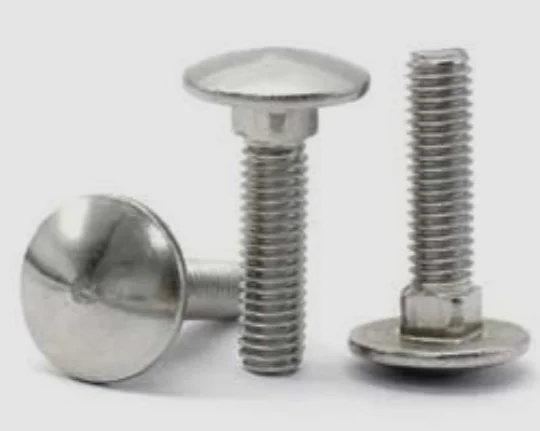
Carriage bolts are among the most recognizable fasteners used in timber and structural woodwork. Their smooth, dome-shaped head and square neck beneath make them particularly suited for joints where a flush appearance or tamper resistance is desired. When you design wood assemblies that rely on mechanical fastening, carriage bolts often provide both structural reliability and aesthetic simplicity.
Characteristics and Applications of Carriage Bolts
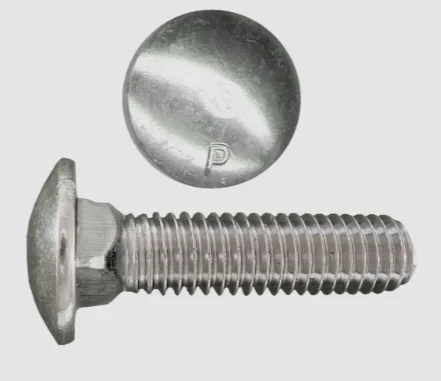
A carriage bolt consists of a round, dome-like head with no drive recess, a short square neck directly under the head, and a fully threaded shank that extends through the connected members. The square neck bites into the wood when tightened, preventing rotation during nut installation. This geometry allows for one-sided wrench access — useful in frames or decks where one face is visible.
You’ll find carriage bolts commonly used in timber framing, deck railings, playground structures, and heavy-duty furniture. They perform well in load-bearing joints where clamping action and shear resistance are both required. Compared to lag screws or machine bolts, carriage bolts distribute load more evenly because of their broad head contact area. Timber rivets, by contrast, are semi-permanent and require special tools for installation.
Mechanical Behavior in Wood Connections
In wood connections, carriage bolts transfer load primarily through bearing between the bolt shank and surrounding wood fibers. As tension develops along the axis of the bolt or shear acts across it, deformation occurs at the contact interface. The square neck helps maintain alignment so that shear planes remain consistent across members.
Bolt diameter plays a key role: larger diameters increase bearing area but reduce flexibility in redistribution of stress. Embedment depth affects how much load is shared by each shear plane — shallow embedment can lead to localized crushing of wood fibers. Engineers often balance these variables to achieve sufficient ductility while maintaining strength.
Overview of the National Design Specification (NDS) for Wood Construction?
The National Design Specification (NDS) serves as the principal reference for structural design involving wood and its fasteners in North America. It provides equations, adjustment factors, and tabulated values that help engineers calculate connection capacities under various conditions.
Purpose and Scope of NDS Standards
The NDS covers material properties for sawn lumber, glulam, structural composite lumber, and fasteners such as nails, screws, bolts, lag screws, and dowels. It outlines procedures for determining allowable stresses based on load duration, moisture content, temperature effects, and service environment. The NDS works alongside building codes like the International Building Code (IBC) or International Residential Code (IRC), ensuring consistency between engineering design and code compliance.
Fastener Design Provisions in NDS
The NDS classifies dowel-type fasteners into categories: bolts (with nuts), lag screws (threaded into wood), nails, and wood screws. Each type has unique yield modes that govern lateral strength — combinations of bending in the fastener and bearing deformation in wood members.
For bolts specifically, design equations address single-shear and double-shear joints using yield theory principles developed by Johansen. Parameters include dowel bearing strength (F_e), member thicknesses (t_1, t_2), dowel diameter (D), and steel yield strength (F_yb). These relationships allow engineers to predict connection behavior under combined tension-shear loading scenarios typical in real structures.
Evaluating Carriage Bolts Under NDS Bolt Design Provisions?
When applying NDS provisions to carriage bolts, it’s essential to verify whether their geometry aligns with what NDS defines as a “bolt.” The standard assumes hex-head bolts with uniform shanks; however, carriage bolts differ slightly due to their rounded head and square neck.
Applicability of NDS Equations to Carriage Bolts
Carriage bolts typically meet dimensional tolerances similar to standard machine bolts per ASTM A307 Grade A specifications. As long as their nominal diameter matches tabulated bolt sizes (e.g., ½ inch or ¾ inch) and they use matching nuts and washers per ASTM F844 or F436 requirements, they can be treated equivalently under NDS equations.
The difference in head type rarely influences structural performance because clamping force depends mainly on nut torque rather than head shape. However, engineers must confirm that head bearing area is sufficient to prevent localized crushing when installed against softer woods like pine or cedar.
Yield Mode Analysis for Carriage Bolts in Wood Connections
Yield mode analysis determines which failure mechanism governs capacity: either crushing of wood fibers beneath the bolt or bending/yielding within the bolt itself. For carriage bolts loaded laterally through two-member joints (single shear), common yield modes include Mode Im (bearing failure in main member) or Mode IIIs (combined bending-yielding). In double-shear assemblies such as beam-to-girder connections using steel side plates, additional modes like Mode IV may occur.
By substituting measured parameters — dowel diameter D = 12 mm for example — into NDS equations for lateral design value Z’, you can compute expected capacity considering adjustment factors C_M (moisture), C_t (temperature), C_D (load duration). This process ensures carriage bolt connections remain consistent with engineered assumptions used across other bolt types.
Material Considerations Affecting Carriage Bolt Design Compliance
Material selection directly impacts whether carriage bolts satisfy NDS assumptions about steel strength and corrosion resistance. Similarly, properties of the connected wood species influence dowel bearing strength calculations critical to accurate design.
Steel Strength Grades and Corrosion Protection Requirements
Most commercial carriage bolts conform to ASTM A307 Grade A carbon steel unless specified otherwise. This grade provides minimum tensile strength around 60 ksi — matching what NDS assumes for standard mild-steel bolts used in timber structures. For exterior exposure or pressure-treated lumber applications containing copper-based preservatives, hot-dip galvanizing per ASTM F2329 or stainless-steel alternatives may be required to prevent galvanic corrosion between metal surfaces and treated wood chemicals.
Wood Species Factors Influencing Connection Performance
Wood density significantly affects connection capacity because dowel bearing strength F_e is proportional to specific gravity G according to empirical relationships provided by NDS Table 11E-1. Denser species like Douglas Fir-Larch exhibit higher F_e values compared with softwoods such as Spruce-Pine-Fir. Adjustment factors also account for service conditions: moisture content above 19% reduces strength; high temperatures require reductions via factor C_t; short-term loads like wind or seismic events allow increases through C_D up to 1.6 depending on duration category.
Practical Design Implications for Using Carriage Bolts per NDS Standards?
Designers applying carriage bolts must verify compliance not only through theoretical calculations but also through proper detailing during construction documentation and field installation practices.
Verification Procedures for Structural Engineers
Verification begins by checking that bolt dimensions match those listed under NDS definitions — shank diameter tolerance within ±0.015 inch ensures snug fit without excessive clearance that could reduce bearing contact area. Lateral load capacity can then be calculated using tabulated Z’ values from Appendix E or derived from yield equations if nonstandard configurations exist. Engineers should also consider service factors such as wet-use adjustments when designing outdoor decks or bridges where moisture cycling occurs frequently.
Installation Practices Influencing Performance Outcomes
Hole diameters should generally not exceed bolt diameter by more than 1/32 inch per NDS Section 11.1.2; oversized holes risk slip before full engagement occurs. During tightening, torque should be applied gradually until washers seat firmly but before compressive damage appears around the hole perimeter — especially important when working with green lumber susceptible to fiber crushing. Field inspection should confirm proper embedment depth so threads do not bear within shear planes; this maintains predictable stiffness across joints.
Engineering Judgment in Applying NDS Principles to Carriage Bolts?
Even though carriage bolts resemble standard hex-head bolts mechanically, subtle geometric differences mean professional judgment remains essential when substituting them within engineered designs governed by code standards.
When Substitution May Be Acceptable or Restricted
Substitution is generally acceptable when all mechanical properties align with those assumed by NDS provisions: same steel grade, diameter tolerance, thread length outside shear plane, washer type under nut side only if needed for seating stability. Restrictions may arise if decorative domed heads reduce effective clamping area against irregular timber surfaces or if access prevents achieving required torque levels during assembly.
Recommendations for Documentation and Approval Processes
Whenever you propose replacing specified hex-head bolts with carriage bolts on drawings or calculations submitted for permit review, document your assumptions clearly — including reference standards such as ASTM A307 compliance statements and any modified installation details addressing head geometry differences. Coordination with building officials helps prevent delays since deviations from prescriptive definitions technically constitute engineered alternatives requiring justification under Section 104 of IBC administrative provisions.
FAQ
Q1: Can carriage bolts be designed following standard NDS equations?
A: Yes. If they meet dimensional tolerances and material specifications equivalent to standard machine bolts defined by ASTM A307 Grade A.
Q2: Does the round head shape affect load capacity?
A: Not significantly; clamping force derives mainly from nut torque rather than head geometry provided washers distribute pressure evenly.
Q3: What happens if oversize holes are drilled?
A: Oversized holes reduce lateral stiffness leading to slip before full engagement; follow NDS limits on hole clearance strictly.
Q4: Are galvanized carriage bolts suitable for treated lumber?
A: Yes; hot-dip galvanized coatings protect against corrosion reactions common with copper-based preservatives used in treated woods.
Q5: Should threads pass through shear planes?
A: No; threads must remain outside primary shear planes so smooth shank sections carry lateral loads uniformly without stress concentration effects.


