How Do Nuts Bolts and Washers Work Together for Safer Fastening?
Why Do Nuts Bolts and Washers Need to Work as One Set?
nuts bolts and washers can look like basic stock items, but once they are tightened, they work as one small fastening system. If you buy, sell, or assemble Bolts & Fasteners, the right choice is not only the lowest-priced bolt or the thickest washer in the bin. Purdue Extension’s 2026 fastener guide says poor selection can make bolts bend, shear, or stretch, nuts loosen, and fasteners corrode; it also says the nut should match the bolt’s strength, diameter, thread type, material, and coating. (ag.purdue.edu)
Bolt Stretch Creates Clamp Force
A bolt does not hold parts together just because it passes through a hole. When you tighten it, the bolt stretches a little, and that elastic stretch pulls the joint faces together. In a workshop, you can see this on a slotted machine guard. If the bolt is only finger tight, vibration can move the guard out of position, but when the same bolt is tightened to the right clamp load, the pressed faces resist sliding.
The Nut Is the Load Partner
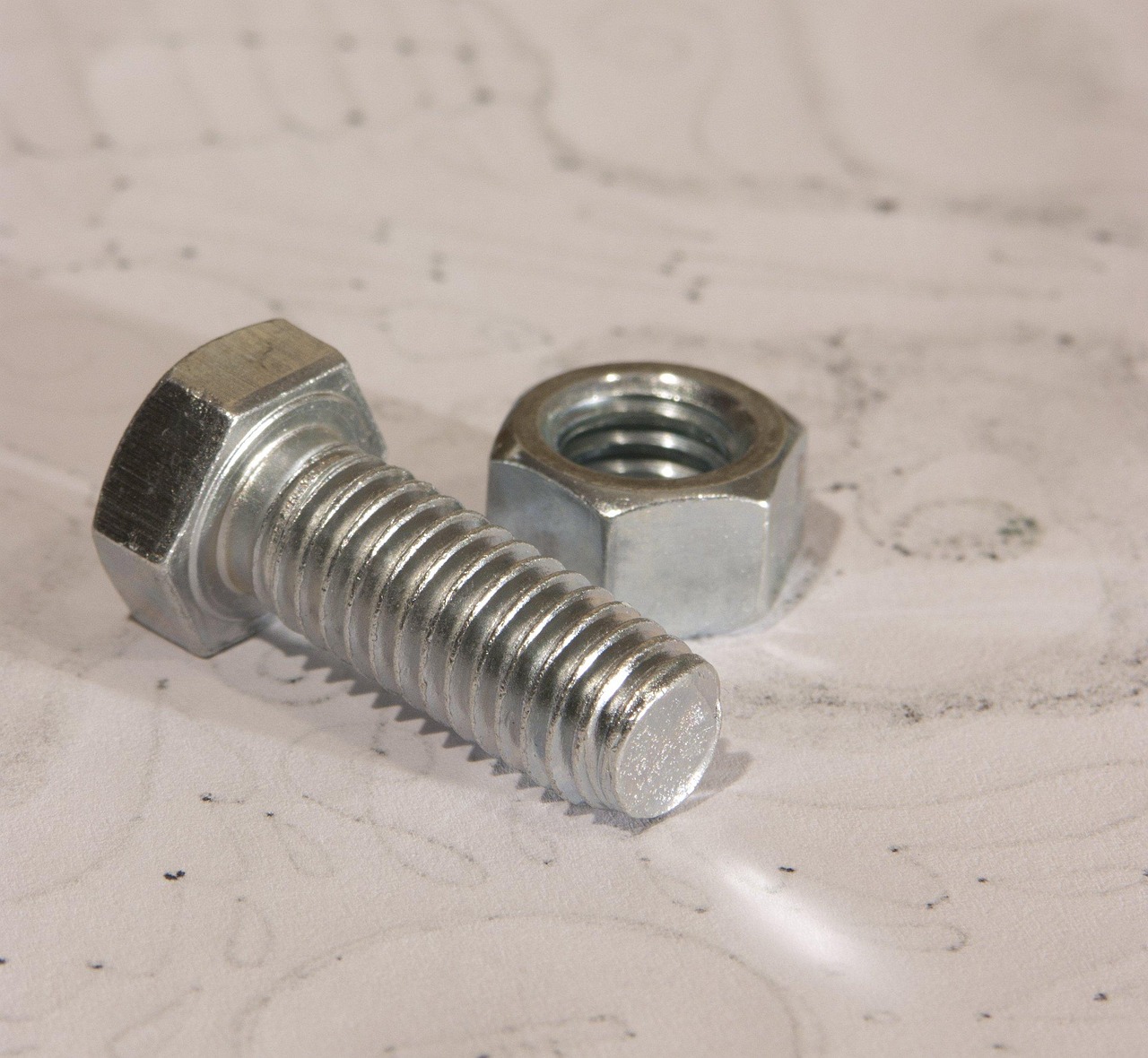
The nut is not just an add-on part. Its internal threads take load against the bolt threads, so the nut grade and thread fit matter. If a low-strength nut is used with a higher-strength bolt, the nut threads may strip before the bolt reaches the clamp load you wanted. The problem may not show at once; the wrench can feel normal, then the nut spins, or it may hold during assembly and loosen after a few hours of vibration.
The Washer Controls Bearing Stress
A washer spreads the load over more surface area and gives the nut or bolt head a better bearing face. This matters on softer steel, aluminum, painted parts, and slotted holes. A washer will not correct a poor joint design, but it can stop the nut from digging into the part, breaking the coating, or giving a wrong torque feel. It is a small item, but skipping it can create rework later.
How Do You Match Size, Thread, and Grade?
Matching starts before anyone picks up a wrench. The measurement system, thread pitch, and strength grade all need to suit the job. Guessing is costly in this area, especially on export orders where inch and metric stock may be stored close to each other.
Inch and Metric Calls Must Stay Separate
An inch callout such as 1/2-13 UNC is not the same system as M12 x 1.75. They may look close when someone is rushing, but forcing them together will damage the threads. In a warehouse, keep inch and metric stock in separate bins with clear labels. Color labels help, and simple sample gauges near the packing bench can prevent one mixed carton from becoming a return.
Thread Pitch Has to Match
Coarse threads are common in general assembly because they start more easily and cope better with dirt or rough handling. Fine threads give more control per turn and are often used where vibration, wall thickness, or strength needs point that way. The main rule is plain enough: nut and bolt threads must match exactly. Close size or close pitch is still wrong for a proper joint.
Grade Markings Set the Strength Ceiling
Grade marks show what load the fastener is designed to carry. Portland Bolt’s public strength table lists SAE J429 Grade 5 bolts in common 1/4 to 1 in. sizes at 120 ksi minimum tensile strength, while SAE J429 Grade 8 is listed at 150 ksi; the same table shows F3125 Grade A325 at 120 ksi and F3125 Grade A490 at 150 ksi minimum with a 173 ksi maximum. This is not just reference data for a catalog page. It explains why a Grade 8 bolt should not be matched with a soft nut taken from an open drawer. (portlandbolt.com)
Which Washer Type Fits Your Joint Best?
Washers are often treated as optional parts, but the washer type changes how the joint seats and how the surface holds up in service. Choose the washer based on the surface, load, and inspection needs, not only the hole diameter.
Flat Washers for Clean Bearing Surfaces
Flat washers work well in many general-purpose assemblies. Use them when the contact surface is painted, a little uneven, or softer than the nut face. They help the nut turn more smoothly and reduce local crushing around the hole. A flat washer is also practical on parts that will be removed many times, such as covers, brackets, light guards, or agricultural panels.
Hardened Washers for Structural Assemblies
For high-strength structural bolts, a standard soft washer may dish or embed into the part. ASTM F436/F436M-24 covers hardened steel washers for threaded fasteners with nominal thread diameters from 1/4 through 4 in.; its product scope includes circular, beveled, clipped, and extra-thick styles for different structural needs. For purchasing, this is a useful signal. When the bolt is structural, the washer specification often matters as much as the bolt callout. (store.astm.org)
Locking Washers Are Not a Cure All
Split lock washers are common in maintenance stores, but they do not solve every loosening problem. In many industrial joints, correct clamp load, clean contact surfaces, the right nut, and the right tightening method do more for service life. If vibration is heavy, look at prevailing torque nuts, thread-locking compounds approved for the material, double-nut methods, or a design change. The better choice depends on access, temperature, service cycles, and whether the joint must be opened again.
How Should Material and Finish Guide Your Choice?
Material and coating decide how long a fastener can last in its working environment. A bolt may be strong enough on the first day, but it can still fail early if the finish is wrong for moisture, chemicals, or weather. This is where a low-cost order can turn expensive after installation.
Zinc-Plated Carbon Steel for Dry Indoor Work
Zinc-plated carbon steel is widely used for indoor hardware, light equipment, shelving, brackets, and shop fixtures. It is easy to source, cost friendly, and clean enough for many visible assemblies. Use it in dry spaces where corrosion risk is low. If the joint is near salt spray, fertilizer, washdown water, or outdoor rain, plain zinc plating may not give the service life the customer expects.
Stainless Steel for Wet or Chemical Areas
Stainless steel is a good fit for wet and mildly corrosive areas, but the grade still needs to match the site conditions. 304 stainless is common for general corrosion resistance. 316 stainless is often selected around chlorides, marine air, food equipment, or chemical exposure. Also watch for galling, because stainless threads can seize during tightening, especially without suitable lubrication or when power tools are run too fast.
Hot-Dip Galvanizing for Outdoor Steel
Hot-dip galvanized fasteners are used on many outdoor steel jobs because the coating is thicker than common electroplated zinc. Keep the finish matched across the assembly where possible. A galvanized bolt with an uncoated nut can cause fit issues and uneven corrosion. If the coating is thick, confirm thread allowance, nut tapping, and project specifications before placing a bulk order. See also: Fittings & Valves.
What Installation Mistakes Cause Fastener Failure?
Most field failures do not start with a loud break. A small mismatch, a dirty thread, or a rushed installer can begin the problem. Good assembly practice keeps the fastener working within the range it was selected for.
Mixed Bins Create Hidden Mismatch
Mixed bins are a regular source of trouble in maintenance work. A 3/8 in. washer can fall into an M10 drawer, or a Grade 2 nut can get mixed with Grade 5 bolts. Someone may also reuse a rusty bolt because it looks acceptable from a short distance. Keep labels visible, restock by lot, and separate used fasteners from new stock; random reuse may be fine for a temporary wooden jig, but not for a lifting bracket or machine frame.
Over-Tightening Damages Threads and Parts
More torque does not always make a joint safer. ASME B18.2.1 covers general and dimensional data for inch-series square and hex bolts and screws, while heavy hex structural bolts are now covered under ASME B18.2.6. Dimensional standards help parts fit, but assembly still needs the correct torque or pretension method for that joint. If the bolt is stretched past its elastic range, clamp load can drop instead of increase. (asme.org)
Loose Joints Lose Preload Fast
A joint that starts loose can loosen faster once vibration begins. Paint creep, gasket compression, dirt under a washer, and burrs around holes can all reduce clamp force after the first load cycles. For critical work, clean the contact faces, remove burrs, tighten in a sensible order, and recheck when the specification says to do so. No one wants to search for a missing nut under a machine late in the day, but that is how many small mistakes show up.
How Can Buyers Specify Nuts Bolts and Washers More Clearly?
Clear purchasing wording saves time for both buyer and supplier. It also lowers the chance of receiving parts that look correct but do not suit the application. For export orders, this matters even more because replacement lead time can run into weeks.
A Clean Purchase Description
A useful line item should include fastener type, diameter, length, thread pitch, grade or property class, material, finish, washer style, nut grade, standard, quantity, and packaging preference. For example: hex bolt, 1/2-13 x 2 in., SAE J429 Grade 5, zinc plated, with matching finished hex nut and flat washer, packed 100 sets per carton. This kind of short description is easy for a sales team, warehouse, and inspector to follow. It can also prevent many back-and-forth emails before production or shipment.
Packaging That Protects Identification
Ask for labels showing size, grade, finish, lot number, and quantity. Keep washers with the correct bolts and nuts when the parts are supplied as a set. If the parts are going to a jobsite, small cartons may be better than one large sack. Workers can carry them, count them, and keep them clean, which is a simple way to reduce picking mistakes.
Inspection Notes Before Assembly
Before assembly, check thread fit by hand, look for coating damage, confirm head markings, and reject parts with cracked, flattened, or badly corroded threads. NASA Goddard’s mechanical fastener torque guideline defines torque coefficient K, also called nut factor, in the torque-preload relation T = KDP, and its training material explains a common rule of thumb: much of applied torque is spent on bearing and thread friction, while a smaller share creates preload. The field point is straightforward. Surface condition and lubrication change the result, so do not copy torque numbers blindly across different finishes. (nasa.gov)
FAQ
Q1: Should You Always Use a Washer with a Bolt and Nut? A: Not always, but washers help when you need a smoother bearing surface, want to protect a softer part, cover a slot, or meet a structural specification. If the drawing calls for a washer, use the specified washer type.
Q2: Can You Mix Stainless Bolts with Carbon Steel Nuts? A: It is usually not a good idea unless an engineer or project specification approves it. Mixed materials can cause strength mismatch, corrosion issues, or thread damage, so match material, grade, and finish whenever possible.
Q3: What Is the Difference Between Coarse and Fine Threads? A: Coarse threads have fewer threads per inch or a larger pitch, so they start faster and work better in rougher conditions. Fine threads have more threads in the same length, giving finer adjustment and often better resistance to loosening in suitable designs.
Q4: Are Grade 8 Bolts Always Better Than Grade 5 Bolts? A: No. Grade 8 has higher tensile strength, but the joint still needs the right nut, washer, material, finish, and installation method. A higher grade can be the wrong choice if the mating parts or service conditions do not suit it.
Q5: What Information Should You Send When Asking for a Quote? A: Send size, length, thread, grade, material, coating, nut type, washer type, standard, quantity, packaging, and use environment. A photo or drawing also helps, especially for replacement fasteners from older machinery.