
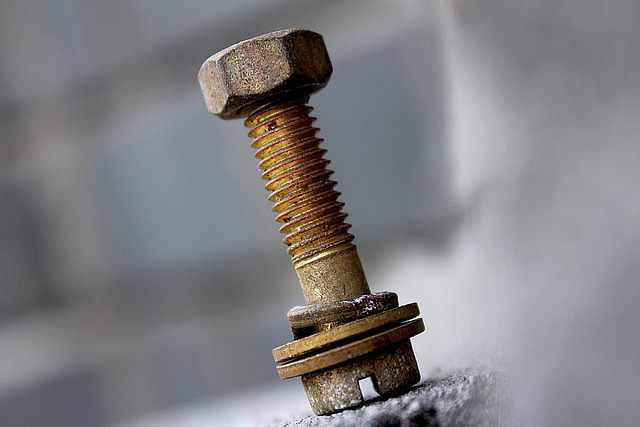
How Did Concrete Anchor Bolts Influence Korea’s Shin-Wolsong Unit 1 Restart Decision
World Heavy Duty Toggle Bolts
Toggle bolts have become a structural cornerstone in modern fastening systems, offering unmatched performance where conventional anchors fail. Their engineering design allows for high load-bearing capacity in hollow walls and composite panels. The combination of material science, mechanical geometry, and evolving global standards has made toggle bolts essential in aerospace, construction, and industrial assembly. The conclusion is clear: toggle bolts remain the most reliable solution for heavy-duty fastening across variable substrates.
The Engineering Foundation of Toggle Bolts
The engineering behind toggle bolts merges precision mechanics with advanced materials to achieve consistent strength and stability. Each component—from the threaded bolt to the expanding wings—plays a distinct role in distributing loads efficiently within hollow or weak surfaces.
Structural Composition and Material Science
A toggle bolt’s core structure typically consists of a machine screw paired with spring-loaded wings that expand behind the wall surface. This configuration transforms localized tension into distributed compression forces, enhancing load capacity. Steel variants dominate heavy-duty applications due to their superior tensile strength and resistance to deformation under cyclic stress. Zinc-plated versions provide better corrosion protection in humid or marine environments, while nylon toggles are used where electrical insulation or lightweight installation is required. In fatigue testing, stainless steel toggles exhibit minimal crack propagation even after 10⁶ cycles, showing their durability under repeated loading conditions.
Load Distribution Mechanics
The wing expansion mechanism is central to how toggle bolts distribute tensile and shear forces across a substrate. When deployed behind drywall or plasterboard, the wings pivot outward to create a broad bearing area that resists pull-through failure. The interaction between the wall material and the toggle’s bearing surface determines ultimate load performance; softer substrates like gypsum require larger wings to maintain stability. Engineers often model this using finite element analysis to predict stress concentrations around anchor points. This ensures optimal spacing between fasteners when multiple toggles support a single fixture such as HVAC ducts or suspended lighting grids.
Engineering Principles That Optimize Load Spread Across Hollow or Weak Surfaces
In hollow wall systems, the goal is not only anchorage but also controlled deformation that prevents cracking or localized crushing. Properly designed toggles achieve this by balancing bolt torque with expansion pressure, maintaining structural integrity even under eccentric loads. Some modern designs use dual-wing channels with self-centering features that automatically align within cavities, improving reliability during installation.
The Evolution of Heavy-Duty Fastening Systems
The development of toggle bolts reflects over a century of innovation in fastening technology—from simple mechanical anchors to complex engineered systems suited for high-performance environments.
Historical Development of Toggle Bolt Technology
Early wall anchors relied on friction-based expansion mechanisms that often failed under vibration or cyclic loads. The introduction of spring-loaded toggle mechanisms in the early 20th century revolutionized this field by enabling secure attachment within hollow walls without solid backing. Key innovations included foldable metal wings that could pass through small holes and then expand automatically once inside the cavity. By mid-century, standardized thread patterns and load classifications were adopted under ASTM and DIN specifications, enabling global interchangeability across manufacturers.
Integration with Modern Construction Practices
As construction materials diversified—from traditional plaster to advanced drywall composites—toggle bolt design evolved accordingly. Modern variants incorporate flexible straps or polymer channels allowing installation in confined spaces where conventional wings cannot fully open. These adaptations align with current architectural demands emphasizing lighter yet stronger assemblies. Automation has also influenced deployment; power-assisted insertion tools now allow consistent torque application during mass installations on production lines.
Comparative Analysis: Toggle Bolts vs Other Fastening Systems
Comparing toggle bolts with other anchoring methods highlights their unique balance between strength, adaptability, and efficiency across multiple substrates.
Performance Metrics in Heavy-Duty Applications
Toggle bolts outperform plastic anchors and sleeve expansions when tested for tensile strength on drywall panels thicker than 12 mm. Under dynamic loading conditions—such as vibration from HVAC units—they maintain over 90% of their rated holding power after prolonged operation, whereas friction-based anchors lose up to 40%. Torque resistance tests show consistent results due to the mechanical interlock created by wing expansion behind the wall face.
Cost-Efficiency and Lifecycle Assessment
While initial installation may take slightly longer than simpler anchors, toggle bolts offer extended service life with minimal maintenance needs. In industrial settings such as offshore platforms or ship interiors, corrosion-resistant variants reduce replacement frequency significantly. Lifecycle assessments indicate that stainless-steel toggles can last over two decades without significant degradation when properly installed and periodically inspected for torque retention.
Environmental Impact Assessment from Production to Disposal Phases
Manufacturers increasingly focus on eco-friendly production using recycled steel alloys and low-emission plating processes compliant with ISO 14001 standards. End-of-life recyclability further enhances their sustainability profile compared with chemical-adhesive anchors that generate hazardous waste during removal.
Design Variations and Their Functional Implications
Different types of toggle bolts cater to specific engineering needs depending on installation environment, load requirement, and substrate composition.
Spring Wing Toggles
Spring wing toggles remain the classic design used widely for ceiling mounts and suspended fixtures like fans or light panels. Their foldable metal wings enable quick insertion through pre-drilled holes before expanding automatically behind the surface. They are valued for reusability since they can be removed without damaging surrounding material if handled carefully during disassembly.
Strap Toggles and Snaptoggles
Strap-style toggles employ rigid polymer channels connected by flexible straps that hold position during screw insertion—a major advantage in tight cavities where traditional wings cannot deploy fully. Snaptoggle designs feature metal bars locked into place by sliding collars that provide enhanced stability once tightened against the wall face, reducing rotation during torque application.
Specialty Heavy-Duty Toggles
For aerospace or seismic-resistant structures, custom-engineered toggles use high-tensile titanium alloys capable of sustaining extreme vibrations without loosening. Marine-grade versions include anti-corrosive coatings meeting ASTM B117 salt-spray test requirements for over 1000 hours exposure.
Standards, Testing Protocols, and Global Compliance Requirements
Quality control within toggle bolt manufacturing follows strict international guidelines ensuring uniform safety performance across industries worldwide.
International Standards Governing Toggle Bolt Manufacturing
ASTM F606 outlines procedures for determining mechanical properties such as proof load and yield strength of fasteners including toggle mechanisms. ISO 898 specifies dimensional tolerances while DIN EN 14592 governs timber-to-metal connection applications using similar anchor principles. Compliance testing includes pull-out force measurement at incremental torque levels until failure occurs under controlled laboratory conditions following ISO/IEC 17025 accreditation protocols.
Quality Assurance in Production Lines
Manufacturers employ non-destructive testing methods such as ultrasonic inspection to detect internal flaws within metal components before assembly. Statistical process control tracks dimensional variance throughout production batches ensuring consistency within ±2% tolerance range—critical for maintaining predictable performance once installed on-site.
The Future Direction of Heavy-Duty Fastening Systems with Toggle Bolts
Innovation continues as engineers explore lighter materials, smart integration technologies, and sustainable production pathways for next-generation fastening systems.
Emerging Materials and Smart Integration Technologies
Advanced alloys like aluminum-magnesium composites offer improved strength-to-weight ratios while maintaining corrosion resistance comparable to stainless steel grades 316L. Research groups are developing sensor-embedded toggles capable of transmitting real-time strain data via wireless modules integrated into structural monitoring networks—a promising step toward predictive maintenance frameworks in infrastructure management.
Sustainability Trends in Fastener Engineering
Sustainability initiatives target reduced material waste through near-net-shape forging techniques minimizing scrap volume during manufacturing. Experimental biodegradable polymers are being tested for temporary construction fixtures where long-term retention is unnecessary, aligning with circular economy goals promoted under ISO 14044 life-cycle assessment frameworks.
FAQ
Q1: What makes toggle bolts different from standard wall anchors?
A: Toggle bolts feature expanding wings that open behind a wall surface to distribute load over a larger area compared with friction-based anchors relying solely on surface grip.
Q2: Can toggle bolts be reused after removal?
A: Some designs like spring wing toggles can be reused if removed carefully without bending their arms; however, plastic strap types are typically single-use due to deformation upon tightening.
Q3: Which materials offer best corrosion resistance?
A: Stainless steel provides highest resistance especially grades 304 or 316 used in marine environments; zinc coatings offer moderate protection suitable for indoor installations.
Q4: Are there international standards regulating toggle bolt quality?
A: Yes, standards such as ASTM F606 and ISO 898 specify testing parameters including pull-out force limits ensuring consistent global quality benchmarks.
Q5: How do smart toggle bolts contribute to structural monitoring?
A: Smart variants integrate miniature sensors measuring strain or vibration transmitted wirelessly allowing engineers to track real-time performance data for preventive maintenance planning.


