
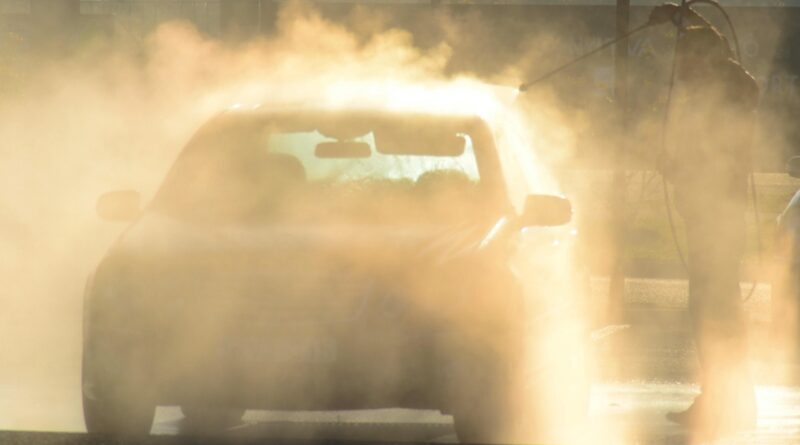
Craftsman power washer guide for choosing electric or gas
Quick answer for homeowners
For homeowners, a Craftsman power washer is generally a cold-water pressure washer for cars, patio furniture, decks, siding, walkways, and residential concrete. The main buying decision is not simply the brand name or the highest PSI on the box. It is whether an electric or gas unit fits the surface, available water flow, storage space, maintenance expectations, and safety limits of the work. Based on Craftsman product information reviewed in October 2026, its electric models commonly range from about 1,700 to 2,800 max PSI, while listed gas models sit around 3,100 to 3,400 PSI at 2.4 GPM. For most light cleaning, electric is simpler. For larger concrete areas and tougher buildup, gas offers more usable flow and mobility, but it also brings fuel, noise, exhaust, and maintenance responsibilities.
This guide explains how to read the specifications, where each type fits, and what limitations to check before buying or using one. For more tool and outdoor equipment coverage, see the Tools & Power section.

What a Craftsman power washer is designed to do
The terms power washer and pressure washer are often used interchangeably in retail listings, although some professionals reserve “power washer” for heated-water machines. The Craftsman consumer models discussed here are cold-water pressure washers. They rely on pressurized water, nozzle pattern, detergent, dwell time, and rinsing action rather than heated water.
Typical homeowner jobs are straightforward: rinsing vehicles with a wide nozzle, refreshing patio furniture, removing surface grime from vinyl siding, cleaning a deck before maintenance, washing brick steps, or speeding up sidewalk cleanup. These are different from the commercial surface-cleaning rigs contractors use all day. The distinction matters because a consumer Craftsman power washer can have enough pressure to damage wood, paint, seals, and skin, yet may not have the high flow rate professional crews use to clean large concrete quickly.
Craftsman’s published product pages show several practical features across the line, including quick-connect nozzles, soap tanks or soap applicators, onboard accessory storage, kink-resistant hoses, large wheels on selected models, and limited warranties. Those features are useful, but the buying decision should still start with PSI, GPM, power source, nozzle set, hose length, and the surface you expect to clean most often.
How to read PSI, GPM, and cleaning units
PSI, or pounds per square inch, describes pressure. Higher PSI increases the force at the nozzle, which can help loosen stubborn dirt but also raises the risk of etching, splintering, stripping, or injury. GPM, or gallons per minute, describes water volume. Higher GPM generally rinses soil away faster and is especially noticeable on broad areas such as driveways, long sidewalks, and large patios.
One useful comparison number is cleaning units, calculated as PSI multiplied by GPM. The Pressure Washer Manufacturers’ Association PW101 standard is intended to create a consistent method for testing and rating pressure and flow performance. For homeowner use, cleaning units help compare model tiers, but they should not replace judgment about nozzle angle, surface hardness, detergent, and operator technique.
| Model type | Typical Craftsman range reviewed | Best fit | Main limitation |
|---|---|---|---|
| Compact electric | About 1,700 to 1,900 max PSI and 1.2 GPM | Cars, grills, patio furniture, small patios, light siding work | Slower rinsing on large concrete and heavy buildup |
| Higher-output electric | About 2,100 to 2,800 max PSI, commonly around 1.1 to 1.2 GPM | General residential cleaning where low maintenance matters | Still limited by electric-cord setup and modest flow |
| Gas homeowner models | About 3,100 to 3,400 PSI at 2.4 GPM in listed Craftsman gas models | Driveways, sidewalks, larger patios, tougher outdoor grime | More noise, fuel handling, exhaust risk, and engine maintenance |
The key point is that a higher PSI number does not automatically mean a better user experience. A 2.4 GPM gas machine can feel much faster on concrete than a compact electric washer because it moves more water. On delicate surfaces, however, more pressure can become a liability. For painted siding, aging deck boards, soft wood, old mortar, and vehicle trim, a wider spray angle and more distance from the surface are usually safer than chasing the highest rating.
Electric Craftsman power washer models and where they fit
Craftsman’s electric pressure washer category includes compact and mid-range corded cold-water machines. Product pages reviewed in October 2026 listed examples such as the CMEPW1700 at 1,700 max PSI and 1.2 GPM, the CMEPW1800 at 1,800 max PSI and 1.2 GPM, the CMEPW1900 at 1,900 max PSI and 1.2 GPM, the CMEPW2100 at 2,100 max PSI and 1.2 GPM, the CMEPW2400 at 2,400 max PSI and 1.1 GPM, and the CMEPW2800 at 2,800 max PSI and 1.1 GPM.
Those numbers make the electric lineup easiest to view as a convenience-first choice. A compact 1,700 or 1,800 PSI unit is often enough for routine car washing, patio chairs, garbage bins, small porches, and light algae on hard surfaces. The 1,900 and 2,100 PSI models add flexibility for fences, back patios, and general household cleaning while keeping the no-gas advantage. The 2,400 and 2,800 PSI electric models move further into heavier residential tasks, although their GPM remains modest compared with gas models.
Why electric makes sense
Electric units are easier to store, start, and maintain. There is no gasoline to stabilize, no small-engine oil routine in the same sense as a gas model, and usually less noise. For households that clean a car, porch, outdoor furniture, and occasional siding, that simplicity may matter more than maximum output.
Where electric can disappoint
The trade-off is speed. A lower-flow electric washer can clean effectively, but it may take longer to rinse loosened dirt from a wide driveway or heavily stained concrete. It also depends on a safe outdoor electrical setup. Craftsman manuals and safety guidance commonly emphasize grounded electrical connections, GFCI protection, and avoiding unsafe cord practices. If your outdoor outlets are limited or far from the work area, the cord may become a bigger issue than the PSI rating.
Gas Craftsman power washer models and the higher-flow trade-off
Craftsman gas pressure washer listings reviewed in October 2026 included homeowner models around 3,100, 3,200, and 3,400 PSI at 2.4 GPM. Product descriptions for these models refer to features such as maintenance-free axial cam pumps, quick-connect nozzles, integrated soap tanks, never-flat wheels, 25-foot or 30-foot high-pressure hoses, and engines with low-oil shutdown on selected units. Some individual listings also note California availability restrictions, so buyers should verify local compliance before choosing a specific SKU.
Gas makes the most sense when the cleaning area is large, the dirt load is heavier, or the user wants to work away from an outlet. Driveways, long sidewalks, stone patios, farm equipment, and larger exterior cleanup jobs are more realistic for a gas machine because of the combination of pressure and flow.
The maintenance side of gas
A gas Craftsman power washer is still a small-engine machine. It requires proper fuel handling, oil checks, seasonal storage preparation, and attention to the pump. If it sits unused with stale fuel, starting and running problems become more likely. If the pump runs without adequate water supply or is stored through freezing conditions without protection, pump damage can follow. For a homeowner who uses a washer only a few times a year, an electric unit may be less frustrating even if it cleans more slowly.
The safety side of gas
Gas models create exhaust and carbon monoxide risk. CDC pressure washer safety guidance updated on August 26, 2026 warns that gasoline-powered equipment should not be used inside buildings or in partially enclosed areas, and should be kept away from windows, doors, and vents. That point is not optional. A gas pressure washer belongs outdoors, with exhaust directed away from occupied spaces.
Matching nozzle, detergent, and surface
Nozzle choice changes how the same machine behaves. A narrow 0-degree nozzle concentrates force into a small point and is rarely the right starting point for general household cleaning. A 15-degree nozzle is more aggressive and may be used on harder surfaces when appropriate. A 25-degree or 40-degree nozzle spreads the force over a wider fan and is usually safer for vehicles, furniture, siding, and more delicate work. Turbo nozzles rotate a concentrated stream to increase cleaning action, but they still require caution around wood, paint, trim, and soft materials. See also: Bolts & Fasteners.
Detergent also matters. Pressure alone is not always the best method for oil, mildew, road film, or organic growth. Many Craftsman models include either an integrated soap tank, removable soap tank, soap nozzle, or foam cannon-style accessory. Use detergents labeled for pressure washers and for the surface being cleaned. Avoid running harsh chemicals through a washer unless the manual permits it, and test a small inconspicuous area before treating a visible surface.
- Vehicles: Use a wide nozzle, keep distance from paint and trim, and avoid forcing water into seals, sensors, or wheel bearings.
- Decks: Use caution on soft or weathered wood. Too much pressure can raise grain and leave wand marks.
- Vinyl siding: Avoid spraying upward behind laps, vents, or openings. Detergent and gentle rinsing are often safer than close-range pressure.
- Concrete: More flow helps. Move consistently to avoid stripes, and consider a compatible surface cleaner for large flat areas.
- Brick and mortar: Older mortar can be damaged by aggressive nozzles. Start gently and increase only if the surface tolerates it.
Buying checklist before choosing a Craftsman power washer
Before buying, write down the three jobs you will do most often. If the list is car, patio furniture, and trash bins, a compact electric model is probably enough. If the list is driveway, long walkway, and heavy seasonal grime, a gas model or higher-output electric model deserves more attention. If the work is only annual, renting may be more practical than storing and maintaining a machine.
Check hose length and cord length together. Craftsman electric models commonly list 35-foot power cords and 20-foot or 25-foot hoses, while selected gas models list 25-foot or 30-foot hoses. Longer reach reduces repositioning, but it does not remove the need for safe routing. Keep cords away from standing water, keep hose paths clear of tripping hazards, and avoid pulling the washer by the cord or hose.
Also verify what nozzles are included. Some models include 15-degree, 25-degree, 40-degree, soap, and turbo nozzles; others include fewer accessories. If you plan to wash cars, a gentle nozzle and soap capability matter more than the most aggressive tip. If you plan to clean concrete, nozzle compatibility and optional surface-cleaner support may matter more than a small PSI difference.
Finally, compare warranty terms, local availability, and service support. Craftsman product pages list limited warranties, but terms can vary by component and model. Gas models may have separate frame, pump, and engine coverage. Retailer listings can also differ from manufacturer pages, so the model number on the box should match the manual and the specification label.
Safe use and common mistakes to avoid
Pressure washers are not harmless garden hoses. CDC guidance notes that high-pressure spray can cause serious wounds that may look minor at first, and the spray can throw objects toward nearby people. Wear eye protection, closed-toe footwear, and clothing that reduces direct skin exposure. Keep children and bystanders away from the work zone, and never point the wand at a person, pet, or yourself.
For electric models, test GFCI protection before use, plug into a properly grounded outlet, and keep electrical connections away from water runoff. Do not remove grounding prongs, splice cords, or use improvised electrical connections. If a breaker or GFCI trips repeatedly, treat it as a safety warning rather than an inconvenience.
For gas models, run the washer outdoors only. Do not operate it in a garage, basement, breezeway, shed, or near open windows and doors. Let hot parts cool before storage, handle fuel carefully, and follow the manual for winterizing. With either type, connect water first, purge air from the system before full operation, and avoid running the pump dry.
Frequently asked questions
Is a Craftsman power washer good for washing a car?
Yes, many electric Craftsman models can be used for vehicle washing when paired with a wide nozzle, appropriate detergent, and safe distance from the paint. Avoid narrow nozzles, do not aim directly at seals or sensors, and start gently.
Is 1,700 PSI enough for home use?
For light home tasks, 1,700 PSI can be enough. It fits cars, patio furniture, grills, bins, and small cleanup jobs. It will usually be slower on large concrete areas because the flow rate is modest.
Should I choose gas or electric for a driveway?
For a small driveway with light soil, a higher-output electric washer may work if you have time. For larger concrete areas or heavier buildup, gas is usually faster because Craftsman gas models in the reviewed lineup provide higher flow at 2.4 GPM.
Can too much pressure damage a deck or siding?
Yes. High pressure, close distance, or a narrow nozzle can scar wood, force water behind siding, remove paint, or damage aging materials. Start with a wider fan pattern and increase cleaning force only as needed.
What should I verify before buying a specific model?
Confirm the exact model number, PSI, GPM, included nozzles, hose length, soap setup, warranty terms, and local availability. For gas models, also check emissions or state-sale restrictions listed for that SKU.


