
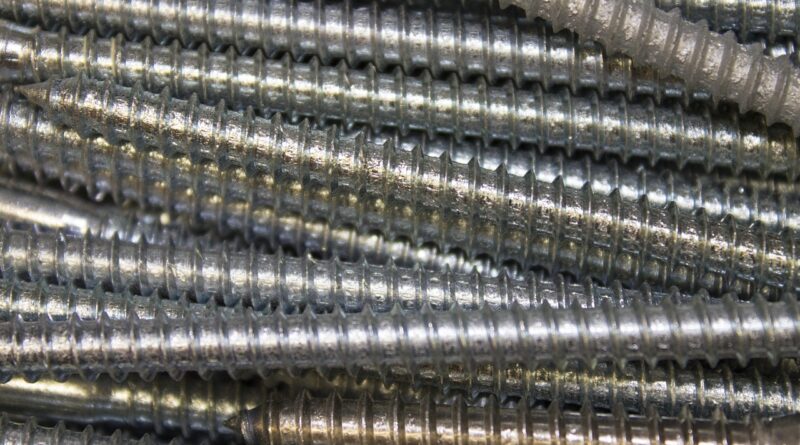
M6 stainless steel bolts explained for grades, sizes and installation
What an M6 stainless steel bolt actually means
An M6 stainless steel bolt is a metric fastener with a nominal 6 mm thread diameter. In most catalogs, M6 means M6×1.0 coarse pitch unless a fine pitch is stated. The specification still needs more than the word “stainless.” Buyers should confirm the head style, length, thread pitch, stainless steel group and property class. A2-70 is common for indoor or sheltered service. A4-70 or A4-80 is often considered for coastal, washdown, chloride or more corrosive conditions, but the complete joint environment still determines suitability. If a joint was originally designed for a carbon steel 8.8 or 10.9 bolt, a stainless replacement should not be assumed to offer the same strength.
This guide focuses on practical selection rather than promoting a specific product. For related fastening topics, see our Bolts & Fasteners section.
The main technical references behind common M6 stainless bolt terminology are ISO metric thread standards, ISO 3506-1:2020 for corrosion-resistant stainless steel bolts, screws and studs, and ISO 4014 or ISO 4017 for many hex-head bolt dimensions.
Common M6 dimensions to check before ordering
The “M6” part of a specification tells you the nominal thread size, not the complete bolt configuration. Two M6 bolts can share the same thread but differ in head type, drive type, thread length, shoulder length, overall length, material condition and corrosion performance. A complete callout is therefore more useful than a short catalog label.
| Item to check | Common M6 value or convention | Why it matters |
|---|---|---|
| Nominal thread diameter | 6 mm | Defines the metric thread family, but not the length or head style. |
| Standard coarse pitch | M6×1.0 | The usual default for M6. Fine pitch, such as M6×0.75, must be specified if required. |
| Typical hex head across flats | 10 mm for ISO 4014/4017 M6 hex bolts | Determines wrench or socket size. Legacy DIN or special parts may vary in details. |
| Typical hex head height | About 4 mm for common ISO M6 hex bolts | Useful where head clearance is limited. |
| Typical socket cap drive | Often 5 mm hex key for ISO 4762 M6 socket head cap screws | Important when the application needs a recessed drive instead of an external hex head. |
| Normal clearance hole | Often around 6.6 mm for a normal M6 clearance fit | Controls alignment tolerance and assembly ease. |
| Common tap drill for M6×1 | 5.0 mm for many standard cut-tap applications | Relevant for tapped holes, but thread engagement and material must still be checked. |
Length is measured according to the head style. For most hex bolts and socket head cap screws, the listed length runs from under the head to the end of the bolt. Countersunk screws are typically measured overall because the head sits flush in the part. When replacing an existing fastener, measure the old bolt carefully rather than relying on visual comparison.
Thread engagement is another common source of ordering and assembly errors. In a through-bolt joint with a nut, the bolt should normally pass fully through the nut, often with a small amount of thread protrusion. In a blind tapped hole, the available engagement depends on the base material. Steel, aluminum, brass and plastic inserts do not provide the same thread strength, so the joint may fail in the internal thread before the stainless bolt reaches its own limit.
Stainless steel grades and property classes
ISO 3506 uses a two-part marking system for many stainless fasteners. The first part, such as A2 or A4, identifies the stainless steel group. The second part, such as 70 or 80, identifies the property class. The number is related to minimum tensile strength in megapascals; for example, class 70 corresponds to a minimum tensile strength of 700 MPa for full-loadability fasteners covered by the standard.
| Marking | General meaning | Typical use case | Selection caution |
|---|---|---|---|
| A2-50 | Austenitic stainless, lower strength condition | Light-duty or non-critical fastening where corrosion resistance is more important than clamp load | Do not substitute for higher-strength bolts without checking load requirements. |
| A2-70 | A2 stainless, common cold-worked property class | General machinery, enclosures, brackets, furniture, indoor and sheltered outdoor hardware | Not ideal for sustained chloride exposure. |
| A2-80 | A2 stainless with higher strength than A2-70 | Applications needing more strength while staying within A2 corrosion performance | Availability may be more limited than A2-70. |
| A4-70 | Molybdenum-bearing austenitic stainless group, commonly associated with 316-family corrosion resistance | Outdoor, coastal, food-area washdown and more corrosive atmospheres | Still not immune to crevice corrosion, pitting or stress corrosion cracking. |
| A4-80 | A4 stainless with higher property class | More demanding corrosion environments where higher strength is also needed | Torque, galling and joint design become especially important. |
A2 is often treated as the fastener-world equivalent of 304-family stainless steel, while A4 is commonly associated with 316-family stainless steel. That shorthand is useful, but it is not a complete specification. A proper fastener callout should include the metric size, pitch if needed, length, head standard, stainless group and property class, such as “M6×1.0 × 25 ISO 4017 A4-70.”
Choose the grade by environment, not by the word stainless
Stainless steel resists corrosion because a chromium-rich passive film forms on its surface. That film performs well in many atmospheric environments, but it can be damaged by chlorides, stagnant moisture, crevices, contamination, high temperature, unsuitable cleaning chemicals or contact with dissimilar metals. For this reason, “stainless” should not be read as “corrosion proof.”
A2 stainless steel bolts are often suitable for dry indoor equipment, light outdoor hardware, clean architectural fittings, brackets, panels and general non-marine use. They are usually selected when the environment is not strongly chloride-rich and when the joint is not safety critical. A4 stainless steel bolts are commonly chosen when exposure includes coastal air, road salt, cleaning chemicals, food-processing washdown or other conditions where chloride-related pitting is a concern.
Even A4 needs thoughtful design. Crevices under washers, trapped water, poor drainage and dirt deposits can concentrate corrosive conditions. A bolt head may look acceptable while hidden threads inside a joint are exposed to a more aggressive micro-environment. In critical outdoor or chemical-service joints, material choice should be reviewed together with joint geometry, drainage, maintenance access and inspection intervals.
Contact with aluminum, galvanized steel or carbon steel also deserves attention. Galvanic corrosion risk depends on the metals, electrolyte, area ratio and exposure conditions. Insulating washers, sealants, suitable coatings and good drainage may be more important than simply moving from A2 to A4.
Strength limits and what the numbers do not tell you
M6 stainless steel bolts can be strong enough for many assemblies, but the property class should be compared with the actual load case. The tensile stress area of a standard M6×1 thread is about 20.1 mm². Using ISO 3506 minimum tensile and proof stress values, the approximate minimum loads below show the scale of the numbers. They are not safe working loads and should not replace engineering calculations.
| Property class | Minimum tensile strength | Approximate minimum tensile load for M6×1 | Minimum 0.2% proof stress | Approximate proof load for M6×1 |
|---|---|---|---|---|
| 50 | 500 MPa | About 10.1 kN | 210 MPa | About 4.2 kN |
| 70 | 700 MPa | About 14.1 kN | 450 MPa | About 9.0 kN |
| 80 | 800 MPa | About 16.1 kN | 600 MPa | About 12.1 kN |
These figures are useful for comparison, but real joints can fail in several ways: thread stripping, shear, fatigue, embedment, loosening, bearing failure in the clamped material, corrosion-assisted cracking or overload from incorrect tightening. A stainless M6 bolt installed into a weak tapped aluminum hole may be limited by the internal thread, not by the bolt’s tensile strength. See also: Fittings & Valves.
Stainless property classes should also not be confused with carbon steel classes such as 8.8, 10.9 or 12.9 under ISO 898-1. A carbon steel 8.8 bolt is not equivalent to A2-70 just because both are metric fasteners. If the original design used a high-tensile carbon steel bolt, a stainless replacement may require a design review, a larger size, a different alloy or a different corrosion-protection strategy.
Installation issues that cause M6 stainless bolts to fail early
Galling is one of the most common stainless fastener problems. It occurs when mating threads seize during tightening, often because friction, pressure and heat cause local adhesion between stainless surfaces. Once severe galling occurs, the bolt may lock in place, strip, twist off or require cutting for removal.
- Use clean, undamaged threads. Dirt, burrs and damaged crests increase friction.
- Start the bolt by hand to confirm thread fit before using tools.
- Avoid high-speed installation where possible, especially in stainless-on-stainless assemblies.
- Use a suitable anti-seize or lubricant when the application allows it.
- Remember that lubrication changes the relationship between torque and clamp load.
- Use compatible nuts and washers, ideally specified to the same material and standard family.
- Stop if the fastener binds before clamping force is reached; forcing it can destroy the joint.
Torque tables can be helpful, but they are not universal. The same M6 A4-80 bolt can produce different clamp loads depending on lubrication, surface finish, washer condition, nut style, thread tolerance and the material being clamped. Where preload is critical, use a controlled assembly procedure rather than a generic torque value copied from an unrelated chart.
A practical buying checklist
A clear specification reduces mismatches, especially when sourcing from multiple suppliers or replacing a bolt in a machine. Before ordering M6 stainless steel bolts, confirm the following points.
- Thread size and pitch, such as M6×1.0 or M6×0.75.
- Length and how that length is measured for the head style.
- Head type, such as hex head, socket head cap, button head or countersunk.
- Dimensional standard, such as ISO 4017 for fully threaded hex head screws or ISO 4014 for partially threaded hex head bolts.
- Material group, usually A2 or A4 for common stainless applications.
- Property class, such as 70 or 80.
- Nut and washer compatibility, including thread pitch and stainless grade.
- Exposure conditions, including chlorides, temperature, cleaning chemicals and trapped moisture.
- Installation method, including lubrication, anti-seize and torque control.
- Documentation needs, such as inspection certificates or material traceability for critical work.
A useful one-line specification might read: “M6×1.0 × 25 ISO 4017 A4-70 stainless hex head bolt with compatible A4 nut and washer.” Another might be: “M6×1.0 × 20 ISO 4762 A2-70 socket head cap screw for indoor equipment panel.” These examples are clearer than “M6 stainless bolt” because they define the functional details a buyer, installer or inspector needs.
Frequently asked questions
Is M6 the same as 1/4 inch?
No. M6 is a metric thread with a nominal 6 mm diameter, while 1/4 inch is an imperial size with a nominal diameter of 6.35 mm. Some clearance holes may accept either fastener loosely, but the threads are not interchangeable.
What does A4-80 mean on an M6 bolt?
A4 identifies the stainless steel group, commonly associated with 316-family corrosion resistance. The 80 indicates a property class with a minimum tensile strength of 800 MPa under the relevant ISO 3506 conditions.
Can A2 stainless steel bolts be used outdoors?
Often, yes, in mild outdoor environments with good drainage and limited chloride exposure. For coastal air, road salt, washdown or chemical exposure, A4 is usually a more appropriate starting point, though the whole joint design still matters.
Do M6 stainless steel bolts need anti-seize?
Anti-seize is commonly used to reduce galling risk, especially in stainless-on-stainless assemblies. It should be selected for the environment and used consistently because lubrication changes the torque needed to reach a given clamp load.
Are stainless M6 bolts stronger than zinc-plated steel bolts?
Not automatically. Stainless bolts may offer better corrosion resistance in many environments, but zinc-plated carbon steel bolts can have higher mechanical property classes. Compare the property class, not only the finish or material name.


