
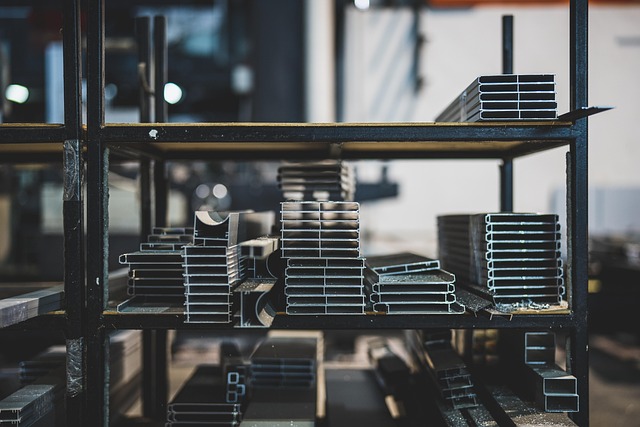
Is Stainless Steel Stainless Steel Demand Driving Acerinox Stock Recovery
Acerinox S.A. Stock (ES0132105018): Stainless Steel Group Refines Strategy After Recent Earnings
Acerinox’s recent earnings reaffirm its resilience in a volatile stainless steel market. Despite cyclical demand pressures, the company’s diversified operations and prudent capital management have positioned it to capture recovery momentum. Global stainless steel consumption is stabilizing after a period of correction, and Acerinox’s strategic refinements—focused on cost discipline, sustainability, and product innovation—are improving investor sentiment. The group’s balance sheet strength and operational flexibility suggest that it remains well placed to benefit from structural growth in infrastructure, mobility, and renewable energy sectors.
Stainless Steel Market Dynamics and Their Influence on Acerinox
The global stainless steel market is undergoing structural change as industrial decarbonization, supply chain localization, and technological innovation reshape demand and production models. These shifts directly influence Acerinox’s pricing power, capacity utilization, and investment priorities.
Global Stainless Steel Demand Trends
Stainless steel demand has grown steadily across construction, automotive, and consumer goods sectors. Asia continues to dominate consumption due to industrial expansion in China and India. Europe shows moderate recovery driven by green infrastructure projects, while North America benefits from reshoring trends. Macroeconomic factors such as GDP growth rates and public infrastructure spending remain decisive for consumption patterns. When governments increase fiscal support for transport networks or renewable installations, stainless steel usage typically rises due to its corrosion resistance and durability.
Supply Chain Adjustments in the Stainless Steel Industry
Raw material availability remains a key challenge. Nickel supply disruptions from Indonesia or Russia can tighten margins rapidly. Chromium markets are also sensitive to geopolitical constraints affecting South African exports. Logistics costs have eased from pandemic peaks but remain above pre-2020 averages due to port congestion and higher fuel prices. Recycling plays an increasingly important role; secondary stainless steel now accounts for over 40% of global output in some regions. Circular economy initiatives help stabilize raw material costs while aligning with environmental targets.
Acerinox’s Strategic Position in the Stainless Steel Sector
Acerinox operates within an industry where efficiency, scale, and product differentiation determine competitiveness. The company’s footprint across multiple continents provides insulation against regional volatility while allowing flexible allocation of production volumes.
Overview of Acerinox’s Business Model and Operations
Acerinox runs major facilities in Spain (Campo de Gibraltar), the United States (NAS), South Africa (Columbus Stainless), and Malaysia (Bahru Stainless). This network enables balanced exposure between mature and emerging markets. Its portfolio spans flat products like coils and sheets, long products such as bars, and specialty grades designed for high-performance applications including chemical processing or desalination plants. Compared with peers like Outokumpu or POSCO, Acerinox maintains leaner cost structures through vertical integration in melting and finishing stages.
Strategic Refinements Following Recent Earnings Results
Following its latest results, management emphasized operational efficiency programs targeting productivity gains at European plants and digital process automation across global units. Cost optimization includes renegotiating energy contracts in Spain to mitigate electricity volatility. Capital allocation remains disciplined: dividend payouts are maintained alongside selective buybacks when valuation gaps appear attractive. Reinvestment focuses on modernization projects improving energy efficiency rather than capacity expansion.
Financial Performance Drivers Behind Acerinox Stock Recovery
The stock’s rebound reflects investor confidence in margin stability despite subdued price cycles. Analysts highlight that improved working capital control and sustained cash generation underpin valuation resilience.
Revenue Composition and Profitability Trends
Revenue diversification remains broad: roughly one-third originates from Europe, another third from the Americas, with Asia-Pacific contributing the remainder through exports from Bahru Stainless. Flat products dominate sales volume though higher-margin specialty steels are gaining share. Margins have improved sequentially as input costs normalized after 2022 spikes in nickel prices. Foreign exchange effects—particularly USD strength versus EUR—have supported reported earnings given NAS’s dollar-based revenues.
Balance Sheet Strength and Liquidity Considerations
Acerinox maintains conservative leverage with net debt-to-EBITDA ratios below industry averages. Interest coverage comfortably exceeds 10x under current conditions, reflecting low financing risk even amid rising rates. Operating cash flows remain robust thanks to tight inventory management; free cash flow generation supports dividends without eroding liquidity buffers. The company holds substantial credit lines that provide flexibility during downturns or acquisition opportunities.
The Role of Stainless Steel Demand in Shaping Market Valuation
Investor perception of Acerinox often mirrors expectations for stainless steel price trajectories but structural improvements are gradually decoupling valuation from pure commodity cycles.
Correlation Between Stainless Steel Prices and Acerinox Share Performance
Historically, Acerinox shares have shown strong correlation with benchmark stainless steel prices quoted on Asian exchanges. However, as the firm expands into value-added alloys with stable pricing dynamics, sensitivity to spot price swings has moderated. Investors increasingly assess long-term demand drivers such as electrification trends requiring corrosion-resistant materials rather than short-term commodity fluctuations.
Market Perception and Analyst Sentiment Toward Acerinox Stock
Recent analyst commentary has turned more constructive following consistent profitability despite weak European demand early this year. Consensus forecasts point toward mid-single-digit revenue growth over the next two years with EBITDA margins recovering above 12%. Earnings per share are expected to normalize toward pre-pandemic levels by 2025 if global trade conditions remain stable. Institutional investors view Acerinox as a defensive play within European metals due to its diversified geography and disciplined capital returns.
External Factors Influencing Future Growth Prospects
Beyond cyclical recovery forces, regulatory frameworks and technology investments will shape how fast Acerinox can expand profitably while meeting sustainability expectations.
Regulatory Environment and Sustainability Commitments
European Union environmental regulations impose strict emission limits on metallurgical industries under the EU Emissions Trading System (ETS). Compliance requires continuous upgrades in energy efficiency equipment at melting shops. Acerinox has committed to reducing CO₂ intensity per ton of output by adopting renewable electricity contracts at its Spanish sites and increasing scrap-based production ratios above 80%. These initiatives align with EU Green Deal objectives but entail upfront costs that may compress short-term margins before yielding operational savings.
Technological Innovation and Product Development Initiatives
Acerinox invests steadily in R&D focused on high-performance alloys used in hydrogen storage systems or marine environments where corrosion resistance is critical. Digital transformation programs include predictive maintenance systems leveraging real-time data analytics across mills to minimize downtime. Collaborative projects with research institutions aim to develop low-nickel compositions maintaining mechanical strength while reducing dependency on volatile raw materials markets—a strategic hedge against future supply shocks.
FAQ
Q1: How does global infrastructure spending impact stainless steel demand?
A: Infrastructure investment boosts consumption because stainless steel is widely used in bridges, rail systems, water treatment facilities, and renewable installations due to its durability.
Q2: Why is recycling important for the stainless steel industry?
A: Recycling reduces reliance on mined nickel or chromium while cutting carbon emissions; it also stabilizes supply chains during raw material shortages.
Q3: What distinguishes Acerinox from competitors like Outokumpu?
A: Acerinox benefits from a geographically balanced footprint spanning Europe, America, Africa, and Asia plus strong cost control through integrated operations.
Q4: How do currency movements affect Acerinox earnings?
A: A stronger U.S. dollar generally supports results since a significant portion of revenue comes from North American operations denominated in USD.
Q5: What are the main sustainability goals set by Acerinox?
A: The company targets lower CO₂ intensity via renewable power use, higher scrap content in production, and continuous improvement in energy efficiency across plants.


