
Can a Brass Pipe Nipple Improve the Seal in PVC Repair Coupling Applications
Brass Pipe Nipple: Threaded on Both Ends, 1-5/16
A brass pipe nipple, threaded on both ends, plays a decisive role in mixed-material plumbing systems where PVC repair couplings are used without cutting more pipe. The core advantage lies in its ability to form a robust mechanical seal between dissimilar materials while maintaining pressure integrity. In field conditions where accessibility is limited, this component allows technicians to restore functionality quickly and securely. Its resistance to corrosion and deformation under load makes it a preferred solution for long-term reliability in pressurized water or air systems.
Understanding the Role of a Brass Pipe Nipple in PVC Repair Coupling Applications
In PVC repair coupling applications, the brass pipe nipple functions as a structural bridge between metal and plastic components. Its performance depends not only on its mechanical design but also on how well it compensates for the physical differences between materials during installation.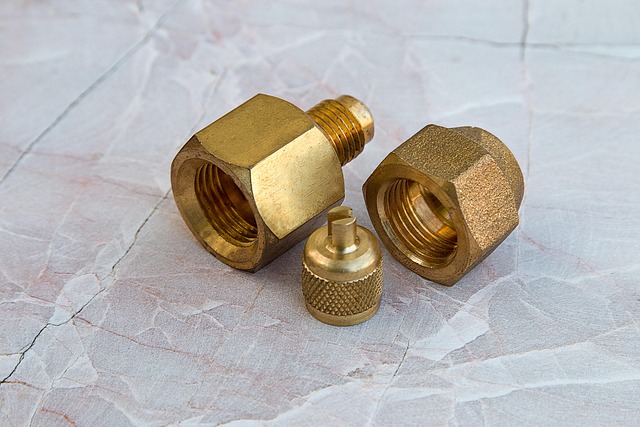
Functional Characteristics of Brass Pipe Nipples
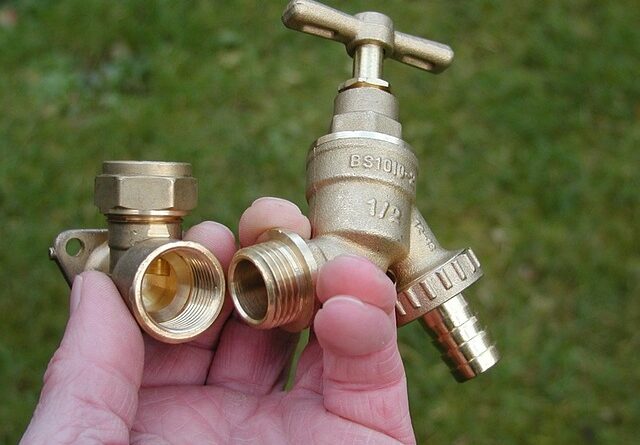
Brass pipe nipples serve as threaded connectors that join two fittings or pipes with internal threads. Their composition—typically copper and zinc—offers excellent corrosion resistance, making them suitable for potable water and compressed air systems. The threading precision directly impacts sealing efficiency; poorly machined threads can lead to leaks even with sealant applied. In high-pressure environments, brass maintains dimensional stability better than softer plastics, ensuring consistent torque retention over time.
Compatibility Between Brass and PVC Components
When brass connects to PVC, thermal expansion becomes a key consideration. Brass expands less than PVC when heated, potentially stressing the joint if not properly sealed. Applying PTFE tape or an anaerobic thread sealant helps mitigate leakage by filling micro-gaps between threads. Installers must also control tightening torque carefully—too much force risks cracking the PVC adapter’s female threads, while too little may result in seepage under pressure cycling.
Challenges in Sealing PVC Repair Couplings Without Cutting Additional Pipe
Repairing a damaged section of PVC piping often requires creativity when space constraints prevent additional cutting. The challenge lies in achieving a watertight connection while preserving existing alignment and structural integrity.
Common Issues in Conventional PVC Repairs
Traditional solvent-weld methods demand sufficient axial movement to slide couplings into position. In older installations or confined spaces, this movement is limited by fixed supports or embedded sections. Misalignment during welding can create stress points that later develop into leaks. Furthermore, aged or uneven pipe surfaces reduce solvent bonding efficiency because the softened material cannot fuse uniformly.
Limitations of Standard Slip Couplings
Slip couplings depend on sliding engagement along the pipe’s axis—a motion sometimes impossible when both ends are immovable. Excessive use of solvent cement may weaken the joint’s structure by softening too much of the pipe wall. Over years of service, temperature fluctuations can cause micro-leakage at these joints as expansion and contraction fatigue the bond line.
Integrating a Brass Pipe Nipple to Enhance Seal Performance
By introducing a brass pipe nipple into the repair design, installers gain both mechanical reinforcement and improved sealing control compared with all-PVC assemblies.
Mechanical Sealing Advantages of Metal Inserts
A brass nipple provides internal rigidity that resists deformation under hydraulic pressure. Its threaded interface enables controlled compression on sealing surfaces without depending solely on chemical bonding agents. When combined with appropriate sealants like PTFE tape or non-hardening paste, it forms a leak-resistant barrier suitable for both cold and hot water lines.
Hybrid Joint Configurations Using Brass and PVC Components
Hybrid configurations allow flexible adaptation to site conditions while maintaining system integrity.
Threaded-to-Slip Transition Assemblies
This setup pairs a brass nipple with a female-threaded PVC adapter followed by a slip coupling section. The installer wraps PTFE tape around the male threads before engagement to achieve uniform sealing contact. This configuration simplifies disassembly for future maintenance since no solvent weld is involved at the threaded interface.
Compression-Assisted Sealing Designs
In compression-style assemblies, rubber gaskets provide elasticity that accommodates thermal expansion mismatches between brass and PVC. The brass nipple acts as an anchor against which compression rings apply steady pressure across the joint face, maintaining consistent sealing even during vibration or minor misalignment events.
Evaluating Durability and Long-Term Performance in Mixed-Material Joints
Durability testing of mixed-material joints reveals that mechanical balance between components determines service life more than any single material property.
Resistance to Mechanical Stress and Vibration
Brass distributes stress evenly across joint interfaces due to its higher modulus of elasticity compared with plastics. This minimizes flexing at transition points where leaks commonly originate after repeated vibration cycles from pumps or flow surges.
Corrosion and Chemical Compatibility Considerations
Brass demonstrates strong resistance to corrosion in potable water systems but can suffer dezincification when exposed to aggressive chemicals or high-chlorine environments. To prevent galvanic reactions when connecting brass to steel or copper pipes, dielectric unions or protective coatings are recommended by plumbing standards such as ASTM F1970 for plastic-metal transitions.
Installation Best Practices for Reliable Sealing Results
Proper preparation ensures long-term reliability regardless of system complexity or environmental exposure conditions.
Preparation and Alignment Procedures
Both brass and PVC ends should be cleaned thoroughly using fine abrasive cloths or nylon brushes to remove debris or oxidation films. Deburring prevents sharp edges from cutting into plastic threads during assembly. Alignment must be verified visually before tightening; cross-threading introduces uneven stress that weakens both materials at their interface.
Sealant Application and Torque Control Techniques
Thread sealant should be applied evenly along male threads without clogging grooves—overfilling may trap air pockets leading to hydraulic lock during tightening. Using calibrated torque wrenches helps achieve consistent compression values recommended by manufacturers; typically 8–12 ft-lb is sufficient for small-diameter fittings without risking thread damage on PVC components.
Assessing When a Brass Pipe Nipple is an Appropriate Solution
Selecting whether to incorporate a brass nipple depends on site limitations, system type, and maintenance expectations rather than cost alone.
Situational Use Cases in Field Repairs
A brass nipple proves valuable where cutting additional pipe would compromise structural framing or embedded conduits. It also benefits installations requiring periodic disassembly such as filtration units or inspection ports where repeated solvent welding would be impractical.
Cost-Benefit Analysis Compared to Alternative Repair Methods
Although brass components increase upfront material expense compared with all-PVC solutions, they significantly reduce downtime by simplifying assembly steps under confined access conditions. Over time, enhanced sealing reliability decreases maintenance frequency—a tradeoff most facility engineers find economically justified given reduced leak-related losses.
FAQ
Q1: Can a brass pipe nipple be used directly with any type of PVC fitting?
A: Only fittings rated for threaded metal connections should be used; standard slip sockets lack reinforcement needed for mechanical threading loads.
Q2: What thread sealant works best for metal-to-plastic joints?
A: PTFE tape remains common due to its chemical inertness; however, anaerobic liquid sealants rated for plastic compatibility offer superior vibration resistance in dynamic systems.
Q3: How much torque should be applied when tightening brass into PVC?
A: Typically hand-tight plus one-quarter turn suffices; exceeding manufacturer limits risks cracking plastic threads due to overcompression.
Q4: Are there corrosion risks when combining brass with other metals?
A: Yes, galvanic corrosion may occur if moisture bridges dissimilar metals; dielectric unions help isolate conductive paths effectively.
Q5: Is it necessary to replace existing couplings when adding a brass insert?
A: Not always—if existing couplings remain structurally sound and dimensionally stable, integrating a threaded insert can restore function without full replacement.


