
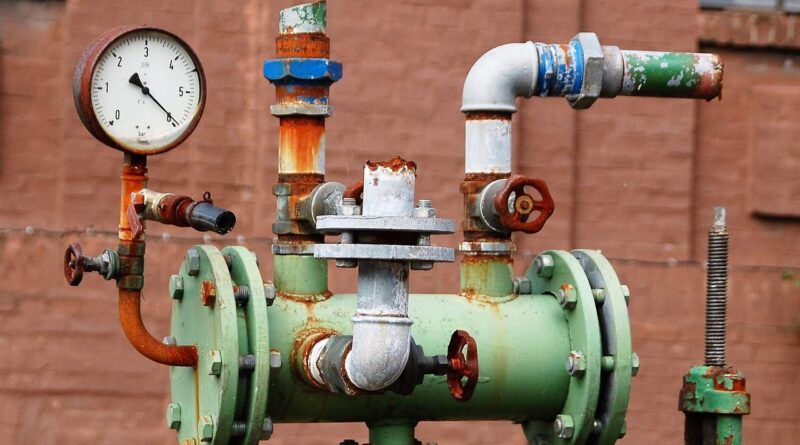
Industrial valves in 2026 and the specification choices that matter
Why industrial valve selection is changing in 2026
Industrial valves are no longer simple line items in piping projects. In 2026, a workable specification has to connect valve type, pressure-temperature rating, material compatibility, fugitive-emission performance, actuator readiness, and maintenance access before price is compared. That shift is being driven by aging water assets, new energy infrastructure, tighter documentation expectations, and greater attention to leakage risk in chemical, power, oil and gas, and water systems. A gate valve, ball valve, butterfly valve, globe valve, check valve, or control valve can all be the right choice in the right service. Each can also become a liability when the service conditions are poorly defined. For related component context, visit the Fittings & Valves section.
Demand signals from water, energy, and process industries
Market discussions around industrial valves often focus on broad growth forecasts. For buyers and engineers, the more useful question is where valves are being consumed and what those projects require. Water infrastructure is one clear driver. The U.S. Environmental Protection Agency’s seventh Drinking Water Infrastructure Needs Survey estimates that public drinking water systems need about $625 billion over 20 years for pipe replacement, treatment upgrades, storage tanks, and related assets. EPA’s clean water infrastructure reporting has also identified at least $630 billion of wastewater, stormwater, and other clean water needs over 20 years. These figures do not translate directly into valve revenue, but they explain why resilient isolation, control, air release, backflow prevention, and pump-station valves remain central to municipal planning.
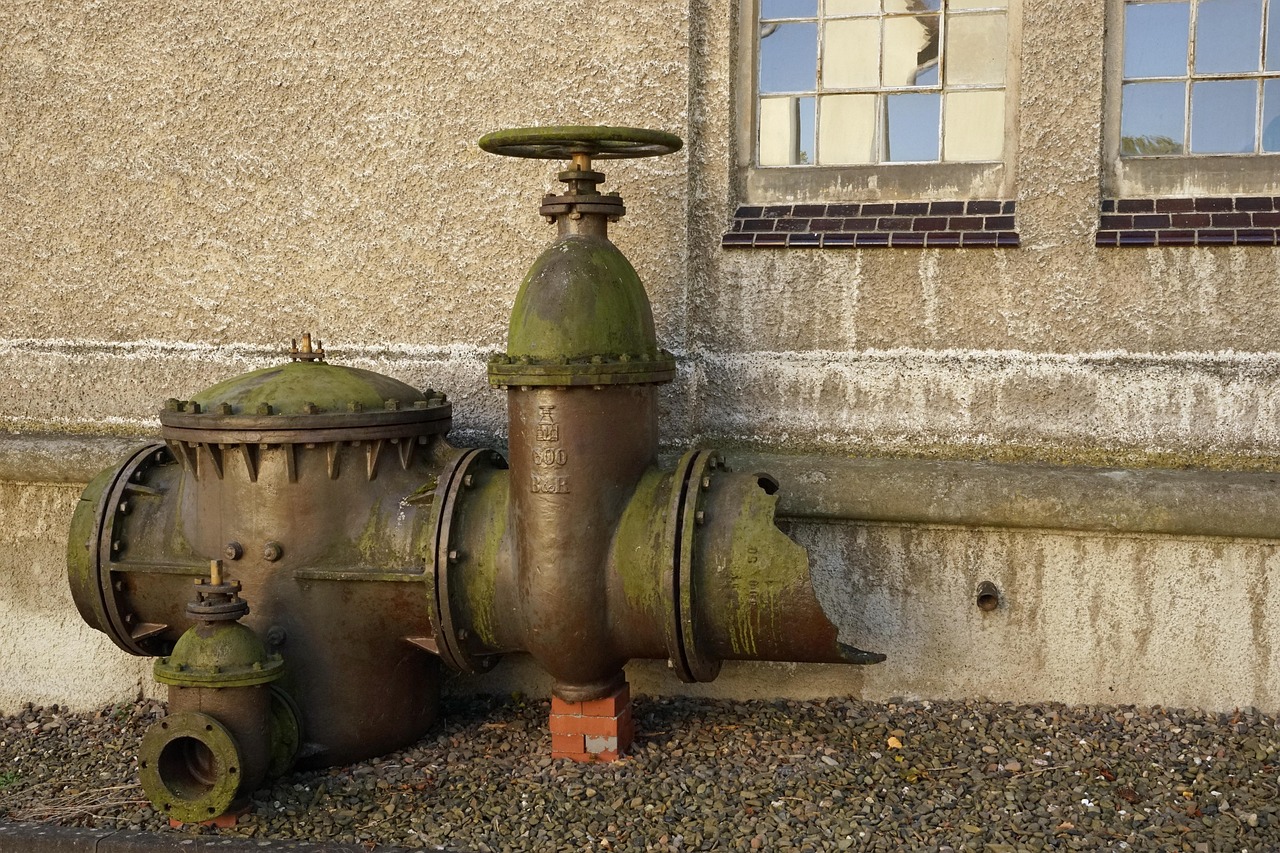
Energy infrastructure is another demand signal. In May 2026, the U.S. Energy Information Administration reported that developers planned approximately 44.9 billion cubic feet per day of new U.S. natural gas pipeline capacity to come online in 2026 and 2027, with roughly 70% already under construction at that time. Pipeline, LNG, gathering, compression, and process facilities all rely on isolation valves, emergency shutdown valves, check valves, and control valves that can be traced to recognized standards and tested against defined service conditions.
Process industries add a different set of requirements: chemical compatibility, emissions control, and documented performance. Chemical plants, refineries, power stations, pulp and paper mills, pharmaceutical facilities, food plants, and semiconductor support systems may use the same valve families, but the required materials, seals, cleanliness, end connections, and test records can differ sharply.
Core industrial valve types and where they fit
A practical specification starts with function. A valve selected for tight shutoff may not be suitable for routine throttling, while a valve that modulates flow well may not be the simplest choice for isolation. The table below summarizes common uses and specification watch points.
| Valve type | Typical role | Specification watch point |
|---|---|---|
| Ball valve | Fast quarter-turn isolation with low pressure drop | Seat material, fire-safe needs, cavity relief, fugitive-emission packing |
| Butterfly valve | Compact isolation or modulation in larger lines | Disc and liner compatibility, shutoff class, torque at pressure |
| Gate valve | Full-bore isolation where flow is generally open or closed | Not intended for routine throttling; consider wedge, seat, and bonnet design |
| Globe valve | Throttling and flow control | Higher pressure drop; check trim, cavitation, noise, and actuator sizing |
| Check valve | Prevention of reverse flow | Cracking pressure, slam risk, orientation, and minimum flow velocity |
| Plug valve | Isolation in slurry, dirty, or some chemical services | Lubricated versus non-lubricated design, torque, seal compatibility |
| Diaphragm or pinch valve | Corrosive, abrasive, sanitary, or slurry services | Elastomer life, pressure limits, temperature limits, and cleanliness needs |
| Safety, relief, and control valves | Pressure protection or active process control | Sizing basis, set pressure, capacity, failure position, and test documentation |
The main point is that valve type should follow service duty. A purchase request that lists only size, pressure class, and connection type often leaves out the details that determine service life.
Standards turn a generic valve into a specifiable component
Standards matter because they turn a general description into verifiable requirements. ASME B16.34 is one of the key references for valves with flanged, threaded, and welding ends. ASME describes its scope as covering pressure-temperature ratings, dimensions, tolerances, materials, nondestructive examination requirements, testing, and marking for cast, forged, and fabricated valves in steel, nickel-base alloys, and other alloys. That scope is important because a pressure class alone does not fully describe allowable service at temperature.
API standards are also widely referenced in hydrocarbon processing and related industries. API Standard 615 provides guidance for selecting valve types covered by ASME B16.34 and API valve standards, including gate, ball, plug, butterfly, check, and globe valves. In practice, an API or ASME reference should be paired with the project’s service data, inspection requirements, documentation package, and acceptance criteria.
For leakage-sensitive applications, ISO 15848-1 is relevant because it defines type testing and classification procedures for fugitive emissions from valve stem seals or shafts and body joints. ISO lists the 2015 edition as current after review and confirmation in 2020. This matters for volatile organic compounds, hazardous fluids, and sites where external leakage is a safety, environmental, or compliance concern.
A standards reference should not be treated as a substitute for engineering judgment. It confirms a baseline, but it does not automatically answer whether the valve is compatible with the fluid, whether the actuator has enough torque margin, whether trapped pressure can be relieved, or whether the maintenance team can reach the packing gland after installation.
A specification checklist that reduces valve failures
Common valve failures are rarely mysterious. They often trace back to incomplete service data, misapplied materials, undersized actuators, poor installation, or inadequate maintenance access. A strong valve specification should answer the following points before purchase.
- Operating pressure and temperature: State normal, maximum, minimum, startup, shutdown, and upset conditions. Do not rely on pressure class alone.
- Fluid and contaminants: Identify water, steam, gas, oil, acids, solvents, slurries, solids, chlorides, oxygen, hydrogen, or cleaning chemicals that may affect body, trim, seat, and seal materials.
- Function: Define whether the valve is for isolation, throttling, non-return duty, pressure protection, sampling, draining, venting, or automated control.
- End connection and face-to-face dimensions: Confirm flange standard, threaded connection, socket weld, butt weld, wafer, lug, or sanitary connection before layout is finalized.
- Leakage expectation: Specify shutoff class, seat leakage test, fugitive-emission requirement, and any site-specific acceptance criteria.
- Actuation and control: State manual, pneumatic, electric, hydraulic, fail-open, fail-closed, fail-in-place, modulating, or on-off duty.
- Documentation: Define material certificates, pressure test reports, coating records, inspection reports, calibration data, and traceability needs.
- Maintenance access: Check stem orientation, handwheel clearance, actuator removal space, packing access, and spare parts availability.
This checklist is deliberately practical. It does not replace a piping specification, but it helps close the gap between a procurement description and the actual operating duty.
Materials and sealing choices are under closer review
Material selection is where many industrial valves succeed or fail. Carbon steel may be economical for many non-corrosive services. Stainless steels, duplex steels, nickel alloys, bronze, ductile iron, lined bodies, engineering plastics, and specialty elastomers are selected when corrosion, temperature, abrasion, hygiene, or weight become dominant concerns. Trim materials can be just as important as body materials because seats, stems, discs, balls, wedges, and packing are exposed to wear and chemical attack.
Sealing choices deserve close attention in 2026. PTFE and other fluoropolymer-based materials are widely used in seats, seals, gaskets, and packing because of chemical resistance and low friction. At the same time, PFAS reporting rules have increased documentation questions in some supply chains. EPA finalized TSCA Section 8(a)(7) PFAS reporting and recordkeeping requirements on October 11, 2023, and the agency’s 2026 updates adjusted timing and scope discussions. This does not mean every fluoropolymer-containing valve is banned. It does mean manufacturers, importers, and regulated buyers may need clearer information about material content, article status, and reporting responsibility.
Fugitive emissions add another layer. For volatile or hazardous fluids, the issue is not only whether the valve closes tightly through the seat. Emissions can also escape through the stem packing, shaft seal, bonnet joint, or body joint. Low-emission packing, live-loaded glands, tested designs, and documented qualification can reduce risk when the service warrants them. See also: Bolts & Fasteners.
Automation should be specified for the duty, not for appearance
Automated valves are becoming more common, but automation is valuable only when it supports the process. A remote open-close valve on a water transmission line, a modulating control valve in a chemical process, and an emergency shutdown valve in a gas system have very different requirements. The actuator must be sized for breakaway torque, running torque, differential pressure, temperature, seal friction, and aging effects. A valve that operates easily on a test bench may require much higher torque after months in service.
Useful automation details include position feedback, local manual override, limit switches, solenoid specifications, enclosure rating, partial-stroke testing where appropriate, and compatibility with the site control system. For control valves, the specification should also address flow coefficient, rangeability, trim style, cavitation, flashing, noise, and response time. For safety-related final elements, proof testing and failure position are not optional details; they are part of the risk-control strategy.
The better question is not whether a valve is smart, but whether it provides the right information at the right time. Position confirmation, abnormal torque trends, slow stroke times, or repeated cycling can be useful maintenance signals. However, digital features should not distract from the mechanical fundamentals: body rating, trim durability, seal life, actuator margin, and correct installation.
How to compare industrial valves beyond purchase price
Valve price matters, but purchase price is only one part of total cost. A lower-cost valve can become expensive if it leaks, requires early replacement, stops production, fails an inspection, or lacks spare parts. A higher-specification valve may be justified when it reduces shutdown risk, improves emissions performance, simplifies maintenance, or aligns with documented plant standards.
A practical comparison should include expected service life, repairability, lead time, test documentation, coating or lining quality, actuator support, spare parts strategy, and supplier familiarity with the applicable standards. For severe service, the cost of an engineering review is often small compared with the cost of a misapplied valve. For routine utility service, over-specification can also waste budget. The goal is not to buy the most complex valve; it is to buy the valve that matches the duty with enough evidence to defend the choice.
In 2026, the most resilient specifications combine recognized standards with application-specific details. That approach supports safety, reliability, emissions control, and lifecycle cost without turning every project into unnecessary customization.
Frequently asked questions
What are industrial valves?
Industrial valves are mechanical devices used to start, stop, throttle, divert, relieve, or prevent the reverse flow of liquids, gases, steam, slurries, and process fluids. They are used in water systems, energy facilities, chemical plants, power generation, food processing, pharmaceutical production, mining, manufacturing, and many other sectors.
Which industrial valve type is best for isolation?
Ball valves, gate valves, butterfly valves, and plug valves are common isolation choices. The best option depends on size, pressure, temperature, required shutoff, fluid cleanliness, cycle frequency, end connection, and maintenance expectations.
Which standards are commonly considered for industrial valves?
Common references include ASME B16.34 for pressure-temperature ratings and construction requirements, API standards for specific valve types and hydrocarbon processing guidance, and ISO 15848-1 for fugitive-emission type testing. Project specifications may add further requirements for testing, materials, coatings, documentation, and installation.
Do automated valves always cost less over their life?
No. Automation can reduce labor, improve response time, and support remote monitoring, but it also adds actuator, control, power, calibration, and maintenance requirements. It is most valuable when the process needs remote operation, frequent cycling, modulating control, safety shutdown, or verified position feedback.
How should buyers handle PFAS-related questions for valve seals?
Buyers should avoid assumptions. If fluoropolymer seats, packing, or gaskets are used, ask suppliers for material identification and available compliance documentation. Current U.S. PFAS reporting rules focus on reporting and recordkeeping responsibilities for covered entities; they should not be interpreted as a blanket ban on every fluoropolymer valve component.


