Ductile cast iron explained for properties, grades, and applications
What makes ductile cast iron different
Ductile cast iron is a family of cast irons in which graphite forms mainly as rounded nodules instead of sharp flakes. That graphite shape is the main reason the material can provide better ductility, impact resistance, and fatigue performance than gray cast iron while retaining many of the advantages of casting.
In practice, ductile cast iron is not a single material with one fixed performance profile. Its behavior depends on the specified grade, matrix structure, section thickness, heat treatment, and inspection requirements. For buyers, engineers, and maintenance teams, the safer approach is to specify the required mechanical properties and service conditions rather than relying on the material name alone.
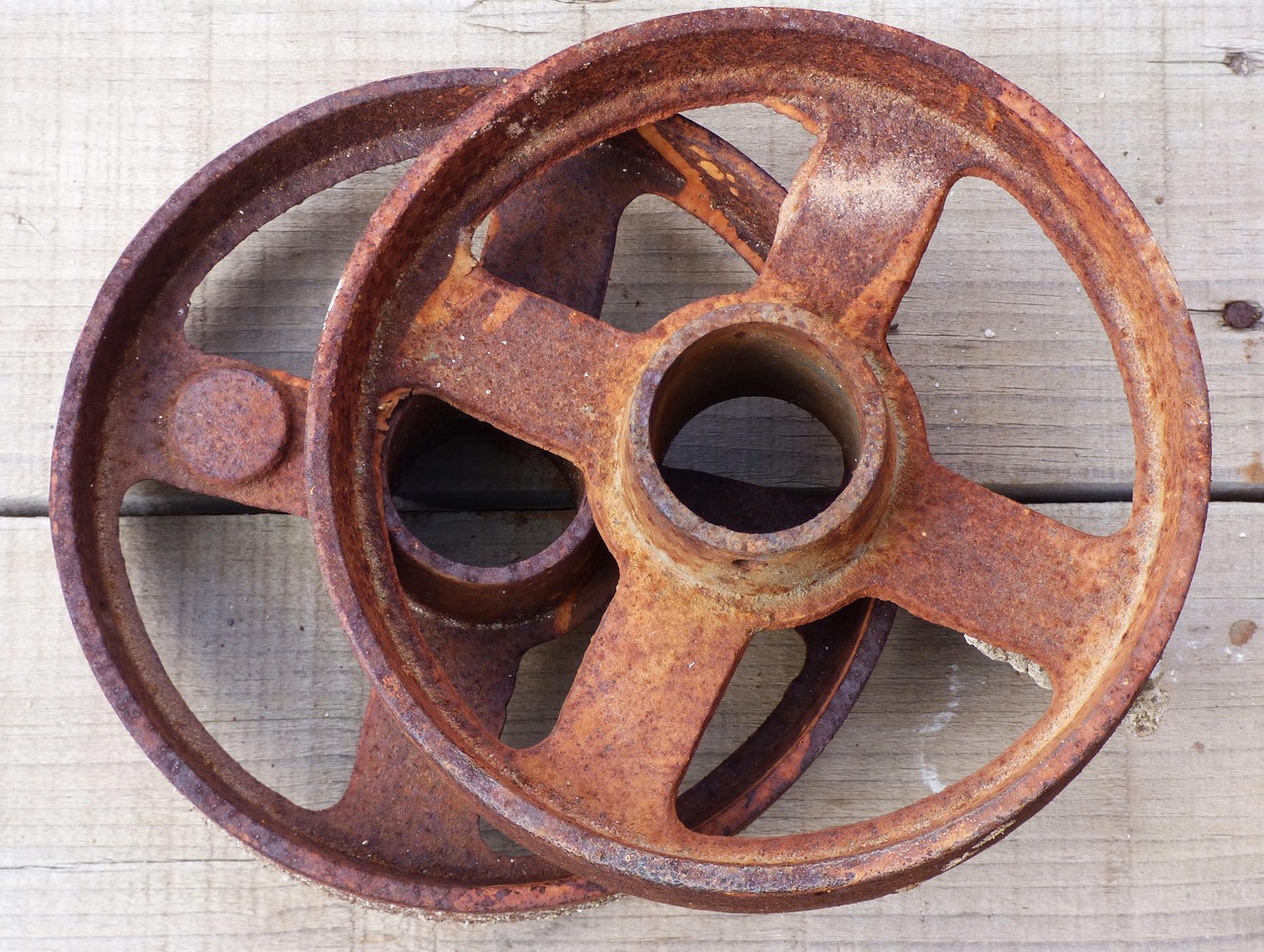
Within the broader metals and surfaces category, ductile cast iron often sits between traditional cast iron and cast steel. It can be economical for complex shapes, pressure-containing parts, housings, brackets, gears, valves, pipe fittings, and heavy-duty machine components. It is still a cast iron, however, so weld repair, low-temperature toughness, thin-wall consistency, and surface finishing requirements need careful review.
How nodular graphite changes performance
Gray cast iron contains graphite flakes. These flakes support machinability and vibration damping, but they also act as internal stress concentrators. Ductile cast iron, also called nodular iron or spheroidal graphite iron, is produced by treating the molten iron, commonly with magnesium or magnesium-bearing additions, so the graphite grows as nodules. ASTM International describes ductile iron castings as cast iron with graphite substantially spheroidal in shape and essentially free of other graphite forms.
The rounded graphite morphology reduces the severity of internal notches. As a result, ductile iron can sustain more tensile strain before fracture than gray iron. The matrix surrounding the graphite nodules then controls the balance between strength, hardness, machinability, and elongation. A ferritic matrix favors ductility and toughness. A pearlitic matrix increases strength and wear resistance but reduces elongation. Heat-treated structures can raise strength further, usually with higher processing cost and tighter process control.
This is why two ductile iron castings with similar chemistry can perform differently in service. Casting section size, cooling rate, inoculation practice, nodule count, nodularity, and post-cast heat treatment all influence the final microstructure. ASM International handbooks and foundry guidance consistently emphasize that graphite shape, matrix, and section size must be considered together rather than as isolated variables.
Common grades and what the numbers mean
The most familiar North American reference is ASTM A536, the Standard Specification for Ductile Iron Castings. As of ASTM A536-26a, the specification identifies ductile iron grades by minimum tensile strength, minimum yield strength, and minimum elongation. The grade name 60-40-18, for example, means 60,000 psi minimum tensile strength, 40,000 psi minimum yield strength, and 18 percent minimum elongation in the standard test context.
| ASTM A536 grade | Minimum tensile strength | Minimum yield strength | Minimum elongation | Typical engineering emphasis |
|---|---|---|---|---|
| 60-40-18 | 60 ksi | 40 ksi | 18% | Ductility, toughness, general service |
| 65-45-12 | 65 ksi | 45 ksi | 12% | Balanced strength and elongation |
| 80-55-06 | 80 ksi | 55 ksi | 6% | Higher strength, moderate ductility |
| 100-70-03 | 100 ksi | 70 ksi | 3% | High strength, lower elongation |
| 120-90-02 | 120 ksi | 90 ksi | 2% | Very high strength, limited ductility |
These values are minimum mechanical properties for test specimens defined by the standard. They should not be treated as a guarantee that every location in a thick or complex casting has identical properties. ASTM A536 specifically cautions that a precise quantitative relationship cannot be assumed between properties in all casting locations and properties measured on separately cast test specimens. For critical work, purchase documents may need cast-on test bars, hardness ranges, microstructure requirements, nondestructive examination, pressure testing, or other special requirements.
Internationally, ISO 1083:2018 classifies spheroidal graphite cast irons by mechanical properties measured on machined test pieces prepared from cast samples. It includes ferritic-to-pearlitic grades and solid-solution strengthened ferritic grades. ISO 1083 also clarifies that some product families, such as spheroidal graphite cast iron pipes and fittings, are handled by other standards. This matters when comparing ASTM, ISO, EN, JIS, or customer-specific material callouts. Grade names may look similar, but equivalence should be checked against mechanical properties, test method, heat treatment, and acceptance criteria.
Microstructure is the real design lever
The word ductile can be misleading if it is read as a single performance promise. Ductile cast iron can be soft and highly elongating, strong and relatively hard, or heat treated for even higher strength. The difference comes mainly from the metallic matrix around the graphite nodules.
Ferritic ductile iron
Ferritic ductile iron has a matrix dominated by ferrite. It is selected when elongation, machinability, toughness, and pressure tightness are more important than maximum strength. ASTM A536 60-40-18 is commonly associated with a ferritizing anneal because a ferritic matrix supports its high elongation requirement.
Ferritic-pearlitic and pearlitic ductile iron
As pearlite content increases, strength and hardness generally rise. This can improve wear behavior and load capacity, but elongation and impact performance usually decline. Grades such as 65-45-12 and 80-55-06 are often used where balanced or higher strength is needed without moving into more severe heat-treatment routes.
Heat-treated high-strength ductile iron
Higher-strength grades such as 100-70-03 and 120-90-02 may involve quenching and tempering, normalizing and tempering, or isothermal heat treatment, depending on the specified route and foundry capability. These grades can be useful where casting is preferred for the part geometry but service loads demand higher strength. They also require closer attention to hardness, distortion, residual stress, and machinability.
How ductile cast iron compares with nearby materials
Material selection usually comes down to trade-offs rather than one material being universally better. Ductile cast iron is attractive because it can cast complex shapes, carry significant mechanical loads, and provide better toughness than gray iron. Still, steel, gray iron, malleable iron, and compacted graphite iron may be better choices in specific cases.
| Material | Main advantage | Main limitation | Typical selection logic |
|---|---|---|---|
| Ductile cast iron | Good castability with useful strength and ductility | Properties depend strongly on microstructure and section size | Complex loaded castings, housings, brackets, valves, gears |
| Gray cast iron | Excellent damping and machinability | Low tensile ductility due to flake graphite | Bases, frames, brake components, non-shock housings |
| Cast steel | High toughness and weldability options | Often higher melting temperature, shrinkage, and processing cost | Severe impact, high toughness, or weld-critical components |
| Malleable iron | Good ductility in smaller castings | Requires a white iron casting followed by long heat treatment | Traditional fittings and smaller parts where specified |
For many machinery parts, ductile iron provides a practical middle ground. It can reduce machining from solid stock and may simplify shapes that would be costly to fabricate. For welded structures, cryogenic service, severe impact, or safety-critical lifting parts, engineers should not assume that a ductile iron substitution is automatically acceptable. See also: Bolts & Fasteners.
Surface, machining, and inspection considerations
Surface requirements should be defined early because they affect casting process choices and finishing cost. Ductile cast iron can be machined, coated, painted, plated, or shot blasted, but its graphite nodules and casting skin influence the final surface. A foundry surface that is acceptable for a pump housing may be unsuitable for a sealing face, bearing seat, or cosmetic component.
- Machining: Ferritic grades are generally easier to machine than harder pearlitic or heat-treated grades. Hard spots, carbides, or chilled edges can shorten tool life.
- Coating and painting: Cleaning, profile, porosity, and residual contamination matter. Blast cleaning and appropriate primer selection are often more important than the base grade name.
- Pressure service: If leak tightness is required, the purchase specification should state pressure testing, impregnation rules if allowed, and acceptance criteria.
- Welding and repair: TWI guidance on cast irons notes that welding can create hard and brittle heat-affected-zone structures such as carbides and martensite. Weld repair should therefore be qualified rather than treated as routine fabrication welding.
- Microstructure control: Nodularity, nodule count, matrix percentage, carbides, and hardness may need explicit limits for demanding service.
Section thickness is another practical concern. Thin sections cool quickly and may develop different nodule counts, pearlite levels, or carbide tendencies than heavy sections. Thick sections cool slowly and may show property gradients. For this reason, production qualification should use representative geometry whenever possible, not only idealized laboratory bars.
Where ductile cast iron works well
Ductile cast iron is commonly used when a part needs more toughness than gray iron but does not require all the characteristics of cast steel. Typical applications include valve bodies, pump bodies, pipe fittings, automotive suspension and drivetrain components, agricultural machinery, construction equipment parts, compressor components, gears, rollers, and industrial housings.
Its casting efficiency is especially useful for parts with ribs, bosses, mounting pads, internal passages, or irregular shapes. The material can also provide good damping compared with steel, which is helpful in machine components exposed to vibration. When properly specified, ductile iron can deliver a useful combination of strength, stiffness, machinability, and cost control.
It is less suitable where the part will be field welded repeatedly, exposed to very low-temperature impact without a verified toughness grade, or subjected to sharp shock loads that require steel-like fracture behavior. It may also be unsuitable when designers need very thin walls without robust foundry process control. In these cases, the better approach is to compare ductile iron with cast steel, forged steel, fabricated steel, aluminum alloys, or compacted graphite iron using application-specific requirements.
How to specify ductile cast iron clearly
A useful ductile iron specification should do more than name the material. At minimum, the purchase document should identify the governing standard and grade, test coupon type, heat treatment condition, hardness range if needed, and inspection requirements. If the component has pressure, fatigue, impact, or safety functions, the specification should also define acceptance tests that reflect the real service condition.
- Start with the load case. Identify tensile load, compressive load, fatigue, impact, wear, pressure, and temperature requirements.
- Select a grade by properties. Use ASTM A536, ISO 1083, or the applicable customer standard, but compare actual tensile, yield, elongation, impact, and hardness needs.
- Define the microstructure if it matters. State matrix type, nodularity, carbide limits, or nodule count only when these controls are relevant and measurable.
- Address section size. Ask whether test coupons represent the casting thickness and cooling conditions.
- Specify surface and finishing needs. Include machining stock, surface roughness, coating preparation, sealing surfaces, and cosmetic limits.
- Clarify inspection. Use pressure tests, magnetic particle inspection, radiography, dimensional inspection, or metallography where justified by risk.
One common mistake is over-specifying a high-strength grade when a lower-strength ferritic grade would give better ductility, machinability, and reliability for the actual part. Another is under-specifying inspection for parts where casting defects, leakage, or property gradients could affect service life. Good ductile iron selection balances grade, geometry, foundry process, and verification method.
Frequently asked questions
Is ductile cast iron the same as ductile iron?
Yes. In most industrial usage, ductile cast iron and ductile iron refer to the same material family. Other common names include nodular cast iron, spheroidal graphite iron, and SG iron.
Is ductile cast iron stronger than gray cast iron?
Usually in tensile loading, yes. Ductile iron normally offers higher tensile strength and much better elongation because its graphite is nodular rather than flake-like. Gray iron may still be preferred for damping, thermal conductivity in some applications, and very good machinability.
Can ductile cast iron be welded?
It can sometimes be welded or weld repaired, but it is not as straightforward as welding many steels. Heat input can form hard, brittle microstructures near the weld. Preheat, filler selection, cooling control, and procedure qualification are important for reliable results.
Which ductile cast iron grade is most ductile?
Among common ASTM A536 grades, 60-40-18 has the highest listed minimum elongation at 18 percent. That does not automatically make it best for every part; the correct grade depends on strength, section size, impact requirement, machining, and service environment.
Does ductile cast iron rust?
Yes. Ductile cast iron is an iron-based material and can corrode when exposed to moisture, salts, chemicals, or unsuitable environments. Paint, coating systems, plating, inhibitors, or design changes may be needed when corrosion resistance is important.


