
Is Drill Angle Guide Precision Higher in 3D-Printed or Pressure-Moulded Systems
Clinical Transfer Accuracy of Pressure‑Moulded Versus 3D‑Printed Drilling Guides for Orthodontic Mini‑Implants in the Anterior Palate: A Randomized Prospective Clinical Study
Precision in orthodontic mini‑implant placement has advanced rapidly with digital technologies. Comparative studies reveal that 3D‑printed drill angle guides consistently achieve lower angular deviations than pressure‑moulded ones. This difference translates to safer, faster, and more predictable clinical outcomes in anterior palate anchorage. While thermoformed systems remain practical where digital tools are limited, the future of guide fabrication clearly leans toward digitally planned, additively manufactured devices that minimize human error and maximize procedural accuracy.
Overview of Drill Angle Guide Systems in Orthodontic Mini‑Implant Placement
The role of a drill angle guide in orthodontics extends beyond convenience; it defines the precision and safety of mini‑implant insertion. As treatment protocols increasingly rely on skeletal anchorage, guide accuracy directly determines long‑term success.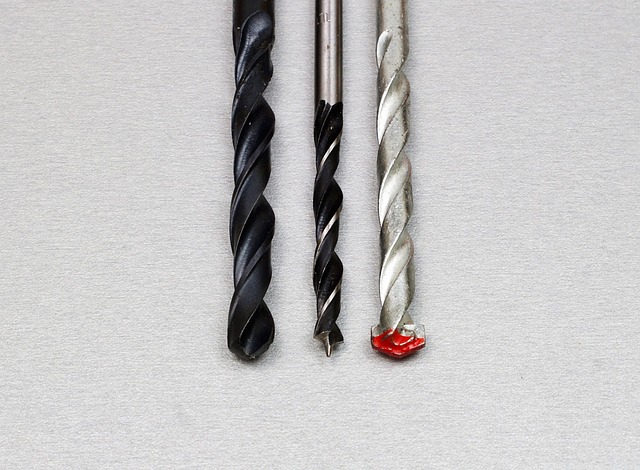
The Importance of Precision in Drill Angle Guides
Accurate angulation is crucial for maintaining implant stability and avoiding iatrogenic damage. Even minor deviations can lead to root contact or insufficient cortical engagement, compromising retention. In the anterior palate—where bone thickness varies—precision becomes non‑negotiable. Clinicians often report that predictable angulation not only improves mechanical stability but also reduces chair time by eliminating intraoperative corrections.
Comparative Technologies: 3D‑Printed vs. Pressure‑Moulded Guides
Two dominant fabrication approaches exist: 3D printing and pressure moulding. The former relies on digital design from intraoral scans, while the latter uses physical casts and thermoforming sheets under pressure. 3D printing enables patient‑specific customization with repeatable accuracy; pressure moulding depends on technician skill and manual adaptation. Their differences lie not only in workflow but also in material rigidity and tolerance control.
Technical Principles Behind Guide Fabrication Methods
Fabrication workflows determine dimensional fidelity and clinical fit. Each method introduces distinct sources of error that influence how faithfully a drill angle guide transfers planned trajectories to the operative field.
Workflow of 3D‑Printed Drill Angle Guides
Digital scanning captures intraoral or model data for computer‑aided design (CAD). Within specialized software, clinicians define drill trajectory, sleeve position, and insertion path based on anatomical landmarks. Additive manufacturing then builds the guide layer by layer from photopolymer resin, achieving submillimeter precision with minimal manual handling. This digital chain reduces variability between planning and production.
Workflow of Pressure‑Moulded Drill Angle Guides
Pressure moulded systems begin with a stone cast or printed model over which a thermoplastic sheet is heated and pressed to form the guide base. After cooling, sleeves are manually inserted at predrilled points corresponding to planned implant sites. Each manual step introduces possible dimensional drift—especially during trimming or sleeve alignment—making consistency harder to maintain across cases.
Evaluating Dimensional Accuracy and Fit Stability
Dimensional fidelity governs whether a guide fits securely during surgery without rocking or misalignment. Both fabrication methods face distinct technical limitations that affect clinical reliability.
Factors Influencing Dimensional Fidelity in 3D Printing
Printer resolution dictates how finely surface geometry is reproduced. Resin shrinkage during polymerization can slightly alter final dimensions if not compensated within CAD settings. Calibration errors at the build platform may tilt sleeves by fractions of a degree—small but clinically relevant when targeting narrow palatal zones. Post‑processing steps such as washing and UV curing further modify resin density, occasionally tightening or loosening fit tolerances.
Sources of Inaccuracy in Pressure‑Moulded Systems
Thermoforming introduces heat distortion that can warp thin areas near sleeve openings. Uneven vacuum pressure may stretch material inconsistently across contours, leading to subtle angular shifts once sleeves are inserted. Manual trimming around palatal rugae sometimes removes reference features critical for seating repeatability, explaining higher angular deviation values observed clinically.
Assessing Angular Deviation During Clinical Application
Evaluating angular deviation provides an objective measure of transfer accuracy between virtual planning and actual implant placement. Quantitative analysis helps distinguish whether deviations stem from design errors or procedural handling.
Measurement Techniques for Angular Deviation Analysis
Clinicians typically compare preoperative digital plans with postoperative cone beam computed tomography (CBCT) scans. Superimposition software aligns both datasets to calculate angular differences along coronal and sagittal planes. Statistical modeling identifies deviations exceeding clinically acceptable thresholds—often set around two degrees—to determine reliability across multiple patients or operators.
Observed Patterns of Angular Deviation Between Systems
Studies consistently show lower angular deviation for 3D‑printed guides compared with pressure‑moulded ones due to their controlled digital workflow. Pressure moulded systems exhibit wider variance linked to manual sleeve positioning and thermal distortion effects. Operator experience partially mitigates this gap; however, even skilled technicians cannot fully eliminate thermoforming inconsistencies inherent to analog fabrication.
Material Properties Affecting Guide Stability During Drilling
Material behavior under drilling stress influences how well a guide maintains its designed trajectory once rotational forces act on it.
Mechanical Behavior Under Drilling Forces
Rigid photopolymer resins used in 3D printing resist deformation under torque loads common during pilot drilling. Their stiffness preserves angulation even when lateral forces occur at entry points. In contrast, thermoplastic materials soften slightly under heat generated by drilling friction, allowing minute deflection that alters trajectory angles by small yet measurable margins.
Influence of Sleeve Integration on Stability and Precision
Metal sleeves reinforce durability but complicate assembly alignment if press‑fitted post fabrication. Directly printed resin sleeves simplify integration yet demand high printer resolution to maintain circularity within micrometer tolerances. Improper bonding between sleeve and body may cause micro movement during drilling—an issue more pronounced in pressure moulded designs relying on adhesive fixation rather than monolithic construction.
Clinical Implications for Orthodontic Mini‑Implant Placement in the Anterior Palate
The anterior palate offers dense cortical bone ideal for anchorage but limited spatial tolerance for error. Thus, guide performance directly affects surgical efficiency and patient safety outcomes.
Impact on Surgical Efficiency and Patient Safety
High transfer accuracy shortens surgical time since drill paths align precisely without intraoperative adjustment. Correct angulation minimizes risk of root perforation or sinus penetration while optimizing bone engagement depth for primary stability. Patients benefit from reduced discomfort and faster recovery due to fewer corrective maneuvers during placement.
Considerations for Clinical Adoption and Workflow Optimization
Digital workflows streamline planning through integrated scanning, design, and printing stages but require training in CAD/CAM software operation and maintenance of equipment calibration standards such as ISO/ASTM 52900 for additive manufacturing processes (ISO 2015). Pressure moulded systems remain practical where clinics lack digital infrastructure; their low cost offsets moderate accuracy loss when used with experienced hands. Some practitioners explore hybrid workflows combining digital trajectory design with conventional forming techniques—a compromise balancing precision against accessibility.
Future Directions in Drill Guide Design and Validation
Emerging technologies continue reshaping how clinicians design, validate, and apply drill angle guides within orthodontic practice.
Integration of Advanced Imaging and AI‑Based Planning
Artificial intelligence algorithms trained on large anatomical datasets could automatically suggest optimal implant angulations based on bone morphology patterns derived from CBCT imaging libraries standardized by IEC 61223 diagnostic performance metrics (IEC 2019). Predictive modeling might flag potential collision risks before fabrication, reducing reprint cycles while improving safety margins.
Innovations in Biocompatible Materials for Enhanced Accuracy
Next‑generation resins emphasize mechanical stability under cyclic loading without brittleness loss after sterilization—key traits defined by ISO 10993 biocompatibility testing standards (ISO 2018). Research into recyclable photopolymers aims to align clinical precision with sustainability goals by lowering waste from disposable guides while maintaining consistent geometric fidelity across repeated prints.
FAQ
Q1: What is the main advantage of using a 3D‑printed drill angle guide?
A: It delivers superior accuracy through digitally defined trajectories that minimize manual variability during fabrication.
Q2: Why do pressure‑moulded guides show higher angular deviation?
A: Heat deformation, inconsistent vacuum pressure, and manual trimming introduce dimensional errors affecting final drill orientation.
Q3: How is angular deviation measured clinically?
A: By comparing preplanned implant vectors with postoperative CBCT scans using superimposition analysis software to quantify degree differences.
Q4: Are metal sleeves necessary for every guide type?
A: Not always; direct resin sleeves can perform adequately if printed at high resolution though metal inserts improve wear resistance over multiple uses.
Q5: What future innovations could improve drill angle guide performance?
A: Integration of AI planning tools with advanced biocompatible resins capable of resisting deformation during drilling cycles will likely define next‑generation systems.


