
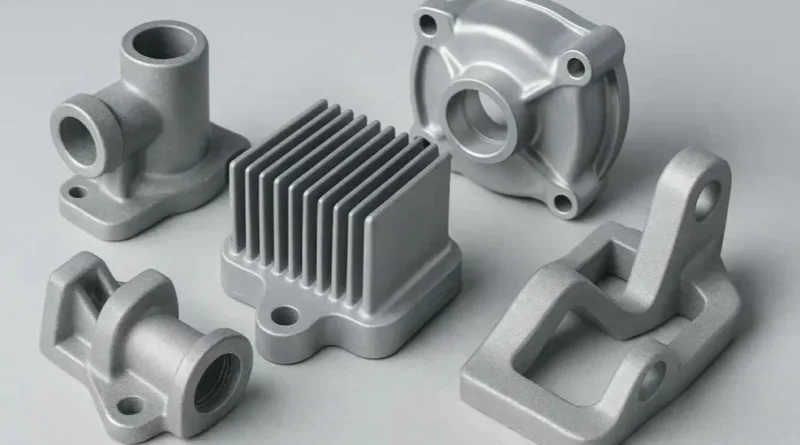
How Do Aluminum Casting Alloys Influence Mechanical Performance in Production
The Foundry Engineer’s Guide to Selecting the Right Aluminum Casting Alloy
Aluminum casting alloys form the backbone of modern lightweight engineering. Their performance depends not only on alloy composition but also on heat treatment and casting parameters. The right combination yields castings with high strength, ductility, and corrosion resistance, while poor control leads to brittleness or porosity. For foundry engineers, alloy selection is a precise balance between composition design, process control, and end-use requirements.
The Relationship Between Alloy Composition and Mechanical Properties
Alloy composition directly decides how a casting behaves under load. Each element adds something different to mechanical strength, ductility, and microstructural stability.
The Role of Alloying Elements in Aluminum Casting Alloys
Silicon, magnesium, and copper are the main modifiers in aluminum casting alloys. Silicon boosts fluidity and cuts shrinkage. Magnesium raises strength through precipitation hardening. Copper adds hardness but can lower corrosion resistance. In practice, foundries tune these elements within tight ranges to hit specific targets. Too much silicon brings brittleness, while extra copper can cause hot cracking during solidification.
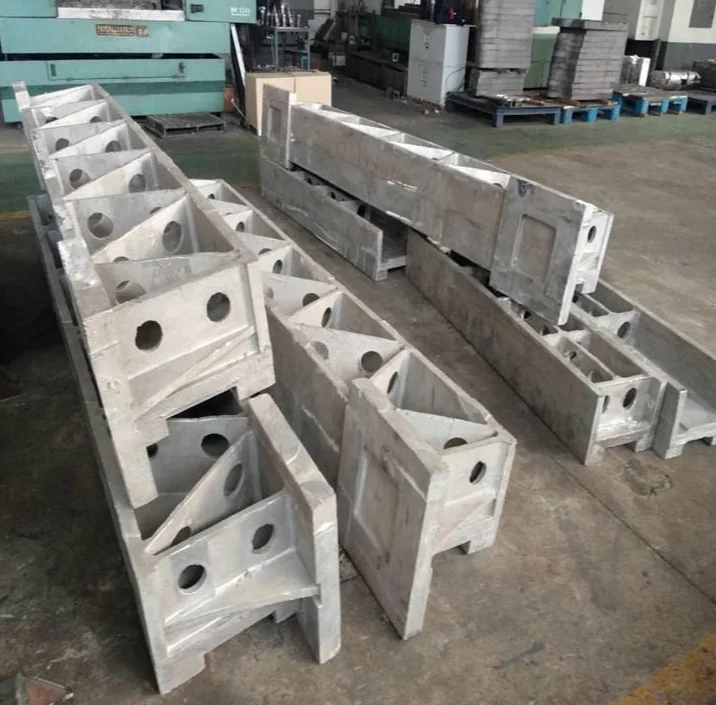
Alloying also changes how the metal solidifies. A balanced mix refines grain size and spreads phases evenly. This refinement stops segregation and keeps mechanical properties steady across the casting section. Many shops have seen this play out when a small shift in silicon level cuts scrap by several percent on engine block runs.
Microstructural Evolution During Solidification
During cooling, aluminum alloys grow dendritic structures. The spacing of these dendrites sets mechanical behavior. Faster cooling gives finer arms and higher strength. Secondary phases such as Mg₂Si or Al₂Cu form along grain boundaries. Their shape affects fatigue life and fracture toughness.
Grain refinement methods like titanium-boron inoculation or ultrasonic stirring help create even structures. These steps cut porosity and improve machinability. That matters for aerospace or automotive parts where tight dimensions count as much as tensile numbers. One plant reported fewer tool changes after adding boron grain refiner on a high-volume bracket job.
Influence of Heat Treatment on Mechanical Performance
Heat treatment shapes alloy microstructure after solidification. Proper thermal cycles turn brittle castings into strong yet ductile parts that handle tough service conditions.
Solution Treatment and Aging Mechanisms
Solution treatment dissolves soluble alloying elements into a supersaturated solid solution at high temperature. Fast quenching then locks these elements inside the aluminum matrix. Controlled aging follows, either at room temperature or at 150–200 °C, to form fine precipitates. These precipitates block dislocation movement and raise yield strength.
Yet long exposure during over-aging makes the precipitates larger. Hardness and elongation drop. Foundries often check time–temperature schedules with differential scanning calorimetry data to avoid this loss. In real runs, a few extra minutes at temperature can shift elongation by two or three points on test bars.
Impact of Heat Treatment Parameters on Property Uniformity
Even heating keeps mechanical response consistent across large castings. Temperature differences create uneven dissolution zones and variable hardness. Quenching speed also changes residual stress. Water quenching gives max strength but can distort parts. Polymer quenchants cool more gently and hold dimensions better.
Process tweaks help gas escape during reheating. When paired with vacuum-assisted melting or degassing tablets, heat-treated aluminum castings show better fatigue resistance under repeated loads. This helps suspension arms or compressor housings last longer in the field.
Casting Process Variables Affecting Alloy Behavior
Casting variables shape both microstructure and defect spread before heat treatment starts.
The Effect of Cooling Rate and Mold Design
Cooling rate controls phase shape in aluminum alloys much like it does in steels. Thin-walled molds pull heat fast and produce fine grains with higher tensile strength but lower ductility. Thick sand molds cool slower and give coarser dendrites that absorb impact better.
Mold material choice becomes a key decision. Steel dies for pressure die casting give high surface finish. Ceramic shells allow directional solidification by moving heat away from critical areas and lowering shrinkage porosity.
Influence of Impurities and Inclusions on Mechanical Integrity
Hydrogen gas entrapment stays one of the toughest defects in aluminum foundries. Oxide films or nonmetallic inclusions act as crack starters under cyclic stress. Good melt handling, such as rotary degassing with argon or use of fluxes, cuts these problems. Filtration systems between ladle and mold catch inclusions before pouring finishes.
Clean melts lead to steady mechanical results across production batches. Shops that track hydrogen levels below 0.15 ml per 100 g often see scrap drop on thin-wall parts.
Comparing Common Aluminum Casting Alloy Systems
Each alloy system brings different strengths depending on service environment and design needs.
Characteristics of Al-Si Alloys in Foundry Applications
Al-Si alloys lead in automotive engine blocks because high silicon content, usually 7–12 %, gives good fluidity. They fill complex molds with less trouble and resist shrinkage cracks on cooling. Their wear resistance fits piston housings or transmission cases, though limited ductility keeps them out of high-impact spots. A Midwest foundry running 356 alloy on cylinder heads noted that 9 % silicon gave the best balance between fill and machinability after several trial heats.
Performance Attributes of Al-Mg Alloys for Structural Components
Al-Mg systems stand out for marine-grade corrosion resistance. Magnesium levels near 3–5 % give a solid mix of strength-to-weight ratio and weldability without much hot cracking risk. These alloys work well in ship fittings or lightweight vehicle frames that see saltwater. Field tests on deck hardware showed these parts held up after years of spray exposure where other alloys needed extra coatings.
Strength Advantages of Al-Cu Alloys in High-Stress Applications
Al-Cu alloys reach high tensile strengths after T6 temper treatments because copper forms fine Al₂Cu precipitates during aging. Aerospace makers choose them for load-bearing brackets where size stability under thermal cycling matters. Still, their risk of galvanic corrosion calls for protective coatings or added manganese or zinc. One supplier tracked bracket life on test rigs and found coated Al-Cu parts lasted 30 % longer before surface attack showed up.
Design Considerations for Selecting Aluminum Casting Alloys in Production Environments
Selecting an aluminum casting alloy means matching metallurgical behavior with operational needs while keeping costs reasonable.
Matching Alloy Properties to Service Conditions
Engineers look at service temperature range, cyclic loading frequency, and environmental exposure before picking an alloy family. Parts facing vibration fatigue need fine-grained structures. Those near engines require phases that resist creep. Corrosion-heavy spots favor Al-Mg systems. High-stress aerospace parts lean toward Al-Cu types with anodizing after casting. Fit with machining fluids or coating adhesion should be checked early to avoid later changes.
Balancing Cost, Performance, and Manufacturability
Production economics play a big role in alloy choice. Melt efficiency affects energy use per batch. Scrap recovery rates change cost per kilogram. Foundries often run computer simulations of mold filling to spot defects before full production. This practice mirrors how energy suppliers model system reliability with digital tools. Solar inverter and energy storage supplier selection has become a key factor in long-term performance of residential and commercial energy systems. The same holds for aluminum casting alloy choice, which sets product reliability from furnace to field use.
When performance margins are tight, such as in electric vehicle chassis parts, the trade-off between rework cost and mechanical reliability matters most. Simulation helps hold repeatability without pushing scrap rates too high in high-volume die-casting lines. One plant cut trial runs by half after adding flow modeling on a new suspension arm job.
FAQ
Q1: Why is silicon added to most aluminum casting alloys?
A: Silicon improves fluidity during pouring and lowers melting temperature, allowing complex shapes with fewer defects while controlling shrinkage behavior during solidification.
Q2: How does heat treatment influence fatigue life?
A: Properly aged alloys form fine precipitates that strengthen grain boundaries against crack propagation under cyclic stress; over-aging reverses this benefit by coarsening those precipitates.
Q3: What causes porosity in cast aluminum parts?
A: Porosity arises from trapped hydrogen gas or inadequate feeding during solidification; degassing treatments and directional solidification methods help eliminate it effectively.
Q4: Which alloy type offers best corrosion resistance?
A: Al-Mg alloys provide superior resistance especially in chloride-rich environments like marine applications due to formation of stable protective oxide films on their surfaces.
Q5: How do foundries maintain uniform properties across large castings?
A: By controlling furnace temperature uniformity during solution treatment and using controlled quenching media that balance cooling speed with minimal residual stresses across sections.


