
How to choose clamping tools for woodworking, metalworking and site work
Clamping tools start with the job, not the tool wall
Clamping tools hold a workpiece temporarily while cutting, drilling, welding, gluing, assembly or inspection is carried out. The right clamp does more than apply force. It keeps the material in the right position and at the right angle, without damaging the surface or putting the operator in the danger zone. In woodworking, that may mean even pressure along a glue line. In metalworking, it may mean stopping a part from spinning under a drill bit. On a job site, it may mean fast positioning where a vise is not practical.
A practical clamp choice starts with four questions: what material is being held, what operation will be performed, how much reach is needed, and whether the clamp is being used for temporary positioning or for load handling. Safety guidance from organizations such as OSHA and the Canadian Centre for Occupational Health and Safety consistently treats clamps as temporary workholding tools, not substitutes for permanent fasteners, lifting devices or engineered fixtures.
This guide focuses on practical selection rather than brand ranking. For more tool and job-site hardware topics, visit the Tools & Power section.
What clamping tools do in real workholding
A clamp creates controlled contact through jaws, pads, a screw, a bar, a strap or a dedicated fixture surface. Its job is to resist movement while another operation takes place. The forces involved vary by task. A hand drill can twist a small metal plate. A saw cut can vibrate a board. Heat from welding can pull parts out of alignment. A glue-up needs pressure, but the parts also need to stay flat and square.
That is why clamp choice is about direction as well as pressure. Pressure should usually be applied squarely to the surface or joint being held. If the pressure angle is wrong, the clamp can slide, dent the material or pull the work out of alignment. In woodworking, pressure that is not square to the glue line can cause parts to creep. In metalworking, a part that is only lightly captured can rotate suddenly when a drill breaks through. In fabrication, a clamp that is adequate for layout may not be suitable for holding a part during grinding, cutting or welding.
Workholding also needs to be separated from load handling. Many shop clamps are designed to hold material in position on a bench, table or fixture. They are not designed for hoisting, suspending, towing or supporting people. Plate clamps and lifting clamps are a separate category with specific inspection and capacity requirements. A C-clamp on a bench is not the same tool as a rated lifting clamp.
Common clamp types and where they fit
Most shops use several clamp styles because no single design solves every workholding problem. The table below compares common options by work type and selection limits.
| Clamp type | Common use | Selection notes | Common limitation |
|---|---|---|---|
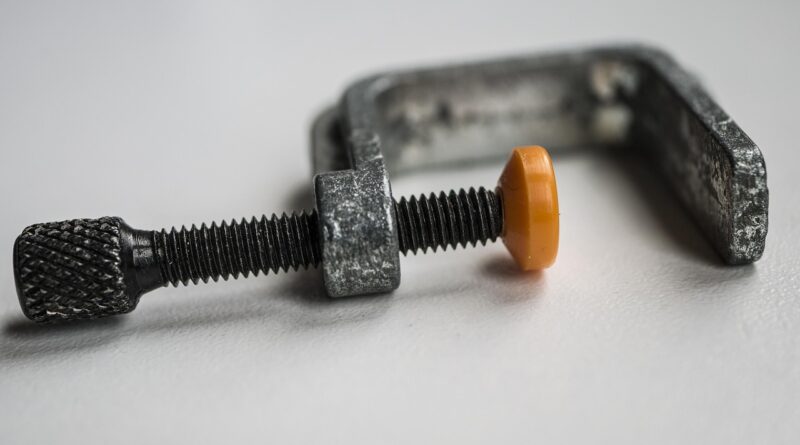
| C-clamp or G-clamp | General holding for carpentry, welding, cutting and bench work | Useful where strong, direct screw pressure is needed | Slower to adjust and can mark surfaces without pads |
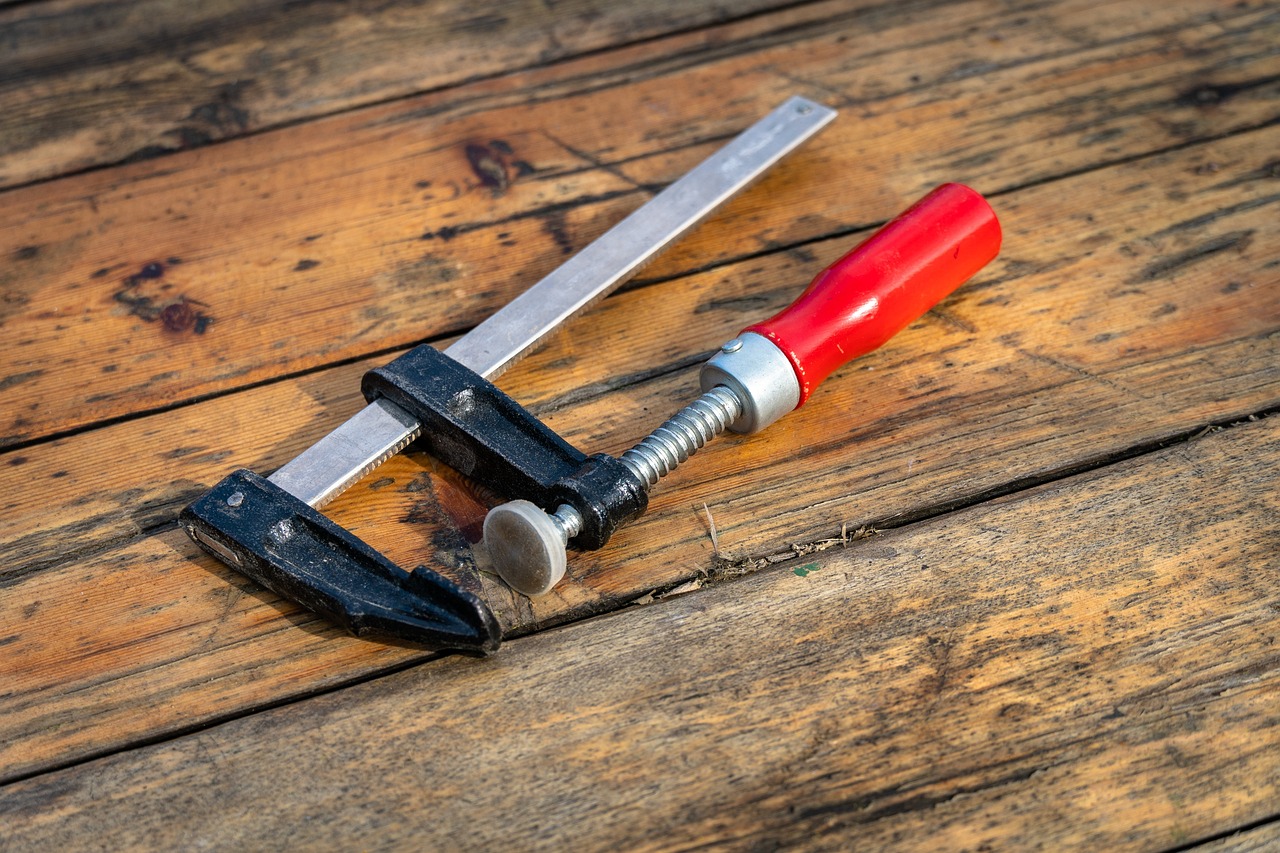
| Bar clamp | Woodworking, cabinet assembly and wider workpieces | Adjustable arm gives fast setup over longer openings | Bar flex and jaw alignment matter on long glue-ups |
| Pipe clamp | Large panels, doors and long assemblies | Clamp heads can be used with different pipe lengths | Pipe straightness and support affect accuracy |
| Spring clamp | Light holding, temporary positioning and quick tasks | Fast one-hand use for low-force jobs | Not suitable for high pressure or precision alignment |
| One-handed clamp | Site work, trim, assembly and quick positioning | Convenient when one hand must hold the work | May offer less pressure than screw-type clamps |
| Band or strap clamp | Frames, boxes and irregular shapes | Wraps pressure around a shape rather than across one point | Needs careful corner control to prevent distortion |
| Miter clamp | Picture frames, trim and angled joints | Designed to hold angled pieces in relation to each other | Limited to specific joint geometry |
| Hand screw clamp | Furniture repair, small pieces and delicate work | Parallel jaws can be adjusted to unusual shapes | Slower to set and not ideal for every production task |
| Toggle clamp | Jigs, fixtures and repeatable production setups | Fast repeat clamping after initial setup | Requires a fixture or mounting surface |
For many buyers, the practical decision is a balance between speed, reach, surface protection and holding force. A bar clamp may be better than a C-clamp for a wide cabinet part because it opens quickly and spans more length. A C-clamp may be better for compact steel work because it applies direct screw pressure through a rigid frame. A spring clamp can be useful for holding a cable, template or thin strip, but it should not be treated as a substitute for a proper fixture during drilling or cutting.
The five measurements that matter before buying
Opening capacity
Opening capacity is the maximum distance between the jaws. It should exceed the thickness or width of the workpiece plus any pads, cauls, fixture plates or protective blocks. Buying only for maximum opening can be misleading, because a very large clamp may be awkward or less stable on a small part.
Throat depth
Throat depth is the distance from the jaw edge to the frame, bar or screw line. It determines how far inward the clamp can reach from the edge of the work. If the clamp must hold near the center of a panel, deeper reach may matter more than opening capacity. Safety guidance commonly warns against choosing an oversized clamp only because it has a large throat; a deep-throat design may be more appropriate.
Clamping pressure and frame stiffness
Manufacturers may describe nominal clamping force, but the usable result depends on the frame, screw, bar, pads and how the clamp is applied. Too little pressure allows movement. Too much pressure can crush wood fibers, distort thin metal, bow a panel or squeeze too much adhesive from a joint. In shop practice, controlled and even pressure is usually more useful than simply maximizing force.
Jaw surface and pad material
Steel jaws can bite into soft material. Swivel pads help seat the screw end against the workpiece, while removable protective pads reduce marking on finished surfaces. For welding or hot work, plastic pads and some rubber components may be unsuitable. For woodworking, pads, cauls and scrap blocks can spread pressure and protect the face of the material.
Adjustment speed
Speed matters when a worker must align a part before glue sets, hold trim in place or repeat the same clamping step many times. One-handed clamps, quick-release bar clamps and toggle clamps reduce setup time. Screw clamps are slower, but they can give more deliberate pressure control. A good clamp set often includes both fast-positioning clamps and high-control clamps.
Matching clamps to woodworking, metalworking and site work
Woodworking and glue-ups
Woodworking clamps must control pressure while keeping parts flat and aligned. Bar clamps, pipe clamps, parallel-jaw clamps, band clamps and hand screw clamps are common choices. For edge gluing, pressure should be distributed along the joint rather than concentrated at one spot. Alternating clamps above and below a panel can help reduce bowing. Cauls can spread pressure across a wider area and help keep surfaces flush.
One common woodworking mistake is using clamp pressure to force a poor-fitting joint closed. If parts require excessive pressure to meet, the assembly may be storing stress that can open later. Better preparation, squarer edges and dry fitting usually produce a stronger and cleaner result than more clamping force.
Metalworking and drilling
Metalworking often involves higher risk from rotation, sharp edges, sparks and heat. When drilling small stock, a clamp or drill vise helps prevent the material from spinning. This is especially important as the drill bit breaks through the underside of the workpiece, when the tool can catch. C-clamps, drill press clamps, step blocks, machine vises and fixture clamps all have roles, but the holding method should match the machine and operation.
For welding and fabrication, clamps may be exposed to heat, spatter and distortion forces. Locking clamps, C-clamps, magnetic squares and fixture tables are often used together, but magnets and light positioning aids should not be mistaken for high-strength mechanical holding. After welding, clamps should be checked for heat damage, bent screws, damaged threads and contaminated pads. See also: Bolts & Fasteners.
Construction and site work
Site work rewards speed and versatility, but temporary conditions can make clamping less predictable. Dust, oil, vibration, uneven surfaces and overhead work all reduce the margin for error. One-handed clamps, trigger clamps and compact C-clamps can help during layout, trim, temporary support and assembly. However, clamps used on site should be removed when the job is finished and should not be treated as permanent fastening hardware.
Safety limits that should not be ignored
Clamps are simple tools, which can make their risks easy to underestimate. A damaged clamp can slip. A bent frame can release unevenly. A screw with damaged threads can feel tight without providing reliable holding. A jaw that contacts only a corner of the workpiece can walk out under load. Before tightening, the pressure plate and anvil should make full contact with the work surface whenever the clamp design allows it.
- Wear appropriate eye protection when cutting, drilling, grinding, striking or using power tools near a clamped workpiece.
- Do not use a clamp with a bent frame, cracked casting, damaged screw, loose pad or badly worn jaw.
- Do not extend a clamp handle with a pipe, wrench or hammer unless the clamp is specifically designed for that method.
- Do not use ordinary shop clamps for lifting, pulling, towing, scaffold support or worker platforms.
- Keep oil and dirt away from jaw faces that must grip the work, while keeping moving threads and pivots properly maintained.
- Remove clamps after the task is complete because they are temporary holding devices, not permanent fasteners.
These points are not only about compliance. They protect accuracy. A clamp that slips by a few millimeters can ruin a cut, misalign a weldment or create a dangerous bind in a rotating tool. In many operations, better clamping improves both safety and quality.
A practical buying framework for shops and crews
Instead of buying a random assortment, build a clamp set around the work that happens most often. A small woodworking shop may need several medium bar clamps, a few longer pipe clamps, spring clamps for light holding, and hand screw or band clamps for irregular assemblies. A metalworking bench may need C-clamps, locking clamps, drill press clamps and fixture-compatible hold-downs. A field crew may value durable one-handed clamps, compact screw clamps and specialty clamps that fit common site materials.
Use this checklist before adding more clamping tools:
- List the operations. Cutting, drilling, gluing, welding and assembly create different holding demands.
- Measure common work sizes. Record typical thickness, width, reach and fixture height before choosing jaw capacity.
- Identify surface sensitivity. Finished wood, coated metal and polished surfaces need pads or pressure-spreading blocks.
- Separate temporary holding from lifting. If a load must be suspended or moved, choose equipment designed and rated for that purpose.
- Plan for inspection and storage. A clamp tossed into a drawer is more likely to develop damaged threads, bent handles or lost pads.
The most efficient clamp collection is usually varied, not oversized. A few large clamps cannot replace properly sized clamps for smaller and more precise tasks. Likewise, a drawer full of light spring clamps will not solve workholding problems at a drill press or welding table.
Maintenance and storage affect clamp performance
Clamp maintenance is straightforward but often neglected. Threads should turn smoothly, swivel pads should rotate freely, and moving bars should slide without binding. Light lubrication on threads and pivots helps adjustment, but gripping surfaces should remain clean and free of oil where friction is needed. Wooden jaws and pads should be checked for embedded metal chips or hardened glue that can mark the next workpiece.
Storage also matters. Hanging C-clamps on a rack, grouping bar clamps by length and keeping specialty clamps near their fixtures reduces damage and saves setup time. Clamps used for welding or grinding should be inspected separately because spatter, heat and abrasive dust can degrade threads and pads. If a clamp no longer tightens smoothly or seats squarely, it should be repaired if possible or removed from service.
Frequently asked questions
Are clamping tools the same as vises?
No. A vise is usually mounted to a bench, machine or fixture and is designed for repeated holding in one location. Clamping tools are generally portable or removable devices used to hold work temporarily in many different setups. Both are workholding tools, but they are not interchangeable in every operation.
How many clamps does a woodworking shop need?
There is no universal number. The better question is how many joints or assemblies must be held at the same time. Panel glue-ups and cabinet work often require multiple clamps of the same length so pressure can be distributed evenly. Occasional repair work may need fewer clamps but more variety.
Can a C-clamp be used for lifting?
An ordinary C-clamp should not be used for lifting, hoisting or pulling. Lifting applications require equipment designed, rated and inspected for that purpose. Treating a shop clamp as a lifting clamp creates a serious failure risk.
Why do clamps leave marks on wood or metal?
Marks usually come from concentrated pressure, hard jaw surfaces, dirt on the pad or excessive tightening. Protective pads, scrap blocks, cauls and cleaner jaw surfaces can reduce marking. On finished surfaces, test the clamping method before applying full pressure.
What is the most common mistake when using clamps?
The most common mistake is relying on force instead of fit and contact. A clamp should hold properly prepared parts in position. It should not be used to compensate for poor alignment, damaged threads, an unstable setup or the wrong clamp style for the job.


