
Can 2 Black Pipe Fittings in Open-Source 3D Printing Truly Reduce Water Waste
Open-Source 3D Printed Pipe Fittings Reduce Water Waste, New Study Argues
Open-source 3D printing is reshaping how water systems are built and maintained. Recent studies show that custom-printed pipe fittings can significantly cut water loss by improving precision, reducing leaks, and supporting localized production. The open-source model accelerates innovation, allowing engineers to refine designs collaboratively while lowering manufacturing waste. Compared with traditional fittings, 3D printed alternatives demonstrate superior adaptability and sustainability. The findings suggest that decentralized additive manufacturing could become a cornerstone of future smart water infrastructure.
Exploring the Concept of 3D Printed Pipe Fittings in Water Management
The role of additive manufacturing in water management has moved beyond experimentation into practical deployment. Engineers now use open hardware models to create fittings tailored to specific hydraulic needs, bridging the gap between custom engineering and scalable production.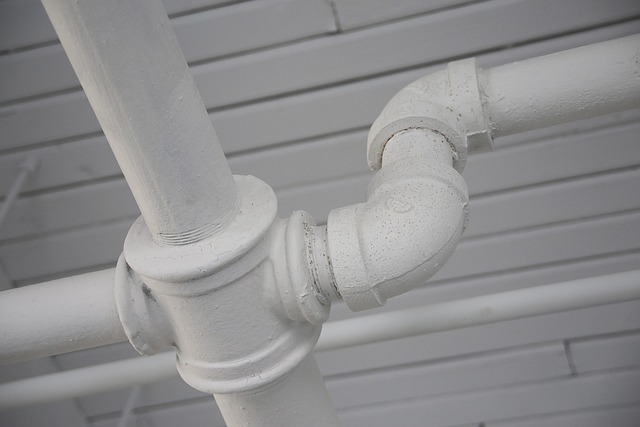
Understanding the Role of Open-Source 3D Printing in Plumbing Systems
Open-source 3D printing allows plumbing components to be designed, shared, and refined without proprietary restrictions. This flexibility enables rapid prototyping of fittings that match exact pipe diameters or unusual joint geometries. Decentralized production means a local facility—or even a small workshop—can print replacement parts on demand, reducing downtime in municipal or industrial networks. Material choice remains critical: polymers like PETG or nylon must balance printability with long-term exposure to pressure and moisture. Print resolution also determines sealing accuracy; even minor surface deviations can alter flow performance.
The Significance of “2 Black Pipe Fittings” in Experimental Design
The phrase “2 black pipe fittings” refers to a paired configuration frequently used in open-source hydraulic tests. Researchers employ these components to evaluate joint durability under variable pressures and flow rates. Their modular structure allows easy assembly and disassembly for iterative testing. By adjusting nozzle diameter or internal curvature between iterations, engineers can measure how geometry affects leak resistance and fluid velocity distribution. This experimental approach has proven useful for validating computational models before large-scale implementation.
Technical Foundations Behind Water Waste Reduction
Reducing water waste through design innovation requires both precise geometry and material resilience. Additive manufacturing provides control at the microstructural level, enabling small but meaningful improvements in flow efficiency.
Hydraulic Efficiency Through Custom Geometry
Custom internal geometries can minimize turbulence that typically occurs at junctions or elbows within pipelines. A smoother interior surface reduces pressure losses across the system, which translates directly into lower pumping energy requirements. Computational fluid dynamics (CFD) simulations often guide these designs by mapping flow trajectories under different conditions. By adjusting curvature angles or wall thicknesses based on simulation data, designers can achieve optimal hydraulic performance without relying on off-the-shelf fittings.
Material Performance Under Water Pressure and Temperature Variations
3D printed pipe fittings must endure constant mechanical stress from water pressure cycles. Polymers reinforced with glass fibers or carbon additives exhibit improved tensile strength while maintaining lightweight characteristics. Temperature fluctuations present another challenge: expansion coefficients vary among materials, potentially causing misalignment over time. Testing protocols modeled after ISO 9080 standards help quantify fatigue resistance under repeated load cycles, providing benchmarks comparable to conventional metal fittings.
Comparative Analysis: Traditional vs. 3D Printed Pipe Fittings
Comparing traditional metal fittings with their printed counterparts reveals fundamental differences not only in production methods but also in quality assurance frameworks.
Manufacturing Precision and Quality Control Differences
Traditional machining achieves precision through tight tolerances measured in micrometers, while additive manufacturing relies on layer height resolution for dimensional accuracy. This introduces anisotropic strength—meaning parts are stronger along certain axes than others—which influences reliability under pressure loads. New quality control metrics such as digital tomography scanning are emerging to verify internal consistency of printed parts without destructive testing.
Environmental Implications of Production Methods
Additive manufacturing generates less scrap material compared with casting or forging processes common in metalwork. Localized production further cuts emissions by reducing transport distances within supply chains. Using recyclable filaments aligns with circular economy goals; some utilities have begun experimenting with biodegradable composites for non-potable applications to close material loops within their maintenance cycles.
Evaluating the Impact on Water Conservation Systems
The integration of open-source printed fittings into operational networks shows measurable benefits for leak prevention and adaptive infrastructure planning.
Leak Prevention and System Integrity Improvements
Custom-fit joints eliminate small gaps that often cause micro-leaks in standardized systems. Engineers can embed sealing features directly into printed designs—such as flexible lips or compression rings—reducing dependence on separate gaskets that degrade over time. Continuous monitoring from pilot installations indicates measurable reductions in unaccounted-for water volumes across test zones.
Adaptive Design for Smart Water Infrastructure Integration
Smart infrastructure demands components capable of data interaction as well as mechanical function. Sensor-compatible 3D printed fittings now allow inline measurement of flow rate or temperature without external housings. Modular construction simplifies upgrades when new sensor technologies emerge; operators can replace only targeted segments instead of entire lines. Integration with IoT platforms supports predictive maintenance by alerting teams before leaks escalate into failures.
Challenges and Future Directions for Open-Source Implementation
Despite promising results, several structural challenges limit full adoption across regulated water sectors.
Standardization and Regulatory Compliance Issues
Without unified standards governing additive-manufactured plumbing parts, certification remains inconsistent between jurisdictions. For potable systems especially, verifying chemical safety under prolonged contact is essential to protect public health. Collaborative initiatives between open-source communities and regulatory agencies are beginning to establish shared testing frameworks similar to those used by IEC and ISO technical committees.
Scaling Production While Maintaining Open Access Principles
Expanding distributed production networks raises questions about maintaining consistent quality while preserving openness of design files. Licensing models such as Creative Commons for hardware influence how innovations circulate among contributors and manufacturers alike. Research continues into hybrid materials combining polymer flexibility with metallic reinforcement layers to extend lifespan while keeping costs accessible for small-scale producers.
FAQ
Q1: What advantages do 3D printed pipe fittings offer over traditional ones?
A: They allow precise customization, faster local production, reduced leakage risk, and lower environmental impact due to minimal material waste.
Q2: How does the “2 black pipe fittings” setup contribute to research?
A: It provides a repeatable configuration for testing durability, pressure tolerance, and flow behavior under controlled laboratory conditions.
Q3: Are polymer-based fittings safe for drinking water systems?
A: Only materials tested against international safety standards such as ISO 9080 or NSF/ANSI 61 should be used for potable applications.
Q4: Can open-source designs meet industrial reliability requirements?
A: Yes, provided they undergo standardized mechanical testing and consistent print calibration across distributed facilities.
Q5: What future developments are expected in this field?
A: Hybrid composites integrating sensors directly within structural layers are likely next steps toward fully intelligent water distribution networks.


