
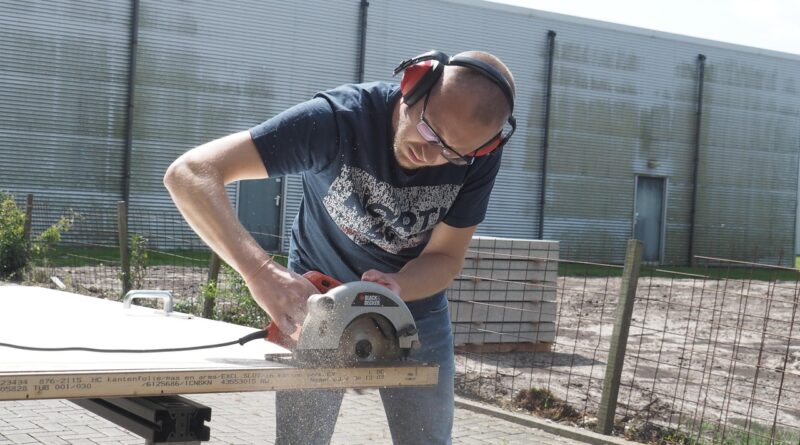
How to choose a power saw for safer cuts in wood, metal, and jobsite materials
Power saw choice starts with the cut
A power saw should be selected by the material, the cut direction, the accuracy required, and how the workpiece will be supported. A circular saw is usually the flexible jobsite choice for sheet goods and framing lumber. A miter saw is built for repeatable crosscuts and angles. A table saw is stronger for ripping boards to width, while a reciprocating saw is better suited to demolition than fine finish work. The safest and most useful saw is not always the most powerful one. It is the saw whose blade type, guard system, capacity, dust collection, and control features fit the work being done.
For more practical coverage of tools, blades, fasteners, and workshop materials, visit the Tools & Power section.

What a power saw means in practical terms
The phrase power saw covers a broad group of motor-driven cutting tools. Some move a round blade through the material. Some move a straight blade back and forth. Some hold the saw stationary while the operator moves the material. Others require the operator to guide the tool through a fixed workpiece. These differences matter because the main risks, cut quality, and setup requirements change with the cutting action.
A handheld circular saw is portable and efficient, but it needs a stable work surface and a clear offcut path so the blade does not bind. A table saw can produce straight, repeatable rips, but it places the operator close to a spinning blade and requires careful kickback control. A miter saw improves repeatability for trim, framing, and angle cuts, but it has limited rip capability. A band saw can handle curves and resawing, while a jigsaw is useful for interior cutouts and shaped cuts. A reciprocating saw is valuable for rough demolition because it can cut wood, metal, plastic pipe, and embedded fasteners when fitted with the correct blade.
For buyers, the starting point is simple: do not begin with brand, voltage, or motor size. Begin by naming the cut. Is it a rip, crosscut, bevel, plunge cut, curve, flush cut, or demolition cut? Then choose the saw body and blade system designed for that motion.
Match the saw type to the work
| Common job | Power saw type to consider | Why it fits | Main limitation |
|---|---|---|---|
| Breaking down plywood, OSB, and jobsite panels | Circular saw or track saw | Portable, fast, and easier to bring to large sheets than a table saw | Accuracy depends on guide setup and work support |
| Repeatable trim, studs, decking, and angled crosscuts | Miter saw | Fixed fence and pivoting head make repeated angles easier | Not designed for ripping long boards |
| Ripping boards to width | Table saw | Fence-guided feed supports consistent straight cuts | Requires strong guarding, push devices, and kickback control |
| Demolition, remodeling, and rough cutouts | Reciprocating saw | Works in confined spaces and accepts aggressive blades | Rough finish and higher vibration |
| Curves, interior openings, and light sheet material | Jigsaw | Small blade can turn and enter drilled starter holes | Less straight-line accuracy in thick stock |
| Curves, resawing, and controlled shop cuts | Band saw | Continuous blade supports smoother curved cutting | Less portable and requires careful blade tensioning |
| Tile, masonry, concrete pavers, or abrasive materials | Wet saw, masonry saw, or cut-off saw | Blade and water or dust-control system are designed for mineral materials | Wrong blade choice can create dust, heat, and blade failure risks |
The comparison also shows why one saw rarely handles every cutting task well. Many users can accomplish a lot with a circular saw, a straightedge, clamps, and the right blades. Shops that repeat the same cut many times often benefit from a table saw or miter saw because the workholding and reference surfaces are built into the machine.
Buying criteria that matter more than advertised power
Blade compatibility
The blade largely determines whether the saw cuts cleanly, overheats, wanders, or becomes dangerous. Tooth count, tooth geometry, kerf width, blade diameter, arbor size, and material rating all need to match the tool and the work. A fine-tooth blade may leave a cleaner edge in plywood or trim, while a lower tooth count can clear chips faster in framing lumber. Metal-cutting, masonry, laminate, and fiber-cement blades are not interchangeable just because they fit the arbor.
Always confirm the saw’s rated blade diameter and maximum speed. A blade that is not rated for the tool’s speed, guard clearance, or material can create a serious failure risk. This is especially important for abrasive wheels, diamond blades, and nonferrous metal blades.
Capacity and real support
Cut capacity is often advertised as depth of cut or crosscut width, but the practical question is whether the tool can complete the cut while the material remains supported. A circular saw may have enough depth for framing lumber, but long sheet goods still need sawhorses, foam board, or a sacrificial support surface. A sliding miter saw may cut wider boards, but it still needs side supports for long trim or decking. A table saw may rip accurately, but it needs infeed and outfeed support for long or heavy stock.
Corded versus cordless
Corded saws remain practical for long cutting sessions, shop work, and applications where a consistent power supply is available. Cordless saws improve mobility and reduce cord-management hazards, especially on roofs, renovation sites, and outdoor work. The tradeoff is runtime, battery cost, and performance under heavy continuous load. When evaluating cordless models, compare the battery platform, available amp-hour options, charger speed, and whether the saw maintains blade speed in dense material.
Control features
Useful control features include an electric brake, clear sightlines, stable depth and bevel adjustments, a trigger lock or lock-off, soft-start behavior on larger tools, and a base plate that stays flat under pressure. On table saws, fence alignment and riving knife setup can matter as much as motor output. On miter saws, detent accuracy, fence height, and dust collection are often more important than a long list of rarely used angle settings.
Safety features are selection criteria, not accessories
Power saw safety starts with the manufacturer’s instructions, but U.S. workplace guidance also gives useful context. OSHA’s portable powered tool rule requires portable, power-driven circular saws with a blade diameter greater than 2 inches to have upper and lower guards, and the lower guard must automatically return to the covering position when the tool is withdrawn from the work. OSHA guidance on hand and power tools also identifies constant-pressure controls for several handheld tools, including reciprocating saws and certain jigsaws or saber saws.
For table saws, the safety conversation is broader because the operator feeds material toward the blade. CPSC injury analyses have repeatedly focused on blade-contact injuries from table saws. A 2003 to 2022 analysis of U.S. emergency department data published in a medical journal found that bench or table saws made up the largest share of upper-extremity saw injuries among the saw categories studied. CPSC’s 2017 proposed rule package estimated 33,400 emergency-department-treated table saw injuries in 2015, with most estimated blade-contact injuries involving fingers.
Those figures do not mean every table saw cut is unsafe. They do mean that buyers should treat riving knives, blade guards, anti-kickback devices, push sticks, stable fences, and clear operating space as part of the tool system. A riving knife helps keep the kerf from closing behind the blade during through cuts. A guard helps reduce direct access to the blade. Push sticks and push blocks keep hands farther from the cutting zone. None of these devices replaces good setup, but removing them without a task-specific reason increases risk.
- Use the guard system that came with the saw unless the manual allows removal for a specific operation and provides an alternative setup.
- Keep both hands out of the blade path and use push devices for narrow rips.
- Stand out of the likely kickback line when using a table saw.
- Support both the main workpiece and the offcut so the blade is not pinched.
- Disconnect power or remove the battery before blade changes, cleaning, and adjustments.
- Wear eye protection, hearing protection, and respiratory protection appropriate to the material and dust level.
Dust, noise, and layout affect cut quality
Dust collection is not only a housekeeping issue. OSHA’s woodworking guidance notes that wood dust exposure is associated with respiratory and skin effects, and its woodworking eTool discusses local exhaust ventilation near dust sources. NIOSH recommends an occupational noise exposure limit of 85 dBA as an eight-hour time-weighted average, with recommended exposure time decreasing as sound levels rise. Many saw operations can exceed comfortable noise levels, especially in enclosed rooms or when cutting hard, resonant materials. See also: Bolts & Fasteners.
Good layout improves both safety and finish quality. A circular saw needs a clear path for the cord or battery housing, room for the lower guard to retract properly, and support under both sides of the cut. A miter saw needs side wings or stands so long stock does not lever upward. A table saw needs outfeed space, a clean floor, and a fence that stays parallel to the blade. Dust extraction ports, shop vac adapters, and collection hoods are worth evaluating before purchase because they are easier to plan at the buying stage than after the shop is crowded.
Material choice changes the dust-control plan. Untreated pine, hardwood, MDF, fiber cement, masonry, and metal each create different debris. Some materials may require wet cutting, HEPA filtration, or task-specific respiratory protection. When cutting unknown demolition material, confirm that it does not contain hazardous coatings, embedded metal, masonry dust, or other contaminants before choosing a blade and dust-control method.
Maintenance and setup decide long-term performance
A well-chosen power saw becomes unreliable if the blade is dull, the base is bent, the fence is misaligned, or dust buildup prevents guards from moving freely. Before each use, check the blade condition, arbor hardware, guard movement, power cord or battery pack, switch action, and the stability of the work surface. For stationary and transportable saws, inspect fences, miter gauges, riving knives, blade height mechanisms, and dust ports.
Blade maintenance is often the cheapest performance upgrade. A sharp, clean blade cuts cooler and requires less feed pressure. Resin buildup on woodworking blades can cause burning and wandering. Missing carbide teeth, cracked bodies, damaged abrasive wheels, and warped blades should be treated as replacement issues, not cleaning issues.
Calibration also matters. On a miter saw, check that the blade is square to the table and fence before precision trim work. On a table saw, confirm fence alignment and blade parallelism according to the manual. On a circular saw, verify the bevel scale against a square rather than assuming the stamped scale is exact. Small setup errors can create visible gaps in finish carpentry and increase binding in structural cuts.
A practical power saw buying checklist
- Define the main cut: rip, crosscut, bevel, plunge, curve, flush cut, or demolition cut.
- Name the material: softwood, hardwood, plywood, laminate, metal, plastic, masonry, tile, or mixed demolition material.
- Confirm blade fit: diameter, arbor, kerf, tooth count, speed rating, and material rating.
- Check safety systems: guards, lock-off, brake, riving knife, anti-kickback parts, and switch design.
- Plan support: sawhorses, track, clamps, miter saw stand, table saw outfeed, or bench space.
- Plan dust and noise control: extraction port, vacuum compatibility, hearing protection, and ventilation.
- Evaluate serviceability: blade changes, brush or motor design, battery platform, replacement parts, and adjustment access.
- Read the manual before purchase if possible: it often reveals limits that product listings do not emphasize.
The strongest buying decision is usually a balanced one. A saw that is slightly less powerful but easier to guide, support, guard, and maintain may produce better results than a larger model that does not fit the workspace. For occasional users, versatility and safe setup may matter most. For production shops, repeatability, dust control, alignment stability, and compliance with applicable workplace requirements deserve more weight.
Frequently asked questions
What is the most versatile power saw for home projects?
For many home and repair projects, a circular saw is the most versatile first choice because it can cut framing lumber and sheet goods with the right blade and a straightedge guide. It is not a complete replacement for a miter saw, table saw, or jigsaw, but it covers many basic straight cuts at a reasonable cost and storage size.
Is a cordless power saw as strong as a corded one?
A high-quality cordless saw can perform very well, especially for intermittent jobsite cutting. Corded saws still make sense for long sessions, dense stock, and shop work where runtime is not a concern. Compare the full battery platform and expected workload rather than judging only by voltage.
Can one blade cut wood, metal, and masonry?
No single blade should be treated as universal for all materials. Wood, metal, masonry, tile, laminate, and fiber cement require blades or wheels designed for their cutting action, debris, heat, and speed requirements. Always match the blade to both the tool and the material.
What safety feature should not be ignored?
Blade guards should not be ignored. For table saws, a riving knife and appropriate push devices are also critical for many through cuts. For handheld saws, a working lower guard, stable footing, and supported material are essential. Safety devices are part of the saw system, not optional decorations.
Should a beginner buy a table saw first?
Not always. A beginner who mainly cuts sheet goods or framing lumber may be better served by a circular saw, guide, clamps, and solid work support. A table saw becomes more valuable when the work requires repeatable rips, cabinet parts, or frequent shop-based cutting, but it also demands more space, setup discipline, and safety knowledge.


