
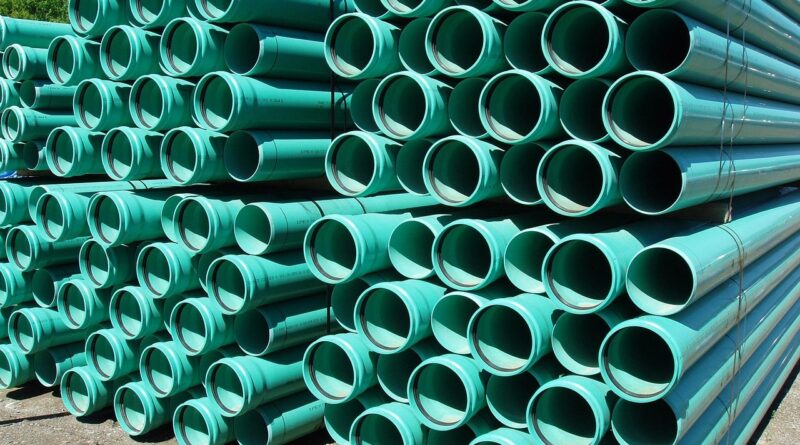
Are PVC Pipe Fittings the Best Choice for Water, Drainage, and Industrial Lines?
Why Do PVC Pipe Fittings Matter in a Reliable Line?
When you buy pvc pipe fittings for a water supply job, irrigation branch, drainage repair, or light industrial line, you are buying more than elbows and couplings. These parts decide how the line turns, where a valve can be fitted, and how the system can be serviced later. For related product categories, you can compare options in Fittings & Valves before building a takeoff list.
There is a practical reason to check every joint as well. The U.S. EPA WaterSense Statistics and Facts page, updated in 2026, reports that household leaks can waste nearly 900 billion gallons of water each year nationwide. A loose thread, a bad pipe cut, or a rushed solvent joint may not explain every leak, but it is often where the problem starts. Source: U.S. EPA WaterSense, 2026. (epa.gov)

Small Parts That Carry Big Loads
A fitting changes direction, joins pipe, reduces size, or connects to a valve. It sounds like a simple part, but on site it does real work. A 90 degree elbow near a pump, a tee feeding a hose bib, or a union beside a filter may deal with vibration, water hammer, sunlight, and tool marks. The fitting still has to match the pipe size, pressure class, fluid, and installation method.
A Fit for Water, Drainage, and Light Industry
PVC is common because it does not rust, it is easy to carry, and it works with many water-based systems. You will see it in irrigation, pool lines, cold-water distribution, drainage, venting, and some compatible chemical lines. The key word is compatible. If the fluid attacks PVC, or if the temperature is too high, another material is the safer choice.
Leak Control Starts at the Socket
Most PVC pressure fittings use a socket joint with primer and solvent cement. This joint is not just glue sitting on the surface. When it is done properly, the cement softens the pipe and socket, then the parts fuse as the solvent flashes off. A clean joint is not only for looks; it means full insertion, even cement coverage, and enough cure time.
Which Types of PVC Pipe Fittings Should You Choose?
The right fitting is normally the one that solves the layout without forcing too many angles or making later service difficult. A small warehouse washdown line, for example, may need a ball valve and union near the wall, not only a straight coupling. A garden irrigation repair may need just one coupling, but the socket depth and pipe size still have to be correct.
Couplings for Straight Runs
Couplings join two pipe ends in a straight line. Standard couplings are used for new installation, while repair couplings, sometimes without a center stop, help when the fitting must slide into an existing run. Reducer couplings step down from one nominal size to another. They should not be used as a quick patch for poor flow planning, because the line still needs the right capacity.
Elbows and Tees for Direction Changes
Elbows change direction, often 90 degrees or 45 degrees. Tees split flow into a branch, so the branch size and position matter. In pressure lines, too many sharp turns near a pump can add stress and noise. In drainage, slope and code rules matter more than what is easiest to install, so a quick sketch can save a wet floor later.
Adapters, Unions, and Valves for Service Points
Adapters connect PVC to threaded equipment, metal valves, pumps, tanks, or gauges. Unions let a worker remove a pump, filter, or valve without cutting the pipe. Valves control flow, isolate sections, and make maintenance easier. Threaded transitions need care because over-tightening plastic female threads can split the fitting body.
How Do Schedule 40 and Schedule 80 PVC Fittings Compare?
Schedule is often treated as a simple strength label, but it should be checked as part of the whole system rating. Pipe size, wall thickness, fitting design, temperature, fluid, and local code all count. Schedule 80 has thicker walls than Schedule 40 in many common sizes, but the final choice still depends on working conditions.
Schedule 40 for General Pressure Lines
Schedule 40 PVC fittings are widely used for cold-water pressure lines, irrigation, pool equipment, and many general jobs. ASTM D2466-23 covers PVC Schedule 40 pressure fittings and includes requirements for materials, workmanship, dimensions, and burst pressure. The standard also states that the covered products are for pressurized liquids that are chemically compatible with the piping material. Source: ASTM International, D2466-23. (store.astm.org)
Schedule 80 for Higher Stress Zones
Schedule 80 fittings are often selected where the line faces higher pressure, more mechanical stress, or more regular service work. They are common around pumps, manifolds, treatment skids, and industrial utility lines. The thicker wall can help, but it does not fix every risk. If the temperature is too high or the fluid is not compatible, a heavier schedule will not make the wrong material safe.
Always Match Pipe, Fitting, and Valve Ratings
Do not mix parts only because they fit together. A line is only as dependable as its lowest rated part. The pipe, fitting, valve, cement, primer, and transition adapter should suit the same pressure, temperature, and service. If a valve has a lower rating than the pipe, the system rating follows the valve, and this is a common small mistake in field work.
What Standards and Certifications Should You Check?
Standards give buyers, contractors, and inspectors a common language. They also make export purchasing clearer when drawings pass between distributors, job sites, and inspection teams. A product description that only says white PVC elbow is not enough for a professional order. Ask for the schedule, standard, size, connection type, and intended service.
ASTM D2466 for Schedule 40 Pressure Fittings
For Schedule 40 pressure fittings, ASTM D2466 is one of the common references. It is useful because it deals with physical requirements, not sales wording. If a project calls for Schedule 40 PVC pressure fittings, the purchase order should name the relevant ASTM standard. It should also state any required markings so the receiving team can check the goods quickly.
NSF/ANSI/CAN 61 for Drinking Water Contact
If the fitting touches drinking water, check certification for that use. NSF explains that NSF/ANSI/CAN 61 sets minimum health-effect criteria for materials, components, products, and systems that contact drinking water. This does not mean every white PVC fitting is approved for potable water. It means the buyer should check the product listing and markings for the actual item. Source: NSF, NSF/ANSI/CAN 61 information page, accessed 2026. (nsf.org)
ASTM D2564 and F656 for Solvent Cement Joints
The jointing materials matter as much as the fitting itself. ASTM F656-21 covers primers for PVC pipe and fittings joined with solvent cements meeting ASTM D2564. ASTM notes that set and cure behavior can depend on the cement, pipe size, application method, temperature, and humidity. Source: ASTM International, F656-21. (store.astm.org) See also: Bolts & Fasteners.
How Should You Install PVC Fittings for a Strong Joint?
Good PVC installation is not slow, but it should not be rushed. The pipe end, socket, primer, cement, assembly angle, and curing time all affect the final joint. Anyone who has seen a pipe pushed halfway into a fitting knows the issue. It may pass a short test, then leak months later.
Square Cuts and Clean Edges
Cut the pipe square so it seats evenly in the socket. Remove burrs from the inside and outside edge before applying primer. A rough edge can scrape cement out of the socket and leave a dry strip. Wipe off dust, oil, and moisture, and on larger pipe, add a small bevel so the pipe does not push all the cement ahead of it.
Primer and Cement Applied Fast
Use the primer and cement listed for the pipe, fitting, and service. Apply primer to the socket and pipe end, then apply cement while the surfaces are ready. Push the pipe fully into the socket with a quarter turn, and hold it briefly so it does not back out. A small even bead around the joint is normal, but a heavy run of cement does not make the joint better.
Cure Time Based on Size, Weather, and Pressure
Cure time changes with pipe diameter, temperature, humidity, and pressure. Cold weather slows the process, and large pipe needs more care than a half-inch repair. Follow the cement maker’s table before pressure testing. For export orders, include the cement type and installation instructions in the project file so the site team is not guessing from a label.
When Should You Avoid PVC Pipe Fittings?
PVC is useful, but it is not right for every line. In some jobs, the safest decision is to reject the cheap fitting and choose another material. That can be frustrating during a repair when the part is already on the shelf. Even so, the wrong material can cause leaks, cracked threads, code issues, or unsafe pressure tests.
Hot Water Above Normal PVC Limits
Many manufacturers rate PVC pressure piping for a maximum operating temperature of 140 degrees Fahrenheit, and pressure ratings are commonly reduced as temperature rises. Westlake Pipe & Fittings states this 140 degrees Fahrenheit maximum on its technical FAQ. Treat the product data sheet as the final source for the fitting you buy. Source: Westlake Pipe & Fittings technical FAQ, accessed 2026. (westlakepipe.com)
Compressed Air and Gas Service
Do not assume a PVC water fitting is safe for compressed air. ASTM D2466 warns that compressed air and other compressed gases store large amounts of energy and can create serious safety hazards if a system fails. Many manufacturers do not allow pneumatic testing of their PVC pressure products. Use the maker’s test procedure instead of shop habit. Source: ASTM International, D2466-23. (store.astm.org)
Unsupported Runs and Mixed Threads
Long horizontal runs need support, and heavy items cannot hang from the pipe. Valves, filters, and pumps need their own supports as well. Mixed plastic and metal threads need extra care because metal can crush or split plastic if tightened too far. Use proper adapters, do not force mismatched threads, and leave service access where a worker can actually reach the part.
FAQ
Q1: Are PVC pipe fittings safe for drinking water? A: They can be, but only when the specific fitting is certified for potable water contact, such as products listed to NSF/ANSI/CAN 61. Do not assume every PVC fitting in the same color is approved for drinking water.
Q2: Can Schedule 40 and Schedule 80 PVC fittings be mixed? A: Sometimes they can fit the same nominal pipe size, but the system rating must follow the lowest rated part. For professional work, match the schedule, pressure rating, and standard on the drawing or purchase order.
Q3: What causes PVC fitting leaks most often? A: Common causes include crooked cuts, dirty pipe ends, too little cement, wrong cure time, over-tightened threads, poor support, and parts used outside their temperature or pressure range.
Q4: Can PVC fittings be used for hot water? A: Standard PVC is generally used for cold-water and moderate-temperature service. For hot water, check the product data sheet and local code. CPVC or another approved material is often the better choice.
Q5: How long do PVC pipe fittings last? A: There is no reliable public number that fits every job because sunlight, chemicals, temperature, pressure, installation quality, and support all change service life. A correctly selected and installed fitting usually lasts much longer than one forced into the wrong service.


