
Which Woodworking Power Tools Should You Buy First for a Better Shop?
Why Do Woodworking Power Tools Matter in a Real Shop?
Choosing woodworking power tools gets easier when you start with the jobs in front of you, not with the longest spec sheet. If you build cabinets, shelves, trim, workbenches, or small furniture, the right tool mix helps you cut straighter, sand with less time wasted, and make the same part more than once without fighting the material. For more tool and hardware ideas, browse the Tools & Power section.
A working shop does not need every machine on the first day. It needs tools that can handle the cuts you make often, plus safety features that keep the work under control. Small things still count, such as a blade made for plywood, a sander connected to dust collection, or a drill that does not feel heavy after half an hour above shoulder height.
Faster Cuts with Better Repeatability
Power tools earn their space when repeated work becomes a normal shop process. A circular saw with a guide rail can break down a full sheet before it goes near the table saw. A miter saw can cut twenty matching face-frame parts when you use a stop block. The point is not only speed, because steady dimensions also mean fewer gaps, less sanding, and less scrap.
Cleaner Joinery with Less Hand Strain
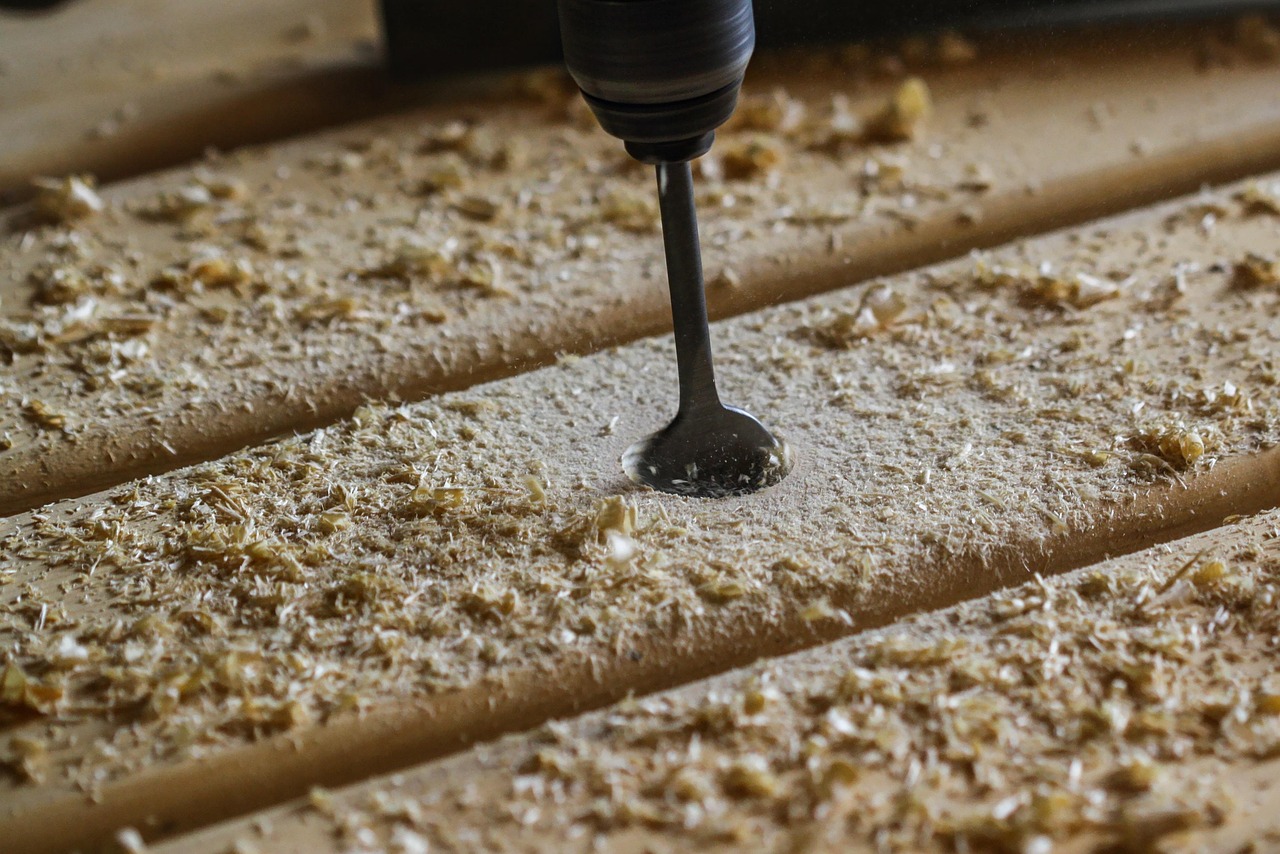
Routers, drills, sanders, and saws take much of the hard pushing and repeated force out of the job. A router can cut a hinge mortise with a jig, and a drill press can bore straight holes for shelf pins. A random orbit sander can remove light mill marks before finish work starts. You still need careful layout and sharp bits, but the tool handles the part that wears out your hands.
Safer Work When Tools Match the Task
The wrong tool often puts the operator in a poor stance or leaves the board without enough support. A long rip on a narrow board is not the same job as a short 2-inch trim cut. When the tool fits the stock, the cut path, and the support setup, the work moves less and the cut is easier to control. That kind of safety is not dramatic, but in a shop it matters every day.
Which Woodworking Power Tools Should You Buy First?
Your first purchases should cover drilling, rough cutting, and surface prep. These three jobs appear in nearly every woodworking project. Spend more on tools you will use every week, then add specialty tools when the work calls for them. A cheap tool that slows you down every weekend usually stops being cheap pretty quickly.
Cordless Drill and Impact Driver
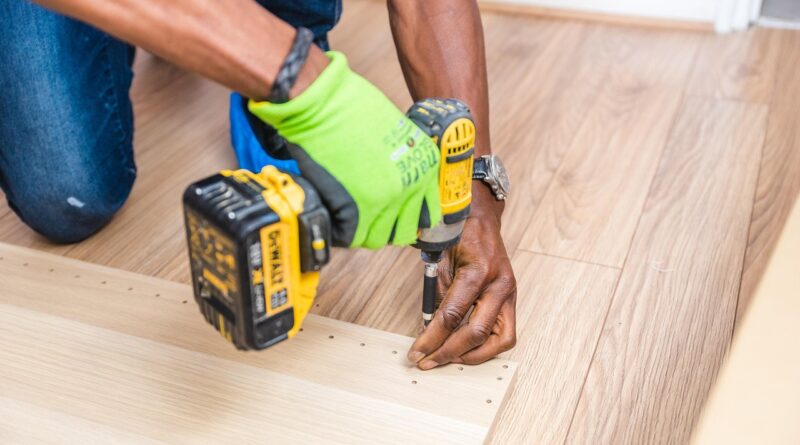
A cordless drill belongs in almost every shop. It drills pilot holes, drives countersinks, bores hardware holes, and helps during assembly. An impact driver is less gentle, but it works well for long screws, deck-style construction, shop fixtures, and jigs. For woodworking, check for a clutch on the drill, two speed ranges, a grip that fits your hand, and batteries that are easy to replace.
- Choose 12V for light cabinet work and tight spaces.
- Choose 18V or 20V class tools for heavier boring and outdoor builds.
- Use sharp brad-point bits for clean holes in hardwood and plywood.
Circular Saw or Track Saw
A circular saw is often the first main cutting tool because it works on boards, panels, and jobsite material. With a straightedge guide, it can make clean plywood cuts if the blade is right and the sheet is supported. A track saw costs more, but it gives cleaner sheet-good cuts with less setup. If your projects use many 4 x 8 sheets, the track saw can save time, reduce edge damage, and make handling large panels easier.
Random Orbit Sander
Sanding is where many builds start to look either finished or careless. A 5-inch random orbit sander is a common choice for small shops because discs are easy to buy and the tool is light enough for vertical work. Look for variable speed, a flat pad, and a dust port that connects to a vacuum. Keep grits in a clear order, such as 80, 120, 180, then 220 for many furniture parts. Skipping steps usually shows up later when finish goes on.
Which Cutting Tools Give the Best Value?
Cutting tools affect the whole shop flow. They decide how you break down stock, how you square parts, and how much cleanup is needed after the cut. The best value is not always the largest motor. It is the tool that makes your most common cut safely and with the same result each time.
Table Saw for Repeatable Rips
A table saw is the main machine in many cabinet and furniture shops because it makes repeatable rip cuts with a fence. It is useful when you need matching rails, stiles, drawer parts, or narrow strips. Safety needs real attention on this tool. A CPSC table saw rulemaking document using NEISS data reported estimated blade-contact injuries from about 29,500 to 34,600 per year during 2010 to 2021, and the same analysis found no statistically significant trend in injury rate over that period. The shop lesson is clear enough: treat guard systems, riving knives, push sticks, and blade-brake technology as buying factors, not as add-ons. (cpsc.gov)
Miter Saw for Fast Crosscuts
A miter saw is made for crosscuts, trim, framing parts, and repeated short pieces. It is not a table saw replacement, but it is faster when you only need to cut boards to length. A 10-inch sliding compound miter saw fits many small shops. Add side support, a stop block, and a sharp crosscut blade. Without proper support, even a good saw can leave a poor cut because the board drops near the end.
Jigsaw and Router for Shape Work
A jigsaw handles curves, sink cutouts, notches, and rough shapes. It is not the tool for fine joinery, but it solves odd cuts that straight-line saws cannot make. A router is more controlled when the setup is right. It can round edges, cut dadoes, trim laminate, shape templates, and make repeat joinery with guides. Start with a compact router for edge work, then move to a full-size plunge router if your projects need deeper cuts.
How Should You Compare Corded vs Cordless Tools?
Corded and cordless tools both have a place in woodworking. The better choice depends on runtime, power draw, shop layout, and how often you move from one work area to another. Do not buy only by voltage or amp rating. A well-made 12V drill may feel better than a bulky high-voltage tool during cabinet installation, while a corded router may still be the better option for long passes.
Power Demand and Runtime
Drills, drivers, trim routers, and small sanders work well on batteries because their heavy-load moments are short. Planers, full-size routers, large saws, and dust collectors often make more sense with cords because they pull power for longer periods. If you need to run a tool through a long session, corded power keeps the pace steady. Batteries are convenient, but a dead spare pack can stop the job at the worst time, especially when glue is already open.
Battery Platform Cost
Battery tools cost less over time when you stay with one platform. The first kit can look expensive because it includes batteries and a charger. After that, bare tools are often easier to justify. Before you commit, check whether the same brand offers the tools you may need later: drill, driver, circular saw, jigsaw, sander, light, and maybe a compact router. Changing platforms later usually means buying batteries twice.
Shop Space and Jobsite Mobility
Cordless tools keep floors clearer and make outdoor cuts simple. Corded tools still make sense at a fixed bench where outlets and dust collection are close by. The U.S. Fire Administration advises replacing worn or damaged extension cords, not overloading power strips, and keeping cords away from pinch points such as rugs. In a shop, the habit is simple: use the right cord gauge, keep cords visible, and unplug tools before blade changes. (usfa.fema.gov) See also: Bolts & Fasteners.
What Safety Specs Should You Check Before Buying?
Safety specs are not only legal notes in the manual. They affect how you work when tired, how much dust stays in the air, and how loud the shop feels during a normal weekend session. Check guards, switches, dust ports, braking, vibration, and tool balance before focusing on bonus accessories.
Guards, Riving Knives, and Kickback Control
For saws, guard design deserves a close look before buying. A circular saw lower guard should move freely and return fully after the cut. A table saw should have a riving knife or splitter aligned with the blade, plus a guard that can stay on for normal cuts. Push sticks, featherboards, and stable outfeed support may look basic, but they keep hands farther from the blade and help reduce board lift.
Dust Collection and Respiratory Risk
Wood dust is more than a cleanup problem. OSHA’s woodworking eTool states that wood dust exposure is linked with skin irritation, allergic respiratory effects, asthma, chronic bronchitis, and certain cancer risks. The same OSHA page lists a permissible exposure limit for nuisance dust of 15 mg/m³ total dust and 5 mg/m³ respirable fraction over an 8-hour time-weighted average, while NIOSH lists a recommended exposure level of 1 mg/m³ total dust. For buying decisions, choose tools with real dust ports and plan for a vacuum or collector early. A dust port that cannot connect well usually gets ignored after the first few uses. (osha.gov)
Noise Levels and Hearing Protection
Many power tools are loud enough that hearing protection should stay near the tool, not in a drawer across the shop. NIOSH sets a recommended exposure limit of 85 dBA averaged over an 8-hour workday, and it recommends cutting allowed exposure time in half for each 3 dBA increase. Its guidance also lists power tools among equipment that can produce levels around 85 to 90 dBA. In daily shop use, that means muffs or plugs should be worn when cutting, routing, planing, or sanding for long stretches. It is a small habit, but hearing loss does not give many early warnings. (cdc.gov)
How Do Accessories and Materials Change Performance?
Accessories can make an average tool work like a better one. Poor accessories can also make an expensive tool feel rough. Blades, bits, abrasives, clamps, and squares are not small side purchases. They are the point where the motor meets the material.
Blades Matched to the Cut
A ripping blade clears fibers along the grain. A crosscut blade uses more teeth to cut across the grain cleanly. A plywood or fine-finish blade helps reduce tear-out on veneers and melamine. If one blade has to do every job, it will usually do most jobs only fairly well. Keep at least one rough blade and one finish blade for your main saw. Clean pitch from blades before you blame the motor.
Abrasives Matched to the Finish
Good sandpaper cuts faster and lasts longer. Do not skip too many grits, because deep scratches can stay visible under the finish. On hardwood, jumping from 80 straight to 220 often leaves lines that show only after stain. For painted shop furniture, 120 or 150 may be enough before primer. For clear finishes on visible parts, a steadier grit path is worth the time.
Clamps, Squares, and Stable Support
Power tools need stable workpieces to do their job well. A wobbly board can ruin a cut and put your hands in a poor position. Buy clamps before buying fancy specialty tools. Add a reliable square, a straightedge, sawhorses, and outfeed support. A few plain shop aids can make the expensive tool finally work the way you expected.
- Use sacrificial backers to reduce tear-out on crosscuts.
- Clamp guide rails before cutting sheet goods.
- Support both sides of a long board before the final inch of a cut.
- Check blade tightness, bit seating, and battery charge before starting.
FAQ
Q1: What woodworking power tools should a beginner buy first? A: Start with a cordless drill, circular saw or track saw, random orbit sander, and basic clamps. Add a miter saw, router, and table saw when your projects need repeat cuts or shaped edges.
Q2: Is a table saw needed for every woodworking shop? A: No. A track saw can handle many panel cuts, and a miter saw can handle crosscuts. A table saw becomes useful when you make many repeat rips, cabinet parts, and narrow strips.
Q3: Are cordless woodworking tools strong enough? A: Yes, for many drilling, driving, cutting, and sanding jobs. Corded tools still make sense for long router passes, heavy planing, large saws, and machines that run for long periods.
Q4: What safety feature matters most on cutting tools? A: Look for guards that move properly, a riving knife or splitter on table saws, electric braking where available, a clear switch layout, and stable support for the workpiece.
Q5: How can you reduce dust when using woodworking power tools? A: Choose tools with dust ports, connect a shop vacuum or dust collector, use fresh filters, clean around the tool often, and wear suitable respiratory protection when dust stays airborne.


